Latest Posts

As competition for used vehicles remains fierce, dealers must make quick decisions on whether to acquire a potential vehicle—or someone else will. Whether you need to evaluate a trade-in or want to make a flat-out offer on a vehicle, quickly accessing the vehicle’s history is only the first step. What if you could determine the likelihood that a vehicle will be on the road in five years and compare it to other similar vehicles? Would this help in your decision-making? Use the AutoCheck Score to evaluate vehicles for your lot The patented AutoCheck ScoreSM was developed to help dealers determine the likelihood that a vehicle will be on the road in five years. The AutoCheck Score summarizes vehicle history data into an easy-to-understand “score” and provides an equivalent score range. Understanding the likelihood that a unit will still be on the road in five years gives dealers more perspective on a vehicle’s desirability and can help you accurately price it. Use the AutoCheck Score to more accurately merchandise vehicles The AutoCheck Score range will give you similarly aged and classed vehicles for comparison that you can use to help merchandise the vehicle for market and help manage consumer conversations regarding the vehicle’s price. How does the AutoCheck Score work? The AutoCheck Score analyzes various characteristics, including age, segment, mileage, number of owners, vehicle use, vehicle events, accidents, theft, and title brands. Essentially, this score summarizes the AutoCheck Vehicle History Report fields and delivers a “score range” that allows you to compare the actual vehicle (score) to other similarly aged and classed vehicles. The score is based on a scale of 1 to 100, but reading the score in conjunction with the score range is essential since looking at the score without knowing the range will reveal only half the story. Check out the example below. Car #1 has a lower score than Car #2. However, look at the score ranges (73-86). For Car #1, other comparable vehicles should fall into a range from 73 to 86, and this car scored an 84. That means the vehicle is within the AutoCheck Score range compared to other similar cars of the same age and class. Car #2 has a score of 89. Because this is higher than Car #1’s score, you might assume this car has a more favorable vehicle history, but that’s not entirely accurate. Comparable vehicles should score in a range from 90 to 95, and this car falls short. That means the car’s history is slightly less favorable compared to similar vehicles of the same age and class. In today’s competitive environment though, dealers may decide to take in both trades, and the AutoCheck Score can also help make decisions on how to price the vehicles for market. Become an AutoCheck member today As an AutoCheck subscriber, you’ll have access to the AutoCheck Score. Between the large graphic display and the simple number comparison, the AutoCheck Score can help you make decisions on vehicle acquisition much quicker and easier!

According to Experian's State of the Automotive Finance Market Report: Q1 2022, SUVs and CUVs made up 60.38% of total vehicle financing, an increase from 58.95% in Q1 2021.

With the right technology, it’s possible to implement a layered fraud solution that provides protection and enhances the consumer journey.

Discover the dos and don’ts when it comes to implementing a successful strategy for income and employment verification for mortgage. Read more!

To drive growth and customer retention in today’s competitive landscape, financial services must optimize their customer acquistion strategies.

“Businesses are managing vast and growing amounts of consumer data – all while ensuring consumers’ privacy and complying with complex government regulations.” This is one of the many reasons there’s an increasing need for innovative digital identity solutions, as explored in a in Axios in a new Experian advertorial. Experian Identity, an integrated suite of identity solutions, products, and services, solves for challenges presented by the continuing migration of consumers to the internet and the resulting growth of consumer data. Leveraging that data stemming from diverse sources and combining it with advanced technologies, is critical to better determining and understanding a company’s best marketing prospects, as well as making confident decisions that enhance and safeguard the consumer experience. How? By leveraging multidimensional data and adhering to all consumer protection laws and industry self-regulatory standards, businesses can best recognize and connect with their consumers in more personalized, meaningful and secure ways. The Axios article discusses the benefits of Experian Identity, including strengthening fraud detection, solving for identity resolution, and helping to uncover business opportunities through segmenting, targeting and engaging consumers. “While today’s consumers are intensely interested in protecting their personal data and identities, they also want to be recognized and understood by the companies they do business with,” said Kathleen Peters, Chief Innovation Officer of Experian Decision Analytics, in the article. Read more about how Experian’s identity solutions helps businesses stay relevant with audiences, create a positive consumer experience, and meet people’s desire to be recognized in Axios’ new article. AXIOS: Making identities personal Learn more about Experian Identity

Experian recently attended Fintech Nexus USA, formally known as LendIT Fintech USA, to discuss fraud prevention and BNPL. Read more!

These days, the call for financial inclusion is being answered by a disruptive force of new financial products and services. Read more!

Experian's 2022 Global Identity and Fraud Report explores consumer expectations and preferences and effective risk mitigation strategies.

Last month my blog discussed how Building the Perfect Audience is Like Building the Perfect Burger! It was National Hamburger Month, so it seemed apropos! We offered marketers insight into building better audiences to help run more strategic marketing campaigns. This month, I am keeping with the monthly ‘holiday’ theme. June 20th was National American Eagle Day and being so close to our 4th of July holiday, I thought this was a perfect tie-in this month! You are probably wondering how I am going to tie in National American Eagle Day with another marketing strategy, but I promise you, I can! It’s all about having strategic insight into your customers and using an “eagle eye” to learn what you can about them to obtain better results from your marketing efforts. An eagle's-eye approach to finding and reaching the right consumers Here are a few fun facts about the great American Bald Eagle. Bald Eagles were placed at the center of the Great Seal of the United States in 1782! “Bald” in Bald Eagle refers to an old English word that means “white-headed.” We’ve all heard people talk about having an “eagle eye.” It’s true—this comes from the eagle’s astonishing eyesight. Eagles can see clearly and about eight times as far as humans can, allowing them to spot and focus on a rabbit or other prey at a distance of about two miles. Can you imagine? They can also look ahead and to the side simultaneously with a 340-degree visual field! Imagine if you had an eagle-eye, 340-degree view of your customers or prospects before running a marketing campaign. Well, you can. Experian data insights offers an eagle-eye approach to finding and reaching the right consumers at the right time in the buying journey to help you eliminate marketing waste and deliver a more significant return on your marketing spend. Understanding your customers is key With Experian’s Insights solution, as part of our comprehensive Experian Marketing Engine, we offer OEM marketers, agencies, and larger dealer groups access to multiple Insight categories to learn more about your customers. Understanding your current customers or the segment of prospects you would like to target allows for a more strategic approach to marketing campaigns. Our brand, model, registration, title, finance, market analysis, lifestyle, and household insights can help you take a 360-degree view of your customer (that's right, 360 degrees, 20 degrees more than an eagles eye!) There’s a lot of discuss here, so we’ve put together a complimentary resource, Understand Your Customer Before Choosing Your Audience that explains all the ways you can use Insights to learn more about your customers. What is the Experian Marketing Engine? Insights is part of the Experian Marketing Engine marketing solution that helps automotive marketers, manufacturers, advertisers, agencies, and platforms identify the right audience, uncover the most appropriate communication channels, develop messages that resonate, and measure the effectiveness of marketing activities.

According to Experian’s State of the Automotive Finance Market Report: Q1 2022, credit unions had their highest total share in five years
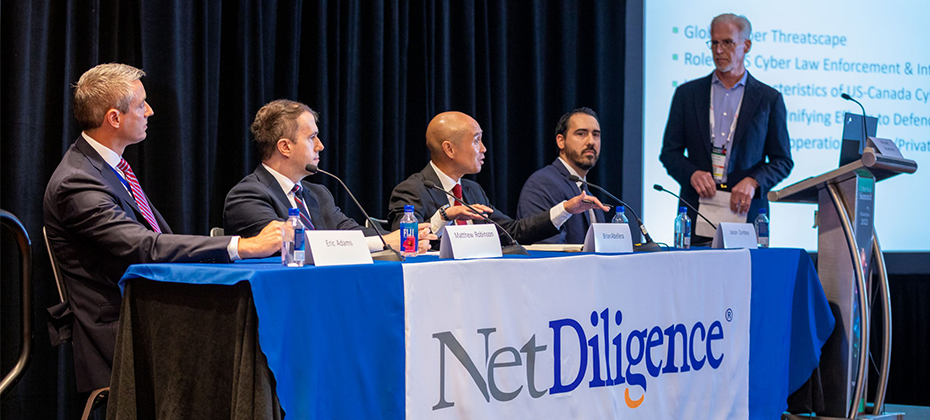
At the NetDiligence CyberRisk Summit, experts shared their thoughts on the role of U.S. cyber law enforcement and oversees intelligence.

When acquiring inventory for your used lot, using AutoCheck Vehicle History Reports is like an ‘insurance’ policy! As the industrial-strength vehicle history report, AutoCheck helps dealers manage risk and confidently buy and sell more of the right vehicles. We’re so confident in our solution that we offer buyback protection. When is AutoCheck Buyback Protection available? AutoCheck Buyback Protection is available for vehicles with an AutoCheck vehicle history report if a certain title brand is found after the vehicle is reported to be free of the brand. AutoCheck Buyback Protection provides: A full year of coverage to protect consumers from major title problems that the Department of Motor Vehicles may have missed Coverage for the purchase price of the vehicle (up to 110% of the NADAguides.com published retail value) PLUS up to $500 in aftermarket accessories Title brands covered by the Buyback Protection plan include: Junk or salvage Dismantled, rebuilt, or reconstructed Flood damage Hail damage Fire damage Bought back by the manufacturer (“lemon law”) Odometer exceeds mechanical limits Odometer was not actual mileage How do consumers take advantage of AutoCheck Buyback protection? Consumers must register for AutoCheck Buyback protection within 90 days of the vehicle purchase date The AutoCheck report must have been run before purchasing the vehicle Consumers must provide a copy of the front and back of the branded title certified by the issuing state. The branded title must have been issued at least 60 days before the AutoCheck vehicle history report was run. Consumers must complete and submit a claim form and provide a complete copy of the AutoCheck vehicle history report Consumers have one year from the vehicle history run date to file a claim Don’t forget to remind your customers to register for the protection plan! Manage risk and protect your business with AutoCheck AutoCheck vehicle history reports can help you make the most informed decisions and minimize risk when purchasing a used vehicle! With tens of thousands of distinct accident sources, AutoCheck has more accident data than other providers. AutoCheck has data from over 95% of U.S. auction houses with 82% manufacturer coverage of open recall data for vehicles on the road We aggregate and analyze tens of thousands of distinct accident sources; many provided only to AutoCheck The only VHR integrated on all the top consumer vehicle shopping sites Become an AutoCheck Member Today!

In the first six months of 2021, there was $590 million in ransomware-related activity, which exceeds the value of $416 million reported for the entirety of 2020 according to the S. Treasury's Financial Crimes Enforcement Network. Constant economic pressure coupled with the ever-increasing volume of data online have created an environment that’s ripe for attacks, leaving businesses and consumers vulnerable to attacks and theft. What are ransomware attacks? Ransomware is a subset of malicious software, AKA malware, that either threatens to publish or block access to data or a computer system. It often takes the form of a cyberattack where criminals take over an organization’s computer network. Once they’ve assumed control, the hackers demand a ransom to restore access to the illicitly encrypted data. Additionally, ransomware attacks and data breaches are now becoming more closely linked, with sensitive data including employees’ personal information, HR records, and more being filtered out and distributed during or after the attack. In fact, Experian has found that 7 of 10 data breaches involve ransomware. The negative impact of ransomware attacks According to the Identity Theft Resource Center, the average ransom demand in 2021 was $5.3 million, a 518% increase from the 2020 average. Experian’s latest Data Breach Response Guide found that businesses were hit with ransomware attacks every 11 seconds in 2021. These attacks also take up to 20% longer to begin breach notifications, leaving businesses even more vulnerable. In addition to the monetary loss and the time spent responding to and recovering from the attack, businesses also stand to suffer reputational damage, because consumer sentiment is that companies are responsible for protecting data. Having a plan in place makes a sizeable impact though, with 90% of consumers being more forgiving of companies that had a response plan in place prior to a breach. How to protect against ransomware attacks Experian’s 2022 Future of Fraud Forecast predicts that ransomware will be a significant fraud threat for companies as fraudsters will look for a sizeable ransom to cede control and potentially steal data from the hacked company. Preparing for the possibility of an attack includes training your staff to spot the signs of a phishing attempt, having a response plan in place, and leveraging partner solutions. To learn more about how Experian helps businesses protect against the fallout of a ransomware attack, visit us, and be sure to read about our other Future of Fraud predictions about cryptocurrency and Buy Now, Pay Later fraud. Request a call Future of Fraud Forecast
Our latest Data Breach Response Guide is an in-depth preparedness page-turner with predictions, trends, and real-world insights.