
All posts by Laura Burrows

With rising consumer debt and an increasing number of consumers defaulting on loans, effective debt recovery strategies have never been more critical. Skip-tracing is the first-step in effective debt collection. This essential practice helps locate individuals who have become difficult to find, ensuring that you can recover outstanding debts efficiently. In this blog post, we'll explore skip-tracing best practices, offering valuable insights and practical tips and tools. Understanding and implementing these collection strategies can enhance your debt recovery efforts, improve overall efficiency, and increase your recovery rates. Understanding the importance of skip-tracing Skip-tracing is the process of locating individuals who have moved or otherwise become difficult to find. This technique is particularly important for financial institutions and debt collectors, enabling them to contact debtors and recover outstanding payments. Given the high stakes involved, mastering skip-tracing best practices is crucial for ensuring successful debt recovery. How to create an effective skip-tracing strategy 1. Use comprehensive skip-tracing data sources One of the foundational elements of an effective skip-tracing strategy is the use of comprehensive skip-tracing data sources. You can gather valuable information about a debtor's whereabouts by leveraging multiple databases, including public records, credit reports, and alternative data sources. The more data sources you utilize, the better chance of making right-party contact. 2. Prioritize data privacy While skip-tracing is essential for debt recovery, it's crucial to prioritize data privacy. Always adhere to the latest consumer contact debt collection regulations. This protects the individual's privacy and safeguards your organization from potential legal issues. 3. Stay updated with regulatory changes The regulatory landscape for debt collection and contacting consumers is constantly evolving. Staying updated with the latest changes ensures that your skip-tracing practices remain compliant with the law. Regularly review industry regulations, obtain proper consent from consumers and adjust your strategies accordingly. 4. Train your team Skip-tracing requires specialized skills and knowledge. Investing in regular training for your team ensures that they are equipped with the latest techniques and best practices. Offer workshops, webinars, and certification programs to keep your team up to date and improve their effectiveness. 5. Utilize skip-tracing software Skip-tracing software can significantly streamline the process and improve accuracy. Look for software solutions that offer comprehensive data integration, advanced search capabilities, and user-friendly interfaces. Implementing the right software can save time and resources while increasing right-party contact. 6. Monitor and evaluate performance Regularly monitoring and evaluating the performance of your skip-tracing efforts is essential for continuous improvement. Track key metrics such as right-party contact rates, time taken to locate individuals, contact method and cost. Use this data to identify areas for improvement and adjust your strategies accordingly. 7. Adapt to changing circumstances The world of debt management is dynamic, and circumstances can change rapidly. Be prepared to adapt your skip-tracing strategies to evolving situations. Whether it's changes in debtor behavior, new technology, or shifts in the regulatory landscape, staying flexible ensures that your skip-tracing efforts remain effective. Why choose Experian® for skip-tracing solutions Skip-tracing is a critical tool for financial institutions and debt collectors, enabling them to locate individuals and recover outstanding debts efficiently. Understanding and implementing collection best practices can improve your efforts and overall success rates. As a global leader in data and analytics, we offer extensive expertise and cutting-edge skip-tracing tools tailored to meet your unique needs. Comprehensive data integration: Our skip-tracing tools integrate data from multiple sources, including credit reports, alternative data, public records, and proprietary databases. This comprehensive approach ensures that you have access to accurate and up-to-date information, improving right-party contact. Recent and reliable data: While many data providers rely on static or stale data, our skip-tracing data is frequently updated, so you can avoid inaccurate, outdated information. More than 1.3 billion updates are made per month, including new phone numbers, new addresses, new employment, payment history, and more. Advanced technology: Our skip-tracing solutions leverage advanced technology, including AI and ML, to analyze data quickly and accurately. Our state-of-the-art algorithms identify patterns and connections to help you locate individuals more efficiently. Commitment to data privacy: We prioritize data privacy and adhere to the highest ethical standards. Our skip-tracing solutions are designed to protect personal information while ensuring compliance with industry regulations. You can trust us to handle data responsibly and ethically. Ready to take your skip-tracing efforts to the next level? Learn more Access white paper

Open banking has been leveraged for years in the U.S. The anticipated U.S. regulation under section 1033 of the Dodd-Frank Act, combined with the desire to expand lending universes, has increased interest and urgency among financial institutions to incorporate open banking flows into their workstreams. With technological improvements, increased data availability, and increasing consumer awareness around the benefits of data value exchange, financial service providers can use consumer-permissioned data to gain new insights. For example, access to bank account transactional data, permissioned appropriately, provides important attributes into risk, spend and income behaviors, and financial health, while equipping institutions with intelligence they can harness to help meet various business objectives. Current state of open banking Open Banking use cases are extensive and will continue to expand as access to permissioned data becomes more common. Second chance underwriting, where a lender retrieves additional insights to potentially reverse the primary declination, is the most prevalent use case in the market today. Where a consumer may have limited or no credit history, this application of cashflow attributes and scores in a decisioning flow can help many consumers access financial services where they cannot be fully underwritten on credit data alone. And it is not just consumer behavior and willingness to permission their data that will accelerate open banking in financial services. The technology enabling access, security, standardization, and categorization is equally critical. New and existing players across the ecosystem are rolling out new solutions to drive results for financial institutions. The benefits of open banking are vast as highlighted recently by Craig Focardi, Principal Analyst at Celent: “The final adoption of the CFPB’s proposed rule under Section 1033 will accelerate open banking in the US,” said Focardi. “Although open banking is operating effectively under existing consumer protection/privacy and related laws and regulations, this modern opening banking rule will enhance consumer control over their data for privacy and security, help consumers better manage their finances, and help them find the best products and banking relationships. For financial institutions, it will level the competitive playing field for smaller financial institutions, increase competition for customer relationships, and incentivize all financial institutions to invest in technology, data, and analytics to adopt open banking more quickly.” Despite the wealth of information that open banking can offer, institutions are at varying stages of maturity when it comes to using this data in production, with fintechs and challenger banks leading the way. However, most banks are researching and planning to take advantage of the insights unlocked through open banking – particularly cashflow data. But why is there not wider adoption when this ‘new’ data can offer such rich and actionable insights? The answer varies, but it is top of mind for risk officers, analysts and marketers. Some financial institutions are worried about application drop-off as consumers move through a data consent journey. Others are taking a wait-and-see approach as they are concerned about incorporating open banking flows only to see regulation upend the application of permissioned data. Regardless of readiness, most organizations are in various stages of testing new permissioned data sources to understand the implications. Experian has helped many financial institutions understand the power of consumer-permissioned data through analytics and specific tests leveraging client transactional data and our cash flow models. On aggregate, we see cashflow data perform well on its own in determining a consumer’s likelihood of going 60 days past due over 12 months; however, it is best used in combination with traditional and alternative credit data to achieve optimal performance of underwriting models. But what about consent? Will consumers be open to permissioning their data? From our research, we see that consumers are willing to give permission if the benefits are explained and they understand how their data will be used. In fact, 70% of consumers report they are likely to share banking data for better loan rates, financial tools, or personalized spending insights.1 Experian reveals new solutions for open banking We at Experian are excited about the benefits open banking can provide, including: Giving more control to consumers: Consumers are hungry for more control over their data. We have seen this ourselves with Experian Boost®. When the benefits of data sharing are properly explained, and consumers can control when and how that data is used, it is empowering and allows consumers the potential to unlock new financial opportunities. Improving risk assessment: As mentioned above, analysis shows that cash flow data (transactional open banking data) is very predictive on its own. Adding our credit data delivers even greater predictability, enabling lenders to score more consumers and offer the right products, services, and pricing. Augmenting existing strategies: Open banking is not a new strategy; it augments and improves many existing processes. Institutions do not need to start something from scratch; they can layer incremental data into existing processes for an improved risk assessment, deeper insights, and a better customer experience. Open banking is not a new strategy; it augments and improves many existing processes. Institutions do not need to start something from scratch; rather, they can layer incremental data into existing processes for an improved risk assessment, deeper insights, and a better customer experience. We’re helping institutions unlock the power of open banking data by transforming transaction data into precise categories, a foundational component of cashflow analytics that feeds into the calculation of attributes and scores. These new Cashflow Attributes can be easily plugged into existing underwriting, analytic, and account management use cases. Early indicators show that Cashflow Attributes can boost predictive accuracy by up to 20%, allowing lenders to drive revenue growth while mitigating risk.2 Open banking is emerging in the industry across various use cases. Many are only just realizing the potential insights and benefits this can have to consumers and their organizations. How will you leverage open banking? Learn more about how we're helping address open banking 1Atomik Research survey of 2,005 U.S. adults online, matching national demographics. Fieldwork: March 17-21, 2024. 2Experian analysis based on GINI predictability. GINI coefficient measures income or wealth inequality within a population, with 0 indicating perfect equality and 1 indicating perfect inequality, reflecting predictive capability.

Dealing with delinquent debt is a challenging yet crucial task, and when faced with economic uncertainties, the need for effective debt management and collections strategies becomes even more pressing. Thankfully, advanced analytics offers a promising solution. By leveraging data-driven insights, you can enhance operational efficiency, better prioritize accounts, and make more informed decisions. This article explores how advanced analytics can revolutionize debt collection and provides actionable strategies to implement treatment. Understanding advanced analytics in debt collection Advanced analytics involves using sophisticated techniques and tools to analyze complex datasets and extract valuable insights. In debt collection, advanced analytics can encompass various methodologies, including predictive modeling, machine learning (ML), data mining, and statistical analysis. Predictive modeling Predictive modeling leverages historical data to forecast future outcomes. By applying predictive models to debt collection, you can estimate each account's repayment likelihood. This helps prioritize your efforts toward accounts with a higher chance of recovery. Machine learning Machine learning algorithms can automatically identify patterns in large datasets, enabling more accurate predictions and classifications. For debt collectors, this means better segmenting delinquent accounts based on likelihood of repayment, risk, and customer behavior. Data mining Data mining involves exploring large datasets to unearth hidden patterns and correlations. In debt collection, data mining can reveal previously unnoticed trends and behaviors, allowing you to tailor your strategies accordingly. Statistical analysis Statistical methods help quantify relationships within data, providing a clearer picture of the factors influencing debt repayment and focusing on statistically significant repayment drivers, which aids in refining collection strategies. Benefits of advanced analytics in delinquent debt collection The benefits of employing advanced analytics in delinquent debt collection are multifaceted and valuable. By integrating these technologies, financial institutions can achieve greater efficiency, reduce operational costs, and improve recovery rates. Enhanced prioritization and decisioning With data and predictive analytics, you can gain a complete view of existing and potential customers to determine risk exposure and prioritize accounts effectively. By analyzing payment histories, credit scores, and other consumer behavior, you can enhance your collectoins prioritization strategies and focus on accounts more likely to pay or settle. This ensures that resources are allocated efficiently, and decisions are informed, maximizing your return on investment. Watch: In our recent tech showcase, learn how to harness the power of our industry-leading collection decisioning and optimization capabilities. Reduced costs Advanced analytics can significantly reduce operational costs by streamlining the collection process and targeting accounts with higher recovery potential. Automated processes and optimized resource allocation mean you can achieve more with less, ultimately increasing profitability. Better customer relationships With debt collection analytics, digital communication tools, artificial intelligence (AI), and ML processes, you can enhance your collections efforts to better engage with consumers and increase response rates. Adopting a more empathetic and customer-centric approach that embraces omnichannel collections can foster positive customer relationships. Implementing advanced analytics: A step-by-step guide Step 1: Data collection and integration The first step in implementing advanced analytics is to gather and integrate data from various sources. This includes payment histories, account information, demographic data, and external data such as credit scores. Ensuring data quality and consistency is crucial for accurate analysis. Step 2: Data analysis and modeling Once the data is collected, the next step is to apply advanced analytical techniques. This involves developing predictive models, training machine learning algorithms, and conducting statistical analyses to identify notable patterns and trends. Step 3: Strategy development Based on the insights gained from the analysis, you can develop targeted collection strategies. These may include segmenting accounts, prioritizing high-potential recoveries, and choosing the most effective communication methods. It’s essential to test and refine these strategies to ensure optimal performance continually. Step 4: Automation and implementation Implementing advanced analytics often involves automation. Workflow automation tools can streamline routine tasks, ensuring strategies are executed consistently and efficiently. Integrating these tools with existing debt collection systems can enhance overall effectiveness. Step 5: Monitoring and optimization Finally, continuously monitor the performance of your advanced analytics initiatives. Use key performance indicators (KPIs) to track success and identify areas for improvement. Regularly update models and strategies based on new data and evolving trends to maintain high recovery rates. Putting it all together Advanced analytics hold immense potential for transforming delinquent debt collection and can drive better return on investment. By leveraging predictive modeling, machine learning, data mining, and statistical analysis, financial institutions and debt collection agencies can perfect their collection best practices, prioritize accounts effectively, and make more informed decisions. Our debt collection analytics and recovery tools empower your organization to see the complete behavioral, demographic, and emerging view of customer portfolios through extensive data assets, advanced analytics, and platforms. As the financial landscape evolves, working with an expert to adopt advanced analytics will be critical for staying competitive and achieving sustainable success in debt collection. Learn more *This article includes content created by an AI language model and is intended to provide general information.

Open banking is revolutionizing the financial services industry by encouraging a shift from a closed model to one with greater transparency, competition, and innovation. But what does this mean for financial institutions, and how can you adapt to this new landscape, balancing opportunity against risk? In this article, we will define open banking, illustrate how it operates, and weigh the challenges and benefits for financial institutions. What is open banking? Open banking stands at the forefront of financial innovation, embodying a shift toward a more inclusive, transparent, and consumer-empowered system. At its core, open banking relies on a simple yet powerful premise: it uses consumer-permissioned data to create a networked banking ecosystem that benefits both financial institutions and consumers alike. By having secure, standardized access to consumer financial data — granted willingly by the customers themselves — lenders can gain incredibly accurate insights into consumer behavior, enabling them to personalize services and offers like never before. How does open banking work? Open banking is driven by Application Programming Interfaces (APIs), which are sets of protocols that allow different software components to communicate with each other and share data seamlessly and securely. In the context of open banking, these APIs enable: Account Information Services (AIS): These services allow third-party providers (TPPs) to access account information from financial institutions (with customer consent) to provide budgeting and financial planning services. Payment Initiation Services (PIS): These services permit TPPs to initiate payments on behalf of customers, often offering alternative, faster, or cheaper payment solutions compared to traditional banking methods. Financial institutions must develop and maintain robust and secure APIs that TPPs can integrate with. This requires significant investment in technology and cybersecurity to protect customer data and financial assets. There must also be clear customer consent procedures and data-sharing agreements between financial institutions and TPPs. Benefits of open banking Open banking is poised to create a wave of innovation in the financial sector. One of the most significant benefits is the ability to gain a more comprehensive view of a consumer’s financial situation. With a deeper view of consumer cashflow data and access to actionable insights, you can improve your underwriting strategy, optimize account management and make smarter decisions to safely grow your portfolio. Additionally, open banking promotes financial inclusion by enabling financial institutions to offer more tailored products that suit the needs of previously underserved or unbanked populations. This inclusivity can help bridge the gap in financial services, making them accessible to a broader segment of the population. Furthermore, open banking fosters competition among financial institutions and fintech companies, leading to the development of better products, services, and competitive pricing. This competitive environment not only benefits consumers but also challenges banks to innovate, improve their services, and operate more efficiently. The collaborative nature of open banking encourages an ecosystem where traditional banks and fintech startups co-create innovative open banking solutions. This synergy can accelerate the pace of digital transformation within the banking sector, leading to the development of cutting-edge technologies and platforms that address specific market gaps or consumer demands. Challenges of open banking While open banking presents a plethora of opportunities, its adoption is not without challenges. Financial institutions must grapple with several hurdles to fully leverage the benefits open banking offers. One of the most significant challenges is fraud detection in banking and ensuring data security and privacy. The sharing of financial data through APIs necessitates robust cybersecurity measures to protect sensitive information from breaches and fraud. Banks and TPPs alike must invest in advanced security technologies and protocols to safeguard customer data. Additionally, regulatory compliance poses a considerable challenge. Open banking regulations vary widely across different jurisdictions, requiring banks to adapt their operations to comply with diverse legal frameworks. Staying abreast of evolving regulations and ensuring compliance can be resource-intensive and complex. Furthermore, customer trust and awareness are crucial to the success of open banking. Many consumers are hesitant to share their financial data due to privacy concerns. Educating customers on the benefits of open banking and the measures taken to ensure their data’s security is essential to overcoming this obstacle. Despite these challenges, the strategic implementation of open banking can unlock remarkable opportunities for innovation, efficiency, and service enhancement in the financial sector. Banks that can successfully navigate these hurdles and capitalize on the advantages of open banking are likely to emerge as leaders in the new era of financial services. Our open banking strategy Our newly introduced open banking solution, Cashflow Attributes, powered by Experian’s proprietary data from millions of U.S. consumers, offers unrivaled categorization and valuable consumer insights. The combination of credit and cashflow data empowers lenders with a deeper understanding of consumers. Furthermore, it harnesses our advanced capabilities to categorize 99% of transaction Demand Deposit Account (DDA) and credit card data, guaranteeing dependable inputs for robust risk assessment, targeted marketing and proactive fraud detection. Watch open banking webinar Learn more about Cashflow Attributes

While bots have many helpful purposes, they have unfortunately become a tool for malicious actors to gain fraudulent access to financial accounts, personal information and even company-wide systems. Almost every business that has an online presence will have to face and counter bot attacks. In fact, a recent study found that across the internet on a global scale, malicious bots account for 30 percent of automated internet activity.1 And these bots are becoming more sophisticated and harder to detect. What is a bot attack and bot fraud? Bots are automated software applications that carry out repetitive instructions mimicking human behavior.2 They can be either malicious or helpful, depending on their code. For example, they might be used by companies to collect data analytics, scan websites to help you find the best discounts or chat with website visitors. These "good" bots help companies run more efficiently, freeing up employee resources. But on the flip side, if used maliciously, bots can commit attacks and fraudulent acts on an automated basis. These might even go undetected until significant damage is done. Common types of bot attacks and frauds that you might encounter include: Spam bots and malware bots: Spam bots come in all shapes and sizes. Some might scrape email addresses to entice recipients into clicking on a phishing email. Others operate on social media sites. They might create fake Facebook celebrity profiles to entice people to click on phishing links. Sometimes entire bot "farms" will even interact with each other to make a topic or page appear more legitimate. Often, these spam bots work in conjunction with malware bots that trick people into downloading malicious files so they can gain access to their systems. They may distribute viruses, ransomware, spyware or other malicious files. Content scraping bots: These bots automatically scrape content from websites. They might do so to steal contact information or product details or scrape entire articles so they can post duplicate stories on spam websites. DDoS bots and click fraud bots: Distributed denial of service (DDoS) bots interact with a target website or application in such large numbers that the target can't handle all the traffic and is overwhelmed. A similar approach involves using bots to click on ads or sponsored links thousands of times, draining advertisers' budgets. Credential stealing bots: These bots use stolen usernames and passwords to try to log into accounts and steal personal and financial information. Other bots may try brute force password cracking to find one combination that works so they can gain unauthorized access to the account. Once the bot learns consumer’s legitimate username and password combination on one website, they can oftentimes use it to perform account takeovers on other websites. In fact, 15 percent of all login attempts across industries in 2022 were account takeover attacks.1 AI-generated bots: While AI, like ChatGPT, is vastly improving the technological landscape, it's also providing a new avenue for bots.3 AI can create audio and videos that appear so real that people might think they're a celebrity seeking funds. What are the impacts of bot attacks? Bot attacks and bot fraud can have a significant negative impact, both at an individual user level and a company level. Individuals might lose money if they're tricked into sending money to a fake account, or they might click on a phishing link and unwittingly give a malicious actor access to their accounts. On a company level, the impact of a bot attack can be even more widespread. Sensitive customer data might get exposed if the company falls victim to a malware attack. This can open the door for the creation of fake accounts that drain a company's money. For example, a phishing email might lead to demand deposit account (DDA) fraud, where a scammer opens a fraudulent account in a customer's name and then links it to new accounts, like new lines of credit. Malware attacks can also cause clients to lose trust in the company and take their business elsewhere.A DDoS attack can take down an entire website or application, leading to a loss of clients and money. A bot that attacks APIs can exploit design flaws to steal sensitive data. In some cases, ransomware attacks can take over entire systems and render them unusable. How can you stop bot attacks? With so much at risk, stopping bot attacks is vital. But some of the most typical defenses have core flaws. Common methods for stopping bot attacks include: CAPTCHAs: While CAPTCHAs can protect online systems from bot incursions, they can also create friction with the user process. Firewalls: To stop DDoS attacks, companies might reduce attack points by utilizing firewalls or restricting direct traffic to sensitive infrastructures like databases.4 Blocklists: These can prevent IPs associated with attacks from accessing your system entirely. Multifactor authentication (MFA): MFA requires two forms of identification or more before granting access to an account. Password protection: Password managers can ensure employees use strong passwords that are different for each access point. While the above methods can help, many simply aren't enough, especially for larger companies with many points of potential attacks. A piecemeal approach can also lead to friction on the user's side that may turn potential clients away. Our 2024 Identity and Fraud Report revealed that up to 38 percent of U.S. adults stopped creating a new account because of the friction they encountered during the onboarding process. And often, this friction is in place to try to stop fraudulent access. Incorporating behavioral analytics to combat attacks Another effective way to enhance bot detection is through the use of behavioral analytics. This technology helps track user activity and identify patterns that may suggest malicious bot behavior. By analyzing aspects such as typing speed, mouse movement and the way users interact with websites, businesses can gain real-time insights into whether a visitor is human or a bot. Behavioral analytics in fraud uses machine learning and advanced algorithms to continuously monitor and refine user behavior patterns. This allows businesses to identify bot attacks more accurately and prevent them before they cause harm. By analyzing real-time behaviors, such as how fast someone enters information or their browsing habits, businesses can flag suspicious activity that traditional methods might miss. Why partner with Experian? What companies need is fraud and bot protection with a positive customer experience. We provide account takeover fraud prevention solutions that can help protect your company from bot attacks, fraudulent accounts and other malicious attempts to access your sensitive data. Experian's approach embodies a paradigm shift where fraud detection increases efficiency and accuracy without sacrificing customer experience. We can help protect your company from bot attacks, fraudulent accounts and other malicious attempts to access your sensitive data. Learn more This article includes content created by an AI language model and is intended to provide general information. 1"Bad bot traffic accounts for nearly 30% of APAC internet traffic," SMEhorizon, June 13, 2023. https://www.smehorizon.com/bad-bot-traffic-accounts-for-nearly-30-of-apac-internet-traffic/2"What is a bot?" AWS. https://aws.amazon.com/what-is/bot/3Nield, David. "How ChatGPT — and bots like it — can spread malware," Wired, April 19, 2023. https://www.wired.com/story/chatgpt-ai-bots-spread-malware/4"What is a DDoS attack?" AWS. https://aws.amazon.com/shield/ddos-attack-protection/

This article was updated on February 13, 2024. Traditional credit data has long been a reliable source for measuring consumers' creditworthiness. While that's not changing, new types of alternative credit data are giving lenders a more complete picture of consumers' financial health. With supplemental data, lenders can better serve a wider variety of consumers and increase financial access and opportunities in their communities. What is alternative credit data? Alternative credit data, also known as expanded FCRA-regulated data, is data that can help you evaluate creditworthiness but isn't included in traditional credit reports.1 To comply with the Fair Credit Reporting Act (FCRA), alternative credit data must be displayable, disputable and correctable. Lenders are increasingly turning to new types and sources of data as the use of alternative credit data becomes the norm in underwriting. Today, lenders commonly use one or more of the following: Alternative financial services data: Alternative financial services (AFS) credit data can include information on consumers' use of small-dollar installment loans, single-payment loans, point-of-sale financing, auto title loans and rent-to-own agreements. Consumer permission data: With a consumer's permission, you can get transactional and account-level data from financial accounts to better assess income, assets and cash flow. The access can also give insight into payment history on non-traditional accounts, such as utilities, cell phone and streaming services. Rental payment history: Property managers, electronic rent payment services and rent collection companies can share information on consumers' rent payment history and lease terms. Full-file public records: Local- and state-level public records can tell you about a consumer's professional and occupational licenses, education, property deeds and address history. Buy Now Pay Later (BNPL) data: BNPL tradeline and account data can show you payment and return histories, along with upcoming scheduled payments. It may become even more important as consumers increasingly use this new type of point-of-sale financing. By gathering more information, you can get a deeper understanding of consumers' creditworthiness and expand your lending universe. From market segmentation to fraud prevention and collections, you can also use alternative credit data throughout the customer lifecycle. READ: 2023 State of Alternative Credit Data Report Challenges in underwriting today While unemployment rates are down, high inflation, rising interest rates and uncertainty about the economy are impacting consumer sentiment and the lending environment.2 Additionally, lenders may need to shift their underwriting approaches as pandemic-related assistance programs and loan accommodations end. Lenders may want to tighten their credit criteria. But, at the same time, consumers are becoming accustomed to streamlined application processes and responses. A slow manual review could lead to losing customers. Alternative credit data can help you more accurately assess consumers' creditworthiness, which may make it easier to identify high-risk applicants and find the hidden gems within medium-risk segments. Layering traditional and alternative credit data with the latest approaches to model building, such as using artificial intelligence, can also help you implement precise and predictive underwriting strategies. Benefits of using alternative data for credit underwriting Using alternative data for credit underwriting — along with custom credit attributes and automation — is the modern approach to a risk-based credit approval strategy. The result can offer: A greater view of consumer creditworthiness: Personal cash flow data and a consumer's history of making (or missing) payments that don't appear on traditional credit reports can give you a better understanding of their financial position. Improve speed and accuracy of credit decisions: The expanded view helps you create a more efficient underwriting process. Automated underwriting tools can incorporate alternative credit data and attributes with meaningful results. One lender, Atlas Credit, worked with Experian to create a custom model that incorporated alternative credit data and nearly doubled its approvals while reducing risk by 15 to 20 percent.3 Increase financial inclusion: There are 28 million American adults who don't have a mainstream credit file and 21 million who aren't scoreable by conventional scoring models.4 With alternative credit data, you may be able to more accurately assess the creditworthiness of adults who would otherwise be deemed thin file or unscorable. Broadening your pool of applications while appropriately managing risk is a measurable success. What Experian builds and offers Experian is continually expanding access to expanded FCRA-regulated data. Our Experian RentBureau and Clarity Services (the leading source of alternative financial credit data) have long given lenders a more complete picture of consumers' financial situation. Experian also helps lenders effectively use these new types of data. You can also incorporate the data into your proprietary marketing, lending and collections strategies. Experian is also using alternative credit data for credit scoring. The Lift Premium™ model can score 96 percent of U.S. adults — compared to the 81 percent that conventional models can score using traditional data.5 The bottom line Lenders have been testing and using alternative credit data for years, but its use in underwriting may become even more important as they need to respond to changing consumer expectations and economic uncertainty. Experian is supporting this innovation by expanding access to alternative data sources and helping lenders understand how to best use and implement alternative credit data in their lending strategies. Learn more 1When we refer to “Alternative Credit Data," this refers to the use of alternative data and its appropriate use in consumer credit lending decisions, as regulated by the Fair Credit Reporting Act. Hence, the term “Expanded FCRA Data" may also apply and can be used interchangeably. 2Experian (2024). State of the Economy Report 3Experian (2020). OneAZ Credit Union [Case Study] 4Oliver Wyman (2022). Financial Inclusion and Access to Credit [White Paper] 5Ibid.

While third-party debt collectors may take a more specialized approach to collections, they face unique challenges. Debt collectors must find the debtor, get them to respond, collect payment and stay compliant. With streamlined processes and enhanced strategies, lending institutions and collection agencies can recoup more costs. Embrace automationAutomation, artificial intelligence, and machine learning are at the forefront of the ongoing digital transformation in collections. When implemented well, automation can ease pressure on call center agents and improve the customer experience. Automated systems can also help increase recovery rates while minimizing the risk of human error and the corresponding liability. Maximize digitalizationIntegrating and expanding digital technologies is mandatory for success in the third-party collections space. Third-party debt collectors must be at the forefront of adopting digital communication tools (i.e., email, text, chatbots, and banking apps), to connect more easily with debtors and provide a frictionless customer experience. A digital debt recovery solution helps third-party debt collectors streamline processes, maintain debt collection compliance, and maximize collections efforts. Leverage the best data Consumer data is ever-changing, especially during times of economic distress. Capturing accurate consumer information through a combination of data sources — and continually evaluating the data’s validity — is key to reducing risk throughout the consumer life cycle. By gaining a fresher, more complete view of existing and potential customers, third-party debt collectors can better determine an individual’s propensity to pay and enhance their overall decisioning. Keep pace with changing regulations With increasing scrutiny on the financial services industry and ever-evolving consumer protection and privacy regulations, remaining compliant is a top priority for third-party debt collections departments and agencies. The increased focus on regulations and compliance has also highlighted the need for teams to include debt collectors with soft skills who can communicate effectively with indebted consumers. With the right processes and third-party collection tools, you can develop a robust compliance management strategy to prevent reputational risk and minimize costly violations. Finding the right third-party collections partner In today's climate, it's never been more important to build the right third-party collections strategies for your business. By creating a more effective, consumer-focused collections process, you can maximize your recovery efforts, make more profitable decisions and focus your resources where they’re needed most. Our third-party debt management solutions empower your organization to gain a comprehensive behavioral, demographic, and emerging view of customer portfolios through extensive data assets, debt collection, predictive analytics, and innovative platforms. Download infographic Learn more

Fraud is a serious concern for everyone, including businesses and individuals. In fact, according to our 2023 U.S. Identity and Fraud Report, nearly two-thirds (64%) of consumers are very or somewhat concerned with online security, and over 50% of businesses have a high level of concern about fraud risk. The fraud landscape is constantly evolving, and staying vigilant against the latest trends is critical to safeguarding your organization and consumers. As we reflect on 2023, let’s look at the top fraud trends and their continued potential impact on your business. The evolution of new fraud trends When economic uncertainty reigns, a rise in fraud often follows. To begin with, consumers tend to be financially stressed in such periods and prone to making risky decisions. In addition, fraudsters are keenly aware of the opportunities inherent in unstable times and develop tactics to take advantage of them. For example, as consumers rein in spending and financial institutions struggle to maintain new account volumes, fraudsters might ramp up their new account and loan activities. Fraud is becoming more sophisticated. For instance, thanks to the rapid rise in the availability of artificial intelligence (AI) tools, fraudsters are increasingly able to impersonate companies and individuals with ease, as well as consolidate data from diverse sources and use it more efficiently. The most impactful fraud trends of 2023 The fraud trends that emerged in 2023 were diverse, though they all had one thing in common: fraudsters' keen ability to take advantage of new technologies and opportunities. And businesses are feeling the repercussions, with nearly 70% reporting that fraud losses have increased in recent years. Here are five trends we forecasted in the fraud and identity space that challenged fraud fighters on the front lines this year. Deposit and checking account fraud With everyone focused on fraud in the on-line channels, it is interesting that financial institutions reported more fraud occurring at brick-and-mortar locations. Preying on the good nature of helpful branch employees, criminals are taking risks by showing up in person to open accounts, pass bad deposits and try to work their way into other financial products. The Treasury Department reports complaints doubling YoY, after increasing more than 150% between 2020 and 2021. Synthetic identity fraud Not quite fake, not quite real, so-called synthetic or "Frankenstein" identities mash up real data with false information to create unique customer profiles that can outsmart retailers' or financial institutions' fraud control systems. With synthetic identity (SID) fraud real data is often stolen or purchased on the dark web and combined with other information — even Artificial Intelligence (AI)-created faces — so that fraudsters can build up a synthetic identity's credit score before taking advantage of them to borrow and spend money that will never be paid back. One major risk? As fraud rates rise due to the use of tactics like synthetic identities, it could become more challenging and expensive to access credit. Fake job postings and mule schemes Well-paying remote work was in high demand this year, creating opportunities for fraudsters to create fake jobs to harvest data such as Social Security numbers from unsuspecting applicants. Experian also predicts a continued rise in "mule" jobs, in which workers unknowingly sign on to do illegal work, such as re-shipping stolen goods. According to the Better Business Bureau, an estimated 14 million people get caught in a fake employment scam yearly. Job seekers can protect themselves by being skeptical of jobs that ask them to do work that appears suspicious, requires money, financial details, or personal information upfront. Peer-to-peer payment fraud Peer-to-peer payment tools are increasingly popular with consumers and fraudsters, who appreciate that they're both instant and irreversible. Experian expects to continue to see an increase in fraudulent activity on these payment systems, as fraudsters use social engineering techniques to deceive consumers into paying for nonexistent merchandise or even sharing access credentials. Stay safe while using peer-to-peer payment tools by avoiding common scams like requests to return accidental payments, opting for payment protection whenever possible and choosing other transaction methods like paying with a credit card. Social media shopping fraud Social media platforms are eager to make in-app shopping fun and friction-free for consumers — and many brands and shoppers are keen to get on board. In fact, approximately 58% of users in the U.S. have purchased a product after seeing it on social media. Unfortunately, these tools neglect effective identity resolution and fraud prevention, leaving sellers vulnerable to fraudulent purchases. And while buyers have some recourse when a purchase turns out to be a scam, it's wise to be cautious while shopping on social media platforms by researching sellers, only using credit cards and being cognizant of common scams, like when vendors on Facebook Marketplace ask for payment upfront. Employer text fraud Fraudulent text messages — also known as “smishing,” a mash-up of Short Messaging Service (SMS) and phishing — continues to rise. In fact, according to data security company Lookout, 2022 was the biggest year ever for such mobile phishing attacks, with more than 30 percent of personal and enterprise mobile phone users exposed every quarter. One modern example of these types of schemes? Expect to continue to see a rise in gift card fraud targeting companies. For example, an employee might receive a text from their "boss" asking them to purchase gift cards and relay the numbers. The fraudsters get to shop, and the company is left with the bill. Why fraud prevention and detection solutions matter Nearly two-thirds of consumers say they are "very" or "somewhat concerned" with online security, and more than 85 percent expect businesses to respond to their identity and fraud concerns. Addressing and preventing fraud — and communicating these fraud-prevention actions to customers — is an essential strategy for businesses that want to maintain customer trust, thereby decreasing churn and maximizing conversions on new leads. There's a financial imperative to address fraud as well. Businesses stand to lose a great deal of money without adequate fraud prevention strategies. Account takeover fraud, for example, is an increasing threat to financial institutions, which saw a 90 percent increase in account takeover losses from 2020 to 2021. By making account takeover fraud prevention a priority, financial institutions can alleviate risks and prevent major losses. How to build an effective fraud strategy in 2024 In 2024, fraud management solutions must be even more technically advanced than the fraudulent techniques they're combating. But more than that, they need to be appealing to consumers, who are likely to abandon signup or purchase attempts when they become too onerous. In fact, 37% of consumers have moved their business elsewhere due to a negative account opening experience. Worryingly for businesses, this number was even higher among high-income households and those aged 25 to 39. To succeed, effective fraud strategies must be seamless, low friction, data-driven and customer-focused. That means making use of up-to-date technologies that boost security while prioritizing a positive customer experience. Concerned about fraud? Let Experian help As we look back at the top fraud trends of 2023, it's clear that scammers are becoming increasingly sophisticated in their methods. Fraud can create huge risks for your business — but there are ways to act. Experian's suite of fraud prevention and identity verification tools can help you detect and combat fraud. Find out more about Experian's fraud risk management strategies and how they can help keep you and your customers safe. Learn more
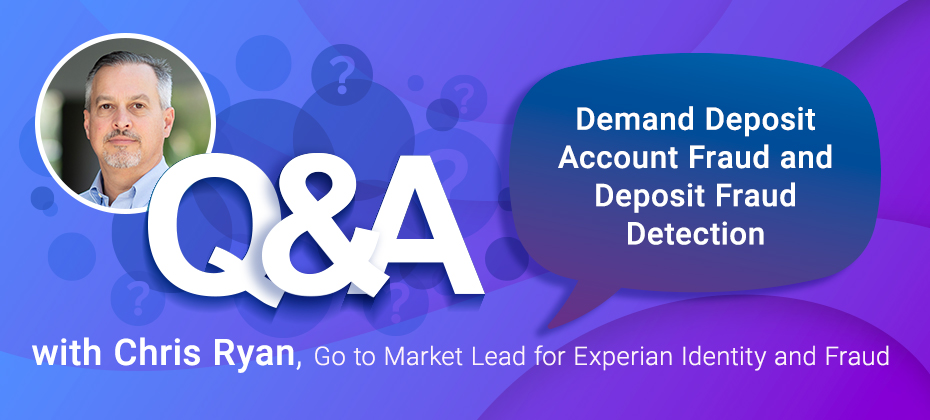
Financial institutions are under increasing pressure to grow deposits and onboard more demand deposit accounts (DDA). But as demand increases, so do fraud attempts from scammers. While a robust mitigation effort is needed to stop fraud, this same effort can also drive away potential clients. In fact, 37 percent of U.S. adults said that they abandoned opening an account online due to experiencing friction. This leaves institutions in a unique quandary: how do they stop DDA fraud without scaring away potential clients? The answer lies in utilizing robust, machine learning tools that can help you navigate fraud attempts without increasing onboarding friction. Chris Ryan, Go to Market Lead for Experian Identity and Fraud, shares his thoughts on demand deposit account fraud and which decisioning tools can best combat it. Q: What is a demand deposit account and how is it used? "Demand deposit is just your basic checking account," Ryan explains." The funds are deposited and held by an institution, which enables you to spend those assets or resources, whether it be through checks, debit cards, person-to-person, Automated Clearing House (ACH) — all the things we do every day as consumers to manage our operating budget." Q: What is demand deposit account fraud? "There are two different ways that demand deposit account fraud works," Ryan says. "One is with existing account holders, and the other is with the account opening process.” When fraud affects existing account holders, it typically involves tricking an account holder into sending money to a scammer or using fraudulent actions, like phishing emails or credit card skimmers, to gain access to their accounts. There is also a resurgence in fraud involving duplication, theft and forgery of paper checks, Ryan explains. Fraud impacting the account opening process occurs when scammers originate new DDAs. This can work in a variety of ways, such as these three examples: A scammer steals your identity and opens an account at the same bank where you have a home equity loan. They link their DDA to your line of credit, transferring your money into their new account and withdrawing the funds. A scammer uses a synthetic identity (SID) to open a fraudulent DDA. They will then use this new DDA to open more lucrative accounts that the institution cross-sells to them. A scammer uses a stolen or SID to open “mule” accounts to receive funds they dupe consumers into sending through fake relationship schemes, bogus merchandise sales and dozens of similar scams. While both types of fraud need to be dealt with, account opening fraud can have especially large repercussions for lenders or financial institutions. Q: What are the consequences of DDA fraud for organizations? "Fraud hurts in a number of ways," Ryan explains. "There are direct losses, which is the money that criminals take from our financial system. Under most circumstances, the financial institution replaces the money, so the consumer doesn’t absorb the loss, but the money is still gone. That takes money away from lending, community engagement and other investments we want banks to make. The direct losses are what most people focus on." But there are even more repercussions for institutions beyond losing money, and this can include the attempts that institutions put into place to stop the fraud. "Preventing fraud requires some friction for the end consumer," Ryan says. "The volume of fraudulent attempts is overwhelmingly large in the DDA space. This forces institutions to apply more friction. The friction is costly, and it often drives would-be-customers away. The results include high costs for the institutions and low booking rates. At the same time, institutions are hungry for deposit money right now. So, it's kind of a perfect storm." Q: What is the impact of DDA fraud on customer experience? Experian’s 2023 Identity and Fraud Report revealed that up to 37 percent of U.S. adults in the survey had abandoned a new account entirely in the previous six months because of the friction they encountered during onboarding. And 51 percent reported considering abandoning the process because of problems they encountered. Unfortunately, fraud mitigation and deposit fraud detection efforts can end up driving customers away. "People can be impatient," Ryan says, "and in the online world, a competing product is a mouse-click away. So, while it is tempting to ask new applicants for more information, or further proof of identity, that conflicts with their need for convenience and can impact their experience.” Companies looking for cheap and fast mitigation can end up impeding customers trying to onboard to sweep out the bad actors, Ryan explains. "How do you get the bad people without interrupting the good people?" Ryan asks. "That's the million-dollar question." Q: What are some other problems with how organizations traditionally combat DDA fraud? Unfortunately, traditional attempts to combat DDA fraud are inefficient due to the fragmentation of technology. Ryan says this was revealed by Liminal, an industry analyst think tank. "Nearly half of institutions use four-or-more-point solutions to manage identity and fraud-related risk," Ryan explains. "But all of those point solutions were meant to work on their own. They weren't developed to work together. So, there's a lot of overlap. And in the case of fraud, there's a high likelihood that the multiple solutions are going to find the same fraud. So, you create a huge inefficiency." To solve this challenge, institutions need to shift to integrated identity platforms, such as Experian CrossCore®. Q: How is Experian trying to change the way organizations approach DDA fraud? Experian is pushing a paradigm shift for institutions that will increase fraud detection efficiency and accuracy, without sacrificing customer experience. "Organizations need to start thinking of identity through a different lens," Ryan says. Experian has developed an identity graph that aggregates consumer information in a manner that reaches far beyond what an institution can create on its own. "Experian is able to bring the entire breadth of every identity presentation we see into an identity graph," Ryan says. "It's a cross-industry view of identity behavior." This is important because people who commit fraud manipulate data, and those manipulations can get lost in a busy marketplace. For example, Ryan explains, if you're newly married, you may have recently presented your identity using two different surnames: one under your maiden name and one under your married name. Traditional data sources may show that your identity was presented twice, but they won’t accurately reflect the underlying details; like the fact that different surnames were used. The same holds true for thousands of other details seen at each presentation but not captured in a way that enables changes over time to be visible, such as information related to IP addresses, email accounts, online devices, or phone numbers. "Our identity graph is unlocking the details behind those identity presentations," Ryan says. "This way, when a customer comes to us with a DDA application, we can say, 'That's Chris's identity, and he's consistently presenting the same information, and all that underlying data remains very stable.'" This identity graph, part of Experian's suite of fraud management solutions — also connects unique identity details to known instances of fraud, helping catch fraudulent attempts much faster than traditional methods. "Let's say you and your spouse share an address, phone numbers, all the identity details that married couples typically share," Ryan explains. "If an identity thief steals your identity and uses it along with a brand-new email and IP address not associated with your spouse, that might be concerning. However, perhaps you started a new job, and the email/IP data is legitimate. Or maybe it’s a personal email using a risky internet service provider that shares a format commonly used by a known ring of identity thieves. Traditional data might flag the email and IP information as new, but our identity graph would go several layers deeper to confirm the possible risks that the new information brings. Q: Why is this approach superior to traditional methods of fraud detection? "Historically, organizations were interested in whether an identity was real,” Ryan says. "The next question was if the provided data (I.e., addresses, date of birth, Social Security numbers, etc.) have been historically associated with the identity. Last, the question would be whether there’s known risk associated with any of the identity components.” The identity graph turns that approach upside down. "The identity graph allows us to pull in insights from past identity presentations, " Ryan says. "Maybe the current presentation doesn’t include a phone number. Our identity graph should still recognize previously provided phone numbers and the risks associated with them. Instead of looking at identity as a small handful of pieces of data that were given at the time of the presentation, we use the data given to us to get to the identity graph and see the whole picture." Q: How are businesses applying this new paradigm? The identity graph is part of Experian's Ascend Fraud Platform™ and a full suite of fraud management solutions. Experian's approach allows companies to clean out fraud that already occurred and stop new fraudulent actors before they're onboarded. "Ideally, you want to start with cleaning up the house, and then figure out how to protect the front door," Ryan says. In other words, institutions can start by applying this view to recently opened accounts to identify problematic identities that they missed. The next step would be to bring these insights into the new account onboarding process. Q: Is this new fraud platform accessible to both small and large businesses? The Ascend Fraud Platform will support several use cases that will bring value to a broad range of businesses, Ryan explains. It can not only enable Experian experts to build and deliver better tools but can enable self-serve analytical development too. "Larger organizations that have robust, internal data science capabilities will find that it’s an ideal environment for them to work in," Ryan says. "They can add their own internal data assets to ours, and then have a better place to develop analytics. Today, organizations spend months assembling data to develop analytics internally. Our Ascend Fraud Platform will reduce the timeline of the data assembly and analytical development process to weeks, and speed to market is critical when confronting continually changing fraud threats. "But for customers who have less robust analytical teams, we're able to do that on their behalf and bring solutions out to the marketplace for them," Ryan explains. Q: What type of return on investment (ROI) are businesses experiencing? "Some customers recover their investment in days," Ryan says. "Part of this is from mitigating fraud risks among recently opened accounts that slipped through existing defenses.” "In addition to reducing losses, institutions we're working with are also seeing potentially millions of dollars a month in additional bookings, as well as significant cost savings in their account opening processes," Ryan says. "We're able to help clients go back and audit the people who had fallen out of their process, to figure out how to fine-tune their tools to keep those people in," Ryan says. “By reducing risks among existing accounts, better protecting the front door against future fraud, and growing more efficiently, we’re helping clients Q: What are Experian's plans for this service? "We're working with top-tier financial institutions on the do-it-yourself techniques," Ryan says. "In parallel, we're launching our first offerings that are created for the broader marketplace. That will start with the portfolio review capability, along with making the most predictive attributes available through our integrated identity resolution platform. And while the Ascend Fraud Platform has a strong use case for DDA fraud, its uses extend beyond that to small business lending and other products. In fact, Experian offers an entire suite of fraud management solutions to help keep your DDA accounts secure and your customers happy. Experian can help optimize your DDA fraud detection Experian is revolutionizing the approach to combating DDA fraud, helping institutions create a faster onboarding process that retains more customers, while also stopping more bad actors from gaining access. It's a win-win for everyone. Experian's full suite of fraud management solutions can optimize your business's DDA fraud detection, from scrubbing your current portfolio to gatekeeping bad actors before they're onboarded. Learn more Speak with a specialist About our expert: Chris Ryan has over 20 years of experience in fraud prevention and uses this knowledge to identify the most critical fraud issues facing individuals and businesses in North America, and he guides Experian’s application of technology to mitigate fraud risk.
Over the past few decades, the financial industry has gone through significant changes. One of the most notable changes is the use of alternative credit data1 for lending. This type of data is becoming increasingly essential in consumer and small business lending. In this blog post, we’ll explore the importance of alternative credit data and the insights you can gain from our new 2023 State of Alternative Credit Data Report. Benefits and uses of alternative credit data and alternative lending Alternative credit data and alternative financial services offer substantial benefits to lenders, borrowers, and society as a whole. The primary advantage of alternative credit data is that it provides a more comprehensive and accurate credit history of the borrower. Unlike traditional credit data that focuses on a borrower’s financial past, alternative credit data includes information from non-traditional sources like rent payments, full-file public records, utility bills, and income and employment data. This additional data allows you to gain a better understanding of financial behavior and assess creditworthiness more accurately.Alternative credit data can be used throughout the loan lifecycle, from underwriting to servicing. In the underwriting phase, alternative credit data can help lenders expand their pool of potential borrowers, especially those who lack or have limited traditional credit history. Additionally, alternative credit data can help lenders identify risks and minimize fraud. In the servicing phase, alternative credit data can help lenders monitor financial health and provide relevant services and an enhanced customer experience.Alternative lending is critical for driving financial inclusion and profitability. Traditional credit models often exclude individuals who have limited or no access to credit, causing them to turn to high-cost alternatives like payday loans. Alternative credit data can provide a more accurate assessment of their ability to pay, making it easier for them to access affordable credit. This increased accessibility improves the borrower's financial health and creates new opportunities to expand your customer base. “Lenders can access credit data and real-time information about consumers’ incomes, employment statuses, and how they are managing their finances and get a more accurate view of a consumer’s financial situation than previously possible.”— Scott Brown, President of Consumer Information Services, Experian State of alternative credit data Our new 2023 State of Alternative Credit Data Report provides exclusive insight into the alternative lending market, new data sources, inclusive finance opportunities and innovations in credit attributes and scoring that are making credit scoring more accurate, transparent and inclusive. For instance, the use of machine learning algorithms and artificial intelligence is enabling lenders to develop more predictive alternative credit scoring models and enhance risk assessment. Findings from the report include: 54% of Gen Z and 52% of millennials feel more comfortable using alternative financing options rather than traditional forms of credit.2 62% of financial institution firms are using alternative data to improve risk profiling and credit decisioning capabilities.3 Modern credit scoring methods could allow lenders to grow their pool of new customers by almost 20%.4 By understanding the power of alternative credit data and staying on top of the latest industry trends, you can widen your pool of borrowers, drive financial inclusion, and grow sustainably. Download now 1When we refer to “Alternative Credit Data,” this refers to the use of alternative data and its appropriate use in consumer credit lending decisions, as regulated by the Fair Credit Reporting Act. Hence, the term “Expanded FCRA Data” may also apply in this instance and both can be used interchangeably.2Experian commissioned Atomik Research to conduct an online survey of 2,001 adults throughout the United States. Researchers controlled for demographic variables such as gender, age, geographic region, race and ethnicity in order to achieve similar demographic characteristics reported in the U.S. census. The margin of error of the overall sample is +/-2 percentage points with a confidence level of 95 percent. Fieldwork took place between August 22 and August 28, 2023. Atomik Research is a creative market research agency. 3Experian (2022). Reaching New Heights with Financial Inclusion 4Oliver Wyman (2022). Financial Inclusion and Access to Credit

Automation, artificial intelligence and machine learning are at the forefront of the continued digital transformation within the world of collections. And organizations from across industries — including healthcare, financial services and the public sector — are learning how automated debt collection can improve their workflows and strategies. When implemented well, automation can ease pressure from call center agents, which can be especially important when there's a tight labor market and retention is top of mind for every employer. Automated systems can also help improve recovery rates while minimizing the risk of human error and the corresponding liability. These same systems can increase long-term customer satisfaction and lifetime value. Deeper insights into consumers' financial situations and preferences allow you to avoid wasting resources and making contact when consumers are truly unable to pay. Instead, monitoring and following up with their preferred contact method can be a more successful approach — and a better experience for consumers. Three tips for automated debt collection Automation and artificial intelligence (AI) aren't new to collections. You may have heard about or tried automated dialing systems, chatbots, text message services and virtual negotiators. But the following three points can be important to consider as the technology and compliance landscapes change. 1. Good automation depends on good data Whether you're using static automated systems to improve efficiencies or using a machine learning model that will adapt over time, the data you feed into the system needs to be accurate. The data can be internal, from call center agents and your customers, and external sources can help verify and expand on what you know. With your internal systems, consider how you can automate processes to limit human errors. For example, you may be able to auto-fill contact information for customers and agents — saving them time and avoiding typos that can cause issues later. External data sources can be helpful in several ways. You can use third-party data as a complementary resource to help determine the best address, phone number or email address to increase right-party contact (RPC) rates. External sources can also validate your internal data and automatically highlight errors or potentially outdated information, which can be important for maintaining compliance. Robust and frequently updated datasets can make your collection efforts more efficient and effective. An automated system could be notified when a debtor resurfaces or gets a new job, triggering new reminders or requests for payment. And if you're using the right tools, you can automatically route the account to internal or external servicing and prioritize accounts based on the consumer's propensity to pay or the expected recovery amount. LEARN MORE: Advanced analytics involves using sophisticated techniques and tools to analyze complex datasets and extract valuable insights. Learn about the benefits of advanced analytics in delinquent debt collection. 2. Expand consumers' communication options and choices Your automated systems can suggest when and who to contact, but you'll also want them to recommend the best way to contact consumers. An omnichannel strategy and digital-first approach is increasingly the preferred method by consumers, who have become more accustomed to online communications and services. In fact, companies with omnichannel customer engagement strategies retain on average 89% of their customers compared to 33% of retention rates for companies with weak omnichannel strategies. Organizations can benefit by using alternative communication methods, such as push notifications, as part of an AI-driven automated process. These can be unobtrusive reminders that gently nudge customers without bothering them, and send them to self-cure portals. Many consumers may need to review the payment options before committing — perhaps they need to check their account balances or ask friends or family for help. Self-service options through an app or web portal can give them choices, such as a single payment or payment plan, without having to involve a live agent. 3. Maintaining compliance must be a priority Organizations need to be ready to adjust to a rapidly changing compliance environment. Over the last few years, organizations have also had to react to changes that can impact Telephone Consumer Protection Act (TCPA) compliance. The automated systems you use should be nimble enough to comply with required changes, and they should be able to support your overall operation's compliance. In particular, you may want to focus on how automated systems collect, verify, safeguard and send consumers' personal information. Why partner with Experian? Whether you're looking to explore or expand your use of automated systems in your collection efforts, you want to make sure you're taking the right approach. Experian helps clients balance effective collections and a great customer experience within their given constraints, including limited budgets and regulatory compliance. The Experian Ascend Intelligence Platform and Experian Decisioning solutions are also making AI-driven automated systems accessible to more lenders and collectors than ever before. Taking a closer look at Experian's offerings, we can focus on three particular areas: Industry-leading data sources Experian's data sources go well beyond the consumer credit database, which has information on over 245 million consumers. Clients can also benefit from alternative financial services data, rental payment data, modeled income estimates, information on collateral and skip tracing data. And real-time access to information from over 5,000 local exchange carriers, which can help you validate phone ownership and phone type. Tools for maximizing recovery rates Experian helps clients turn data into insights and decisions to determine the best next step. Some of Experian's offerings include: Collection AdvantageSM: A one-stop shop for comprehensive and efficient debt collection, Collection AdvantageSM allows you to segment, prioritize and make contact on collections accounts by leveraging speciality collection scoring models. PriorityScore for CollectionsSM: Over 60 industry-specific debt recovery scores that can help you prioritize accounts based on the likelihood to pay or expected recovery amount. RecoveryScore 2.0: Helps you prioritize charged-off accounts based on collectability. TrueTrace™ and TrueTrace Live™: Find consumers based on real-time contact information. We've seen a 10 percent lift in RPC with clients who use Experian's locating tools, TrueTrace or TrueTrace Live. Collection Triggers℠: Sometimes, waiting is the best option. And with an account monitoring tool like Collection Triggers℠, you'll automatically get notified when it makes sense to reach out. RPC contact scores: Tools like Phone Number ID™ and Contact Monitor™ can track phone numbers, ownership and line type to determine how to contact consumers. Real-time data can also increase your RPC rates while limiting your risk. LEARN MORE: See how Collection Triggers can help you establish a more profitable debt collection strategy to increase recovery rates. You can use these, and other, tools to prioritize collection efforts. Experian clients also use different types of scores that aren't always associated with collections to segment and prioritize their collection efforts, including bankruptcy and traditional credit-based scores. Custom models based on internal and external scores can also be beneficial, which Experian can help you build, improve and house. Prioritize collections activities with confidence Collections optimization comes down to making the right contact at the right time via the right channel. Equally important is making sure you're not running afoul of regulations by making the wrong contact. Experian's data standards and hygiene measures can help you: Identify consumers who require special handling Validate email addresses and identify work email addresses Get notified when a line type or phone ownership changes Append new contact information to a consumer's file Know when to reach out to consumers to update contact information and permissions Recommend the best way to reach consumers Automated tools can make these efforts easier and more accurate, leading to a better consumer experience that increases the customer's lifetime value and maximizes your recovery efforts. Learn more

Consumer debt topped $17 trillion in the first quarter of 2023 — an increase of almost $3 trillion compared to 20191 — with challenging inflation levels, increases in consumer demand and low unemployment levels leading consumers to spend.2 A significant portion of mortgages, auto loans and leases, credit card debt and student loans aren't paid on time. Recent data reveals that 2.6 percent of accounts in the U.S. are delinquent1, with 175 million consumer credit reports showing past-due accounts.3 More debt means more pressure on collection agencies, requiring effective strategies to collect on delinquent accounts. Implementing effective debt collection strategies is especially crucial in the face of challenges like staff shortages, regulatory pressures and the declining success of outbound calling.4 The approach to successful debt collection has changed. Debt collectors and agencies that implement these debt collection techniques and debt recovery tools can improve their performance and bottom line. Debt collection techniques that work Leverage data Outdated approaches to collections ignore consumer contact preferences. Research shows that credit card customers with overdue balances prefer to be contacted via email or text (SMS) over phone calls. Among those with low credit scores and balances under $1,000, 56% preferred emails compared to 18% who preferred to be contacted about their delinquent debt over the phone.5 Data analytics allow you to segment customers based on the amount owed, payment histories, credit scores and past behaviors. This information makes it easier to target those most likely to repay their debt and offer personalized, pre-approved debt solutions. Customers with delinquent debt who preferred digital contact over traditional channels, like phone and mail, were up to 30% more likely to make a payment when debt collectors made contact through a digital channel.4 By leveraging data and analytics, you can create a contact management strategy that increases efficency and profitability. Embrace automation Using digital tools can help streamline the debt collection process. Automation, data, analytics and artificial intelligence (AI) make it easier to create customer profiles and enhance account prioritization.4 Incorporating self-service debt collection options is also essential. Customers want to learn about their options, set up their payment terms and repayment schedules and address their debt at a convenient time via their preferred platform. Digital approaches can be helpful when recovering payments on accounts that are more than 30 days overdue. Research shows that 73% of customers contacted via digital channels for overdue accounts made at least a partial payment compared with just 50% who were contacted via traditional channels.6 Overall, digital-first approaches have been linked to a 25% increase in the resolution of accounts that are more than 30 days past due, a 15% reduction in collections cost and customer engagement levels that are five times higher than traditional collections methods.7 Investments in automation and other digital tools are necessary to replace outdated methods of debt collection that don’t put customers first or place an extra burden on staff. Prioritize the customer experience Leveraging data for customer segmentation is not the only way debt collectors can increase recovery rates. Delivering personalized debt solutions that are proactive, fair and customer-focused is also essential to achieving higher recovery returns.5 Predictive analytics provide insight into customer behavior, making it easier to identify those who need additional support and allowing debt collectors to be responsive to their needs.5 Collections used to be a linear process, but with customer migration to digital — with 64% of consumers using more than four devices per day — collectors need to rethink their approach.8 Consumers expect convenient interactions and relevant communications. Debt collectors that prioritize omnichannel communications can make debt repayment more convenient, resulting in improved customer retention. Remain compliant Digital tools have made it easier for debt collectors to connect with consumers, but legal compliance is still essential. In 2021, the Consumer Finance Protection Bureau (CFPB) passed Regulation F (Reg F) to govern electronic communications for debt collections. The regulations state that electronic communication, including email, text messages and social media, are allowed with direct consent from the consumer; limits on call frequencies do not apply to electronic communications but contacting consumers at inconvenient times and general harassment are still prohibited. Opt-out notices that are clear and prominent are required in all electronic communications.9 Predictive analytics and process automation can also play a role in minimizing regulatory risk by reducing gaps in the contact strategy and helping debt collectors avoid fines. Debt collectors face significant challenges in recovering delinquent debt. A digital-first strategy that prioritizes the customer experience while remaining compliant is essential. Why partner with Experian Increased automation, self-service processes and individualized approaches allow you to focus on accounts with the greatest recovery potential while minimizing charge-offs and ensuring compliance. Implementing an efficient and effective collections prioritization strategy can require a lot of work, but you don’t have to go at it alone. Experian offers various debt collection solutions that can help optimize processes and free up your organization’s resources and agents’ time. Learn more about our debt collection techniques 1Federal Reserve Bank of New York. “Quarterly Report on Household Debt and Credit." 2Experian. “Average Consumer Debt Levels Increase in 2022."Published February 24, 2023. Accessed July 31, 2023.3Consumer Financial Protection Bureau. “Market Snapshot: An Update on Third-Party Debt Collections Tradelines Reporting.” Published February 2023. Accessed July 31, 2023.4McKinsey & Company. “Going digital in collections to improve resilience against credit losses.” Published April 29, 2019. Accessed July 31, 2023.5EY. “Five ways banks can transform their collections processes.” Published November 19, 2020. Accessed July 31, 2023.6McKinsey & Company. “The customer mandate to digitize collections strategies." Published July 29, 2019. Accessed July 31, 2023.7McKinsey & Company. “Holistic customer assistance through digital-first collection.” Published May 21, 2021. Accessed July 31, 2023.8Consumer Finance Protection Bureau. “1006.6 Communications in connection with debt collection." Published November 30, 2021. Accessed July 31, 2023

It's no secret that the banking industry is essential to a thriving economy. However, the nature of the industry makes it prone to various risks that can have significant consequences. Therefore, effective and efficient risk management is vital for mitigating these risks and enhancing the stability of the banking sector. This is where risk management in banking comes in. Let’s look at the importance of risk management in banking and its role in mitigating risks in the industry. What is risk management in banking? Risk management in banking is an approach used by financial institutions to manage risks associated with banking operations. Establishing a structured risk management process is essential to identifying, evaluating and controlling risks that could affect your operations. The process involves developing and implementing a comprehensive risk management framework consisting of several components, including risk assessment, mitigation, monitoring and reporting. Importance of banking risk management Banks face risks from every angle – changing customer behaviors, fraud, uncertain markets, and regulatory compliance, making banking risk management critical for the stability of financial institutions. There are various risks associated with the industry, including: Credit risk: The probability of a financial loss resulting from a borrower's failure to repay a loan, which results in an interruption of cash flows and increased costs for collection. How to mitigate: Leverage advanced analytics, data attributes, and predictive models to improve predictability, manage portfolio risk, make better decisionsand acquire the best customers. Market risk:The likelihood of an investment decreasing in value because of market factors (I.e., changes in interest rates, geopolitical events or recessions). How to mitigate: While it is impossible to eliminate market risk, you can diversify your assets, more accurately determine your risk threshold and stay informed on economic and market conditions. Liquidity risk:The risk that an organization cannot meet its short-term liabilities and financial payment obligations. How to mitigate: More regularly forecast your cash flow and conduct stress tests to determine potential risk scenarios that would cause a loss of liquidity and how much liquidity would be lost in each instance. Operational risk:Potential sources of losses that result from inadequate or failed internal processes (I.e., poorly trained employees, a technological breakdown, or theft of information). How to mitigate: Hire the right staff and adequately train them, stay up to date with cybersecurity threats and automate processes to reduce human error. Reputational risk: The potential that negative publicity regarding business practices, whether true or not, will cause a decline in the customer base, costly litigation or revenue reductions. How to mitigate: Define your bank’s core ethical values and relay them to stakeholders and employees. You should also develop a reputational management strategy and contingency plan in case a reputation-affecting incident occurs. Risk management in banking best practices Successful banks embrace risks while developing powerful mechanisms to prevent or manage them and stay ahead. By taking a proactive approach and leveraging risk management tools, you can minimize losses, enhance stability and grow responsibly. The steps for implementing a banking risk management plan, include: Risk identification and assessment: Financial institutions need to identify potential risks associated with their operations and assess the severity and impact of these risks. Risk mitigation: Once risks have been identified and assessed, financial institutions can implement strategies to mitigate the effects of these risks. There are several strategies for risk mitigation, including risk avoidance, reduction, acceptance and transfer. Risk monitoring and reporting: One of the fundamental principles of a banking risk management strategy is ongoing monitoring and reporting. Financial institutions should continually monitor their operations to identify evolving risks and develop mitigation strategies. Generating reports about the progress of the risk management program gives a dynamic view of the bank’s risk profile and the plan’s effectiveness. Several challenges may arise when implementing a risk management strategy. These include new regulatory rules or amendments, cybersecurity and fraud threats, increased competition in the sector, and inefficient resources and processes. An effective risk management plan serves as a roadmap for improving performance and allows you to better allocate your time and resources toward what matters most. Benefits of implementing a risk management strategy Banks must prioritize risk management to stay on top of the various critical risks they face every day. There are several benefits of taking a proactive approach to banking risk management, including:Improved efficiency: Enhance efficiency and deploy more reliable operations by identifying areas of weakness or inefficiencies in operational processes.Confident compliance: Ensure you comply with new and amended regulatory requirements and avoid costly fines. Enhanced customer confidence: Foster customer confidence to increase customer retention and mitigate reputational risk. Partnering to reduce risk and maximize growth Effective risk management is crucial for mitigating risks in the banking industry. By implementing a risk management framework, financial institutions can minimize losses, enhance efficiency, ensure compliance and foster confidence in the industry. At Experian, we have a team of experts dedicated to supporting our banking partners. Our team’s expertise paired with our innovative solutions can help you implement a powerful risk management process, as well as: Leverage data to reach company-wide business goals. Lower the cost of funds by attracting and retaining deposits. Protect your business against fraud and risk. Create less friction through automated decisioning. Grow your business portfolio and increase profitability. Learn more about our fraud and risk management solutions for banks. Learn more

Credit risk refers to the likelihood that a borrower will fail to repay a debt as agreed. Credit risk management is the art and science of utilizing risk mitigation tools to minimize losses while maximizing profits from lending activities. Lenders can establish credit underwriting criteria for each of their products and utilize risk-based pricing to adjust the terms of a loan or line of credit based on the risk associated with the product and borrower. Credit portfolio management extends beyond originations and individual decisions to encompass portfolios as a whole. Why is credit risk management important? Continuously managing credit risk matters because there's always a balancing act. Tightening a credit box – using more restrictive underwriting criteria – might reduce credit losses. However, it can also decrease approval rates, excluding borrowers who would have repaid as agreed. Expanding a credit box might increase approval rates, but it is only beneficial if the profit from good new loans exceeds credit losses. Fraud is also on the rise and becoming increasingly complex, making fraud management a crucial part of understanding risk. For instance, with synthetic identity fraud, fraudsters might “age an account" or make on-time payments before “busting out” or maxing out a credit card, and then abandoning the account. If you examine payment activity alone, it may be challenging to classify the loss as either a fraud loss or a credit loss. Additionally, external economic forces and consumer behavior are constantly in flux. Financial institutions need effective consumer risk management and to adjust their strategies to minimize losses. And they must dynamically adjust their underwriting criteria to account for these changes. You could be pushed off balance if you don't react in time. What does managing credit risk entail? Lenders have used the five C’s of credit to measure credit risk and make lending decisions for decades: Character: The likelihood a borrower will repay the loan as agreed, often measured by analyzing their credit report and a credit risk score. Capacity: The borrower's ability to pay, which lenders might measure by reviewing their outstanding debt, income, and debt-to-income ratio. Capital: The borrower's commitment to the purchase, such as their down payment when buying a vehicle or home. Collateral: The value of the collateral, such as a vehicle or home, for an auto loan or mortgage. Conditions: The external conditions that can impact a borrower's ability to afford payments, such as broader economic trends. Credit risk management considers these within the context of a lender’s goals and its specific lending products. For example, capital and collateral aren't relevant for unsecured personal loans, which makes character and capacity the primary drivers of a decision. Credit risk management best practices at origination Advances in analytics, computing power and real-time access to additional data sources are helping lenders better measure some of the C’s. For example, credit risk scores can more precisely assess character for a lender's target market than generic risk scores. Open banking data enables lenders to more accurately assess a borrower's capacity by directly analyzing their cash flows. With these advances in mind, leading lenders: View underwriting as a dynamic process: Lenders have always had to respond to changing forces, and the pandemic highlighted the need to be nimble. Consider how you can utilize analytical insights to quickly adjust your strategies. Test the latest credit risk modeling techniques: Artificial intelligence (AI) and machine learning (ML) techniques can improve credit risk model performance and drive automated credit risk decisioning. Use multiple data sources: Alternative credit data and consumer-permissioned data offer increased and real-time visibility into borrowers' creditworthiness to help lenders more accurately assess credit risk. These additional data sources can score those who are unscoreable by conventional models and help fuel ML credit risk models. Experian helps lenders measure and manage credit risk Experian is a leading provider of traditional credit data, alternative credit data and credit risk analytics. For those who want to quickly benefit from the latest technological advancements, our Lift Premium credit risk model utilizes both traditional and alternative data to score up to 96 percent of U.S. consumers — compared to the 81 percent that conventional models can score.¹ Experian’s Ascend Platform and Ascend Intelligence Services™ can help lenders develop, deploy and monitor custom credit risk models to optimize their decisions. With end-to-end platforms, our account and portfolio management services can help you limit risk, detect fraud, automate underwriting and identify opportunities to grow your business. Learn more about credit risk management ¹Experian (2023). Lift Premium™ and Lift Plus™

Credit portfolio management has often involved navigating uncertainty, but some periods are more extreme than others. With the right data and analytics you can gain deeper insight into financial behaviors and risk to make better decisions and drive profitable growth. Along with access to an increasing amount of data, advanced analytics can help lenders more accurately: Forecast losses under different economic scenarios to estimate liquidity requirements. Identify fraud by detecting behaviors that could indicate identity theft, account takeover fraud, first-party or synthetic identity fraud. Incorporate real-time and alternative data,1 such as cash flow transaction data and specialty bureau data, in decisioning and scoring to accurately assess creditworthiness and expand your lending pool without taking on undue risk. Precisely segment consumers using internal and external data to increase automation during underwriting and identify cross-sell opportunities. Improve collections using AI-driven strategies and automated debt collection software to enhance operations and increase recovery rates. It’s imperative to take a proactive approach to portfolio monitoring. Monthly portfolio reviews with bureau scores, credit attributes and specialized scores — and using the results to manage credit lines and loan terms — are critical during volatile times. View our interactive e-book for the latest economic and consumer trends and learn how to set your portfolio up to succeed in any economic cycle. Download e-book 1"Alternative credit data" refers to the use of alternative data and its appropriate use in consumer credit lending decisions, as regulated by the Fair Credit Reporting Act. Hence, the term “expanded FCRA data" may also apply in this instance, and both can be used interchangeably.