Fraudsters are getting surprisingly good at onboarding. Sometimes, better than your customers.
Legitimate customers treat onboarding like an errand. They start an application between other tasks, get distracted, forget a password, switch devices, upload a document or come back later to finish. Their digital lives aren’t always linear, because real life isn’t either.
Fraudsters approach onboarding differently. For them, opening an account is the objective. Every interaction is designed to increase the odds of success.
The difference raises an uncomfortable question hanging over onboarding: What exactly are we rewarding?
When smooth becomes suspicious
Digital onboarding has traditionally rewarded experiences that feel smooth, consistent and complete. The challenge is that legitimate customers rarely behave that way.
Most people approach onboarding somewhere between mildly distracted and mildly annoyed. They pause halfway through because dinner is burning. They reopen an old account only to realize everything is attached to an email they made in college and, somehow, still use for airline receipts. Digital life accumulates history unevenly, because ordinary life does too.
Fraudsters have every reason to eliminate those inconsistencies. Applications may be rehearsed. Identity attributes are assembled deliberately. Contact points are prepared in advance. Every interaction is optimized to make the application appear credible.
Ironically, the qualities organizations often associate with confidence — clean submissions, steady progression and few corrections — can also describe applications that have been carefully engineered to pass inspection. The challenge isn't that smooth onboarding is meaningless. It's that smooth onboarding, by itself, doesn't tell the whole story.
Context changes interpretation
A smooth onboarding experience should be the beginning of the evaluation, not the end.
Behavior provides important context.
How someone moves through an application can reveal whether the experience feels naturally human or unusually orchestrated. Do they interact naturally? Do they hesitate, correct mistakes or navigate in ways that resemble ordinary human behavior? Or does the session appear unusually scripted, automated or repetitive?
Identity verification adds another layer.
Matching information across trusted sources, validating identity details and strengthening confidence in account creation remain important, particularly when onboarding decisions carry financial, fraud or customer experience consequences. But verification largely answers a point-in-time question: Does this information match right now?
A third layer comes from digital history. An inbox attached to years of airline receipts, loyalty accounts, subscription renewals, account recovery, financial notifications and familiar digital routines introduces a different kind of confidence. Legitimate digital identities leave behind patterns of persistence and engagement that develop gradually over time.
Fraudsters can assemble convincing identity attributes, but creating years of ordinary digital life is much harder.
Building confidence in an identity requires more than verifying information submitted during a single onboarding session. It requires understanding whether the identity reflects a broader history that supports what the application suggests.
A multilayered approach builds stronger identity confidence
No single signal can provide a complete view of identity risk. Organizations need multiple sources of confidence that reinforce one another. That's the thinking behind our approach: combining behavioral intelligence, identity verification and digital identity continuity into a more complete view of risk.
We bring these complementary layers together through:
• NeuroID adds behavioral context during onboarding and account creation, helping identify interaction patterns that may indicate automation, manipulation or coordinated fraud.
• Precise ID® strengthens identity verification and resolution by comparing applicant information with trusted identity data.
• AtData, recently added to our portfolio, contributes email-centered intelligence based on persistence, engagement and long-term digital history.
Together, these capabilities help organizations move beyond evaluating a single moment in time to understanding whether an identity is supported by consistent behavior, trusted identity data and an established digital history.
The future of fraud prevention isn't about rewarding the smoothest application. It's about recognizing the most trustworthy identity.
Fraudsters can rehearse an application. They can optimize an onboarding journey. They can even assemble convincing identity attributes.
What they can't easily manufacture is years of ordinary digital life.
That's why digital identity continuity has become an important layer of modern fraud prevention. Combined with identity verification and behavioral intelligence, it helps organizations distinguish between identities that simply look convincing and those supported by a history that is much harder to fake.
Learn more
Contact us
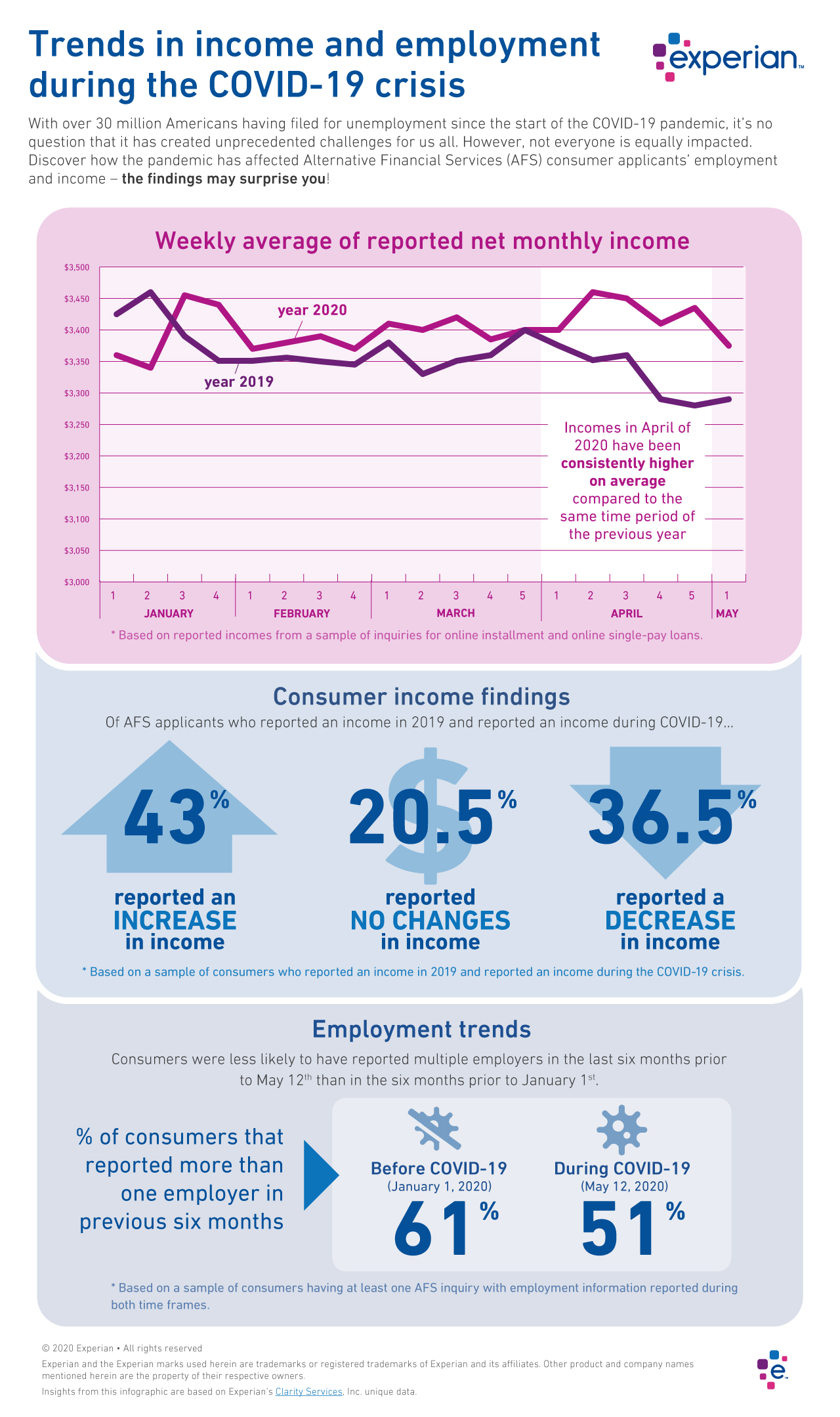 The COVID-19 pandemic has had far-reaching economic consequences, leading to drastic changes in consumers’ financial habits and behavior. When it comes to your consumers, are you seeing the full picture?