Latest Posts

Experian’s latest research shows that while 83% of U.S. consumers expect companies to address security and privacy concerns, branded retail sites have some of the widest trust gaps, more than a 30% difference between expectation and reality. This disconnect isn’t just theoretical; it drives real-world consequences like cart abandonment, dispute escalation and reputational damage. Online fraud is amplifying this erosion of consumer confidence. Identity theft and stolen credit card information remain top concerns for consumers, and when those fears materialize, the impact can be significant. A Mastercard study found that 91% of consumers would consider not doing business with a company again after experiencing fraud. For merchants, this isn’t just a customer experience issue; it’s a financial and operational crisis. Two-thirds of merchants report year-over-year increases in fraud losses, with account takeover and transactional payment fraud topping their list of stressors. Every dispute becomes a trust event, and when trust is damaged, chargebacks rise, fees climb and merchants risk being classified as high-risk, a label that can increase transaction costs and damage long-term profitability. “In today’s digital commerce landscape, trust isn’t just important. It’s the foundation of every successful interaction between consumers and merchants. As threats become increasingly sophisticated, it’s essential for businesses to make protecting consumer trust their top priority.”Dennis Gamiello, Executive Vice President of Identity, Mastercard One of the most visible symptoms of this trust gap is the surge in guest checkout. Consumers increasingly choose speed and privacy over account creation. 43% of consumers prefer guest checkouts, and 72% still use it even when they already have an account. While this behavior signals a desire for frictionless experiences with less data, it creates a challenge for merchants: fewer data insights make fraud harder to detect, so the most seamless checkouts aren’t always the most secure. Striking a balance between speed and security is key in today’s e-commerce landscape. “When there’s limited context and no persistent relationship, trust has to be established in real time. That exposes the limits of static credentials. Identity intelligence must lead, continuously assessing who’s behind the interaction and whether they can be confidently authenticated before the transaction completes. Payment tokenization, biometric authentication and tools like Click to Pay also reduce manual entry of sensitive data and reinforce security and convenience.”Dennis Gamiello, Executive Vice President of Identity, Mastercard The solution isn’t to force account creation; it’s to rethink security. Consumers want protection they can trust, but don’t want those security methods to slow down their digital experiences. Invisible security measures, such as behavioral analytics and passive identity verification, enable merchants to secure transactions without slowing them down. Our recently released report shows that half of merchants now use secondary devices to verify identity, signaling a shift toward frictionless security. Behavioral biometrics rank among the most trusted authentication methods, yet adoption remains slow. “Security today means investing in invisible tools consumers expect merchants to have, solutions that detect signals almost impossible to spoof. These capabilities are critical for addressing top concerns like identity theft and stolen credit card abuse. They allow merchants to protect trust without adding friction.”Nash Ali, Vice President of Operational Strategy, Experian What does that mean in practice? It means ensuring the purchaser truly owns the identity data and payment method they provide. Advanced fraud detection layers behavioral, device and network intelligence atop rich identity verification tools, like Mastercard’s Identity Insights via Experian’s orchestration platform, and payment ownership verification data to spot anomalies in real time, even at guest checkout. “By analyzing interaction patterns such as typing cadence, hesitation, and copy-paste behavior, merchants can distinguish genuine users from bots or synthetic identities without collecting personal information. And with passive card verification, merchants can confirm card ownership instantly, reducing false declines and preventing fraud, all while preserving privacy and speed.”Jose Pallares, Senior Director of Payments and E-commerce products, Experian Building trust isn’t just meeting expectations; it’s anticipating threats and investing in technologies that make fraud detection seamless and invisible. For merchants, this isn’t only about reducing fraud; it’s about avoiding the downstream costs of disputes and chargebacks that erode margins and operational efficiency. First-party fraud is contributing to an increase in disputes, which can affect financial performance and customer trust. As we move into part two, we’ll explore why these challenges are escalating, how they impact merchant profitability, and what proactive strategies, from dispute intelligence to enhancing transaction clarity, can help businesses fight back and protect trust at scale. Learn more Coming soon: Part two: Fighting back against first-party fraud – from chargebacks to checkout safeguards

Not long ago, every online transaction shared a simple assumption: there was a human on the other side of the screen. Someone browsing, clicking and confirming a purchase. That assumption is starting to break. Today, Artificial Intelligence (AI) agents can search for products, compare options, make payments and even complete transactions on behalf of users, without the need for human supervision. This shift, often called agentic commerce, is redefining how decisions are made and how transactions occur. But it also introduces a new and urgent question: how do you trust something that isn’t human? That’s where Know Your Agent (KYA) comes in. Understanding Know Your Agent At its core, Know Your Agent is a framework for establishing trust in AI-driven interactions. It extends traditional identity verification into a world where software, not people, is acting. Instead of asking “Who is the customer?”, KYA asks a broader question: Who is this agent, who is it acting for and is it authorized to act? In practice, KYA connects three critical elements: The human A verified individual The agent The authenticated AI agent acting on behalf of the consumer The intent What the agent is trying to do as instructed by the consumer This connection ensures that every action taken by an AI agent can be traced back to a real, verified person and that the action itself is legitimate. Why KYA is emerging now The rise of AI agents isn’t theoretical; it’s already happening. From shopping assistants to financial co-pilots, agents are beginning to act autonomously in ways previously reserved for humans. But this evolution exposes a gap in today’s trust models. Most fraud prevention, identity verification and risk systems are designed to evaluate human behavior. Additionally, most merchant checkout processes use risk controls focused on identifying the consumer interacting with the merchant site or application (app). When an AI agent initiates a transaction, those signals become harder to interpret. Is it a trusted assistant acting on behalf of a real customer, or a sophisticated bot attempting fraud? KYA is emerging to solve exactly this problem. A new trust layer for agentic commerce Agentic commerce changes not just who transacts, but how trust is established. In a traditional transaction, trust is built through familiar signals, such as login credentials, device data, location data and behavioral patterns. In an agent-driven interaction, those signals are abstracted away. The agent acts, but the human intent sits behind it. Know Your Agent introduces a new trust layer that bridges this gap. It allows businesses to answer critical questions in real time: Who is the consumer behind the agent? Is this authenticated agent linked to that consumer? Has the user authorized this specific action? Is the agent behaving consistently and within its permissions? Can this transaction be trusted? Without these answers, agentic commerce introduces risks like fraud, misrepresentation and unauthorized activity. With KYA, those risks become manageable and, more importantly, scalable. From KYC to KYA: an evolution of identity For decades, organizations have relied on Know Your Customer (KYC) to verify people and reduce fraud. But KYC alone isn’t enough in a world where AI agents act independently. KYA doesn’t replace KYC; it builds on it. If KYC verifies the individual, KYA verifies the relationship between the individual and the agent acting on their behalf. It adds context, continuity and accountability to every interaction and both are necessary for safe, agentic commerce. In other words, KYC answers who you are. KYA answers who (or what) is acting for you, and whether it should be trusted. ConceptKnow Your Customer (KYC)Know Your Agent (KYA)FocusHuman identityAI agent identity PurposePrevent fraud, ensure compliance Enable safe automation and delegationEntity verifiedIndividual or business Agent + human + authorizationScopeStatic identity checks Dynamic identity + behaviors + permissions How KYA works in practice While the concept is still evolving, most KYA approaches share a common goal: creating a verifiable chain of trust between humans and AI agents. This typically involves: Establishing a secure and auditable link between a verified person and their agent Confirming that the agent is authorized to act within defined permissions Continuously evaluating behavior and risk over time Ensuring a verified connection between humans and AI agents confirms that agent-initiated transactions are grounded in real identity. Why KYA matters for businesses For organizations, KYA is more than a security concept; it’s an enabler of growth. As agentic commerce expands, businesses will increasingly interact with AI agents as a new customer base. Those who can confidently verify and trust these interactions will be able to: Accept agent-initiated transactions with lower risk Reduce friction for legitimate users Unlock new, automated customer experiences Those that can’t may find themselves required to block or challenge these interactions, limiting adoption and missing out on emerging revenue streams. The reality is simple: agentic commerce will not scale without trust. Bringing it to life with Experian® Agent TrustTM This is exactly the challenge we’re addressing with our first-of-its-kind framework, Experian® Agent TrustTM. Experian Agent Trust is designed to create a secure, verifiable link between consumers and the AI agents acting on their behalf, bringing identity, intent and accountability into AI-driven transactions. At the center of this approach is Human-to-Agent Binding, which connects a verified individual, their device and their AI agent. This binding is recorded in Experian’s Agent Trust Registry and creates a persistent trust signal that allows businesses to understand exactly who is behind every agent-driven action. By grounding agent activity in verified identity, we are extending our expertise in fraud prevention and identity verification into the next era of commerce, one where AI agents don’t just assist, but act. The future of trust starts with knowing your agent As AI agents grow more capable, they won’t just support transactions, they’ll initiate them, negotiate them and complete them autonomously. This evolution demands a new foundation for trust, one that extends beyond verifying customers to understanding and validating the agents acting on their behalf. As agentic commerce accelerates, organizations that embrace Know Your Agent (KYA) will be better equipped to innovate with confidence, scale responsibly and strengthen trust at every interaction. Learn more about Experian Agent Trust

The automotive market is entering a new phase defined not just by what consumers are buying, but by how they’re choosing to finance it. According to Experian Automotive’s State of the Automotive Finance Market Report: Q1 2026, nearly one-third (35.55%) of all new vehicle loans now stretch more than six years, up from 30.83% in Q1 2025. Similarly on the used side, 31.54% of loans extended more than six years, an increase from 28.60% last year. The shift highlights why affordability is reshaping how consumers are financing their vehicles, particularly in larger and higher-priced vehicles. Refinancing gains traction as interest rates stabilize In addition to longer-term loans, consumers are becoming increasingly deliberate with their financing decisions and managing monthly payments as refinancing activity has gained momentum. For instance, consumers who refinanced this quarter lowered their interest rate by 2.2% and saved an average of $81 on their monthly payment. Credit unions, in particular, continued to play a major role in helping consumers secure more affordable payment options. In Q1 2025, credit unions accounted for the lion’s share of automotive refinancing at 63.43%, from 62.31% a year ago. By comparison, banks went from 23.51% to 22.59% year-over-year. Furthermore, those who refinanced with a credit union saved an average of $101 this quarter, whereas those who refinanced with banks saved $60. Expanding credit access through flexible financing Another notable trend this quarter was the incessant growth in subprime financing as credit accessibility across the market continues to increase. In the first quarter of this year, subprime borrowers made up 15.75% of total vehicle financing, from 14.40% last year. For new vehicles in particular, the subprime market went from 5.61% to 6.88% year-over-year, while subprime in used vehicle financing grew to 20.60% this quarter, from 19.36% a year ago. Increased activity in the subprime segment highlights continued confidence in the automotive market and underscores the importance of expanded financing options. As consumers seek greater flexibility with financing decisions that fit their lifestyle, lenders and dealers have the opportunity to approach them with more personalized solutions. These trends are helping keep both new and used vehicle markets moving forward, while creating new opportunities for consumers to manage payments and purchase confidently. To learn more about automotive finance trends, view the full State of the Automotive Finance Market Report: Q1 2026 presentation on demand.

Trigger leads have long been the preferred solution for identifying high-intent mortgage borrowers. But with the implementation of the Homebuyers Privacy Protection Act (HPPA), which introduces new limitations and consumer protections around trigger leads, that playbook will need to shift. Now, lenders are quickly facing a pivotal shift in how they discover, engage, and convert prospective borrowers into customers. The industry now stands at a crossroads. Lenders who adapt early—leaning into predictive tools, consent-based engagement, and smarter prescreening—will redefine borrower acquisition in a more privacy-centric era. HPPA: A structural change to mortgage marketing The HPPA amends the Fair Credit Reporting Act by significantly restricting the use of mortgage inquiries for prescreen purposes. As of March 5, 2026, credit bureaus may only provide or utilize mortgage inquiries to: End users with explicit borrower consent The originator of the consumer’s current mortgage The servicer of the consumer’s current mortgage An insured depository institution or credit union where the consumer has an existing account While these exemptions may provide continuity for banks and credit unions, many mortgage brokers and nonbank lenders will need to overhaul their prescreen practices—or risk being cut off entirely from a previously high-performing acquisition channel. Why this isn’t just a compliance shift—It’s a strategic recalibration Mortgage triggers in prescreen allow lenders to react instantly to consumer intent. Lenders rely on a prompt and convincing narrative to entice applicants to switch lenders. Mortgage inquiry triggers are effective and were, therefore, a prospecting strategy for many lenders. Recent legislative changes significantly restrict the availability of these inquiry triggers, and impacted lenders are focusing on a more intentional prospecting strategy to compete. Without these mortgage triggers in prescreen, lenders need to ask: Who are we trying to reach? What early signals can we act on? How do we earn permission and attention before a mortgage inquiry ever happens? Transforming the funnel: From reaction to anticipation The shift in mortgage inquiry-based prescreen isn’t the end of high-intent lead targeting. It’s the beginning of a more strategic and intentional approach—one that leverages earlier indicators of mortgage readiness and focuses on building relationships, not just closing transactions. Here’s where the momentum is evolving, creating a new and smarter funnel: Prescreen marketing: Using credit and behavioral attributes to help identify consumers who meet specific lending criteria before they signal active intent. Predictive modeling: Leveraging propensity scores or custom models to prioritize outreach based on conversion likelihood. Consent-based engagement: Implementing compliant mechanisms to capture and manage borrower opt-ins at scale. The power of predictive modeling According to recent industry interviews, propensity modeling is emerging as one of the most effective replacements for trigger-based prescreen. These models analyze hundreds of credit attributes—such as utilization, account mix, account age, and depth—to help identify consumers statistically more likely to seek a mortgage. For lenders just beginning to use predictive modeling, off-the-shelf models can be a quick way to identify potential borrowers. For example, when layering propensity scores on top of credit eligibility, which can improve borrower targeting, many lenders see an increase in open mortgage loan rates. Meanwhile, custom-built models, which analyze a lender’s own campaign performance over time, offer the highest level of precise targeting. These models isolate the attributes most predictive of conversions within a specific product mix—optimizing not just volume, but fit. Speed without traditional triggers? It’s possible One of the biggest concerns among lenders is maintaining the speed historically enabled by trigger leads. But that concern may be overblown. Self-service prescreen platforms now allow marketers to generate qualified lead lists in as little as 24 hours, enabling rapid response during rate drops, competitive shifts, or seasonal demand spikes. For those new to prescreening, batch campaigns still offer value, especially with analyst support. Don’t overlook retention In an era of intense acquisition competition, retention becomes a key differentiator. Lenders who monitor property status, cash flow, and consumer credit behavior can proactively identify when an existing borrower is likely to list, refinance, or exit. Armed with that intelligence, lenders can re-engage with the borrower at the right moment—sometimes before a competitor is considered or contacted. This level of behavioral intelligence may soon separate proactive lenders from reactive ones. Actions instead of reactions The evolution of trigger-based prescreen doesn’t just require new tools; it demands new thinking. Lenders should begin by auditing their current pipelines and determining: What percentage of our acquisition is dependent on triggers? What share of our book falls under the HPPA exemptions? How will we scale compliant opt-in collection? Are our current prescreen or modeling capabilities future-ready? Those who answer these questions today—and act on them—won’t just be in compliance with the new laws, they’ll lead in a transformed market. Lenders should also be asking: Do we have the infrastructure to collect and act on borrower consent? Are our acquisition teams equipped to run prescreen campaigns — both batch and self-service? What predictive models are we using (or could we use) to prioritize leads? Are we proactively monitoring our portfolio to catch retention risks early? How are we preparing our sales teams for longer, more consultative buying journeys? Conclusion The HPPA signals a shift away from relying on passive, inquiry-based prescreen acquisition and the beginning of smarter, more strategic engagement with potential borrowers. Lenders who embrace this transition early will find themselves not just compliant, but competitive—with deeper borrower insights, better conversion rates, and stronger long-term customer relationships. The market is moving. The only question is: will you lead the change or chase it? Citation Experian. (2025, November). Interview: How the Homebuyers Privacy Protection Act is reshaping mortgage marketing—and what lenders should do now [transcript]. Experian Mortgage Insights. Insights based on lender feedback, campaign performance data, and analysis of prescreen marketing strategies and predictive modeling outcomes were gathered from Experian client engagements and internal mortgage analytics between May and October 2025. Homebuyers Privacy Protection Act timeline and legal context referenced from legislation signed September 5, 2025, with implementation beginning March 5, 2026.

When an employee's identity is stolen, the damage rarely stays contained to their personal life. It spills into the workplace, quietly, persistently and at real cost to employers. Identity theft triggers a cascade of financial consequences that employees are seldom equipped to handle. These include damaged credit scores, unauthorized accounts and unexpected debt. According to a recent report, identity fraud victims report an average loss of 200 hours when resolving fraud-related issues. This time is primarily consumed during business hours on calls to banks, credit bureaus and government agencies. Attention fragments. Focus deteriorates. Anxiety compounds. And because the financial consequences can drag on for months or even years, so does the distraction. This is what makes identity theft a workforce issue that impacts productivity and the bottom line, not just a personal one. For employee benefit brokers advising employers on benefits strategy, understanding this dynamic is critical. Brokers have an opportunity to reframe identity theft protection as a financial wellness solution that serves employees and employers alike, rather than simply positioning it as a cyber product. Compounding the financial stress of employees Even before fraud enters the picture, employee financial stress is one of the most significant and underappreciated drains on organizational performance. One study found that 62% of employees report that moderate-to-severe financial stress affects their productivity, with three out of four saying it affects their work motivation. Another study found that 84% of employees reported that financial stress left them exhausted and burned out. For employees already under financial stress, when fraud hits, the problem is compounded dramatically and the workplace ends up absorbing the cost. These factors have changed how employees view employer benefits. In the past, a paycheck, basic health insurance, and a retirement plan were the benchmark for attracting employees. That threshold has moved. Today, 84% of employees feel their employer should be more actively involved in helping them navigate financial challenges.And 87% of workers say they would consider leaving an organization that doesn't prioritize their overall well-being. Employees are looking to their employers for help with financial stress, underscoring the importance of offering financial wellness programs that address these pressing concerns. For brokers, this is both a challenge and an opportunity. Offering identity theft solutions strictly as cyber products misses the bigger picture. There is an opportunity to position identity theft tools within a more comprehensive, integrated financial wellness program that addresses employees’ concerns about financial security and well-being. When employers offer benefits that proactively address employee concerns, they reduce distractions caused by financial stress, thereby improving productivity. The added advantage of a benefits package that includes a financial wellness program is the ability to be more competitive in attracting new talent while retaining existing employees, thus reducing churn. These benefits are hard for employers to ignore. Why financial wellness programs are effective Employee benefit brokers are well-positioned to explain to employers why financial protection for employees shouldn’t be limited to a single product or a monitoring alert but instead is more effective when part of a complete solution. A financial wellness program can provide the credit education employees need. For many employees, credit remains one of the most misunderstood forces shaping their financial lives, affecting their ability to qualify for loans, secure housing, lease a vehicle or even pass background checks for certain jobs. Credit education tools that provide real-time monitoring, personalized guidance and interactive learning resources help employees understand what's happening with their credit, why it matters and what they can do about it. The results of this type of education can be striking. Research shows that one in three users with scores below 800 move up a full credit band within 12 months of enrolling in credit tools. Employee financial wellness programs go beyond education. They provide employees with the tools to actively manage budgets, build savings, reduce debt and track their progress over time. Personalized dashboards, goal-setting features and proactive coaching turn passive awareness into active behavior change. This is important because only 44% of employees currently feel fully supported in their financial wellness. That's a meaningful opening for employers who want to differentiate. A financial wellness solution will also provide identity protection. This is where the workplace impact becomes most direct. Strong identity protection goes well beyond credit freezes or basic alerts. It includes real-time monitoring across the dark web, financial institutions and public records; instant notifications for suspicious activity; device-level security tools; lost wallet recovery support; and insurance coverage for resolution costs. When an employee's identity is compromised, the speed and quality of their recovery depend almost entirely on the infrastructure they had in place before the incident. A compromised identity often leads to credit damage, requiring financial rebuilding and demanding education and guidance. When these wellness capabilities are integrated into a single connected experience, employees don't just get an alert; they receive a clear path forward. The broker's role in closing the gap Employee desires for greater financial wellness support are increasing. Brokers who understand this shift are positioned to have a very different kind of conversation with employers. When brokers recognize that financial well-being is inseparable from workforce performance, they can bring solutions to employers that better serve the business as a whole. By framing identity protection not as a standalone add-on but as one integrated component of a broader financial health strategy, brokers can help employers see the full picture: the risk identity theft poses to productivity and morale, the inadequacy of fragmented point solutions and the competitive advantage of getting this right. Employees who feel financially secure are more focused, more loyal and more productive. For employers, offering benefits that support business outcomes is essential. An integrated benefits solution that connects credit health, financial wellness, and identity protection delivers a double win: protecting what matters now and accelerating what’s possible next. Want to explore how an integrated approach to employee financial protection could serve your clients? Visit our employee benefits resource hub

Customers rarely announce their departure. Instead, they quietly reduce engagement, move deposits and explore competing offers. By the time attrition shows up in reporting, competitors may have already captured meaningful wallet share. For lenders, the risk isn’t just lost accounts, it’s silent revenue erosion within relationships that still appear intact. The hidden risk in your portfolio Today’s consumers often hold less than half of their deposits or loans with a single provider. At the same time: Competition for prime borrowers continues to intensify. Cross-sell remains one of the most effective and efficient growth strategies available. Even small improvements in retention can drive outsized profitability gains. The opportunity is real, but only if you can see momentum early and act before competitors do. From static reviews to strategic signals Traditional monthly and quarterly reviews confirm what has already happened, but they rarely surface early indicators like emerging behavioral shifts or improving credit capacity. Modern portfolio management requires continuous visibility into behavioral signals, trended credit data and event-based triggers that highlight change as it happens. When you can see momentum forming, you can act with precision, intervene before balances leave, engage customers as capacity strengthens, and activate compliant prescreen cross-sell campaigns at the right moment. Our new interactive strategic snapshot outlines the modern approach to portfolio management, one that connects ongoing account review with timely, event-based signals, helping you protect, retain and grow high-value customers. Download it now to see how to turn early signals into stronger customer lifetime value. Read the snapshot

Smaller creditors often struggle to access reliable credit‑reporting solutions, as many available options frequently require technical integration, such as full Application Programming Interface (API) implementation or enterprise‑level approvals, creating barriers that small lenders cannot easily overcome. Minimum volume requirements further intensify the challenge, forcing smaller creditors to pay disproportionately high costs for the limited number of reports they need. As a result, the financial burden and operational complexity restrict their ability to compete, hindering growth and preventing them from adopting the same efficient, data‑driven processes available to larger institutions. Experian fully recognizes the need to empower smaller creditors and is proud to introduce a new capability, Experian Express, designed with these creditors in mind. Experian Express is a digital onboarding portal that fast-tracks the credentialing process for smaller creditors to gain access to Experian’s Credit Profile Report for the purpose of extending credit. Via a fully digital online process, users can choose from two plans tailored to the needs of community banks and credit unions. A new opportunity to build high-value relationships With Experian Express, credit unions and community banks can offer benefits to both consumer and business customers seeking access to credit. Consumers and businesses want more digital convenience, and a primary institution that can meet their needs in one place, as more than half of consumers who switch their primary bank hold over four checking relationships¹ and 55% of U.S. consumers say mobile apps are their most‑used method for managing bank accounts,² while customers across all age groups are curating financial services from multiple providers due to digital gaps at their primary institutions.³ Community banks and credit unions that offer integrated digital credit products, faster onboarding, and personalized advice can convert today’s rising credit demand into long-term, primary relationships rather than one-off loan transactions. What is the value of the opportunity for capturing more consumer and business relationships? Both consumers and businesses are showing strong signals of growth in their demand for credit. Consumer demand for credit in 2026 represents $52.6B annualized,4 when converting the Federal Reserve’s latest growth pace into a reachable opportunity for community banks and credit unions in today’s market. Elevated new business formation presents an opportunity to build more relationships, as a growing majority of small businesses have been in operation for less than 2 years and have little credit history. New small businesses often use the business owner’s personal credit to access capital for growth. Younger businesses are accounting for a growing portion of newly opened commercial accounts. In 2025, businesses under 2 years old accounted for 36% of new commercial accounts.5 It is important to recognize that customer composition is changing as new business formation rises, with solopreneurs and gig workers making up a growing majority of new small businesses. Smaller lenders like credit unions and community banks, which serve as the backbone of Main Street, should prioritize this demographic as the divide between consumer and business customers in their portfolios continues to blur. Taking advantage of the new wave of customers while mitigating fraud More customers demand digital experiences; however, Experian’s 2026 Global Future of Fraud Forecast shows that artificial intelligence (AI) is simultaneously enabling an unprecedented escalation in fraud. Fraud losses are rising sharply: nearly 60% of companies reported increased fraud from 2024 to 2025, and consumers lost more than $12.5 billion to fraud in 2024 alone.⁶ Experian warns that fraudsters are rapidly weaponizing agentic AI to launch autonomous, harder‑to‑detect digital attacks, creating “machine‑to‑machine mayhem” as transactions occur without clear ownership or liability.⁷ Generative‑AI–enabled deepfakes are also accelerating, allowing fraudsters to impersonate job candidates, bypass identity checks, and infiltrate sensitive systems at scale.⁷ In addition, as most small businesses are newly formed with little credit history, up to 46% of small business loan applications show signs of first-party fraud, commonly known as first payment default, such as misrepresented revenue or business details. 7 The misrepresentation of financial information by new business customers creates a unique issue for creditors as they face a wave of first-payment defaults. As digital adoption grows, businesses and consumers face an environment where fraud is not only faster and more scalable but increasingly woven into everyday digital interactions. How can firms take advantage of the new wave of business customers while protecting their portfolios? In a world where fragmented data and siloed systems hinder accurate decision-making, a unified approach to scoring for both creditworthiness and fraud signals offers a solution. Whether dealing with a consumer or a small business looking for access to credit, relationships with customers represent a new form of digital currency that provides long-term value. Need to find a way to grow your business and consumer accounts? Start by using the right data to better understand their needs and easily upsell your existing customers. Seeing the whole picture of your customers is the key to outperforming competitors. To stay competitive, community banks and credit unions must act with laser precision to block fraudsters and unlock credit for underserved, yet high-potential, consumer and small business customers. Now it is easier than ever to gain an edge with Experian’s vast datasets, which provide depth and accuracy to deliver unmatched insights for confident decision-making through Credit Profile Reports. Community banks and credit unions can use Experian Express’ tailored annual plans, which include fraud prevention tools, to gain access to Experian’s Credit Profile Reports and better understand the creditworthiness of a consumer applying for credit or a small business owner’s personal credit to enhance their ability to get access to credit. Lenders can use Experian Express as a bridge to access Experian’s credit solutions online to perform credit checks. Ready to start a conversation? Learn more about Experian Express
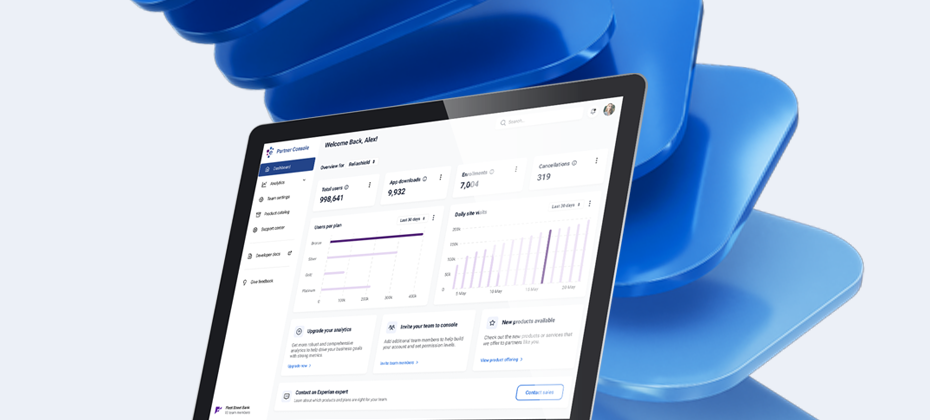
For years, many financial institutions have treated free credit scores, alerts, identity monitoring and financial wellness tools as necessities, must‑have features to stay competitive, but not meaningful drivers of growth. Free benefits were viewed as cost centers rather than strategic levers. That mindset is now one of the biggest barriers to realizing their true value. Institutions invest in these programs, but because they remain static and disconnected from premium offerings, they generate shallow engagement and little revenue impact. The organizations seeing the strongest growth today have taken a different approach. They’re transforming free benefits from passive add‑ons into dynamic, product‑led pathways that guide customers naturally toward paid protection and financial wellness offerings, without heavy technology investment or operational lift. Why traditional programs fall short Inside many institutions, free offerings are viewed as: A regulatory or competitive expectation A commodity every organization must provide A retention checkbox rather than a growth opportunity When free benefits are treated this way, they stay under‑resourced and stagnant. Adoption becomes the only metric of success, and the experience rarely evolves. Free benefits don’t underperform because they’re free, they underperform because they aren’t intentionally designed to lead customers to higher‑value paid experiences. The real miss: no clear path The issue isn’t customers’ willingness to pay. It’s the absence of a clear, strategic progression that connects free tools to premium value. High‑performing financial protection and wellness programs follow a deliberate sequence, one that mirrors how customers build trust, perceive value and ultimately decide to upgrade: 1. Free provides the initial value and earns trust: Customers gain access to helpful tools without friction. They feel supported, not sold to. 2. Engagement moments make the value tangible: Timely alerts, personalized insights and actionable prompts show customers real progress and protection. This is where repeated value solidifies trust. 3. Monetization becomes the natural next step: Once customers rely on the free experience, paid upgrades feel like logical extensions, unlocking broader protection or deeper insights right when customers recognize the need. This is the point where engagement translates into revenue. When free benefits are designed to guide customers through this journey, they stop being cost centers and start becoming revenue engines. Understanding the free‑to‑paid benefits model A free‑to‑paid program is not a collection of standalone tools. It’s a structured, product‑led system designed to move customers from awareness to engagement to monetization. Here’s how it works: The free experience builds trust and removes friction. Engagement features (alerts, insights, personalized guidance) turn the experience into a habit. Premium offerings appear at the right time, in the right context, when value has already been proven. Customers upgrade because they want more of what’s already working, not because they’re pushed. When done well, free‑to‑paid programs drive recurring revenue, increase lifetime value, and deepen digital engagement, all using products institutions already offer. The anatomy of a high‑performing free‑to‑paid program Leading institutions consistently leverage four key pillars: 1. Free offerings that deliver ongoing utility: Experiences evolve with customers by providing dynamic insights, updated alerts and relevant financial guidance. 2. Engagement engineered around value realization: Each alert or insight prompts meaningful action, reinforcing the benefit’s importance. 3. Product‑led upgrade pathways: Contextual cues surface premium value organically based on customer behavior, risk or goals. 4. Paid offerings that feel like the natural next step: Upgrades offer more depth, broader protection, and greater peace of mind, aligned with the customer’s demonstrated needs. Together, these pillars create a system where monetization is an outcome of engagement, not a disruption to it. Why this matters now Margins are tightening. Interchange revenue is shrinking. Fraud risk is climbing. Consumers increasingly expect proactive guidance and protection from their financial institutions. All of this creates an urgent need for scalable, low‑lift revenue models that deepen engagement while improving customer outcomes. Institutions that evolve to a free‑to‑paid strategy stand to unlock: New recurring revenue streams Higher product adoption Stronger customer retention Greater digital engagement Deeper trust through proven value Those that don’t risk maintaining stagnant programs that quietly consume resources and fail to differentiate. The bottom line The question is no longer whether you should offer free benefits. It’s how you use them to create value, deepen engagement and drive measurable revenue. If you’re ready to build a free‑to‑paid pathway that generates real growth, our team can help evaluate your current program and design a monetization strategy aligned to your customers and business goals. Learn more Download white paper

In today’s competitive mortgage environment, lenders are under constant pressure to move faster and reduce costs while delivering a seamless borrower experience. Yet one persistent challenge continues to impact efficient operations and profitability: buying duplicate income and employment verifications. The Cost of Uncertainty: Why Unnecessary Verification Orders Happen When lenders cannot confidently determine whether employment data is available through a specific provider, they face a difficult choice: Take a chance on one provider, risking delays if records aren’t available Order from multiple providers to ensure coverage, but increasing costs This uncertainty adds up. Over time, the cost of ordering extra verification orders can lead to increased operational expenses and reduce overall loan profitability. In a high-volume lending environment, even small inefficiencies scale quickly, leading to increased costs. The lack of upfront transparency into employment data availability can make it difficult to control verification costs while maintaining speed and certainty in the loan process. Introducing the Experian Verify™ Preview Report With 10 to 12% of consumers holding multiple jobs, lenders often feel compelled to check both Experian Verify and higher-cost competitors to find complete employment records. Experian’s Verify Preview Report eliminates that uncertainty, accelerating loan decisions, cutting costs, and streamlining the borrower’s experience. Available at no cost to existing Experian mortgage clients, the report gives an upfront view of which employers are associated with a consumer within a configured lookback period—before committing to buying a report. The Experian Verify Preview Report provides lenders with instant visibility into employer records tied to a borrower—before they purchase a full Verification of Income and Employment (VOIE) report. With a Verify Preview Report, lenders can: See a list of employer names associated with the borrower Confirm which records are available for instant verification through Experian Verify Determine whether ordering a full VOIE report will add value The result? Fewer unnecessary orders, lower verification costs, and a smarter, more efficient verification workflow. This availability empowers lenders to start the verification process confidently. When the employer information lenders need is present, they can move forward with a lower cost report, accessing the same data as other providers but at a better price. And when records aren’t available, alternative providers remain a fallback. The Experian Verify Preview Report makes it clear that Experian Verify has the instant employment data lenders need, which could lead to improved outcomes and operational efficiency. How it works The Experian Verify Preview Report offers a seamless implementation process. There is no new integration required. Lenders already using Experian Verify Instant can request the Preview Report using the same API connection. The only difference is which report type you request. Here’s how it works: Request the Preview Report via your current Experian Verify Instant integration by selecting the Preview Report type. Receive instant visibility into employer names associated with the consumer for your configured timeframe (e.g., 24 months). Proceed confidently by confirming availability before placing a full VOIE order, only when it adds value. Because the API is already in place, using the Verify Report is a frictionless process. Lenders simply request this specific report type and immediately gain the benefits of upfront clarity into employment records. Move from preview to proof with confidence The Experian Verify Preview Report is not a replacement for a full VOIE report—it’s a strategic first step. Once lenders confirm that relevant employment records are available, they can move from preview to proof by ordering the full VOIE report through the same integration. In an environment where margins and efficiency matter, having visibility before you buy isn’t just helpful—it’s essential. With the Experian Verify™ Preview Report, lenders can eliminate guesswork, control costs, and move from preview to proof with confidence. To learn more about how Experian Verify Preview Report, contact us and visit us online.

Key takeaways from recent Chrisman Commentary podcast The mortgage industry is in the middle of a pivotal moment, one defined by credit modernization, improved data usage, and a renewed focus on how lenders can better serve today’s consumers without increasing risk. In a recent episode of the Chrisman Commentary podcast, host Robbie Chrisman sits down with Michele Bodda, who leads Housing and Verification Solutions at Experian, and Shelley Leonard, President of Xactus, for a candid and wide-ranging conversation on what’s changing, what’s coming, and what lenders should be doing now. Key Findings A central theme of the discussion is the industry’s ongoing journey toward modern credit scoring, including the FHFA’s approval of VantageScore 4.0. As Shelley explains, this isn’t simply a score change; it’s part of a broader credit modernization effort that touches lenders, investors, technology providers, and ultimately consumers. While adoption across the GSE landscape is still evolving, lenders are actively testing, learning, and preparing their systems, so they’re ready when the time comes. Michele adds an important perspective: these conversations are prompting a healthy industry-wide introspection. From originators to capital markets, stakeholders are re-examining longstanding underwriting practices, the data that informs them and who those decisions impact. That scrutiny, she notes, is a good thing, especially as better data and analytics create opportunities to responsibly expand access to homeownership. Beyond credit scores, the discussion highlights another critical opportunity: workflow optimization. Both Michele and Shelley stress that success isn’t about ordering more data; it’s about ordering the right data at the right time. With advancements in analytics, AI, and machine learning, lenders can reduce waste, cut costs, improve cycle times, and still maintain a safe and sound mortgage market. The episode also tackles persistent myths in the industry, including misconceptions about competition and how credit data actually flows through the mortgage ecosystem. In reality, the space is highly competitive, a dynamic that continues to drive innovation and better outcomes for lenders and borrowers alike. The conversation closes on two powerful notes. First, a call to action for lenders: don’t stick your head in the sand. Change is already here, and doing nothing is no longer an option. Second, in recognition of Women’s History Month, Michele and Shelley reflect on the importance of representation, mentorship, allies, and shared responsibility in building a stronger, more inclusive industry. It’s an honest, thoughtful discussion that underscores one thing clearly: the future of mortgage lending will be shaped by curiosity, collaboration, and the courage to rethink how things have always been done. 🎧 Listen to the full episode of Chrisman Commentary to hear the complete conversation.
Lending hasn’t slowed down—but many decisioning processes have. Applications are coming in faster. Fraud is becoming more sophisticated. Borrowers expect near-instant responses. And yet, inside many organizations, decisions are still being made across fragmented systems, manual reviews, and rigid strategies that weren’t designed and aren’t optimized for today’s environment. That broadening gap isn’t just an operational issue but often stems from a lack of innovation as well. And it’s quietly costing lenders growth, efficiency, and competitive position. When decisioning falls behind, some symptoms are easy to recognize, like applications taking days to process, teams overloaded with manual reviews, and credit and fraud decisions happening in separate platforms. Others are not as obvious, but arguably more impactful, slipping bottom lines and fraud and therefore losses lurking in lenders’ portfolios. The root issue is a fragmented infrastructure. Experian has reported that while 79% of financial institutions surveyed globally want fewer vendors or more unified approaches, they typically use eight or more tools across credit, fraud and compliance. As most decisioning environments cannot integrate data, adapt strategies, and execute decisions in real time, lenders often have to make tradeoffs. Speed vs. accuracy; growth vs. risk; and automation vs. control are just some. Meanwhile, the market has moved on. Leading lenders are no longer optimizing individual steps. They’re rethinking decisioning as a connected, intelligent system. Gaps forming from status quo in 8 key decision areas Across the lending lifecycle, there are eight critical moments where decisioning can either accelerate growth or create friction. Pre-qualification: Pre-qualification should expand your funnel with confidence. But limited data access and static criteria often result in overly conservative targeting or missed opportunities. Additionally, the delay in acting on a pre-qualification funnel highlights a key area for opportunity among many lenders. Instant credit decisions: Customers expect real-time outcomes. When decisions rely on manual intervention or fragmented inputs, speed and conversions suffer. Prescreen and targeting: Disconnected data and rigid segmentation can lead to poorly aligned offers, reducing response rates and wasting acquisition spend. Credit line management: Without dynamic strategies, credit lines may be too restrictive (limiting growth) or too aggressive (increasing risk). Early delinquency management: Missed early signals and delayed interventions make it harder to prevent accounts from deteriorating. Mid- and late-stage delinquency: Strategies that don’t adapt to evolving borrower behavior reduce recovery effectiveness and increase losses. Collections and recovery: Manual, one-size-fits-all approaches limit recovery rates and increase operational cost. Ongoing strategy optimization: Perhaps the most overlooked gap: many lenders lack the ability to continuously test, learn, and refine decision strategies as conditions change. What these gaps are really costing you Individually, each of these breakdowns may seem manageable. Together, they can create systemic drag on performance. That shows up in four critical ways: Missed growth opportunities: Good borrowers are declined, abandoned, or never targeted in the first place. Credit offers fail to align with actual borrower potential. Higher operational costs: Manual reviews and disconnected workflows consume time and resources that could be spent on higher-value work. Increased fraud exposure and friction: Fraud is proliferating and becoming more expensive to manage. The Federal Trade Commission reported $12.5B were lost to fraud in the U.S. in 2024, a 25% increase over the prior year. For many financial institutions, the first reaction is often to add more steps to the decisioning process, which can impact good borrowers. Increased competitive pressure: Fintechs and modern lenders are focused on delivering faster, more personalized experiences, capturing share while traditional processes lag behind. 80% of banks and credit unions plan to increase their technology spending in 2026, yet many continue to fall short on planned system deployments, according to Cornerstone Advisors’ annual “What’s Going On in Banking” research report. What innovative decisioning leaders are doing differently Leading lenders are changing how decisions are made, creating a competitive advantage. Instead of stitching together point solutions, they’re adopting a more integrated approach that brings together: Comprehensive data – including both credit and fraud insights Optimized decision strategies – designed to balance growth and risk Real-time execution – enabling faster, more consistent outcomes Continuous optimization – adapting to changing market conditions Strategic partnerships – leveraging third-party industry expertise to augment their own This shift eliminates the need for tradeoffs and instead allows lenders to increase approvals while maintaining control, reducing manual effort while improving consistency, and responding faster without sacrificing confidence. The stakes are high and the competition for consumers is even higher, particularly against a backdrop of ever-evolving fraud risks, continuously increasing consumer expectations for seamless, digital-first experiences and often limited resources. Nearly half of banks and 59% of credit unions have already deployed generative AI, with more investing now, according to the Cornerstone Advisors’ report. Closing the innovation gap requires a more fundamental shift toward decisioning systems that are connected, scalable, and built for continuous change. A new foundation for decisioning This is where platforms like Experian Decisioning are changing the landscape. By bringing together credit and fraud insights, decision strategies, and a flexible technology architecture, lenders can move beyond fragmented processes and build a more unified, intelligent decisioning approach. One that fits within existing systems but also evolves with your needs. Where to start Impactful change doesn’t need to be an overhaul of everything at once for most organizations. The first step is understanding where your biggest gaps exist, and which decision areas are creating the most friction or missed opportunity. Once you can see where decisioning is not optimized, you can begin to redesign it in a way that’s faster and more adept for what lending has become. By making better decisions, faster, and with greater confidence, lenders can process applications more efficiently and also break away from the pack by leveraging decisioning as a strategic advantage. Learn more

As the market finds its footing, evolving consumer demand is driving changes in new and used vehicle registrations. In response, manufacturers are balancing affordability and production efficiency to protect their market share. According to Experian’s Automotive Market Trends Report: Q4 2025, new vehicle registrations slightly decreased to 3.8 million, from 4 million this time last year. On the used side, registrations ticked up slightly year-over-year, going from 9 million to 9.1 million. With elevated new vehicle pricing and higher interest rates likely playing a role in new vehicle registrations dipping, buyers seem to be gravitating toward lower-cost alternatives in the used market. Familiar OEM leaders remain steady at the top of market share Despite shifts in vehicle registrations, leaders in new vehicle manufacturer market share have remained consistent. For instance, data through the fourth quarter of this year reveled General Motors (GM), Toyota, and Ford continue to hold the top three positions in new vehicle market share, with GM coming in at 17.4% share, followed by Toyota (16.5%), and Ford (12.6%). At the make level, Toyota held the top position for the fourth consecutive year in new vehicle market share, coming in at 14.1% through Q4 2025; they were followed by Ford (11.9%) and Chevrolet (11%). Sustained leadership in today’s market isn’t just about scale, it relies on how quickly manufacturers can respond and adapt to shifting consumer preferences and industry changes. Those that adapt their portfolios and go-to-market approaches will be best positioned not just to protect their share, but to grow it as the market continues to evolve. To learn more about vehicle market trends, view the full Automotive Market Trends Report: Q4 2025 presentation on demand.

A new reality for screening providers Everything about the candidate checked out. Their resume reflected the right experience. Their references confirmed it. The background screening process came back clean. From outside, there was no reason to hesitate. So, the company didn’t. But within weeks, small inconsistencies began to surface. The employee struggled in ways that didn’t match their credentials. Follow-up questions led to vague answers. Eventually, a deeper review uncovered the issue; this wasn’t just a case of exaggeration. It was candidate fraud. And increasingly, it’s not just individuals acting alone. In a widely reported scheme, foreign operatives posed as legitimate remote IT workers, using stolen identities and AI-assisted interviews to secure jobs at major Fortune 500 companies. Once hired, access was handed off, allowing bad actors to infiltrate corporate systems and generate millions in illicit revenue. In one case, a single individual funneled over $17 million to a foreign operation. These weren’t obvious scams. The candidates passed interviews. They cleared checks. And that’s exactly the point. For background screening and verification providers, this shift presents both a challenge and an opportunity. As candidate fraud becomes more sophisticated, your clients are no longer just looking to verify records – they’re looking to trust identity itself, and they’re looking to you to help them do it. The assumption that no longer holds For decades, hiring has relied on a simple premise: verify the records, resume, and you can trust the candidate. That model worked when identity was easier to validate in person. But in today’s digital-first hiring environment, identity can oftentimes be asserted, not proven. At the same time, identity-based fraud is accelerating. Synthetic identity fraud alone accounts for billions in annual losses, and employers are increasingly encountering candidates whose identities are far more difficult to validate than their resumes. This creates a critical disconnect: Organizations are still verifying records, but those records may be tied to identities that were never legitimate to begin with. Increasingly, they’re turning to their screening partners to close that gap. The reality of candidate fraud 31% of employers have interviewed candidates using a false identity Only 19% feel confident they can detect fraud in hiring 1 in 4 companies report losses of$50K+from fraudulent hires Why candidate fraud is getting harder to see The nature of candidate fraud has fundamentally changed. At one end of the spectrum, companies are still dealing with candidates who falsify resumes, costing businesses time and money when the truth comes to light later. But at the other end, the threat has escalated dramatically. Coordinated fraud rings are now using stolen identities and AI-assisted interviews to place individuals into remote roles, sometimes without ever revealing their identity. And this isn’t slowing down. According to Gartner, by 2028, 1 in 4 candidates could be fake, driven by AI, remote hiring, and identity manipulation. For screening providers, this introduces a new level of complexity. The challenge is no longer just delivering verified records; it’s helping clients surface risks that traditional screening processes were not designed to identify. What traditional screening still gets right None of this diminishes the importance of pre-employment screening. Verifying employment history, education, and background remains a critical part of responsible hiring, and it should. But even the most thorough screening process is designed to answer a specific question: Do the records align with the identity provided? What it does not answer is the question that matters most now: Is that identity real? That gap between record verification and identity validation is where modern fraud operates. And it represents an opportunity for screeners to expand their role from record validation to helping enable stronger identity confidence. The cost of believing everything is working When fraud moves through the hiring process undetected, the consequences aren’t always immediate, but they can be significant. There are financial risks, compliance exposure and potential access to sensitive systems. But there’s also a more subtle —and often overlooked — impact: The assumption that existing processes are working as intended. When fraudulent candidates pass through screening, it reinforces confidence in processes that may not be equipped for today’s threat landscape. Over time, that false sense of security can become a vulnerability. From screening provider to strategic partner As hiring evolves, so do expectations. Employers are no longer just looking for faster background checks - they’re looking for greater confidence in who they’re hiring. This shift creates an opportunity for screening providers to move upstream in the hiring process. By introducing identity verification earlier in the workflow, providers can help clients detect candidate fraud sooner, reduce downstream risk, and strengthen the integrity of hiring decisions. More importantly, it allows providers to differentiate their offerings in an increasingly competitive market, shifting from a transactional service to a more strategic capability. A shift in thinking: Identity before everything else To address modern candidate fraud, organizations don’t just need better tools; they need a different starting point. Instead of beginning with records, leading providers are beginning with identity. They are asking a more fundamental question earlier in the process: Is this person who they say they are? Is this person a real, consistent and verifiable person? When that foundation is established, everything that follows becomes more meaningful. Background checks become more reliable. Verification becomes more consistent. And the ability to detect candidate fraud improves, not because the process is longer, but because it’s more informed. In this model, identifying potential fraud becomes proactive rather than reactive. Why identity verification matters more now than ever The shift to remote and digital hiring hasn’t just changed how companies hire – it’s changed how fraud occurs. Today, a significant portion of fraudulent activity targets the employment process, making it a key point of exposure for identity misuse. In fact, 45% of all false document submissions now occur in the employment sector. In many cases, candidates who falsify information still progress through hiring workflows. A study revealed that 70% of candidates who falsify information still get hired. This reinforces today’s reality: Fraud is no longer slipping through the cracks; it’s moving through the front door. How Experian helps close the identity gap Experian® helps background screeners and verification providers bridge the gap between who a candidate claims to be and who they are. By combining identity verification, fraud detection, and verification solutions, Experian enables providers to enhance their existing solutions – without disrupting their workflows. This allows you to extend your value beyond traditional screening, help clients detect candidate fraud earlier, and strengthen confidence in hiring outcomes. The result is not just better screening, it’s a stronger strategic position in your clients’ hiring ecosystem, one that reduces risk while improving speed and confidence. Candidate fraud isn’t an edge case anymore. It reflects a broader shift in how identity works in a digital world. And while traditional screening remains essential, it may not be sufficient on its own. Because if identity is uncertain, every subsequent check is built on unstable ground. But when identity is established earlier in the process, everything that follows becomes more dependable. Don’t just verify the candidate records, verify the identityLearn how Experian helps screening providers embed identity verification at the start of the hiring journey to help detect candidate fraud earlier, reduce risk, and strengthen screening outcomes. Explore Experian’s Fraud Prevention Playbook for Pre-Employment Screening FAQs

Stressed-out employees aren’t just bad for morale; they’re a drain on productivity and can even affect revenue. A study last year found that 72% of U.S. workers were to some extent stressed about their household finances, while one-third said they were extremely stressed.1 The growing financial pressure on today's workforce is real and widespread. Rising costs, mounting debt, tightening credit markets, and an accelerating wave of identity theft and fraud have created conditions where financial stress isn't limited to low-income earners. Inflation, rate hikes, and relentless data breaches are impacting workers at every level, eroding not just their bank accounts but also their focus, resilience and ability to function at their best. Some of this stress is due to the threatening environment we live in. Every employee, regardless of role or income level, is at risk from cyberattacks and increasingly sophisticated fraud schemes. Identity theft is ever-present, from phishing attacks and credential stuffing, ransomware and social engineering. The escalation in cybercrime has made personal and financial data more vulnerable than ever. The Federal Trade Commission Consumer Sentinel Network Report for 2025 stated that millions of identities are compromised each year, often without the individual realizing it until the damage is already done.2 Given this ongoing threat landscape, it is little wonder that employee financial stress and workplace productivity loss levels are high. The correlation between employee financial stress and productivity loss When employees feel stressed and burned out, it negatively affects their work productivity, which can lead to a loss of revenue for the company. A recent survey found that 66% of employees blamed financial stress for negatively affecting their work and personal lives.3 The same survey found that 83% of HR leaders are concerned that employee financial concerns are harming productivity.4 When employees are consumed by financial stress or anxious about identity theft, their attention is split. They're managing debt, monitoring accounts, or dealing with fallout from fraud, all while trying to do their jobs. The end result is cognitive overload. Simply put, financially stressed employees are more distracted, less engaged, and more likely to make errors. Identity theft compounds the problem because resolving it can take dozens of hours and even months of follow-up. And much of that effort is likely to be happening during work hours. The upshot of all this employee financial stress is presenteeism. In other words, employees are on the job, but their minds are elsewhere. Bottom line: workplace productivity takes the hit. The cost of this stress on employees is ultimately borne by employers. A recent report found that U.S. employers lose approximately $250 billion a year due to lost productivity and distraction caused by financial stress.5 A Gallup survey also reported that "disengaged employees — often dealing with financial stress, cost the global economy $8.9 trillion in lost productivity yearly."6 The cost of ignoring this issue can be staggering for employers, who ultimately bear the weight of workplace productivity loss, increased healthcare costs, and higher turnover, all of which impact the bottom line. Fortunately, employers can avoid most of these problems by taking the right proactive steps that better support employees in managing financial stressors. This is key to building a more resilient workforce. Targeting the source of stress with financial wellness tools Today’s employers are recognizing that simply providing a steady paycheck, basic insurance, and a 401(k) is no longer sufficient to attract and retain the best and brightest employees. The U.S. Bureau of Labor Statistics found that 87% of workers would consider leaving a company that doesn’t prioritize employee well-being and that 84% feel their employer should be more involved in helping them through financial challenges.7 Conversely, 70% of those surveyed indicated that benefits that better support their financial wellness would increase their loyalty to their companies.8 What is clear is that employees want personalized support in managing finances, building credit and securing their financial future. Providing the depth and breadth of support employees are clamoring for is essential for addressing and preventing workplace productivity loss and revenue impacts. To address employee concerns, employers need to offer more than just tools. They need connected solutions that offer all-in-one financial protection, enabling employees to better safeguard their paychecks, protect their identities and plan for tomorrow. Instead of simply reacting to threats, a more holistic approach that proactively equips employees with the insights, tools, and support they need is called for. Zooming in on what a holistic solution should do A comprehensive, fully integrated set of holistic employee financial wellness tools offered as benefits can be instrumental in alleviating some of the stress workers feel. The right set of financial wellness tools should include: Identity protection and restoration – Avoiding becoming avictim of identity theft and fraud is crucial. Effective tools monitor personal information, send fraud alerts and help with resolution services to facilitate faster recovery. Credit education and financial management – Employees are interested in learning how to pay down debt and increase their credit score. Providing instructive credit education resources empowers them to set goals, make actionable plans and track their progress. Device and data protection – The threat to personal data is constant. Providing proactive digital privacy tools can help employees keep passwords and other personal information secure while browsing. Financial wellness benefits only work if employees actually trust them. Our My Financial Expert® platform enables employers to offer holistic benefits, including more than 50 financial wellness features designed to help employees take control of their finances. With a proven track record in credit education and identity protection, we have supported and protected more than one billion consumers. When employees stop worrying about money, they start focusing on work. It's that simple. By giving workers real tools to tackle financial stress, productivity loss, and security concerns, employers reduce distractions, boost satisfaction and make a compelling case for why good people should stay. The payoff isn't just cultural. It shows up through improved productivity and a more robust bottom line. Learn more about our financial wellness programs

Model inventories are rapidly expanding. AI-enabled tools are entering workflows that were once deterministic and decisioning environments are more interconnected than ever. At the same time, regulatory scrutiny around model risk management continues to intensify. In many institutions, classification determines validation depth, monitoring intensity, and escalation pathways while informing board reporting. If classification is wrong, every downstream control is misaligned. And, in 2026, model classification is no longer just about assigning a tier, but rather about understanding data lineage, use case evolution, interdependencies, and governance accountability in a decentralized, AI-driven environment. We recently spoke with Mark Longman, Director of Analytics and Regulatory Technology, and here are some of his thoughts around five blind spots risk and compliance leaders should consider addressing now. 1. The “Set It and Forget It” Mentality The Blind Spot Model classification frameworks are often designed during a regulatory remediation effort or inventory modernization initiative. Once documented and approved, they can remain largely unchanged for years. However, model risk management is an ongoing process. “There’s really no sort of one and done when it comes to model risk management,” said Longman. Why It Matters Classification is not merely descriptive, it’s prescriptive. It drives the depth of validation, the frequency of monitoring, the intensity of governance oversight and the level of senior management visibility. As Longman notes, data fragmentation is compounding the challenge. “There’s data everywhere – internal, cloud, even shadow IT – and it’s tough to get a clear view into the inputs into the models,” he said. When inputs are unclear, tiering becomes inherently subjective and if classification frameworks are not reviewed regularly, governance intensity can become misaligned with real exposure. Therefore, static classification is a growing risk, especially in a world of rapidly expanding AI use cases. In a supervisory environment that continues to scrutinize model definitions, particularly as AI tools proliferate, a dynamic, periodically refreshed classification process can demonstrate institutional vigilance. 2. Assuming Third-Party Models Reduce Governance Accountability The Blind SpotThere is often an implicit belief that vendor-provided models carry less governance burden because they were developed externally. Why It Matters Vendor provided models continue to grow, particularly in AI-driven solutions, but supervisory expectations remain firm. “Third-party models do not diminish the responsibility of the institution for its governance and oversight of the model – whether it’s monitoring, ongoing validation, just evaluating model drift” Longman said. “The board and senior managers are responsible to make sure that these models are performing as expected and that includes third-party models.” Regulators consistently emphasize that institutions remain responsible for the outcomes produced by models used in their decisioning environments, regardless of origin. If a vendor model influences credit approvals, pricing, fraud decisions, or capital calculations, it directly affects customers, financial performance and compliance exposure. Treating third-party models as inherently lower risk can also distort internal tiering frameworks. When vendor models are under-classified, validation depth and monitoring rigor may be insufficient relative to their true impact. 3. Limited Situational Awareness of Model Interdependencies The Blind SpotModern decisioning environments are interconnected ecosystems. Forecasting models may influence reserve calculations. Marketing models may be repurposed across product lines. Data transformations may feed multiple downstream models simultaneously. Why It Matters Risk often flows across interdependencies. When upstream models degrade in performance or introduce bias, downstream models inherit that exposure. If multiple material decisions depend on the same data transformation or feature engineering process, concentration risk emerges. Without visibility into these dependencies, tiering assessments may underestimate cumulative risk, and monitoring frameworks may fail to detect systemic vulnerabilities. “There has to be a holistic view of what models are being used for – and really somebody to ensure there’s not that overlap across models,” Longman said. Supervisors are increasingly interested in understanding how model risk propagates through business processes. When institutions cannot articulate how models interact, it raises broader concerns about situational awareness and control effectiveness. Therefore, capturing interdependencies within the classification framework enhances more than documentation. It enables more accurate tiering, more targeted monitoring and more informed governance oversight. 4. Excluding Models Without Defensible Rationale The Blind SpotGray-area tools frequently sit outside formal inventories: rule-based engines, spreadsheet models, scenario calculators, heuristic decision aids, or emerging AI tools used for analysis and summarization. These tools may not neatly fit legacy definitions of a “model,” and so they are sometimes excluded without robust documentation. Why It Matters Regulatory definitions of “model” have broadened over time. What creates risk is the absence of defensible reasoning and documentation. Longman describes the risk clearly: “Some [teams] are deploying AI solutions that are sort of unbeknownst to the model risk management community – and almost creating what you might think of as a shadow model inventory.” Without visibility, institutions cannot confidently characterize use, trace inputs, or assign appropriate tiers, according to Longman. It also undermines the credibility of the official inventory during examinations. A well-governed program can articulate why certain tools fall outside model risk management scope, referencing documented criteria aligned with regulatory guidance. Without that evidence, exclusions can appear arbitrary, suggesting gaps in oversight. 5. Inconsistent or Subjective Classification Frameworks The Blind SpotAs inventories scale and governance teams expand, classification decisions are often distributed across reviewers. Over time, discrepancies can emerge. Why It Matters Inconsistency undermines both risk management and regulatory confidence. If two models with comparable use cases and impact profiles are assigned different tiers without clear justification, it signals that the framework is not being applied uniformly. AI adds even more complexity. When it comes to emerging AI model governance versus traditional model governance, there’s a lot to unpack, says Longman: “The AI models themselves are a lot more complicated than your traditional logistic or multiple regression models. The data, the prompting, you need to monitor the prompts that the LLMs for example are responding to and you need to make sure you can have what you may think of as prompt drift,” Longman said. As frameworks evolve, particularly to incorporate AI, automation, and new regulatory interpretations, institutions must ensure that changes are cascaded across the entire inventory. Partial updates or selective reclassification introduce fragmentation. Longman recommends formalizing classification through a structured decision tree embedded in policy to ensure consistent outcomes across business units. Beyond clear documentation, a strong classification program is applied consistently, measured objectively, and periodically reassessed across the full portfolio. BONUS – 6. Elevating Classification with Data-Level Visibility Some institutions are extending classification discipline beyond models to the data layer itself. Longman describes organizations that maintain not only a model inventory, but a data inventory, mapping variables to the models they influence. This approach allows institutions to quickly assess downstream effects when operational or environmental changes occur including system updates or even natural disasters affecting payment behavior. In an AI-driven environment, traceability may become a competitive differentiator. Conclusion Model classification is foundational. It determines how risk is measured, monitored, escalated, and reported. In a rapidly evolving regulatory and technological environment, it cannot remain static. Institutions that invest now in transparency, consistency, and data-level visibility will not only reduce supervisory friction – they will build a governance framework capable of supporting the next generation of AI-enabled decisioning. Learn more