Tag: auto

A closer look at the data shows GM’s losses might not be particularly significant, despite the announcement of discontinued models.

Experian Boost gives consumers greater control over their credit profiles by allowing them to add non-traditional credit information to their Experian credit file.
Today, we’re excited to announce that AutoCheck® has received a facelift! AutoCheck has always been the industrial strength Vehicle History Report that automotive professionals trust to help manage risk and confidently buy and sell the right vehicles. We’ve made this great tool even greater by adding more data and accident insights than ever before and improving the user experience by making it easier to read across all mobile devices. Among the data and insights updated within AutoCheck: Updated display of how buyback protection details are presented Vehicle ownership history presentation Vehicle use history details Updated accident and damage check sections Updated display of how title brand information is displayed Updated odometer check Open safety recall information, inspection, service and repair history checks Based on extensive research, we’ve added many visual changes which make it easier for dealers and cars shoppers to understand and use the full report. One noticeable change is the addition of the Experian logo and color scheme. Experian continues to invest significantly in building a widely recognized and trusted brand. Reinforcing that AutoCheck is backed by Experian’s rich data and industry expertise will resonate with consumers as they look for a trusted source to confidently move along their vehicle shopping journey. The AutoCheck Score® has a new visualization, designed after an automotive-themed gauge to illustrate if the vehicle’s AutoCheck Score is below, within or above the score range for similar vehicles. Making the score easier to use and understand will help consumers better compare their vehicle to other similar vehicles currently in the market. We’ve also made the report easier to use and access for both consumers and dealers. AutoCheck is now optimized for tablet and mobile users, providing even more shopping convenience for users. As always, dealers can access the new report via AutoCheck Fast Link℠ for their online vehicle listings and through multiple integrations within their DMS or inventory management solution. The report will still be available directly from AutoCheck.com for consumers and AutoCheck.com/members for dealers. In addition, the report is available through most dealer platforms and all premier consumer automotive portals. Check out the full report redesign changes, updates and some additional highlights below. Updated AutoCheck® Buyback Protection Information As always, AutoCheck will buy back your vehicle if your AutoCheck report fails to list certain title brands available to Experian at the time the report was issued. Items impacting Buyback protection are now grouped together, so users can clearly see what data impacts Buyback qualification. Items that do not impact Buyback are captured in other areas of the report. Buyback Protection badging for eligible clients displays on the first page as well as in the specific State Title Brand section if the vehicle is, or is not, Buyback protected. NEW: Owner History AutoCheck now displays information for the current, last and previous vehicle ownership. The report will now highlight the year and state the vehicle was purchased from as well as the ownership date ranges and length of ownership. NEW: Vehicle Usage AutoCheck now clearly highlights the historical usage activity level for the vehicle, whether it was used as Personal, Fleet, Rental, Lease, Taxi, Livery, Police, Government, Drivers Ed and/or Commercial. NEW: Damage Check Section We have added a new Damage Check section to more clearly illustrate the historical activity for the vehicle. The Damage Check section will highlight damage records from auctions, salvage, or independent sources such as recycling and crash tests. We will continue to offer the Accident Check section, which highlights accident dates and location from government sources and independent agencies. The Damage Check section will highlight damage records from auctions, salvage auctions or independent sources such as recycling and crash tests. Other Title Brand and Specific Event check: Other title brands that are not included in Buyback protection qualification will be listed here. In addition, event activity such as theft and insurance loss is also included in this section. UPDATED: Odometer Check We have combined information to provide one place for all odometer related history checks. State title odometer check reflects all odometer related brands from the state such as Exceeds Mechanical Limits (EML), Not Actual Mileage (NAM) and Broken Odometer (BRK). Auction odometer check are the odometer brands either reported to auctions or upon inspection in auction announcements. The odometer calculation check is Experian’s proprietary odometer sequence calculation to determine if there are any potential discrepancies. NEW: ‘Check’ sections: To highlight specific data for easier reference and understanding, we have added an open safety recall check, Inspection history check, and service and repair history check section. What do all these changes mean for dealers and their customers? They have an easier-to-use AutoCheck VHR with more comprehensive information than ever. For dealers, it will help with their buying decisions at auction or on trade-ins. For consumers, it provides even more peace of mind when making a used vehicle purchase decision. Ultimately, it improves the shopping process for everyone involved and can help dealers develop even stronger relationships with their customers. Want to learn even more about AutoCheck? Visit our site for more details: https://www.experian.com/lp/automotive/autocheck-dealer-lp

Findings from the Q3 State of the Automotive Finance report show that Subprime originations hit the lowest overall share of the market seen in 11 years.

There are four reasons why the auto industry should be enthusiastic about the electric vehicle segment’s future.

Where are electric vehicles most popular? During the first half of the year, 3.6 percent of all new registrations in California were EVs.

It’s not enough to just dig into the sales number of electric vehicles — It’s important to understand the consumers most interested.
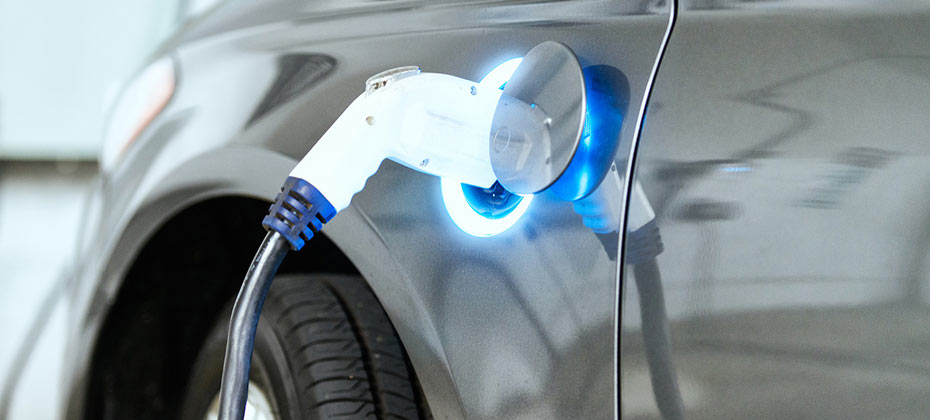
Electric vehicles are here to stay – and will likely gain market share as costs reduce, travel ranges increase and charging infrastructure grows.

After Hurricane Florence, Experian is here to help. People can download our free Vehicle Flood Risk Check app.

Trivia question: Millennials don’t purchase new vehicles. True or False?

When it comes to driving the automotive industry forward, Experian Automotive has a motto: “The right cars. The right customers. The right data to know the difference.” We deliver an integrated perspective based on the highest quality automotive information and market intelligence. Data is important to us, and we have the most robust combination of data assets under one roof. The North American Vehicle Database℠, File One℠ Credit Database, Consumer View℠ Marketing Database, Online Activity Databases, and National Fraud Database℠ all fed into Experian’s Auto HyperConnect™. Auto HyperConnect houses two different solutions: Auto HyperTargeting™ and Auto HyperMonitoring™. There are four different components to Auto HyperTargeting, and the one we will focus on today is Expired Lease. Dealers have found success marketing to their own customers when vehicle leases come due. The challenge has been conquesting off-lease consumers who didn’t buy from them. While off-lease consumer marketing lists are available, they only provide the estimated lease end date and monthly lease payment. When restricted to this data, it’s hard to tell if a $550 a month payment is for a Ford F150 or a BMW 3-series. And yet this is exactly the level of detail needed to successfully target off-lease marketing. Experian’s new Auto HyperTargeting- Expired Lease addresses this challenge by enabling dealers to identify and engage off-lease audiences through a highly targeted approach that has never been possible! Now, finding customers is much easier and cost-effective. You can use the best mix of selection criteria to maximize your off-lease conquesting strategy. Some of the ways you can identify your audience are: Lease Maturity Date Vehicle Make Vehicle Model Zip Code Model Performance Tier Distance from Dealer Ship Vehicle Status (New or Used) Signing up for Auto HyperTargeting- Expired Lease comes with five perks. The first is a monthly file. This includes name and address, lease maturity date, make/model, monthly payment bands, and phone and email address when available. The second is the ability to make sign up for a subscription monthly payments. Third is marketing flexibility with direct mail, email, and phone. Four there is no firm offer of credit required for this. Finally, a quarterly sales report. ARA reports provide sales metrics industry wide for your targets. Other competitive features also available in Auto HyperTargeting- Expired Lease is the customers full contact information with name, address, email address and phone number. And for online and offline channels, you can select a specific audience that is customizable. Auto HyperTargeting has some amazing features to successfully conquest customers, and Expired Lease is one of the four ways to do this. Stay tuned for Auto HyperTargeting- Vehicle Owners coming up next!

Results two and three are now available for the 2018 Experian Automotive Attribution Study. Learn how to use data and and attribution to gain more sales.

There are many factors attributing to the success of dealerships. When it comes to dealers, empirical guidance is a great way to study effective advertising. Experian brought Auto, Targeting, and the Dealer Positioning System capabilities together in a nationwide study to answer the ultimate question: what drives sales? The answers can be found in Experian’s 2018 Attribution Study. This is a wide-ranging, dealer-focused sales-driven attribution study that analyzed a few key variables. We deployed 187,701 tracking pixels to devices in 41,012 distinct households, focused on 15 digital metrics to learn about shopper behavior, and tied that digital shopping data to 2,436 vehicle sales. An industry first, Experian’s ability to combine automotive registration data, sales data, and website analytics and online behavior data puts us in a position to do something that very few companies can do. We use the household identifiers to not only see who bought a car and who bought specifically from a participating dealer, but also how they shopped the dealer’s site. Our ability to accurately identify a household’s digital behavior is based on the fact that we are a source compiler of the data and have it sitting under one roof. Others that attempt to provide this type of insight need to contract out for registrations, sales data imports from the dealership, website analytics, household identifiers, or all the above, which generally adds time to the insights. Using our sales-based approach, we can deliver unbiased attribution. Sales-based attribution is attributing credit to different advertising sources/campaigns based on actual vehicle sales – including those targeted consumers that may have purchased outside of the dealership. This is the Holy Grail of attribution for car dealers since it ties an offline activity such as buying a car back to the online advertising that’s taking up most their budgets every month. Because of that offline-online disconnect, sales-based attribution is difficult. Other automotive attribution models are typically focused on website conversions or website behavior – “what advertising can I attribute website leads to” (conversions) or “what advertising is driving users who follow the behavior that I think shows they’re likely to buy from my dealership” (website behavior.) What are the takeaways? We found three takeaways from our study. First off, we look at shopper behavior instead of isolating KPIs. Later we will discuss how traditional website metrics do not tie-in to sales. Second, we look at optimizing your paid advertising. Finally, we look at third-party investments. Although third parties drive sales, they may not be your sales. Looking at shopper behavior, not isolated KPI’s Traditional website metrics don’t tell the sales story for dealers. Traditional conversion stats are equal for buyers vs. all traffic such as VDPs or page views What this means is on average, buyers converted at a lower rate than overall website traffic. Looking solely at form submissions, hours and directions pageviews, and mobile clicks-to-call, don’t give the best view of what advertising is driving sales. With that, 98% of buyer traffic never submitted a form or went to the hours and directions page. This is a typical website conversion that dealers, vendors, and advertising agencies focus on. Since traditional web metrics don’t tell the story, there is another way. These are called High-Value Users, or HVU. They purchase at a 34% higher rate than overall traffic although they make up 11% of all traffic. High-Value Users are an Experian derived KPI. What makes someone an HVU are four different measurements. They must visit a website at least three times Spend at least six minutes on the site in total View at least eight pages in total View at least one VDP High-Value Users correlates to sales better than Vehicle Detail Page or VDP metrics. In this study, the correlation for VDP was measured at .595 which is rated a medium correlation. Meanwhile, HVU scored a .698 which is rated a high correlation. Looking at many different behavioral KPIs, like we do with our High-Value User (HVU) metric, correlates better to sales than just looking at how many VDPs you had. Driving more VDPs won’t necessarily help sales. But driving more HVUs is more likely to correlate with more sales. This also gets back to the attribution discussion above: Experian sales-based attribution is the best, and Experian’s HVUs are a good method for web-based attribution. From this attribution study, High-Value Users are a vital group for dealers to utilize. In our next post, we will go over the second and third takeaways from the attribution study: optimizing paid advertising and evaluating third-party investments.

Backed by Experian Information Solutions, AutoCheck provides a comprehensive vehicle history report. Here are five best practices to use AutoCheck.