
Three Ways to Segment Your Mortgage Portfolio to Maximize Performance

by Jenna Ostmann 2 min read June 6, 2023

High property values and rising interest rates have priced many borrowers out of the market. In the face of declining home purchases, lenders are focusing on their portfolios and opportunities to expand borrower relationships. At the same time, portfolio health is increasingly important. Keeping a pulse on and successfully managing portfolio risk is just as important as portfolio growth.

To effectively manage a mortgage portfolio, an understanding of the complete financial standing of a borrower, along with the most recent loan performance and property data characteristics, is crucial. Below we discuss three ways to analyze your portfolio to maximize performance.

Portfolio risk

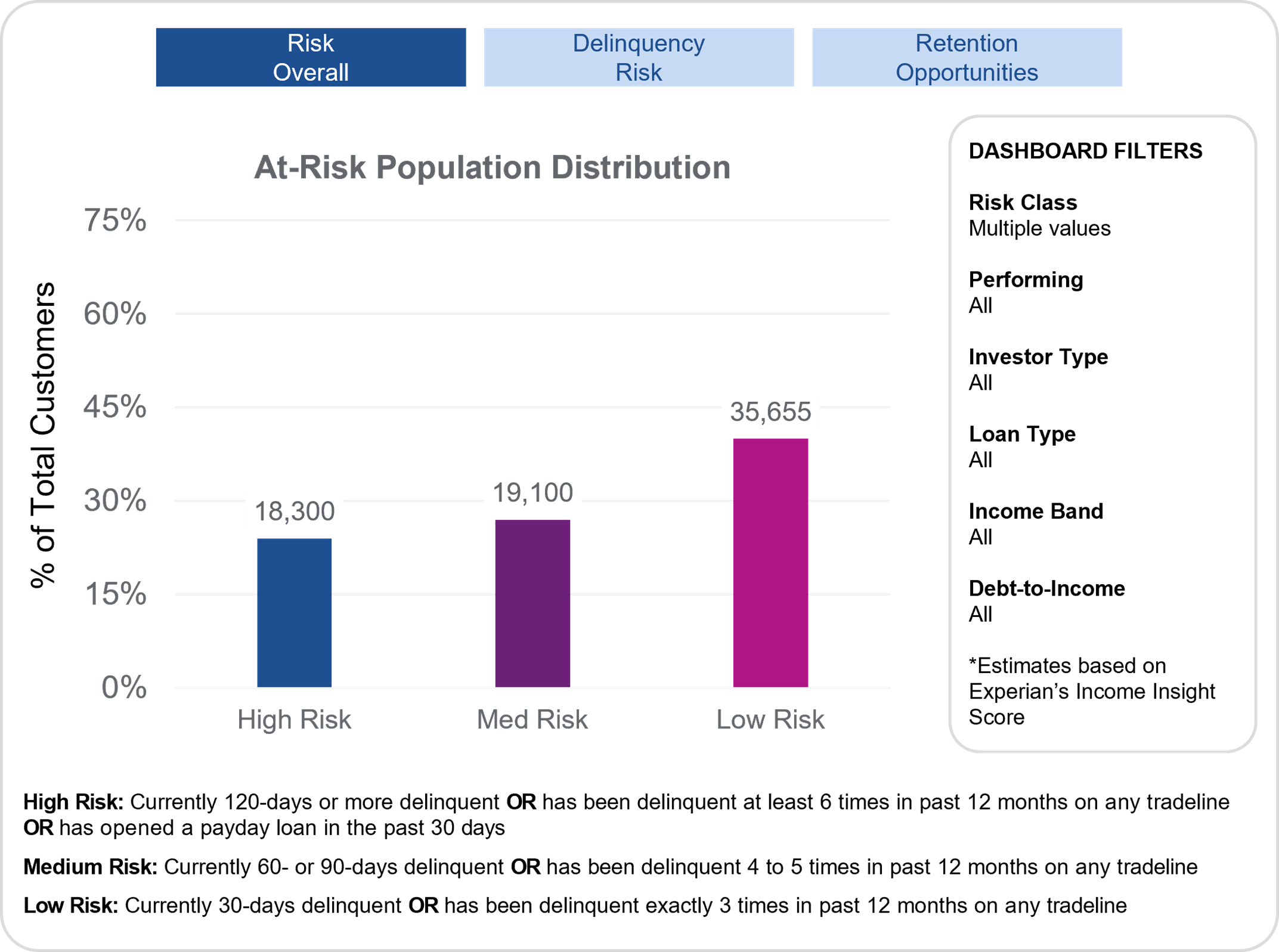
While mortgage delinquencies remain well below pre-pandemic levels, rolling delinquency rates are seeing an uptick. In a recent study, we found that, of the at-risk population, over 24% may be at high risk of delinquency or default. Having the tools and resources to segment your portfolio and identify these borrowers is key to preemptively assisting or modifying loan terms and reducing risk exposure to the business.
Growth and retention

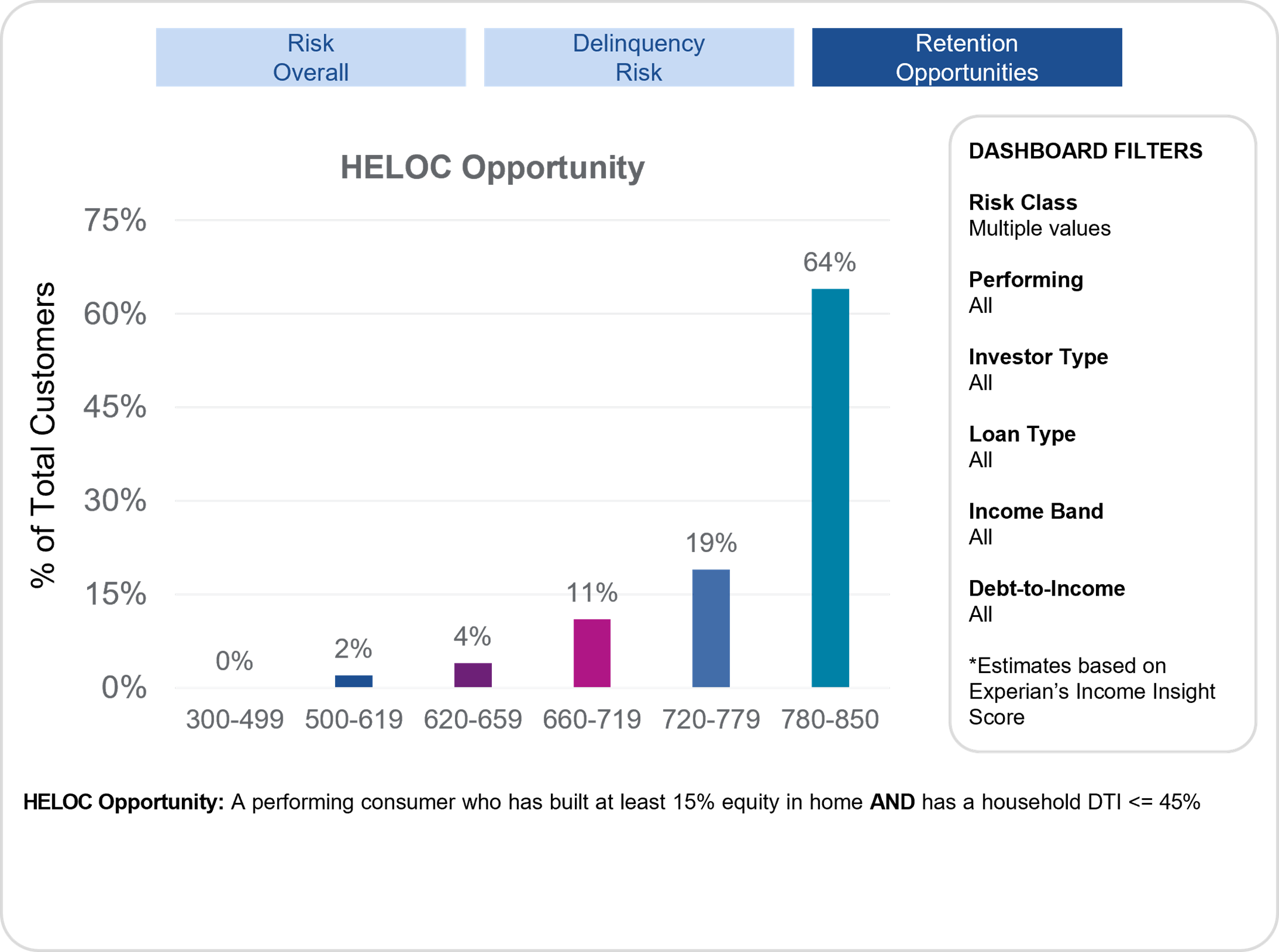
Did you know up to 64% of prime and above borrows may be ideal Home Equity Line of Credit (HELOC) candidates? Having the ability to segment your portfolio to identify borrowers who can tap into their home equity as a line of credit for upgrades, remodeling, or simply a rainy-day fund, will allow you to grow your originations pipeline while also supporting your mortgage retention strategy.

To optimize your segmentation strategy, consider leveraging In the Market Models (ITMM) to identify borrowers with a high propensity to respond to HELOC offers. Through a retrospective analysis, we found that ITMM can improve campaign performance by over 700%.
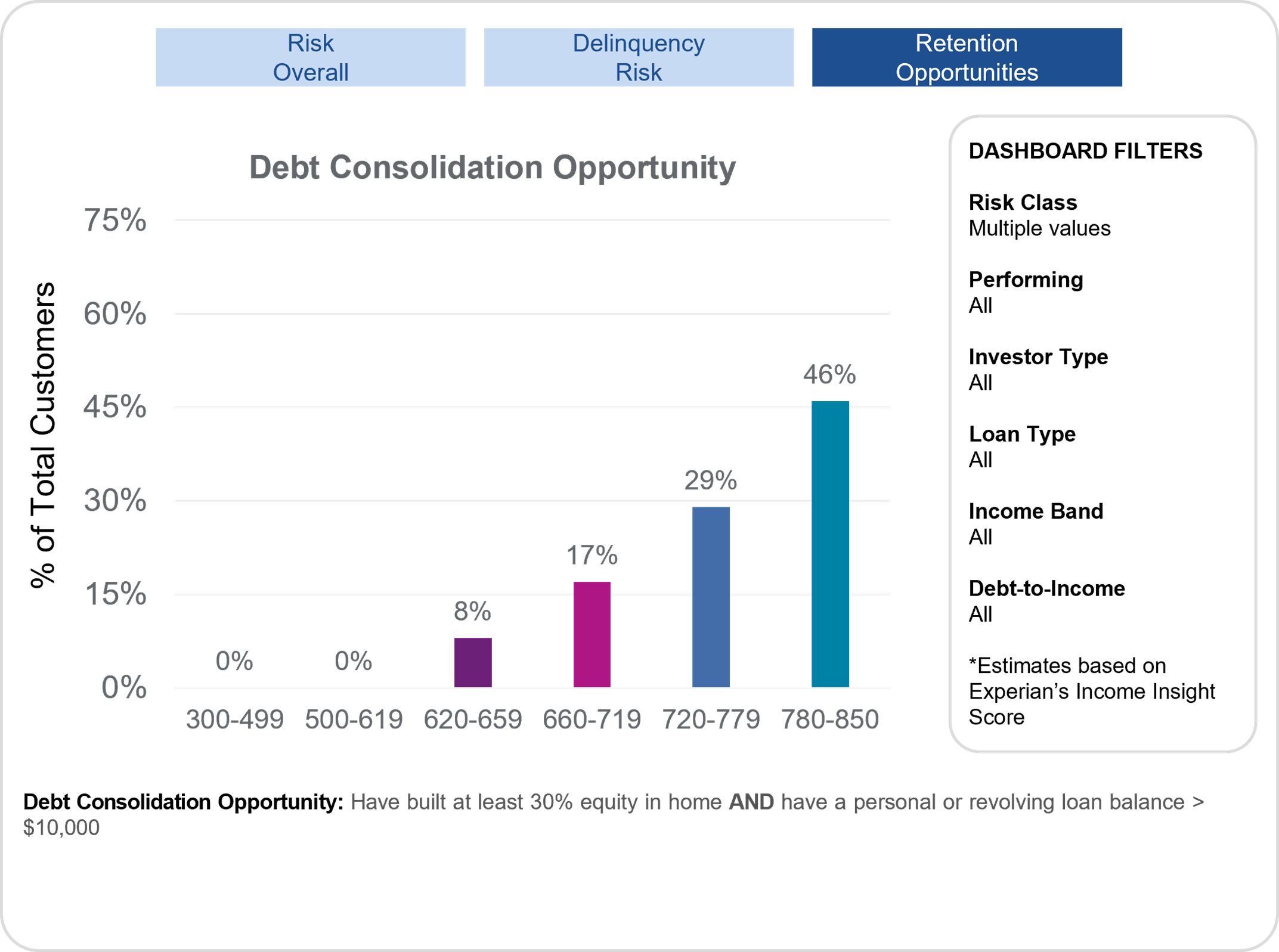
Similarly, a HELOC can be a prime option for borrowers with increasing debt. Through our newly launched solution, Mortgage Insights Dashboard for Servicing, we found that up to 46% of prime and above borrowers may be ideal candidates for debt consolidation. For this segment of your portfolio, a HELOC can consolidate high-interest debt from credit cards, retail cards, or even short-term loans.
Peer analysis

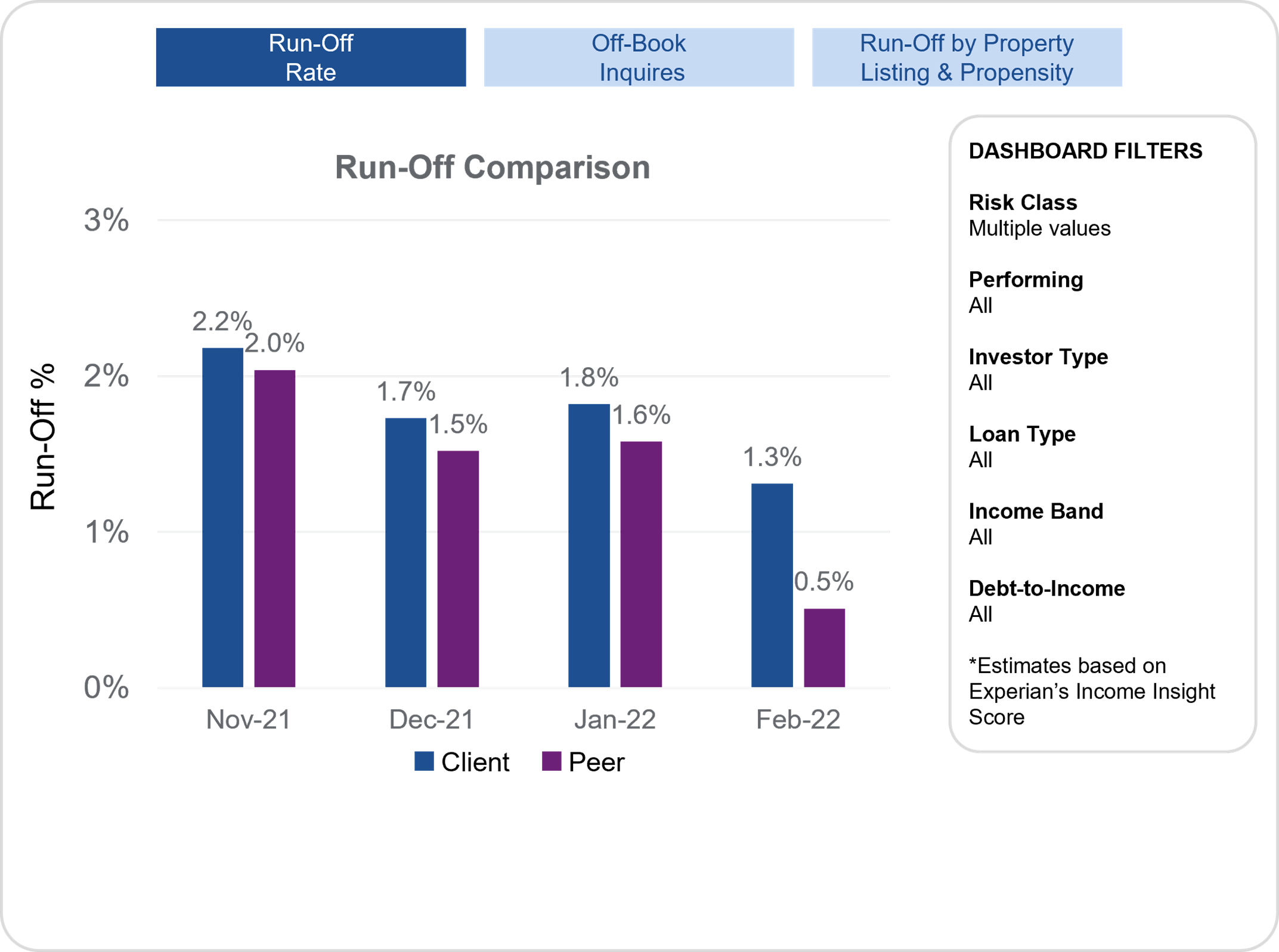
Like sports teams, many mortgage lenders and servicers are interested in comparing their performance against that of their peers. Are your portfolio runoff rates above, equal to, or below that of your competitors? In some instances, we’ve seen a lender’s runoff rate averaging 10% MoM higher than their peers. By comparing your portfolio performance against your peers (and the market) you can assess both the efficacy of portfolio recapture strategies and demonstrate loan quality to investors.
While these are just a few examples of ways to analyze your portfolio, perhaps what’s most important is having the data, such as credit, income, DTI, and property information, needed for this type of intelligence available in one place.

Partner with a provider that can offer you the mortgage servicing solutions to easily segment your portfolio to gain insights and inform ongoing strategic decisions.

Learn more

*Data charts source: Experian’s Mortgage Insights Dashboard for Servicing

Related Posts

New data indicate signs of increased VantageScore 4.0 adoption. Recent Experian Capital Markets data reporting points to gradual growth in VantageScore 4.0 adoption, and more loans beginning to appear in a larger share of GSE pools.

November 20, 2026 by Angad Paintal
What Is a Ransomware Attack? How to Prepare and Respond

Ransomware attacks can create challenges that extend far beyond an organization’s IT systems. When critical applications become unavailable or sensitive information is compromised, businesses may face operational disruption, financial losses and difficult decisions about how to support affected customers. While cybersecurity defenses are essential, organizations also need clear response procedures, coordinated communication and recovery plans. Understanding how ransomware attacks happen, their potential impact and the steps organizations can take to prepare can help businesses respond more effectively when an incident occurs. What is a ransomware attack? A ransomware attack is a type of cyberattack in which criminals use malicious software or extortion tactics to demand payment from an organization. Traditionally, ransomware encrypts files or systems, preventing authorized users from accessing information until a ransom is paid. Some attackers also steal sensitive data and threaten to release it unless their demands are met. These tactics may occur separately or together, creating challenges for organizations trying to restore operations and protect sensitive information. Paying a ransom does not guarantee that attackers will restore access, delete stolen information or refrain from making additional demands. How do ransomware attacks happen? Ransomware attacks often begin when cybercriminals gain unauthorized access to an organization’s systems or accounts. Once inside, attackers may attempt to expand their access, steal information or deploy malicious software. Common attack methods include: Phishing and social engineering: Deceptive emails or messages that trick employees into opening malicious attachments, visiting harmful websites or sharing login credentials Compromised credentials: Stolen passwords or authentication information used to access business systems and accounts Unpatched vulnerabilities: Security weaknesses in software, servers or network devices that attackers exploit Third-party access: Compromised vendors or connected systems that provide a potential entry point Malicious downloads: Harmful software installed through deceptive websites, compromised applications or unsafe downloads Understanding these methods can help organizations identify potential weaknesses and strengthen their security practices. How do ransomware attacks affect businesses and customers? The consequences of a ransomware attack depend on the systems affected, the information involved and the organization's ability to contain the incident. Business disruption and financial losses When critical systems become unavailable, organizations may experience interruptions to customer service, payment processing, internal operations or other essential functions. The financial impact can be significant. According to the FBI's 2025 Internet Crime Report, reported ransomware-related losses reached approximately $32.3 million, up from $12.5 million in 2024. These figures do not capture the full financial impact of ransomware incidents, including business interruption, recovery expenses and other indirect costs. Customer data exposure and fraud risks Some ransomware incidents involve the theft of sensitive information, potentially exposing customers to identity theft or fraud. If attackers obtain login credentials or personal information, organizations may also need to consider related threats, including account takeover. Customer trust and reputation Customers expect organizations to protect their information and communicate clearly when incidents affect them. Delayed or confusing communication may create additional uncertainty. A coordinated response can help organizations provide timely information and appropriate support to affected individuals. What should organizations do after a ransomware attack? When a ransomware incident is suspected, organizations should activate their incident response procedures and work with qualified professionals to assess and contain the threat. Important response steps include: Activate the response team: Bring together IT, cybersecurity, legal, privacy, communications and leadership teams as appropriate. Contain the incident: Identify affected systems and take steps to limit further unauthorized activity while preserving relevant evidence. Investigate the impact: Determine which systems and information may have been compromised, including whether sensitive data was accessed or removed. Evaluate notification requirements: Work with legal and privacy advisers to determine applicable regulatory, contractual and customer communication obligations. Support affected customers: Prepare clear communications and appropriate resources when personal information has been exposed. An established data breach response strategy can help organizations coordinate customer notification and support activities following an incident. How can organizations prepare for and recover from ransomware attacks? Organizations can prepare for ransomware attacks by combining security controls, tested backups, employee training and a documented incident response plan. Recovery planning should also address how teams will restore systems, assess data exposure and communicate with affected customers. Key preparedness measures include: Maintain secure backups: Keep protected backups and regularly test restoration procedures. Strengthen access controls: Implement multifactor authentication and limit access to sensitive systems. Update software: Address known vulnerabilities through consistent patch management. Train employees: Help staff recognize phishing attempts and suspicious activity. Monitor security threats: Use appropriate detection and monitoring tools to identify potential attacks. Test response plans: Conduct exercises that evaluate technical recovery, communication and decision-making responsibilities. Following an incident, recovery should focus on restoring systems safely, addressing remaining vulnerabilities and evaluating potential risks to affected individuals. Organizations may also need to consider whether compromised information could contribute to additional fraud. Depending on the circumstances, fraud prevention solutions may support broader identity risk management efforts. Security teams should also evaluate related threats, including automated bot attacks, when assessing potential misuse of compromised accounts or credentials. Once operations are restored, reviewing lessons learned can help organizations strengthen their security controls, response procedures and future preparedness. How can breach response planning help protect customers? Ransomware preparedness should account for both operational recovery and the potential impact on customers. If sensitive information is compromised, organizations may need to coordinate notifications, respond to customer questions and provide appropriate support. Experian® offers data breach resolution services that help organizations plan for and manage customer-facing aspects of a breach, including notification management and response support. By establishing response procedures before an incident, organizations can improve coordination and prepare to address customer needs when a breach occurs. Prepare for a more coordinated breach response Explore Experian's data breach response solutions and learn how to plan for customer notification and support. Explore data breach response solutions Download the 2027 Data Breach Response Guide

November 20, 2026 by Julie Lee
How GenAI Fraud Bots Fly Under the Radar (and How to Ground Them Before It’s Too Late)

Today’s AI-powered fraud bots are exceptionally good at mimicking human behavior. Learn why a modern defense strategy is key.

November 18, 2026 by Laura Burrows

Subscribe to our Newsletter

Enter your name and email for the latest updates.

This site is protected by reCAPTCHA and the Google Privacy Policy and Terms of Service apply.

Subscribe to our Newsletter

Don't miss out on the latest industry trends and insights!
Subscribe