Uncloaking Synthetic Identities – Revealing the Ring

by Guest Contributor 4 min read April 23, 2013

As we prepare to attend next week’s FS-ISAC & BITS Summitwe know that the financial services industry is abuzz about massive losses from the ever-evolving attack vectors including DDoS, Malware, Data Breaches, Synthetic Identities, etc. Specifically, the recent $200 million (and counting) in losses tied to a sophisticated card fraud scheme involving thousands of fraudulent applications submitted over several years using synthetic identities. While the massive scale and effectiveness of the attack seems to suggest a novel approach or gap in existing fraud prevention controls, the fact of the matter is that many of the perpetrators could have been detected at account opening, long before they had an opportunity to cause financial losses. Synthetic identities have been a headache for financial institutions for years, but only recently have criminal rings begun to exploit this attack vector at such a large scale.

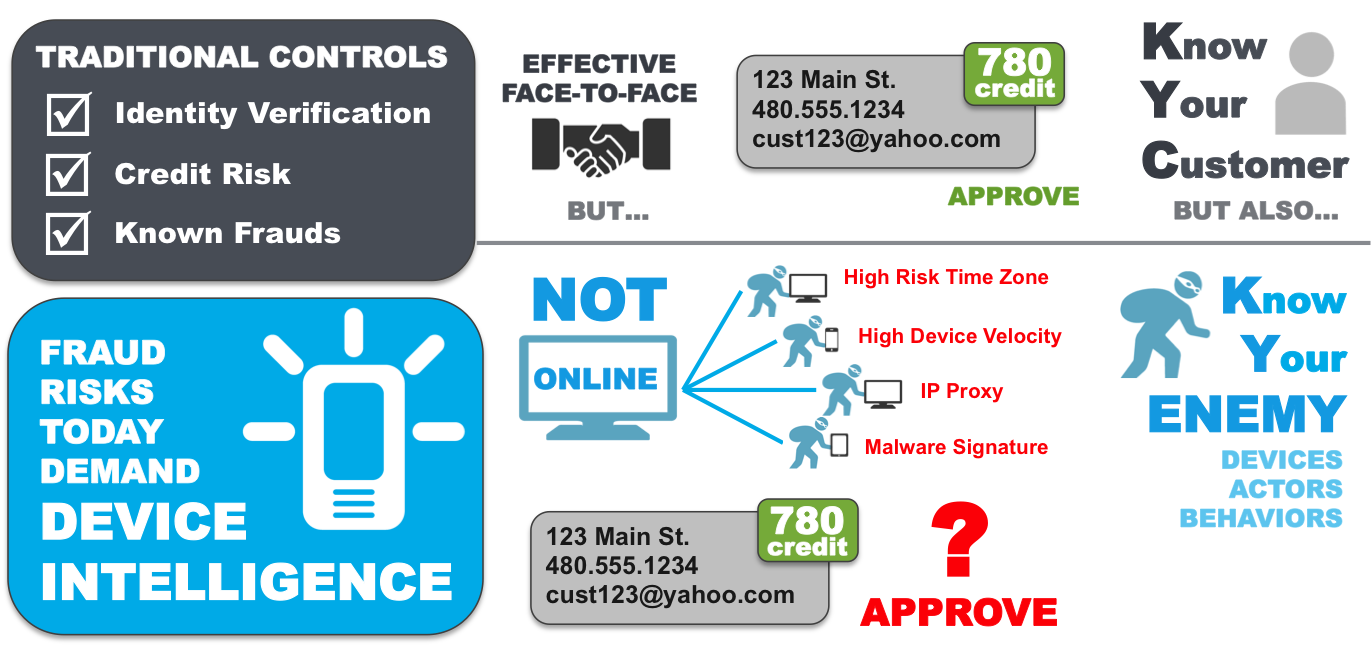
The greatest challenge with synthetic identities is that traditional account opening processes focus on identity verification compliance around the USA PATRIOT Act and FACT Act Red Flags guidance, risk management using credit bureau scores, and fraud detection using known fraudulent data points. A synthetic identity ring simply sidesteps those controls by using new false identities created with data that could be legitimate, have no established credit history, or slightly manipulate elements of data from individuals with excellent credit scores. The goal is to avoid detection by “blending in” with the thousands of credit card, bank account, and loan applications submitted each day where individuals do not have a credit history, where minor typos cause identity verification false positives, or where addresses and other personal data does not align with credit reports. Small business accounts are an even easier target, as third-party data sources to verify their authenticity are sparse even though the financial stakes are higher with large lines of credit, multiple signors, and complex (sometimes international) transactions. Detecting these tactics is nearly impossible in a channel where anonymity is king — and many rings have become experts on gaming the system, especially as institutions continue to migrate the bulk of their originations to the online channel and the account opening process becomes increasingly faceless.

While the solutions described above play a critical role in meeting compliance and risk management objectives, they unfortunately often fall short when it comes to detecting synthetic identities. Identity verification vendors were quick to point the finger at lapses in financial institutions’ internal and third-party behavioral and transactional monitoring solutions when the recent $200 million attack hit the headlines, but these same providers’ failure to deploy device intelligence alongside traditional controls likely led to the fraudulent accounts being opened in the first place.

With synthetic identities, elements of legitimate creditworthy consumers are often paired with other invalid or fictitious applicant dataso fraud investigators cannot rely on simply verifying data against a credit report or public data source. In many cases, the device used to submit an application may be the only common element used to link and identify other seemingly unrelated applications. Several financial institutions have already demonstrated success at leveraging device intelligence along with a powerful risk engine and integrated link analysis tools to pinpoint these complex attacks. In fact, one example alone spanned hundreds of applications and represented millions of dollars in fraud saves at a top bank.

The recent synthetic ring comprising over 7,000 false identities and 25,000 fraudulent cards may be an extreme example of the potential scope of this problem; however, the attack vector will only continue to grow until device intelligence becomes an integrated component of all online account opening decisions across the industry. Even though most institutions are satisfying Red Flags guidance, organizations failing to institute advancedaccount opening controls such as complex device intelligence can expect to see more attacks and will likely struggle with higher monetary losses from accounts that never should have been booked.Traditional-Controls
Related Posts

How Caliber Financial Uses Data to Drive Better Decisions

Learn how Caliber Financial uses Experian data to improve lead targeting, underwriting and AI-driven decisioning for better outcomes.

Published: July 14, 2026 by Scarlet Nickel
What Is Agentic Commerce? Why Trust Will Define the Next Era of AI-Powered Shopping

Learn what agentic commerce is, why AI agents are transforming digital commerce and how Agent Trust builds trusted AI interactions.

Published: July 14, 2026 by Laura Burrows
Ask the Expert: A closer look at financial inclusion with Corliss Hill and Dr. Vaneesha Dutra

Consumer visibility is changing Roughly 45 million Americans, or 1 in 5 consumers, are considered credit invisible or unscoreable.[1] They’re working, paying bills and participating in the economy, yet many are not fully visible during the lending process. That creates both a visibility challenge and a growth opportunity for lenders. In this Ask the Expert session, Corliss Hill, Senior Director, Inclusion and Belonging at Experian, joins Dr. Vaneesha Dutra, Endowed Professor of Finance at Morehouse College, to discuss how evolving consumer behaviors are reshaping conversations around financial inclusion and lending decisions. For lenders, visibility matters because confident decisions depend on reliable context and insight. Broader consumer signals can help institutions better understand repayment behaviors, financial stability and consumer capacity. “The benefit of banks using alternative data is that they capture a very significant and new consumer base. That's 20% of the population, 45 million Americans.”Dr. Vaneesha Dutra, Endowed Professor of Finance A more complete understanding of today’s consumers Today’s consumers often manage obligations across a wide range of payment types and financial channels, creating additional signals through cash flow activity, recurring payments and consumer-permissioned financial data. Rent, utilities, subscriptions and mobile phone payments can all provide meaningful insight into how consumers manage their financial lives. What’s changing isn’t the need for risk assessment. It’s the amount of consumer behavior lenders can now evaluate. For example, a consumer experiencing temporary financial disruption may fall behind on certain obligations while continuing to consistently pay rent, utilities and phone bills. Those recurring payment behaviors can provide important context into financial priorities and stability. “These are consumers that pay rent on time every month, pay utilities every month on time and meet many other financial obligations in a timely manner.”Dr. Vaneesha Dutra, Endowed Professor of Finance From visibility to more-informed decisioning Broader consumer insights may help lenders move from limited visibility to more informed decisioning. The conversation shifts when lenders move from asking: “Should we take a risk on this consumer?” to: “Do we have enough information to fully understand this consumer?” That broader context can help institutions: Strengthen risk assessment. Identify financially active consumers with strong repayment behaviors. Support more informed lending strategies. Alternative data isn’t about replacing established credit approaches. It’s about helping lenders build on trusted credit foundations with additional context and insight. Responsible lending starts with better context For lenders, the path forward is practical and actionable. As lenders evaluate broader consumer behaviors, three priorities become increasingly important: Modernize data strategies Incorporate broader consumer signals alongside existing credit data to create a more holistic view of repayment behavior and financial stability. Engage consumers earlier Earlier intervention may help lenders better support consumers before financial challenges become more severe. Create pathways to financial access Smaller lending opportunities can help consumers establish stronger financial profiles and demonstrate positive repayment behaviors over time. The institutions that lead will be the ones that can combine strong risk practices with a broader understanding of consumer behavior. Whitepaper: Bridging the credit divide: income, risk and inclusion in consumer finance Building on the themes discussed in this Ask the Expert session, Dr. Dutra explores how demographic shifts, evolving borrower behaviors and broader consumer visibility are reshaping lending strategies and what they mean for lenders seeking to balance growth, risk management and financial inclusion. Download whitepaper Explore alternative data with Experian Experian can help lenders combine broader consumer insights with trusted credit data to strengthen decisioning, improve risk assessment and support more-informed lending strategies. With solutions spanning identity, cash flow and advanced analytics, lenders can gain a more complete view of consumer behavior and expand access to credit with greater confidence. Learn more Watch episode 1 About our experts Corliss Hill Senior Director, Belonging Business Partner, Experian Corliss Hill is a collaborative leader well-versed in working with executive stakeholders, crossfunctional teams, external partners and community organizations to design and deliver initiatives and programs that create sustainable impact. With over 25 years of extensive experience in multicultural marketing, communications, PR and inclusion and belonging initiatives, she is dedicated to advancing equitable access to financial. Her mission is to drive impactful marketing initiatives that foster meaningful change and address systemic barriers to inclusion and the communities they serve.Hill has been a part of the Experian family since 2021, and resides in Atlanta with her daughter who is a rising 11-year-old entrepreneur. Vaneesha Dutra, Ph.D. Endowed Professor of Finance and Associate Dean, Morehouse College Vaneesha Dutra, Ph.D., serves as Associate Dean in the Division of Business and Economics. With more than 20 years of experience spanning higher education, banking and real estate, Dr. Dutra’s work focuses on the racial and gender wealth gap, financial literacy and financial decision-making. She is an active researcher and consultant whose work has earned numerous grants and fellowships, including serving as the inaugural Tracy A. Pruitt Visiting Research Faculty Fellow at the Wharton School of Business. Dr. Dutra has also been named a Research Faculty Fellow for both the Center for Black Entrepreneurship and the PNC Bank Center for Entrepreneurship. [1] Consumer Financial Protection Bureau, Expanding access to credit.

Published: July 13, 2026 by Julie.JLee@experian.com