
Generation Z, or people born between 1997 and 2012, make up about 27% of the American population[1] and have $360B in disposable income[2]. While they may be a young demographic now, Gen Z will soon represent a significant portion of buyers and borrowers in the United States, creating an enormous opportunity for financial institutions to start engaging with them now.
Here are three reasons why you should be marketing financial services to Gen Z.
Improving financial wellness is a priority for Gen Z
Gen Z is a pragmatic cohort of consumers, but they’re also uncertain and anxious about their financial future.The top concern amongst Gen Z is the cost of living.
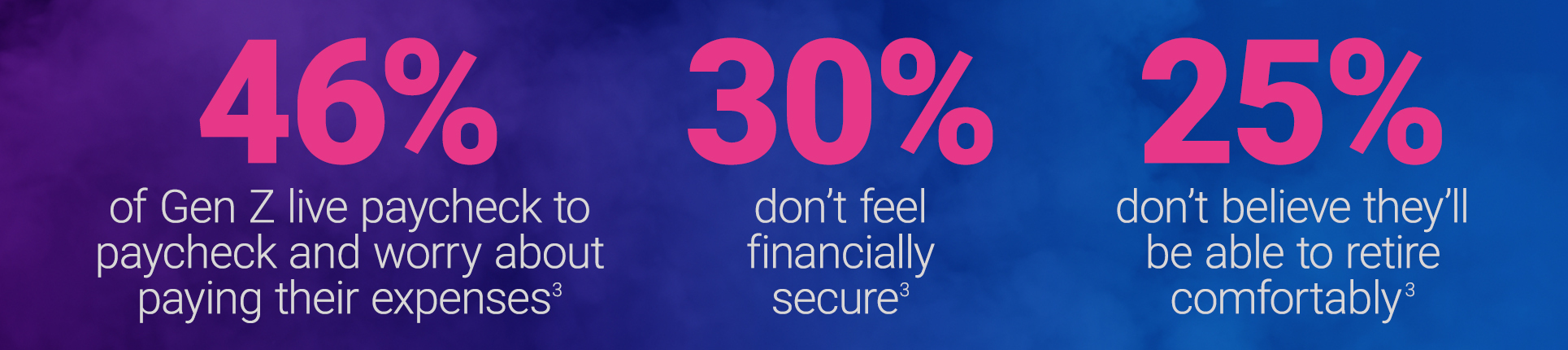
For these reasons, businesses have a unique opportunity to help those consumers feel less stressed and more confident by providing them with financial services.Thiscan turn those consumersinto loyal, long-standing customers.
Gen Z has the lowest credit score of any generation
Gen Z ranks lowest in average and median VantageScore® credit score* compared to all other generations, including Gen Y (or millennials), Gen X, and baby boomers.[4] While this is partially due to Gen Z being younger than the others, it’s also a result of having shorter credit histories and fewer lines of credit.
This presents a great chance for businesses to help Gen Z individuals establish responsible financial habits, such as opening a new line of credit to begin building a healthy credit history.
Gen Z is actively seeking support now
Consumers in the Gen Z age rangerecognize the importance of personal finance, but they also realize that they don’t have the knowledge needed to be successful.

While people in Gen Z are still young (currently between the ages of about 11 and 26), many need guidance now for their financial wellness and many need help to keep their financial future secure. This means now is the perfect time to start building a lifetime relationship with them and become a trusted advisor by providing financial products and services to help them through their financial journey.
There are about 72 million Americans in the Gen Z demographic[1]. A large percentage of this group may feel strongly about improving their financial wellness. With high levels of financial stress and generally low credit scores, many of them are looking for companies they can trust to help them build good credit and take control of their personal finances.
Since 2019, the number of consumers under the age of 30 enrolled in Experian Partner Solutions credit monitoring and identity protection services has doubled from 9% to 18%. Offering these financial tools to Gen Z is essential to building their trust and financial wellness, which can lead to an increase in future acquisition, retention, and revenue for your business.
*Calculated on the VantageScore® model. Your VantageScore® credit score from Experian® indicates your credit risk level and is not used by all lenders, so don’t be surprised if your lender uses a score that’s different from your VantageScore® credit score. Click here to learn more.
[1]Insider Intelligence. 2023. Generation Z News: Latest characteristics, research, and facts.
[2]Forbes. 2022.As Gen Z’s Buying Power Grows, Businesses Must Adapt Their Marketing.
[3]Deloitte. Deloitte Gen Z and Millennial Survey 2022. Jan 2022.
[4]Experian State of Credit Report. 2021.