Loading...

#ExperianVision 2019 – Day 1 Recap

by Stefani Wendel 4 min read May 6, 2019

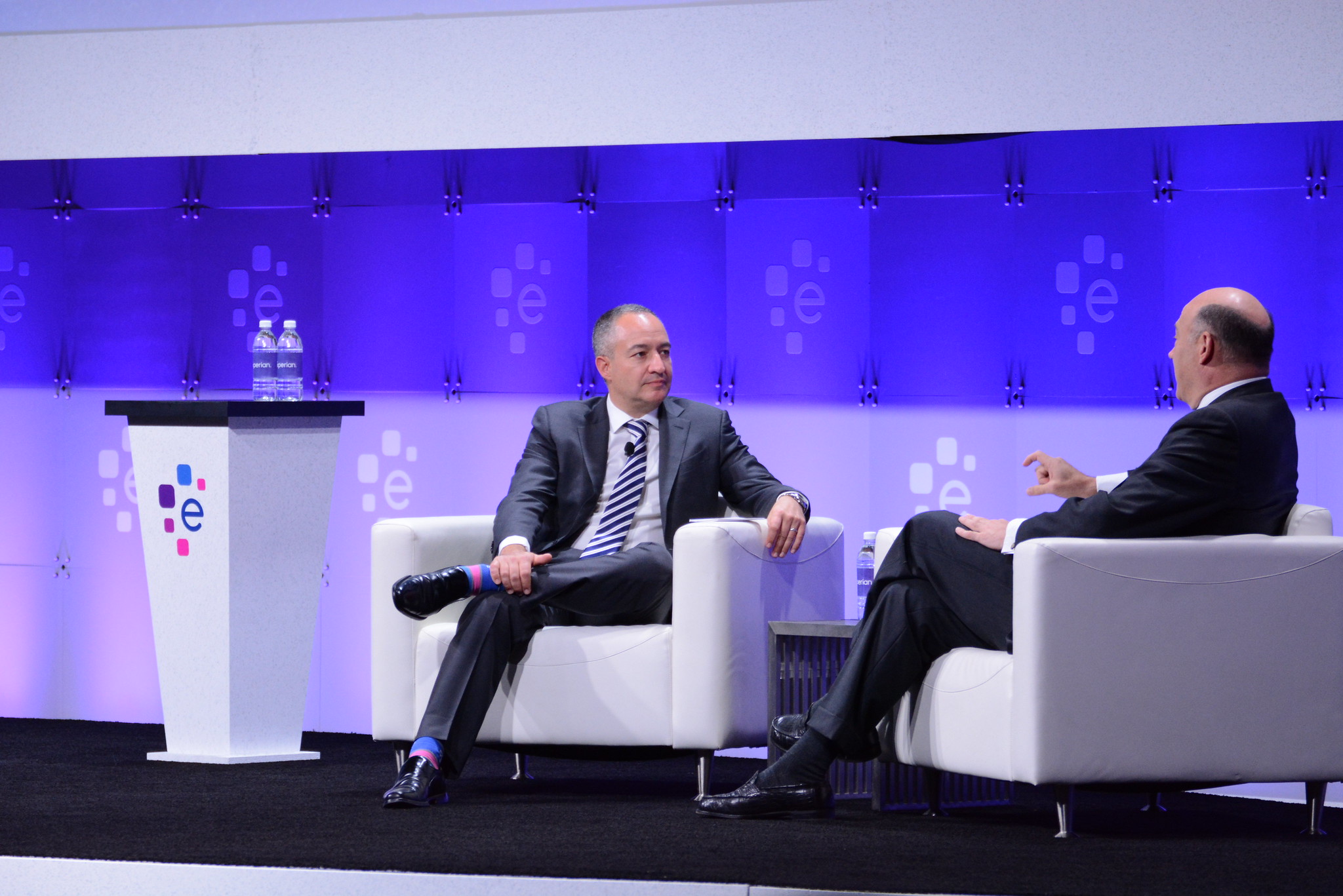
“Experian is transforming our business from a traditional credit bureau to a true technology and software provider,” said Craig Boundy, CEO of Experian, North America, as part of his opening remarks Monday morning to kick off the 2019 Experian Vision Conference.

“We are committed to working as a force of good.”

Covering the themes of financial inclusion, giving consumers control of their lives and better outcomes, a digital-first society, and the latest trends in fraud and security, Boundy addressed a crowd of over 850.

Alex Lintner, Experian’s Group President, gave a quick history of the past 3,000 years, from the first credit card, to the addition of wheels to a suitcase, to the iPhone and artificial intelligence.

“Innovation is not invention,” Lintner said. He gave the example of the iPhone and how a tear down analysis revealed there were no new elements; however, it was the translation of an idea into a good or service that benefited everyone (as the entire audience raised their hand when asked who had a smart phone).

Lintner’s mainstage presentation also featured three live demos, including how the Ascend Technology Platform takes complex model building and outputs from days and weeks to a few clicks, to the incorporation of Small Business Financial Exchange (SBFE) data into the Ascend Analytical Sandbox (incorporating more than 17 years of small business tradeline data and 150 predictive attributes) and lastly, Experian Boost, which according to a live tracker, has boosted consumer credit scores by a total of 3.2 million points, as of this morning, since its launch eight weeks ago.

Keynote Speaker: Gary D. Cohn

Gary D. Cohn, Former Director of the U.S. National Economic Council, was Monday morning’s keynote speaker. He weighed in on the domestic and global economy, policy issues, financial institutions’ responsibilities and some of his predictions.

Cohn brought attention to the ever-changing financial services space, including new forms of encryption and the world of biometric security, calling the financial services industry the “tip of the spear” when it comes to the digitization of the world.

Session Highlights – Day 1

Machine Learning

From the building blocks of neural networks to artificial intelligence, machine learning has been used in the areas of financial services that do not have adverse actions – think fraud, ID, collections. As we look to harness machine learning for models and other spaces (including adverse action), it’s important to delineate descriptive data (what’s happening now); predictive data (what’s happening in the future); prescriptive data (what am I going to do now); and cognitive data (are we asking the right question?). In addition, it’s necessary to address the five advanced analytic drivers including customer experience, cost, risk and loss, growth and compliance.

Home Equity & Lending

US macroeconomic trends show consumer confidence is still on an upward trend. While investor confidence is a little volatile, the GDP remains strong (though slightly slowing down) and unemployment is low and forecasted to remain low. Since 2006, the US hasn’t returned in the HELOC space. Mortgage and personal loans are up 20% and 13% respectively, while mortgages have dropped 1% and HELOCs have dropped 2%. With an estimated market potential of over $700 billion, HELOCs may be an untapped credit line given the strength of the economy.

Identity Evolution

From dumpster divers, aka pulling receipts out of dumpsters behind businesses, to today’s identity-based authentication, there’s been an evolution of how identity is defined as well as its corresponding risks. According to Experian’s Global Fraud & Identity Report, 74% of consumers value security as the most important part of the online experience (over convenience and personalization). However, 74% of consumers abandoned a shopping session that required too much information, and 72% of consumers said they were willing to share more data if it meant a seamless experience. What does this mean? Consumers want it all. Identity today now includes proxies and activity, which can also mean greater risk. Because of aggregators and other associated entities acting on a consumer’s behalf, there are lots of nuances that will need to be looked through.

Consumer-Permissioned Data

In order to be more consumer-centric, there are four levers through which consumers are given control: data accuracy, knowing their financial profile, the ability to improve their scores (via Experian BoostTM and UltraFICOTM) and protecting consumers when they permission access to their identity credentials. Using Experian Boost, consumers have seen an average increase of 13 points for consumers with positive changes. Additionally, using alternative credit data, financial institutions can score more people and score more accurately. One hundred million consumers could gain greater access to credit with consumer-permissioned data sources.

Meanwhile, the tech showcase featured over 20 demos covering alternative data, digital credit marketing, consumer empowerment, fraud and identity, integrated decisioning and technology.

More insights from Vision to come. Follow @ExperianVision and #ExperianVision on Twitter to see more of the action.

Related Posts

Lending hasn’t slowed down—but many decisioning processes have. Applications are coming in faster. Fraud is becoming more sophisticated. Borrowers expect near-instant responses. And yet, inside many organizations, decisions are still being made across fragmented systems, manual reviews, and rigid strategies that weren’t designed and aren’t optimized for today’s environment. That broadening gap isn’t just an operational issue but often stems from a lack of innovation as well. And it’s quietly costing lenders growth, efficiency, and competitive position. When decisioning falls behind, some symptoms are easy to recognize, like applications taking days to process, teams overloaded with manual reviews, and credit and fraud decisions happening in separate platforms. Others are not as obvious, but arguably more impactful, slipping bottom lines and fraud and therefore losses lurking in lenders’ portfolios. The root issue is a fragmented infrastructure. Experian has reported that while 79% of financial institutions surveyed globally want fewer vendors or more unified approaches, they typically use eight or more tools across credit, fraud and compliance. As most decisioning environments cannot integrate data, adapt strategies, and execute decisions in real time, lenders often have to make tradeoffs. Speed vs. accuracy; growth vs. risk; and automation vs. control are just some. Meanwhile, the market has moved on. Leading lenders are no longer optimizing individual steps. They’re rethinking decisioning as a connected, intelligent system. Gaps forming from status quo in 8 key decision areas Across the lending lifecycle, there are eight critical moments where decisioning can either accelerate growth or create friction. Pre-qualification: Pre-qualification should expand your funnel with confidence. But limited data access and static criteria often result in overly conservative targeting or missed opportunities. Additionally, the delay in acting on a pre-qualification funnel highlights a key area for opportunity among many lenders. Instant credit decisions: Customers expect real-time outcomes. When decisions rely on manual intervention or fragmented inputs, speed and conversions suffer. Prescreen and targeting: Disconnected data and rigid segmentation can lead to poorly aligned offers, reducing response rates and wasting acquisition spend. Credit line management: Without dynamic strategies, credit lines may be too restrictive (limiting growth) or too aggressive (increasing risk). Early delinquency management: Missed early signals and delayed interventions make it harder to prevent accounts from deteriorating. Mid- and late-stage delinquency: Strategies that don’t adapt to evolving borrower behavior reduce recovery effectiveness and increase losses. Collections and recovery: Manual, one-size-fits-all approaches limit recovery rates and increase operational cost. Ongoing strategy optimization: Perhaps the most overlooked gap: many lenders lack the ability to continuously test, learn, and refine decision strategies as conditions change. What these gaps are really costing you Individually, each of these breakdowns may seem manageable. Together, they can create systemic drag on performance. That shows up in four critical ways: Missed growth opportunities: Good borrowers are declined, abandoned, or never targeted in the first place. Credit offers fail to align with actual borrower potential. Higher operational costs: Manual reviews and disconnected workflows consume time and resources that could be spent on higher-value work. Increased fraud exposure and friction: Fraud is proliferating and becoming more expensive to manage. The Federal Trade Commission reported $12.5B were lost to fraud in the U.S. in 2024, a 25% increase over the prior year. For many financial institutions, the first reaction is often to add more steps to the decisioning process, which can impact good borrowers. Increased competitive pressure: Fintechs and modern lenders are focused on delivering faster, more personalized experiences, capturing share while traditional processes lag behind. 80% of banks and credit unions plan to increase their technology spending in 2026, yet many continue to fall short on planned system deployments, according to Cornerstone Advisors’ annual “What’s Going On in Banking” research report. What innovative decisioning leaders are doing differently Leading lenders are changing how decisions are made, creating a competitive advantage. Instead of stitching together point solutions, they’re adopting a more integrated approach that brings together: Comprehensive data – including both credit and fraud insights Optimized decision strategies – designed to balance growth and risk Real-time execution – enabling faster, more consistent outcomes Continuous optimization – adapting to changing market conditions Strategic partnerships – leveraging third-party industry expertise to augment their own This shift eliminates the need for tradeoffs and instead allows lenders to increase approvals while maintaining control, reducing manual effort while improving consistency, and responding faster without sacrificing confidence. The stakes are high and the competition for consumers is even higher, particularly against a backdrop of ever-evolving fraud risks, continuously increasing consumer expectations for seamless, digital-first experiences and often limited resources. Nearly half of banks and 59% of credit unions have already deployed generative AI, with more investing now, according to the Cornerstone Advisors’ report. Closing the innovation gap requires a more fundamental shift toward decisioning systems that are connected, scalable, and built for continuous change. A new foundation for decisioning This is where platforms like Experian Decisioning are changing the landscape. By bringing together credit and fraud insights, decision strategies, and a flexible technology architecture, lenders can move beyond fragmented processes and build a more unified, intelligent decisioning approach. One that fits within existing systems but also evolves with your needs. Where to start Impactful change doesn’t need to be an overhaul of everything at once for most organizations. The first step is understanding where your biggest gaps exist, and which decision areas are creating the most friction or missed opportunity. Once you can see where decisioning is not optimized, you can begin to redesign it in a way that’s faster and more adept for what lending has become. By making better decisions, faster, and with greater confidence, lenders can process applications more efficiently and also break away from the pack by leveraging decisioning as a strategic advantage. Learn more

by Stefani Wendel 4 min read March 26, 2026

Fraud is evolving faster than ever, driven by digitalization, real-time payments and increasingly sophisticated scams. For Warren Jones and his team at Santander Bank, staying ahead requires more than tools. It requires the right partner. The partnership with Santander Bank began nearly a decade ago, during a period of rapid change in the fraud and banking landscape. Since then, the relationship has grown into a long-term collaboration focused on continuous improvement and innovation. Experian products helped Santander address one of its most pressing operational challenges: a high-volume manual review queue for new account applications. While the vast majority of alerts in the queue were fraudulent and ultimately declined, a small percentage represented legitimate customers whose account openings were delayed. This created inefficiencies for staff and a poor first impression of genuine applicants. We worked alongside Santander to tackle this challenge head-on, transforming how applications were reviewed, how fraud was detected and how legitimate customers were approved. In addition to fraud prevention, implementing Experian's Ascend PlatformTM, with its intuitive user experience and robust data environment, has unlocked additional value across the organization. The platform supports multiple use cases, enabling collaboration between fraud and marketing teams to align strategies based on actionable insights. Learn more about our Ascend Platform

by Zohreen Ismail 4 min read February 18, 2026

For lenders, the job has never been more complex. You’re expected to protect portfolio performance, meet regulatory expectations, and support growth, all while fraud tactics evolve faster than many traditional risk frameworks were designed to handle. One of the biggest challenges of the job? The line between credit loss and fraud loss is increasingly blurred, and misclassified losses can quietly distort portfolio performance. First-party fraud can look like standard credit risk on the surface and synthetic identity fraud can be difficult to identify, allowing both to quietly slip through decisioning models and distort portfolio performance. That’s where fraud risk scores come into play. Used correctly, they don’t replace credit models; they strengthen them. And for credit risk teams under pressure to approve more genuine customers without absorbing unnecessary losses, understanding how fraud risk scores fit into modern decisioning has become essential. What is a fraud risk score (and what isn’t it) At its core, a fraud risk score is designed to assess the likelihood that an applicant or account is associated with fraudulent behavior, not simply whether they can repay credit. That distinction matters. Traditional credit scores evaluate ability to repay based on historical financial behavior. Fraud risk scores focus on intent and risk signals, patterns that suggest an individual may never intend to repay, may be manipulating identity data, or may be building toward coordinated abuse. Fraud risk scores are not: A replacement for credit scoring A blunt tool designed to decline more applicants A one-time checkpoint limited to account opening Instead, they provide an additional lens that helps credit risk teams separate true credit risk from fraud that merely looks like credit loss. How fraud scores augment decisioning Credit models were never built to detect fraud masquerading as legitimate borrowing behavior. Consider common fraud scenarios facing lenders today: First-payment default, where an applicant appears creditworthy but never intends to make an initial payment Bust-out fraud, where an individual builds a strong credit profile over time, then rapidly maxes out available credit before disappearing Synthetic identity fraud, where criminals blend real and fabricated data to create identities that mature slowly and evade traditional checks In all three cases, the applicant may meet credit criteria at the point of decision. Losses can get classified as charge-offs rather than fraud, masking the real source of portfolio degradation. When credit risk teams rely solely on traditional models, the result is often an overly conservative response: tighter credit standards, fewer approvals, and missed growth opportunities. How fraud risk scores complement traditional credit decisioning Fraud risk scores work best when they augment credit decisioning. For credit risk officers, the value lies in precision. Fraud risk scores help identify applicants or accounts where behavior, velocity or identity signals indicate elevated fraud risk — even when credit attributes appear acceptable. When integrated into decisioning strategies, fraud risk scores can: Improve confidence in approvals by isolating high-risk intent early Enable adverse-actionable decisions for first-party fraud, supporting compliance requirements Reduce misclassified credit losses by clearly identifying fraud-driven outcomes Support differentiated treatment strategies rather than blanket declines The goal isn’t to approve fewer customers. It’s to approve the right customers and to decline or treat risk where intent doesn’t align with genuine borrowing behavior. Fraud risk across the credit lifecycle One of the most important shifts for credit risk teams is recognizing that fraud risk is not static. Fraud risk scores can deliver value at multiple stages of the credit lifecycle: Marketing and prescreen: Fraud risk insights help suppress high-risk identities before offers are extended, ensuring marketing dollars are maximized by targeting low risk consumers. Account opening and originations: Real-time fraud risk scoring supports early detection of first-party fraud, synthetic identities, and identity misuse — before losses are booked. Prequalification and instant decisioning: Fraud risk scores can be used to exclude high-risk applicants from offers while maintaining speed and customer experience. Account management and portfolio review: Fraud risk doesn’t end after onboarding. Scores applied in batch or review processes help identify accounts trending toward bust-out behavior or coordinated abuse, informing credit line management and treatment strategies. This lifecycle approach reflects a broader shift: fraud prevention is no longer confined to front-end controls — it’s a continuous risk discipline. What credit risk officers should look for in a fraud risk score Not all fraud risk scores are created equal. When evaluating or deploying them, credit risk officers should prioritize: Lifecycle availability, so fraud risk can be assessed beyond originations Clear distinction between intent and ability to repay, especially for first-party fraud Adverse-action readiness, including explainability and reason codes Regulatory alignment, supporting fair lending and compliance requirements Seamless integration alongside existing credit and decisioning frameworks Increasingly, credit risk teams also value platforms that reduce operational complexity by enabling fraud and credit risk assessment through unified workflows rather than fragmented point solutions. A more strategic approach to fraud and credit risk The most effective credit risk strategies today are not more conservative, they’re more precise. Fraud risk scores give credit risk officers the ability to stop fraud earlier, classify losses accurately and protect portfolio performance without tightening credit across the board. When fraud and credit insights work together, teams can gain a clearer view of risk, stronger decision confidence and more flexibility to support growth. As fraud tactics continue to evolve, the organizations that succeed will be those that can effectively separate fraud from credit loss. Fraud risk scores are no longer a nice-to-have. They’re a foundational tool for modern credit risk strategies. How credit risk teams can operationalize fraud risk scores For credit risk officers, the challenge isn’t just understanding fraud risk, it’s operationalizing it across the credit lifecycle without adding friction, complexity or compliance risk. Rather than treating fraud as a point-in-time decision, credit risk teams should assess fraud risk where it matters most, from acquisition through portfolio management. Fraud risk scores are designed to complement credit decisioning by focusing on intent to repay, helping teams distinguish fraud-driven behavior from traditional credit risk. Key ways Experian supports credit risk teams include: Lifecycle coverage: Experian award-winning fraud risk scores are available across marketing, originations, prequalification, instant decisioning and ongoing account review. This allows organizations to apply consistent fraud strategies beyond account opening. First-party and synthetic identity fraud intelligence: Experian’s fraud risk scoring addresses first-payment default, bust-out behavior and synthetic identity fraud, which are scenarios that often bypass traditional credit models because they initially appear creditworthy. Converged fraud and credit decisioning: By delivering fraud and credit insights together, often through a single integration, Experian can help reduce operational complexity. Credit risk teams can assess fraud and credit risk simultaneously rather than managing disconnected tools and workflows. Precision over conservatism: The emphasis is not on declining more applicants, but on approving more genuine customers by isolating high-risk intent earlier. This precision helps protect portfolio performance without sacrificing growth. For lenders navigating increasing fraud pressure, Experian’s approach reflects a broader shift in the industry: fraud prevention and credit risk management are no longer separate disciplines; they are most effective when aligned. Explore our fraud solutions Contact us

by Julie Lee 4 min read February 18, 2026