#ExperianVision 2019 – Day 2 Recap

by Stefani Wendel 5 min read May 7, 2019

Day 2 at this year’s Vision conference was fueled with new technology and inspiration.

The morning session opened with Robert Boxberger, Experian President, Decision Analytics, and also featured two live demos, one on Experian’s solution for the upcoming CECL compliance deadline and the second for mobile credit, including two use cases on instant issuance and lead generation, which has resulted in a 28% conversion rate of hot leads for one of Experian’s marquee clients.

Keynote Speaker: Aimée Mullins

“Get comfortable with the uncomfortable” was just one of the mantras shared on Tuesday morning by Aimée Mullins, an actor, Olympian, TEDTalk speaker, and one of the youngest honorees to be inducted into the National Women’s Hall of Fame, among many other accomplishments.

“It is our uniqueness that’s our greatest asset that we can leverage for our greatest strength,” said Mullins during her keynote centered on achieving the “impossible.”

As a bi-lateral amputee (or “double BK” also known as double below-the-knee amputee, as she referenced), Mullins had doctors and experts tell her and her parents what she would not be able to do. Instead, she encouraged Tuesday’s audience to never stop thinking like a child, to use their curiosity to find new ways where you want to go, and to practice curiosity like a sport to keep from getting comfortable, and therefore static.

“It made my not knowing what I can do so much more powerful than an expert’s presumption of what he thought I could do,” she said.

Session Highlights – Day 2

Consumer Trust

What engenders trust as consumers? And what does it take to build online trust? With 51% of new account fraud victims personally knowing the perpetrator and 3.4 billion total losses from fraudulent account openings (Javelin Feb 2019), there are five key components to building trust: digital adoption, transparency, fraud management, recognition and authentication. Today’s consumers want to use the digital channel, have both security and ease of access, be recognized, know how their personal information is being used, and engage and trust with biometrics.

Artificial Intelligence – Chat Bots and Beyond

According to Gartner, “’Conversational AI-first’ will supersede ‘cloud-first,’ ‘mobile first’ as the most important high-level imperative for the next 10 years.” As evidenced by Google Duplex’s realistic conversations with humans, including the use of “uh” and “um,” conversational AI is positioned to redefine the next generation of human interface, aimed at achieving better customer satisfaction and elevate the customer relationship.

Marketing Analytics

The marketing analytics landscape is changing. Today’s marketing problems – including the always limited budget and need to produce greater ROI – require tactical strategies to target the right consumers. Enter Experian’s AscendTM marketing platform. Leveraging this tool, including its neural networks that were demonstrated Monday morning, helps gain new insights into consumer behavior.

Fraud in the Digital Wild West

A panel discussion featuring representatives from Merchant Risk Council, USAA and Alliance Data compared fighting fraud to herding cats. Challenges discussed included the ongoing struggle to find balance between limiting friction during the authentication process, while also protecting customers, as well as fraudsters’ tendencies to tap into victims’ emotions and curiosity (think phishing schemes). As one of the panelists offered as a piece of advice, “Fraudsters share best practices, so should we.”

Visibility for the Invisibles

People are more than the sum of their parts. The traditional credit score may show a consumer’s reputation, but layering trended and alternative data sets adds their character. Not only can trended data and alternative credit data – including leveraging education attributes – make invisible consumers visible, they can also reveal that a consumer with a presumably superlative credit score is actually a “credit zombie.” These data sets enable the opportunity to create first chances, drive second chances and re-evaluate risk, while also driving a strong growth strategy.

CECL

After reviewing the basics of CECL and the upcoming deadlines (ranging from Q1 2020 to Q1 2022), a review of CECL compliance challenges and potential product changes preceded a modeling techniques case study and a list of key impacts to businesses. Those impacts include: product profitability, loss forecasting methodology, data management and processes and capital ratios. Experian’s CECL forecasting solution leverages Experian’s extensive historical data and Ascend Analytical Sandbox. Using a best practice modeling pipeline to improve efficiency and reduce operational risks, the solution combines advanced machine learning, traditional model techniques and modeling experience to improve performance and reduce risk of overfitting.

Keynote Speaker: Kobe Bryant
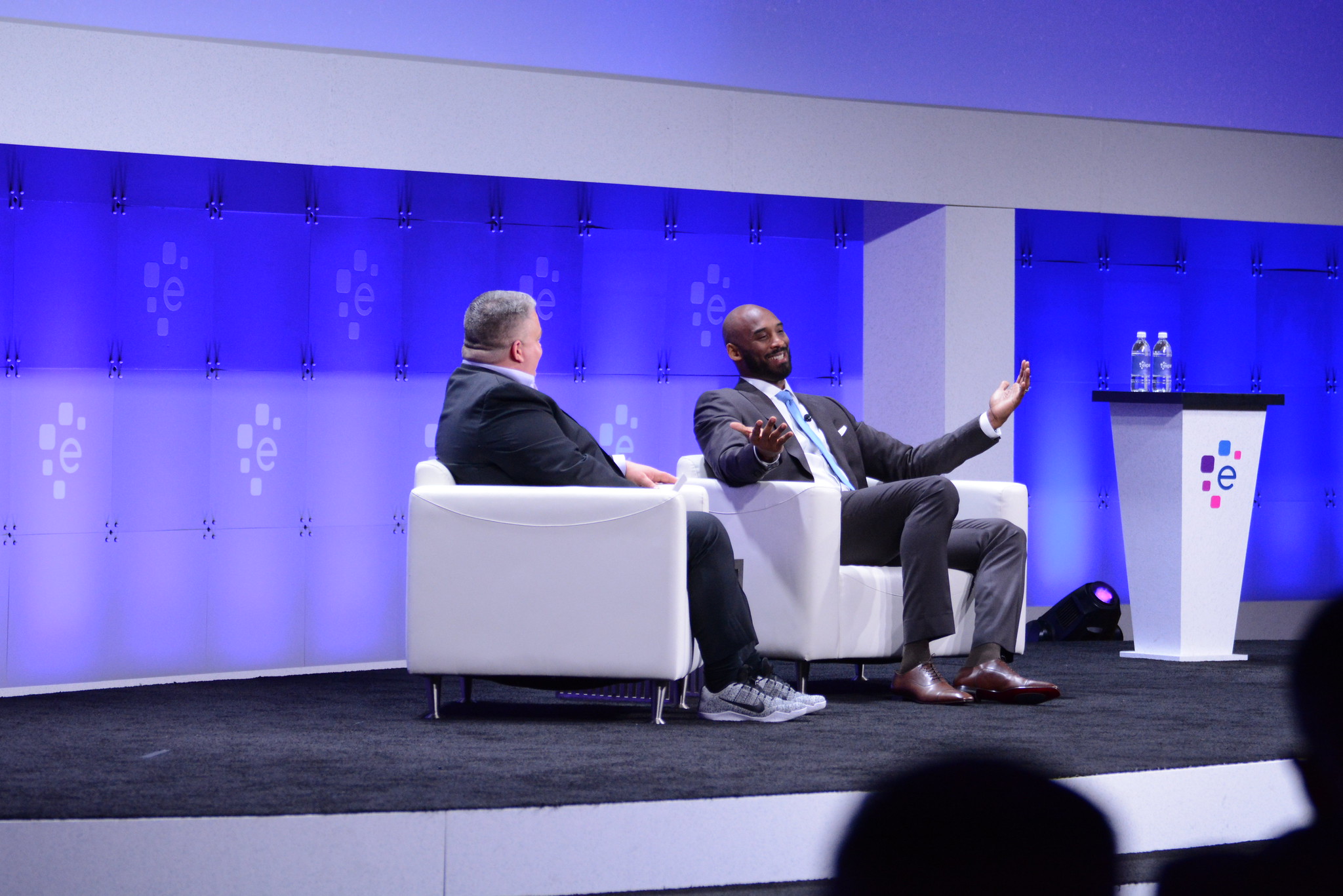
Kobe Bryant closed out the day with stories from his highly-decorated 20-year career with the Los Angeles Lakers, some tips on trash talk and lessons in leadership.

“I had to figure out how to be undeniable,” Bryant said, on competing for minutes at the start of his career.

In addition to his basketball legacy, including wining five NBA championships, being named an NBA MVP, a two-time NBA Finals MVP and winning two Olympic gold medals, Bryant also launched the Kobe and Vanessa Bryant Family Foundation, hosts the Kobe Academy and has formed Kobe Inc. He’s a storyteller, an Oscar winner, and his name has become synonymous with standing for uncompromising excellence.

How to be successful? “Make sure you have the right people on the team,” Bryant said. “Passionate. Borderline obsessive.”

One of his key takeaways from his basketball career that translates to his leadership on and off the court happened when his pre-game and game time thinking shifted from internal to external.

“You have to put yourself 2nd, 3rd, 4th…you have to put the team first,” Bryant said.

For more coverage, follow #ExperianVision on Twitter or check the Experian Insights LinkedIn page.
Related Posts

Expanding the Prescreen View with Alternative Credit Data

Start with a simple question Credit prescreen is an important tool in many lenders’ growth strategies. But the precision of any prescreen strategy depends on the data behind it. What financial behavior might traditional credit data alone not reveal? With Clarity data now available for Instant Prescreen decisioning, lenders can bring alternative credit insights into their targeting strategy, helping them identify prospects who may align with their established criteria, refine targeting strategies and explore additional acquisition opportunities while maintaining control over their risk thresholds. Additional insights alongside traditional credit data For many consumers, a traditional credit file tells a rich and reliable story. But it doesn't always tell the whole story. Consumers may also be using alternative financial products, such as small-dollar installment loans, single-payment loans, auto title loans or rent-to-own agreements and building payment histories that provide additional signals about their financial behavior. For lenders, those unseen signals can represent untapped opportunities. With more than 60 million unique subprime identities, Clarity's database helps lenders gain a more complete view of their applicant pool. Clarity data adds another dimension to that view, providing alternative credit insights that can help lenders better understand consumers whose financial behavior may not be fully represented by traditional credit data alone. How Clarity data sharpens instant prescreen decisioning Clarity provides specialty alternative credit data, with insights into subprime and near-prime consumer activity that may not appear in traditional credit files. And because Clarity is part of Experian, those insights can now be brought directly into Instant Prescreen decisioning. That means lenders can incorporate additional attributes and scores into their credit decisioning strategies without managing a separate data feed or stitching together disconnected sources. It has quickly become a visibility gap lenders can't ignore. Additional data may help support more granular segmentation and targeting strategies. Lenders remain in control of their criteria and risk thresholds while gaining additional information to inform their prescreen strategies. When considered alongside traditional credit data, alternative credit insights can support several aspects of prescreen decisioning: Identify more opportunities: Surface qualified prospects who may be harder to identify using traditional credit data alone. Refine targeting: Add alternative credit insights to help differentiate consumers with greater precision. Inform offer strategies: Use a broader view of financial behavior to help align consumers with appropriate offers. Expand intelligently: Explore incremental audience opportunities while maintaining control over your established risk criteria. Simplify execution: Access Experian and Clarity insights within a connected Instant Prescreen decisioning environment. See more opportunity in your prescreen strategy Growth doesn’t always require looking for an entirely new audience. Sometimes, it starts with seeing more in the audience already in front of you. By bringing Clarity data into Instant Prescreen, lenders can add another layer of insight to their decisioning, helping identify incremental opportunities, refine targeting and support acquisition decision processes across a broader range of consumers. Explore prescreen solutions

September 3, 2026 by Zohreen Ismail
Are Fraudsters Building Better Identities Than Your Customers?

Fraudsters are getting surprisingly good at onboarding. Sometimes, better than your customers. Legitimate customers treat onboarding like an errand. They start an application between other tasks, get distracted, forget a password, switch devices, upload a document or come back later to finish. Their digital lives aren’t always linear, because real life isn’t either. Fraudsters approach onboarding differently. For them, opening an account is the objective. Every interaction is designed to increase the odds of success. The difference raises an uncomfortable question hanging over onboarding: What exactly are we rewarding? When smooth becomes suspicious Digital onboarding has traditionally rewarded experiences that feel smooth, consistent and complete. The challenge is that legitimate customers rarely behave that way. Most people approach onboarding somewhere between mildly distracted and mildly annoyed. They pause halfway through because dinner is burning. They reopen an old account only to realize everything is attached to an email they made in college and, somehow, still use for airline receipts. Digital life accumulates history unevenly, because ordinary life does too. Fraudsters have every reason to eliminate those inconsistencies. Applications may be rehearsed. Identity attributes are assembled deliberately. Contact points are prepared in advance. Every interaction is optimized to make the application appear credible. Ironically, the qualities organizations often associate with confidence — clean submissions, steady progression and few corrections — can also describe applications that have been carefully engineered to pass inspection. The challenge isn't that smooth onboarding is meaningless. It's that smooth onboarding, by itself, doesn't tell the whole story. Context changes interpretation A smooth onboarding experience should be the beginning of the evaluation, not the end. Behavior provides important context. How someone moves through an application can reveal whether the experience feels naturally human or unusually orchestrated. Do they interact naturally? Do they hesitate, correct mistakes or navigate in ways that resemble ordinary human behavior? Or does the session appear unusually scripted, automated or repetitive? Identity verification adds another layer. Matching information across trusted sources, validating identity details and strengthening confidence in account creation remain important, particularly when onboarding decisions carry financial, fraud or customer experience consequences. But verification largely answers a point-in-time question: Does this information match right now? A third layer comes from digital history. An inbox attached to years of airline receipts, loyalty accounts, subscription renewals, account recovery, financial notifications and familiar digital routines introduces a different kind of confidence. Legitimate digital identities leave behind patterns of persistence and engagement that develop gradually over time. Fraudsters can assemble convincing identity attributes, but creating years of ordinary digital life is much harder. Building confidence in an identity requires more than verifying information submitted during a single onboarding session. It requires understanding whether the identity reflects a broader history that supports what the application suggests. A multilayered approach builds stronger identity confidence No single signal can provide a complete view of identity risk. Organizations need multiple sources of confidence that reinforce one another. That's the thinking behind our approach: combining behavioral intelligence, identity verification and digital identity continuity into a more complete view of risk. We bring these complementary layers together through: • NeuroID adds behavioral context during onboarding and account creation, helping identify interaction patterns that may indicate automation, manipulation or coordinated fraud. • Precise ID® strengthens identity verification and resolution by comparing applicant information with trusted identity data. • AtData, recently added to our portfolio, contributes email-centered intelligence based on persistence, engagement and long-term digital history. Together, these capabilities help organizations move beyond evaluating a single moment in time to understanding whether an identity is supported by consistent behavior, trusted identity data and an established digital history. The future of fraud prevention isn't about rewarding the smoothest application. It's about recognizing the most trustworthy identity. Fraudsters can rehearse an application. They can optimize an onboarding journey. They can even assemble convincing identity attributes. What they can't easily manufacture is years of ordinary digital life. That's why digital identity continuity has become an important layer of modern fraud prevention. Combined with identity verification and behavioral intelligence, it helps organizations distinguish between identities that simply look convincing and those supported by a history that is much harder to fake. Learn more Contact us

September 2, 2026 by Julie Lee
From Hybrids to Refinancing: Consumers are Finding New Roads to Vehicle Affordability

For today’s automotive consumers, considering a vehicle purchase isn’t just about the price they see on the window, it’s about finding the right combination of their vehicle preference and monthly payment. In fact, data from Experian Automotive’s State of the Automotive Finance Market Report: Q2 2026 highlighted how affordability continues to shape the automotive finance market. For instance, hybrids offered the lowest average new vehicle loan payment across all fuel types, coming in at $646 in Q2 2026, compared to electric vehicles (EVs) at $692, and gasoline-powered vehicles at $721. This led to considerable growth in new vehicle market share for hybrids this quarter, accounting for 16.80%, from 12.99% last year. While the automotive market continues to offer consumers an expanding mix of fuel types, the combination of growing hybrid share and comparatively lower monthly payments is something worth watching. Affordability isn’t just about what consumers drive, it’s how they finance it While hybrid vehicles are continuing to pave their way in the vehicle market, consumers who already have an auto loan are finding greater savings through refinancing. In the second quarter of 2026, automotive refinancing reached approximately 140,000 loans. More notably, the financial benefit associated with refinancing has grown. Consumers who refinanced this quarter reduced their average interest rate by more than 2.4%, with the average rate moving from 10.40% on the original loan to 7.97% on the refinanced loan. Those rate reductions translated into meaningful monthly savings, especially when refinancing through particular lenders. In Q2 2026, refinancing saved consumers an average of $83 per month, compared to an average monthly savings of $64 this time last year. However, credit unions delivered the largest average payment difference among lender types at $102 this quarter, followed by banks ($65), and finance companies ($38). It’s important for automotive professionals to acknowledge that affordability is not a single moment in the vehicle journey. It can influence the vehicle a consumer chooses, the financing they opt for during that transaction, and the decisions they make years after driving off the lot. Understanding and leveraging those different moments can help professionals identify opportunities to better serve consumers throughout the vehicle ownership lifecycle. To learn more about automotive finance trends, view the full State of the Automotive Finance Market Report: Q2 2026 presentation on demand.

August 27, 2026 by Melinda Zabritski

Subscribe to our Newsletter

Enter your name and email for the latest updates.

This site is protected by reCAPTCHA and the Google Privacy Policy and Terms of Service apply.

Subscribe to our Newsletter

Don't miss out on the latest industry trends and insights!
Subscribe