Fraud & Identity

For lenders, the job has never been more complex. You’re expected to protect portfolio performance, meet regulatory expectations, and support growth, all while fraud tactics evolve faster than many traditional risk frameworks were designed to handle. One of the biggest challenges of the job? The line between credit loss and fraud loss is increasingly blurred, and misclassified losses can quietly distort portfolio performance. First-party fraud can look like standard credit risk on the surface and synthetic identity fraud can be difficult to identify, allowing both to quietly slip through decisioning models and distort portfolio performance. That’s where fraud risk scores come into play. Used correctly, they don’t replace credit models; they strengthen them. And for credit risk teams under pressure to approve more genuine customers without absorbing unnecessary losses, understanding how fraud risk scores fit into modern decisioning has become essential. What is a fraud risk score (and what isn’t it) At its core, a fraud risk score is designed to assess the likelihood that an applicant or account is associated with fraudulent behavior, not simply whether they can repay credit. That distinction matters. Traditional credit scores evaluate ability to repay based on historical financial behavior. Fraud risk scores focus on intent and risk signals, patterns that suggest an individual may never intend to repay, may be manipulating identity data, or may be building toward coordinated abuse. Fraud risk scores are not: A replacement for credit scoring A blunt tool designed to decline more applicants A one-time checkpoint limited to account opening Instead, they provide an additional lens that helps credit risk teams separate true credit risk from fraud that merely looks like credit loss. How fraud scores augment decisioning Credit models were never built to detect fraud masquerading as legitimate borrowing behavior. Consider common fraud scenarios facing lenders today: First-payment default, where an applicant appears creditworthy but never intends to make an initial payment Bust-out fraud, where an individual builds a strong credit profile over time, then rapidly maxes out available credit before disappearing Synthetic identity fraud, where criminals blend real and fabricated data to create identities that mature slowly and evade traditional checks In all three cases, the applicant may meet credit criteria at the point of decision. Losses can get classified as charge-offs rather than fraud, masking the real source of portfolio degradation. When credit risk teams rely solely on traditional models, the result is often an overly conservative response: tighter credit standards, fewer approvals, and missed growth opportunities. How fraud risk scores complement traditional credit decisioning Fraud risk scores work best when they augment credit decisioning. For credit risk officers, the value lies in precision. Fraud risk scores help identify applicants or accounts where behavior, velocity or identity signals indicate elevated fraud risk — even when credit attributes appear acceptable. When integrated into decisioning strategies, fraud risk scores can: Improve confidence in approvals by isolating high-risk intent early Enable adverse-actionable decisions for first-party fraud, supporting compliance requirements Reduce misclassified credit losses by clearly identifying fraud-driven outcomes Support differentiated treatment strategies rather than blanket declines The goal isn’t to approve fewer customers. It’s to approve the right customers and to decline or treat risk where intent doesn’t align with genuine borrowing behavior. Fraud risk across the credit lifecycle One of the most important shifts for credit risk teams is recognizing that fraud risk is not static. Fraud risk scores can deliver value at multiple stages of the credit lifecycle: Marketing and prescreen: Fraud risk insights help suppress high-risk identities before offers are extended, ensuring marketing dollars are maximized by targeting low risk consumers. Account opening and originations: Real-time fraud risk scoring supports early detection of first-party fraud, synthetic identities, and identity misuse — before losses are booked. Prequalification and instant decisioning: Fraud risk scores can be used to exclude high-risk applicants from offers while maintaining speed and customer experience. Account management and portfolio review: Fraud risk doesn’t end after onboarding. Scores applied in batch or review processes help identify accounts trending toward bust-out behavior or coordinated abuse, informing credit line management and treatment strategies. This lifecycle approach reflects a broader shift: fraud prevention is no longer confined to front-end controls — it’s a continuous risk discipline. What credit risk officers should look for in a fraud risk score Not all fraud risk scores are created equal. When evaluating or deploying them, credit risk officers should prioritize: Lifecycle availability, so fraud risk can be assessed beyond originations Clear distinction between intent and ability to repay, especially for first-party fraud Adverse-action readiness, including explainability and reason codes Regulatory alignment, supporting fair lending and compliance requirements Seamless integration alongside existing credit and decisioning frameworks Increasingly, credit risk teams also value platforms that reduce operational complexity by enabling fraud and credit risk assessment through unified workflows rather than fragmented point solutions. A more strategic approach to fraud and credit risk The most effective credit risk strategies today are not more conservative, they’re more precise. Fraud risk scores give credit risk officers the ability to stop fraud earlier, classify losses accurately and protect portfolio performance without tightening credit across the board. When fraud and credit insights work together, teams can gain a clearer view of risk, stronger decision confidence and more flexibility to support growth. As fraud tactics continue to evolve, the organizations that succeed will be those that can effectively separate fraud from credit loss. Fraud risk scores are no longer a nice-to-have. They’re a foundational tool for modern credit risk strategies. How credit risk teams can operationalize fraud risk scores For credit risk officers, the challenge isn’t just understanding fraud risk, it’s operationalizing it across the credit lifecycle without adding friction, complexity or compliance risk. Rather than treating fraud as a point-in-time decision, credit risk teams should assess fraud risk where it matters most, from acquisition through portfolio management. Fraud risk scores are designed to complement credit decisioning by focusing on intent to repay, helping teams distinguish fraud-driven behavior from traditional credit risk. Key ways Experian supports credit risk teams include: Lifecycle coverage: Experian award-winning fraud risk scores are available across marketing, originations, prequalification, instant decisioning and ongoing account review. This allows organizations to apply consistent fraud strategies beyond account opening. First-party and synthetic identity fraud intelligence: Experian’s fraud risk scoring addresses first-payment default, bust-out behavior and synthetic identity fraud, which are scenarios that often bypass traditional credit models because they initially appear creditworthy. Converged fraud and credit decisioning: By delivering fraud and credit insights together, often through a single integration, Experian can help reduce operational complexity. Credit risk teams can assess fraud and credit risk simultaneously rather than managing disconnected tools and workflows. Precision over conservatism: The emphasis is not on declining more applicants, but on approving more genuine customers by isolating high-risk intent earlier. This precision helps protect portfolio performance without sacrificing growth. For lenders navigating increasing fraud pressure, Experian’s approach reflects a broader shift in the industry: fraud prevention and credit risk management are no longer separate disciplines; they are most effective when aligned. Explore our fraud solutions Contact us

For many banks, first-party fraud has become a silent drain on profitability. On paper, it often looks like classic credit risk: an account books, goes delinquent, and ultimately charges off. But a growing share of those early charge-offs is driven by something else entirely: customers who never intended to pay you back. That distinction matters. When first-party fraud is misclassified as credit risk, banks risk overstating credit loss, understating fraud exposure, and missing opportunities to intervene earlier. In our recent Consumer Banker Association (CBA) partner webinar, “Fraud or Financial Distress? How to Differentiate Fraud and Credit Risk Early,” Experian shared new data and analytics to help fraud, risk and collections leaders see this problem more clearly. This post summarizes key themes from the webinar and points you to the full report and on-demand webinar for deeper insight. Why first-party fraud is a growing issue for banks Banks are seeing rising early losses, especially in digital channels. But those losses do not always behave like traditional credit deterioration. Several trends are contributing: More accounts opened and funded digitally Increased use of synthetic or manipulated identities Economic pressure on consumers and small businesses More sophisticated misuse of legitimate credentials When these patterns are lumped into credit risk, banks can experience: Inflation of credit loss estimates and reserves Underinvestment in fraud controls and analytics Blurred visibility into what is truly driving performance Treating first-party fraud as a distinct problem is the first step toward solving it. First-payment default: a clearer view of intent Traditional credit models are designed to answer, “Can this customer pay?” and “How likely are they to roll into delinquency over time?” They are not designed to answer, “Did this customer ever intend to pay?” To help banks get closer to that question, Experian uses first-payment default (FPD) as a key indicator. At a high level, FPD focuses on accounts that become seriously delinquent early in their lifecycle and do not meaningfully recover. The principle is straightforward: A legitimate borrower under stress is more likely to miss payments later, with periods of cure and relapse. A first-party fraudster is more likely to default quickly and never get back on track. By focusing on FPD patterns, banks can start to separate cases that look like genuine financial distress from those that are more consistent with deceptive intent. The full report explains how FPD is defined, how it varies by product, and how it can be used to sharpen bank fraud and credit strategies. Beyond FPD: building a richer fraud signal FPD alone is not enough to classify first-party fraud. In practice, leading banks are layering FPD with behavioral, application and identity indicators to build a more reliable picture. At a conceptual level, these indicators can include: Early delinquency and straight-roll behavior Utilization and credit mix that do not align with stated profile Unusual income, employment, or application characteristics High-risk channels, devices, or locations at application Patterns of disputes or behaviors that suggest abuse The power comes from how these signals interact, not from any one data point. The report and webinar walk through how these indicators can be combined into fraud analytics and how they perform across key banking products. Why it matters across fraud, credit and collections Getting first-party fraud right is not just about fraud loss. It impacts multiple parts of the bank. Fraud strategy Well-defined quantification of first-party fraud helps fraud leaders make the case for investments in identity verification, device intelligence, and other early lifecycle controls, especially in digital account opening and digital lending. Credit risk and capital planning When fraud and credit losses are blended, credit models and reserves can be distorted. Separating first-party fraud provides risk teams a cleaner view of true credit performance and supports better capital planning. Collections and customer treatment Customers in genuine financial distress need different treatment paths than those who never intended to pay. Better segmentation supports more appropriate outreach, hardship programs, and collections strategies, while reserving firmer actions for abuse. Executive and board reporting Leadership teams increasingly want to understand what portion of loss is being driven by fraud versus credit. Credible data improves discussions around risk appetite and return on capital. What leading banks are doing differently In our work with financial institutions, several common practices have emerged among banks that are getting ahead of first-party fraud: 1. Defining first-party fraud explicitly They establish clear definitions and tracking for first-party fraud across key products instead of leaving it buried in credit loss categories. 2. Embedding FPD segmentation into analytics They use FPD-based views in their monitoring and reporting, particularly in the first 6–12 months on book, to better understand early loss behavior. 3. Unifying fraud and credit decisioning Rather than separate strategies that may conflict, they adopt a more unified decisioning framework that considers both fraud and credit risk when approving accounts, setting limits and managing exposure. 4. Leveraging identity and device data They bring in noncredit data — identity risk, device intelligence, application behavior — to complement traditional credit information and strengthen models. 5. Benchmarking performance against peers They use external benchmarks for first-party fraud loss rates and incident sizes to calibrate their risk posture and investment decisions. The post is meant as a high-level overview. The real value for your teams will be in the detailed benchmarks, charts and examples in the full report and the discussion in the webinar. If your teams are asking whether rising early losses are driven by fraud or financial distress, this is the moment to look deeper at first-party fraud. Download the report: “First-party fraud: The most common culprit” Explore detailed benchmarks for first-party fraud across banking products, see how first-payment default and other indicators are defined and applied, and review examples you can bring into your own internal discussions. Download the report Watch the on-demand CBA webinar: “Fraud or Financial Distress? How to Differentiate Fraud and Credit Risk Early” Hear Experian experts walk through real bank scenarios, FPD analytics and practical steps for integrating first-party fraud intelligence into your fraud, credit, and collections strategies. Watch the webinar First-party fraud is likely already embedded in your early credit losses. With the right analytics and definitions, banks can uncover the true drivers, reduce hidden fraud exposure, and better support customers facing genuine financial hardship.

Financial services leaders are dealing with numerous pressures at the same time. These growing challenges for financial services organizations include sophisticated fraud, rapid Artificial Intelligence (AI) adoption without clear regulatory direction, rising customer expectations and the need for compliant, sustainable growth. Businesses are rethinking how they manage risk, growth and customer trust. These financial industry challenges are no longer confined to internal risk teams. They directly impact long-term customer loyalty. How organizations navigate these challenges will determine how effectively they deliver value to their customers. We’ve outlined the six challenges for financial services oranizations that consistently rank highest among industry leaders today. Challenge 1: Fraud is becoming harder to detect and eroding customer trust 72% of business leaders expect AI-generated fraud and deepfakes to be major challenges by 20261 As fraud tactics evolve quickly, driven in part by AI, customers are being targeted through identity-based attacks from account takeovers to synthetic identities and misuse of personal information. When these threats go undetected, or when legitimate activity is incorrectly flagged, the result isn’t just financial loss. It’s a breakdown of trust. Organizations that want to stay ahead must move beyond isolated fraud controls. By embedding identity management and monitoring into the customer experience, organizations can move from reactive fraud response to proactive identity protection. Identity theft protection and monitoring help organizations turn fraud prevention into a visible, trust-building experience for customers — offering early alerts, guidance, and peace of mind when identity risks arise. Challenge 2: AI decisions must be trusted by customers, not just regulators 76% of businesses say implementing responsible AI is one of their biggest challenges2 As AI becomes more embedded in financial services, it shapes the experiences customers see every day. From credit decisions to eligibility outcomes and personalized offers. While AI can drive faster and more inclusive decisions, it also introduces a new expectation: customers want to understand why a decision was made. Responsible AI is no longer just about regulatory compliance. It’s about delivering outcomes that feel fair, consistent and easy to understand. When decisions appear unclear, confidence erodes. When organizations can clearly explain outcomes, not just internally, they build confidence across regulators, partners and customers. This allows AI to scale responsibly while reinforcing trust in every interaction. Financial wellness tools such as credit scores, reports and education help make AI-driven decisions more transparent, giving customers clarity into outcomes and confidence in how their financial health is assessed. Challenge 3: Digital experiences are failing to deliver clarity and confidence 57% of U.S. consumers remain concerned about conducting activities online3 Customer confidence is affected by day-to-day interactions such as onboarding, payments and issue resolution. Inconsistent decisions, unclear outcomes and friction in digital journeys can quickly erode confidence and increase confusion, disengagement and abandonment. Financial services leaders will need to rebuild and strengthen confidence. Improving key decision points with better data and analytics helps ensure customers receive timely insights, understandable outcomes and meaningful guidance, turning everyday interactions into opportunities to build stronger relationships. By delivering ongoing financial wellness insights and education, organizations can replace confusion with clarity — helping consumers better understand their financial standing and stay engaged over time. Challenge 4: Gen Z continues to raise the bar It's no secret that Gen Z stands out for its strong preference for digital financial services and digital interactions, but Gen Z is also pushing the envelope on financial wellness. 48% of Gen Z report that they do not feel financially secure, indicating strong demand for financial support and tools4 Their expectations for instant decisions, seamless digital experiences, transparency and tools that help them manage their financial lives are quickly becoming the baseline. To meet and exceed these expectations, financial institutions will need to support real-time, data-driven decisioning that adapt to individual needs. Delivering modern, app-like financial experiences, without compromising risk management. Increasingly, organizations are meeting Gen Z expectations by offering financial wellness and protection tools through employee benefits, supporting everyday financial confidence beyond traditional compensation. Challenge 5: Limited data limits meaningful consumer engagement 62 million U.S. consumers are thin-file or credit invisible under traditional credit scoring.5 Growth will always be a priority, but it must be responsible and inclusive. Traditional credit data alone often provides an incomplete picture of consumer financial behavior, limiting visibility and making it harder to confidently expand access. By incorporating alternative and expanded data, organizations can gain a more holistic view of consumers. This broader perspective supports smarter decisions, personalized insights and more inclusive engagement, which enables growth while maintaining compliance and managing risk responsibly. Expanded data supports more personalized financial wellness experiences, enabling organizations to provide relevant insights, responsible access and guidance tailored to individual consumer needs. Challenge 6: Disconnected decisions create inconsistent customer experiences Increasingly, fintech leaders are moving toward unified risk and decisioning strategies to deliver more personalized experiences6 While customers interact with a single institution, decisions are often made across disconnected data sources, systems and teams. These silos create inconsistent experiences, slow responses and operational complexities that customers feel directly through conflicting messages and uneven outcomes. Experian helps organizations break down these silos by unifying data, analytics and decisioning across the enterprise. When data incidents occur, integrated experiences enable faster data breach resolution, helping consumers understand what happened, take action, and recover with confidence. Looking ahead These challenges for financial services organizations are not emerging; they’re already here and reshaping how financial institutions engage with consumers. Leaders who proactively address financial industry challenges by connecting data, analytics, and responsible AI are better positioned to deliver trusted, transparent and meaningful experiences. Learn More References:1. https://www.experian.com/blogs/insights/2025-identity-fraud-report2. https://www.techradar.com/pro/businesses-are-struggling-to-implement-responsible-ai-but-it-could-make-all-the-difference3. https://www.experian.com/blogs/insights/2025-identity-fraud-report4. https://www.deloitte.com/global/en/issues/work/genz-millennial-survey.html5. https://www.experian.com/thought-leadership/business/the-roi-of-alternative-data6. https://us-go.experian.com/2025-state-of-fintech-report?cmpid=IM-2025-state-of-fintech-report-livesocial-share
Discover how Experian Verify’s real-time “Go Fetch” model enhances data integrity, reduces fraud, and redefines trust in income and employment verification amid rising digital threats.
In today’s evolving labor market, the employment screening landscape is undergoing a significant transformation. The traditional methods of verifying income and employment are being reimagined to keep pace with economic shifts, digital expectations, and the growing complexity of workforce dynamics. As organizations contend with an influx of applications, resume discrepancies, and evolving workforce structures, the demand for accurate, secure, and efficient verifications has never been more pressing. A Workforce in Transition The current employment environment is marked by a distinct shift toward lower-wage industries, which now account for nearly 88% of job growth in 2024. White-collar job creation, in contrast, has declined. Industries such as retail, staffing, food services, education, and healthcare are driving employment gains, while sectors like technology and professional services experience stagnation or contraction. (Experian, 2024) Geographically, unemployment remains concentrated in regions impacted by remote work trends and industry-specific slowdowns. These changes in job distribution and employment types underscore the need for more adaptive and inclusive verification processes that can accommodate a broader spectrum of worker experiences—from traditional W-2 employees to gig economy participants. The Verification Bottleneck At the core of employment screening lies a critical step: verification. While often overlooked, verification has a profound impact on hiring outcomes, onboarding timelines, and organizational risk. The risks of poor verification—from hiring the wrong candidate to facing compliance pitfalls—are high. Resume inconsistencies are increasingly common, making robust verification processes essential to mitigate liability and protect organizational integrity. Recruiters are also grappling with scale. Many employers report receiving thousands of applications, often from automated tools, creating noise and reducing the signal necessary to identify truly qualified candidates. In high-volume hiring environments, the absence of efficient screening tools can quickly lead to operational inefficiencies and hiring errors. Modernizing Research Verifications The industry is at an inflection point. Legacy methods of verification—manual phone calls, faxed documents, and mailed records—are no longer viable at scale. As a result, the sector has shifted toward instant digital verifications sourced directly from employers and payroll providers. These methods, supplemented by consumer-permissioned workflows, offer a scalable and more accurate alternative. However, not all employees can be verified through instant or consumer-permissioned methods, especially those in small businesses or with multiple jobs. This is where research verifications, long considered a fallback option, are being reengineered. Today, a digital-first approach is transforming research verifications into a strategic asset. This evolution includes multi-channel support: call centers for live interactions, online smart forms for asynchronous data entry, and conversational AI that guides users through the process intuitively. Such flexibility ensures that verifications are accessible, efficient, and reflective of how people communicate in the digital age. Consumer Engagement as a Verification Tool A key innovation in the verification space is the rise of consumer-permissioned access. These workflows empower individuals to authorize access to their payroll or earnings data directly—often through secure, embedded interfaces or mobile prompts. This not only broadens the verification net to include gig workers and contractors but also strengthens data integrity by retrieving information from the source. Interestingly, many hourly and gig workers are already familiar with this kind of access, given their reliance on apps for earnings and scheduling. As comfort with these tools grows, so too does the potential for consumer-permissioned verifications to become a mainstream standard. Nevertheless, it's important to acknowledge that not every candidate is willing or able to engage with digital verification methods. That’s why the ongoing development of research verifications remains critical. Ensuring that all candidates—regardless of role, industry, or digital fluency—can be verified effectively is essential to creating an equitable hiring process. Toward a Holistic Verification Ecosystem Looking ahead, the employment screening industry is poised to adopt a more comprehensive approach. Income and employment verifications are no longer standalone processes—they are part of a broader ecosystem that includes identity verification, fraud prevention, and compliance validation. Integrating these components through automation and modern digital infrastructure enhances both security and decision-making. Organizations now play dual roles in this ecosystem: as both verifiers (providing information about current and former employees) and consumers (seeking data for new hires). This dual perspective fosters greater alignment around the need for transparency, efficiency, and data integrity. The vision for the future is clear. Verification processes must be fast, flexible, and fair—capable of handling the complexity of today’s labor market without compromising on accuracy or candidate experience. By reimagining research verifications through the lens of innovation and inclusivity, the industry is not only solving present-day problems but also laying the groundwork for a more agile and resilient workforce infrastructure. Explore the Future of Employment Screening Want to dive deeper into the trends and innovations shaping modern employment verification? Watch the full webinar, Reimagining Research Verifications for Employment Screening, featuring industry experts from Experian. 👉 Watch the webinar now Troy Huff, Director of Product Management, Experian Employer Services, Reimagining Research Verifications for Employment Screening webinar, 2024. According to Hoff, in 2024, nearly 88% of new job growth occurred in lower-wage industries, highlighting a significant shift in workforce composition post-COVID.
Addressing where renters struggle mostRental affordability is diverging fast across the U.S. See which states and cities face the biggest rent increases, rising rent-to-income ratios, and shifting renter pressure.

Discover why Experian’s unified fraud prevention platform, backed by decades of data stewardship and AI innovation, is the trusted choice for enterprises seeking scalable, compliant, and transparent identity verification solutions.

Learn how you can mitigate e-commerce fraud with identity verification and fraud prevention best practices.
Tenant screening fraud is rising fast. Discover how income verification tools, Experian income verification, and AI-powered document upload strengthen fraud detection and streamline employment checks.

In today’s digital lending landscape, fraudsters are more sophisticated, coordinated, and relentless than ever. For companies like Terrace Finance — a specialty finance platform connecting over 5,000 merchants, consumers, and lenders — effectively staying ahead of these threats is a major competitive advantage. That is why Terrace Finance partnered with NeuroID, a part of Experian, to bring behavioral analytics into their fraud prevention strategy. It has given Terrace’s team a proactive, real-time defense that is transforming how they detect and respond to attacks — potentially stopping fraud before it ever reaches their lending partners. The challenge: Sophisticated fraud in a high-stakes ecosystem Terrace Finance operates in a complex environment, offering financing across a wide range of industries and credit profiles. With applications flowing in from countless channels, the risk of fraud is ever-present. A single fraudulent transaction can damage lender relationships or even cut off financing access for entire merchant groups. According to CEO Andy Hopkins, protecting its partners is a top priority for Terrace:“We know that each individual fraud attack can be very costly for merchants, and some merchants will get shut off from their lending partners because fraud was let through ... It is necessary in this business to keep fraud at a tolerable level, with the ultimate goal to eliminate it entirely.” Prior to NeuroID, Terrace was confident in its ability to validate submitted data. But with concerns about GenAI-powered fraud growing, including the threat of next-generation fraud bots, Terrace sought out a solution that could provide visibility into how data was being entered and detect risk before applications are submitted. The solution: Behavioral analytics from NeuroID via Experian After integrating NeuroID through Experian’s orchestration platform, Terrace gained access to real-time behavioral signals that detected fraud before data was even submitted. Just hours after Terrace turned NeuroID on, behavioral signals revealed a major attack in progress — NeuroID enabled Terrace to respond faster than ever and reduce risk immediately. “Going live was my most nerve-wracking day. We knew we would see data that we have never seen before and sure enough, we were right in the middle of an attack,” Hopkins said. “We thought the fraud was a little more generic and a little more spread out. What we found was much more coordinated activities, but this also meant we could bring more surgical solutions to the problem instead of broad strokes.” Terrace has seen significant results with NeuroID in place, including: Together, NeuroID and Experian enabled Terrace to build a layered, intelligent fraud defense that adapts in real time. A partnership built on innovation Terrace Finance’s success is a testament to what is possible when forward-thinking companies partner with innovative technology providers. With Experian’s fraud analytics and NeuroID’s behavioral intelligence, they have built a fraud prevention strategy that is proactive, precise, and scalable. And they are not stopping there. Terrace is now working with Experian to explore additional tools and insights across the ecosystem, continuing to refine their fraud defenses and deliver the best possible experience for genuine users. “We use the analogy of a stream,” Hopkins explained. “Rocks block the flow, and as you remove them, it flows better. But that means smaller rocks are now exposed. We can repeat these improvements until the water flows smoothly.” Learn more about Terrace Finance and NeuroID Want more of the story? Read the full case study to explore how behavioral analytics provided immediate and long-term value to Terrace Finance’s innovative fraud prevention strategy. Read case study

BIN attacks are a growing threat in today’s digital payments ecosystem. Learn how to mitigate these attacks to reduce losses.

Learn what lending fraud is, what you can do to safeguard your organization and consumers and how we can help. Read more!
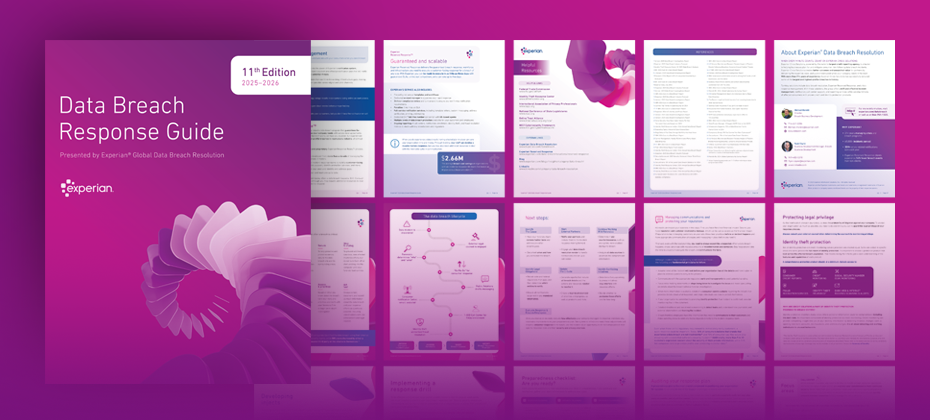
Data breaches continue to be a reality for organizations across industries, and the complexity of responding to them is only increasing. From AI-driven fraud to third-party exposures, the risk landscape is shifting fast. Having a modern and tested response plan is essential to containing the damage, protecting your customers, and preserving your organization’s reputation when a breach occurs. Experian’s eleventh annual Data Breach Response Guide draws on decades of breach support experience. It offers practical strategies and insights for navigating the moments that matter most: the first hours after a breach and the days that follow. The 2025–2026 guide explores: How AI is shaping new breach and fraud patterns Where organizations are most vulnerable, including third-party and supply chain weak points Consumer expectations and how they influence crisis response How prepared organizations are reducing impact and protecting trust What is required to build a modern, effective breach response plan Organizations with a tested plan can potentially reduce the cost, impact, and long-term consequences of a breach. From real-world case insights to crisis communication templates, this guide is designed to help teams act quickly and confidently. Download the 2025–2026 Data Breach Response Guide to learn how you can strengthen your breach preparedness, reduce risk exposure, and build resilience against the next wave of cybersecurity threats. Download guide
Experian is proud to be a Thought Leadership Sponsor at this year’s Federal Identity Forum & Expo. Meet us on site at FedID!

Now in its tenth year, Experian’s U.S. Identity and Fraud Report continues to uncover the shifting tides of fraud threats and how consumers and businesses are adapting. Our latest edition sheds light on a decade of change and unveils what remains consistent: trust is still the cornerstone of digital interactions. This year’s report draws on insights from over 2,000 U.S. consumers and 200 businesses to explore how identity, fraud and trust are evolving in a world increasingly shaped by generative artificial intelligence (GenAI) and other emerging technologies. Highlights: Over a third of companies are using AI, including generative AI, to combat fraud. 72% of business leaders anticipate AI-generated fraud and deepfakes as major challenges by 2026. Nearly 60% of companies report rising fraud losses, with identity theft and payment fraud as top concerns. Digital anxiety persists with 57% of consumers worried about doing things online. Ready to go deeper? Explore the full findings and discover how your organization can lead with confidence in an evolving fraud landscape. Download report Watch on-demand webinar Read press release