Loading...

Who Rules the Road? Full-Size Pickups, Apparently.

Published: January 24, 2018 by Guest Contributor

Benjamin Franklin famously said that nothing in life is certain except death and taxes. While that may be true, I think we can add another item to the list — traffic. An unfortunate part of many people’s day, traffic is an inevitable consequence when moving from point A to point B, especially when you consider the sheer volume of vehicles on the road.

According to the latest research from Experian, the number of vehicles in operation (VIO) has jumped 5.7 million, going from 265.3 million in Q3 2016 to 271 million in Q3 2017. In fact, more than 17 million new vehicles hit the road in the United States, with just 11.4 million exiting operation.

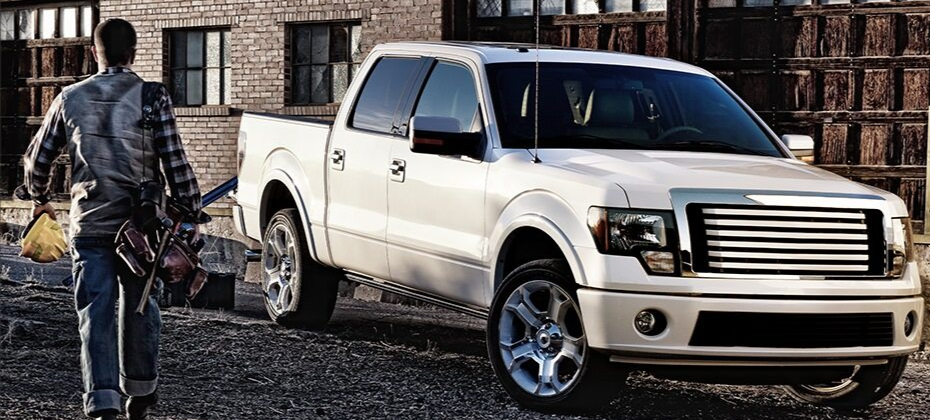
Numbers of that size can be hard to process, so let’s focus on something more relatable. When you’re stuck in traffic, what types of vehicles are inching along at a snail’s pace with you? No matter which state you live in, chances are you’ll see lots of full-size pickup trucks. Why? The top vehicle segment in 42 out of the 50 states is full-size pickups. The only exceptions are Hawaii — which has small pickup trucks as the number one segment — and Rhode Island, New York, New Jersey, Connecticut, Massachusetts, California and Maryland, which prefer midrange standard cars.

If you think about it, these exceptions make sense. Residents of the East Coast commuter states and California probably prefer smaller vehicles because they’re more fuel efficient and it’s easier to find parking.

But if you talk to a pickup truck owner, you’ll almost certainly hear why trucks are the best vehicle to own. Not surprisingly, full-size pickups aren’t just the top segment in most states; they also make up the largest vehicle segment currently on the road, at 15.3 percent.

In terms of top models for full-size pickups, the Ford F-150 and Chevy Silverado 1500 are the top two best-selling trucks nationwide.

Overall, Ford and GM still hold the largest market share across all makes and models. Toyota showed the greatest market share growth, going from 12.5 percent in 2016 to 13.6 percent in Q3 2017.

For more information about Experian’s most recent VIO data, watch our latest webinar.

Related Posts

Experian Automotive Series | What Auto Marketers Are Prioritizing in the Second Half of 2025 As we close out our four-part series on what auto marketers are prioritizing in the second half of 2025, we’re shifting gears from strategy to execution. It’s time to explore how marketers are operationalizing data, seeking clarity, and building emotional connections that deepen relationships with customers. With the end of the year’s competitive automotive landscape, clarity and connection aren’t just buzzwords—they’re the cornerstones of growth and loyalty for 2026. Let’s start by exploring how clarity empowers today’s marketers to steer their strategies with control. Clarity: Putting marketers in the driver’s seat Data-guided auto marketers who leverage data insights have a clearer understanding of where consumers are on their car-buying journey. You can learn whether car buyers are gearing up for: A longer commute and want an electric vehicle (or a hybrid vehicle).1 Expanding their family and want a top-tier safety rating with cargo space. Factoring in market trends and wanting to be more economical.2 Creating a new and loyal customer base requires dealers, marketers, and OEMs to focus on clarity and connection. This will be more relevant than ever in the final days of 2025. Gone are the days when dealers and agencies used platforms and tools they did not understand. More businesses are simplifying their services and products by offering guides, Artificial Intelligence (AI) tools, tutorials, consultants, and webinars. At Experian Automotive, we're here to do just that, bringing clarity to our auto solutions, such as the Experian Marketing Engine (EME). While the EME tool has robust and dynamic data, two of our most widely used features — AutoAudiences and AutoInsights — stand out for their impact. Let’s break them down in the simplest way: AutoInsights helps marketers define where, what, and how. AutoAudiences helps reach who to target and when they might be in the market. For further clarification, savvy marketers leverage AutoInsights to strategize and understand their market, then activate AutoAudiences to curate marketing opportunities. With these tools empowering clarity, it’s equally important to focus on building genuine connections with car shoppers. Connection: Personalized experiences that drive sales Building a strong connection starts by truly understanding what consumers need and where they are on their car-buying journey. It’s important to know how consumers plan to use their vehicle and how they have serviced their cars in the past (or how they plan to service them in the future). By focusing on these details, marketers and dealerships can create more meaningful relationships and deliver helpful, relevant experiences that customers value. On the journey to better connections, consider your customers’ communication preferences, 2026 plans, and affordability.3 “Human connection...separates good stores from great ones,” notes Dealer Principal, Matt Birckhead at Sir Walter Chevrolet4 , while General Manager, Michael Wood at Jaguar Land Rover Virginia Beach collaborates with his Digital Director, Ryan Montville, to generate vehicle specs and feature descriptions that connect emotionally with target buyers 5 Key Takeaway: Automotive marketers who leverage data-informed clarity and authentic customer connection are best positioned to drive growth and loyalty in the final days of 2025 into 2026. By using innovative tools like Experian Marketing Engine, focusing on consumer needs, and personalizing every interaction, dealerships, agencies, and OEMs can optimize campaigns and foster lasting relationships. Mastering clarity with data and building emotional connections are the keys to success in automotive marketing today. Ready for clarity and connection with Experian data? Lead the way in creating customer-first experiences that fuel long-term growth. Connect with Experian Automotive and start driving measurable impact. Learn More https://www.coxautoinc.com/insights-hub/q3-2025-ev-sales-report-commentary/ https://www.experian.com/automotive/auto-credit-webinar-form https://news.dealershipguy.com/p/inside-q4-s-new-vehicle-trends-and-how-dealers-are-adjusting-2025-10-28 https://news.dealershipguy.com/p/one-price-vs-negotiation-what-four-operators-say-really-builds-trust-and-gross-2025-10-16 https://news.dealershipguy.com/p/5-powerful-chatgpt-hacks-car-dealers-are-using-to-supercharge-their-business-insights-2025-09-19

Published: November 11, 2025 by Chanté O’Neill

Electric vehicles (EVs) are the topic of conversation in the automotive industry, but we’re continuing to see another fuel type pick up speed. With consumer demand shifting and drivers exploring more fuel-efficient options, the automotive market is leaning back into hybrids. In fact, new retail hybrid registrations grew to 11.5% through Q3 2024, from 9.5% through Q3 2023, according to Experian’s Automotive Market Trends Report: Q3 2024. Meanwhile, EVs increased from 7.7% to 8.2% year-over-year and gasoline vehicles declined to 70.4% this year, from 72.7% last year. Despite EVs gaining notable attention over recent years, some consumers may be factoring in the benefits of opting for a hybrid, such as the convenience of driving a longer distance without facing challenges as charging stations remain limited. As more manufacturers adapt to consumer needs and roll out additional vehicles, data shows 9.1% of 2024 model year vehicles in operation were attributed to hybrids, while 6.2% of 2024 model years were EVs through Q3 2024. Having more models enter the market has shifted the hybrid and plug-in hybrid electric vehicle (PHEV) market share, with the Toyota Camry making up 12.5% of the market share this quarter, a notable increase from 2.4% last year. On the other hand, the Jeep Wrangler 4xe went from having 4.5% of market share last year to 2.4% through Q3 2024. With many consumers continuing to have some concerns around EVs such as range anxiety and charging times, they’re seeking a more practical solution for their daily driving needs. The balance of fuel options provides more convenience—making hybrids an appealing choice for those wanting an EV alternative. It’s important for manufacturers to stay ahead of the competitive market as it’s constantly evolving. Leveraging the most current data can provide solutions that address both feasibility and consumer preference. To learn more about vehicle market trends, view the full Automotive Market Trends Report: Q3 2024 presentation on demand.

Published: January 10, 2025 by John Howard

Electric vehicle (EV) registrations are re-gaining momentum as a wave of more affordable models hit the market, pushing more consumers than ever to make the transition. According to Experian’s State of the Automotive Finance Market Report: Q3 2024, EVs made up 10.1% of new vehicle financing this quarter, increasing more than 30% from last year. Furthermore, 45% of EV consumers leased their vehicle in Q3 2024—resulting in EVs accounting for 17.3% of all new vehicle leasing. Of the top five transacted EV models this quarter, Tesla accounted for three—with the Tesla Model Y leading at 31.8%, followed by the Tesla Model 3 (14.3%) and Tesla Cybertruck (4.9%). Rounding out the top five were the Ford Mustang Mach-E (3.9%) and Hyundai IONIQ 5 (3.7%). Interestingly, data in the third quarter of 2024 found that consumers’ financing decisions vary based on the EV model they’re looking at. For example, 76.5% of consumers purchased the Tesla Model Y with a loan and 13.1% opted for a lease; on the other hand, only 8.5% of consumers bought the Hyundai IONIQ 5 with a loan and 78.7% chose to lease. Despite the rising interest in leasing as more incentives and rebate programs roll out, some consumers still prefer to purchase their EV with a loan. Understanding financing patterns based on different models is key for professionals as they cater to the diverse preferences and determine the long-term viability of certain EVs and their potential for leasing renewals. Snapshot of the overall vehicle finance market As the finance market continues to stabilize, it’s notable that the average interest rate for a new vehicle fell year-over-year, going from 7.1% to 6.6%, respectively. However, average new vehicle loan amounts increased $736 from last year, reaching $41,068 in Q3 2024, and average monthly payments went from $732 to $737 in the same time frame. On the used side, average interest rates saw a slight uptick to 11.7% in Q3 2024, from 11.6% last year. Meanwhile, the average loan amount dropped from $1,195 over the last year to $26,091 this quarter and the average monthly payment declined from $538 to $520 year-over-year. With the overall market shifting and EVs re-sparking interest, automotive professionals should leverage how consumers are purchasing their vehicles based on average payments and the fuel type as more incentives are being offered. Monitoring these insights can unlock opportunities for tailored financing solutions that meet the needs of consumers as preferences continue to evolve. To learn more about automotive finance trends, view the full State of the Automotive Finance Market: Q3 2024 presentation on demand.

Published: December 5, 2024 by Melinda Zabritski

Subscribe to our Auto blog

Enter your name and email for the latest updates.

This site is protected by reCAPTCHA and the Google Privacy Policy and Terms of Service apply.