Tag: new retail registrations

While Experian is known as a trusted source for credit insights, we have built a reputation for helping car shoppers, dealers, and lenders make informed decisions with confidence in the automotive space. Leveraging the value of data is key for identifying the latest trends in markets, behaviors, and industry changes. In fact, Experian’s Automotive Market Trends Report: Q1 2025 revealed the latest shifts in alternative fuel type registrations. Through the first quarter of this year, data found that growth in retail registrations for electric vehicles (EVs) is slowing compared to previous years, reaching 7.8%, down from 7.9% last year and 7.1% the year prior. Meanwhile, hybrids increased to 13.6% of new retail registrations through Q1 2025, from 11.3% through Q1 2024 and 8.8% through Q1 2023. Some of the uptick in hybrids may be attributed to consumers’ concerns with EV charging infrastructure and range anxiety. Hybrids are known to offer practical middle grounds—with the convenience of refueling and not having to plan longer trips around charging availability, this fuel type is becoming a more ideal choice for some. Vehicle preferences continue to vary by age group Through Q1 2025, Gen Z accounted for 14.8% of new retail hybrid registrations and 8.4% of EV registrations, while Millennials made up 15.9% for hybrid and 11.4% for EVs. On the other hand, Baby Boomers were at 16.3% for hybrids and 5.9% for EVs this quarter. Younger generations have naturally gravitated towards the gas-alternative fuel types as it aligns with their current lifestyle, including everyday commuting and the tech-forward features that these vehicles offer. As the automotive industry continues to evolve, staying attuned to the shifting landscape is essential. We’re committed to delivering insights that will help professionals make forward-looking decisions and stay ahead of the curve. To learn more about vehicle market trends, view the full Automotive Market Trends Report: Q1 2025 presentation on demand.

While many view Experian as a credit bureau, we have a rich history in identifying and analyzing emerging market shifts and consumer behaviors across industries, particularly automotive. In fact, Experian’s Automotive Consumer Trends Report: Q1 2025 is one of our many reports that provide essential intel for automotive professionals navigating today’s competitive landscape. And this quarter’s report sheds light on SUVs (including SUVs and CUVs)—a segment that continues to pique consumers’ interest. Data in the first quarter of this year found 62.8% of new retail registrations were SUVs, accounting for the largest portion of market share over the last 12 months—compared to sedans (18.4%), pickup trucks (16.6%), and vans (2.2%). While overall SUV registrations highlight the growing dominance in this sector, a closer look at the data revealed that electric SUVs are emerging as a contributor to this momentum. In Q1 2025, electric SUVs accounted for 10.5% of new retail SUV registrations—and within that group, 30.7% were registered in the state of California. It’s crucial for automotive professionals to monitor these trends and prepare accordingly as the fuel type continues to grow. Which electric SUV models are catching buyers’ attention? Knowing which types of electric SUVs are attracting consumer interest can enable professionals to align their offerings with market demand. The Tesla Model Y made up nearly half of the new retail SUV registrations for exotic and luxury in the last 12 months, coming in at 40.5%. Interestingly, the next closest model, Ford Mustang Mach-E, trailed behind at 5.8%. Rounding out the top five were the Hyundai IONIQ 5 (5.5%), Honda Prologue (4.9%), and Chevrolet Equinox EV (4.3%). Understanding SUV registrations goes beyond data—it’s about spotting the shift in consumer behavior as this segment as well as the EV fuel type continues to break ground in the automotive landscape. This insight gives professionals the leverage they need to adapt and refine their strategies in the next era of mobility. To learn more about SUV insights, view the full Automotive Consumer Trends Report: Q1 2025 presentation.
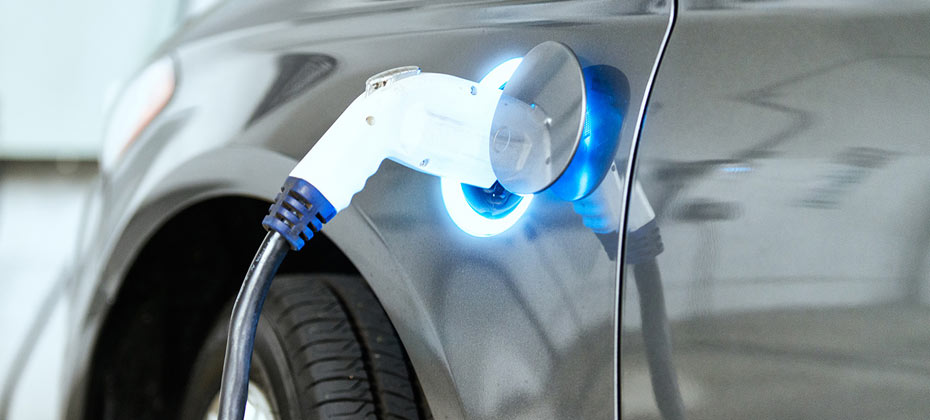
With wider model availability and technology continuing to develop, the electric vehicle (EV) market experienced shifting in 2023, most notably among the top five newly registered models. According to Experian’s Electric Vehicles 2023 Year in Review, Tesla only made up two of the top five newly registered models in 2023, compared to four of the top five a year prior. The Tesla Model Y made up 36.8% of new retail EV registrations in 2023, followed by the Tesla Model 3 (19.6%), Volkswagen ID.4 (3.4%), Ford Mustang Mach-E (2.9%) and Chevrolet Bolt EUV (2.8%). The Volkswagen ID.4 and Chevrolet Bolt EUV were the newest entrants to the top five, replacing the Tesla Model X and Tesla Model S. EV registrations grow We’re also witnessing shoppers gravitate toward EVs more often than in years past. For instance, of the 11.8 million new retail registrations in 2023, more than 8% were EVs. Comparatively, of the 12.3 million new retail registrations in 2022, just over 6% were EVs. It’s notable that EVs continue to be most popular on the West Coast—particularly in California and Washington. According to the data, 33% of new retail EV registrations were in California—Los Angeles (170,000+), San Francisco (90,000+) and San Diego (30,000+) were among the top five DMAs for new retail EV registrations, along with Seattle, Washington (35,000+). While California exhibits robust EV registration growth, other states show the potential to expand, something automotive professionals should keep in mind. For instance, El Paso, Texas, was the fastest growing DMA for new retail EV registrations—with an 89.5% five year, year-over-year growth average, Savannah, Georgia, came in second at 81.8%, followed by Peoria-Bloomington, Illinois (76.7%), and Waco, Texas (73.7%). EV buyer insight Beyond the “what” and “where” of the EV market, the “who” is perhaps most important. Which customers have the highest propensity to buy an EV? According to the data, Gen Xers accounted for 32.0% of new retail registrations in 2023, however they accounted for 37.7% of new EV retail registrations over the same period. Similarly, millennials accounted for 24.5% of new retail registrations, yet made up 30.6% of new EV retail registrations in 2023; the only two generational demographics to over index on EV purchases. As professionals in the automotive industry find ways to stay ahead of the evolving EV landscape, leveraging data will enable them to understand and identify emerging opportunities to tailor their marketing strategies to a consumer’s needs. To learn more about EV trends, view the full Electric Vehicles 2023 Year in Review.