Tag: monthly payments

In an ever-evolving automotive landscape, where shifting consumer behavior meets fluctuating market dynamics, Experian’s State of the Automotive Finance Market Report: Q2 2025 delivers key insights into how both consumers and professionals are adapting to the changes. This quarter’s report revealed a sharp increase in vehicle refinancing—up nearly 70% from Q2 2024—as consumers capitalized on the more stable rate environment. In fact, after refinancing, the average interest rate went from 10.45% to 8.45%. That shift resulted in their monthly payment dropping by an average of $71. Interestingly, credit unions played a significant role in the refinance surge, increasing their market share from 63.22% last year to 68.33% this quarter, and borrowers who refinanced through credit unions saw their monthly payments decrease by $87 on average. Banks saw a slight dip in their share of the refinancing market year-over-year, going from 22.71% to 21.45%, and borrowers who refinanced through them saved an average of $46 a month. New leaders emerge as the lender market share continues to evolve Taking a deeper dive into the automotive finance market share, banks reclaimed their leading position for total vehicle financing, rising to 27.50% in Q2 2025, from 24.50% in Q2 2024. Meanwhile, captives declined from 30.17% to 26.63% year-over-year, and credit unions slightly increased from 20.35% to 21.04% during the same period. For new vehicles, captives continued to lead at 52.39% this quarter, though it was a drop from 60.74% last year. On the other hand, banks grew from 21.12% to 25.91% and credit unions went from 9.99% to 12.24% in the same time frame. On the used side, banks edged ahead, increasing their share to 28.59% in Q2 2025, from 26.80% last year. Credit unions saw slight growth from 27.59% to 27.63%, while captives declined from 7.83% to 6.40% year-over-year. As affordability remains a key priority, consumers seem to be exploring financing options that offer more favorable terms. While Experian Automotive’s report continues to illustrate the evolving dynamics, these data-driven insights can empower both consumers and industry professionals to make smarter financial decisions. To learn more about automotive finance trends, view the full State of the Automotive Finance Market Report: Q2 2025 presentation on demand.

Quick Summary: Leasing continues to increase in the electric vehicle (EV) market. EVs accounted for nearly 20% of all new vehicle leases in Q4 2024, up from only 2.11% of new vehicle leases four years ago in Q4 2020. With consumers looking for flexibility—both in monthly payment and model availability—we’re seeing leasing continue to surge in the electric vehicle (EV) market. According to Experian’s State of the Automotive Finance Market Report: Q4 2024, EVs accounted for 19.5% of all new vehicle leases this quarter, up from 11.7% last year and a substantial increase from 2.1% in Q4 2020. Diving a bit deeper, data found EVs accounted for 9.3% of all new purchases in Q4 2024. Of those EVs, 50.1% were leased, while 38.9% were financed through loans. With lease payments for EVs ultimately being more affordable compared to loans and the excitement of driving the latest models packed with advanced technology, it’s no surprise we’re seeing leasing grow in popularity. Top leased EVs: How do lease and loan payments compare? As more consumers transition to EVs and manufacturers introduce new options to their lineup, certain models have become top choices for those opting to lease. Tesla accounted for the top two leased EVs in Q4 2024, with Tesla Model 3 coming in at 12.2% and Tesla Model Y at 9.1%. However, the Honda Prologue followed closely at 8.8% this quarter. Rounding out the top five were Hyundai IONIQ 5 (6.9%) and Chevrolet Equinox EV (5.9%). It’s notable that leasing has traditionally been a value-driven option for consumers, and the same holds true in the EV market. Leasing continues to offer lower monthly payments, making the finance option stand out for those looking to test an EV before purchasing or simply wanting the latest model on the lot. In Q4 2024, the average payment difference between a loan and a lease was $175. Though, the average monthly payment to lease a non-luxury EV was $504 this quarter, noting a $205 difference compared to the $709 loan payment. By comparison, the average monthly payment between a loan and leased luxury EV was $98—coming in at $842 for a lease and $940 for a loan. As more consumers choose to lease EVs, automotive professionals in both new and used markets have a chance to capitalize on this trend. By leveraging this data, those in the new retail market can effectively reach the right audience, while those in the used market can stay ahead of the curve and prepare for the influx of off-lease models in the coming years. To learn more about automotive finance trends, view the full State of the Automotive Finance Market: Q4 2024 presentation on demand.
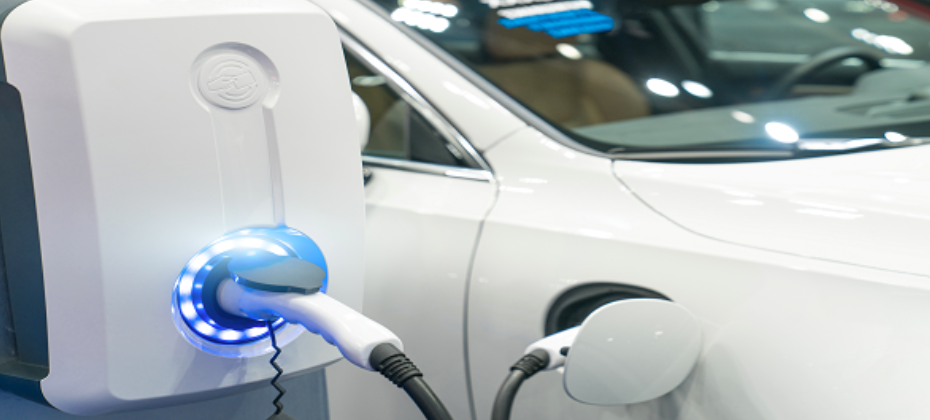
According to Experian’s State of the Automotive Finance Market Report: Q4 2023, EVs comprised 8.6% of total new retail transactions, an increase from 7.1% in Q4 2022.

According to Experian’s State of the Automotive Finance Market Report: Q3 2023, the average new vehicle loan amount decreased to $40,184, from $41,543 in Q3 2022 and the average used vehicle loan amount went from $28,684 to $27,167 year-over-year.

Experian’s State of the Automotive Finance Market Report: Q4 2022 found that the year-over-year (YOY) average new loan amount increased 4.04%, a smaller growth rate compared to 12.46% YOY in Q4 2021