
How Credit Unions Can Improve Financial Inclusion

by Corliss Hill 6 min read October 20, 2022

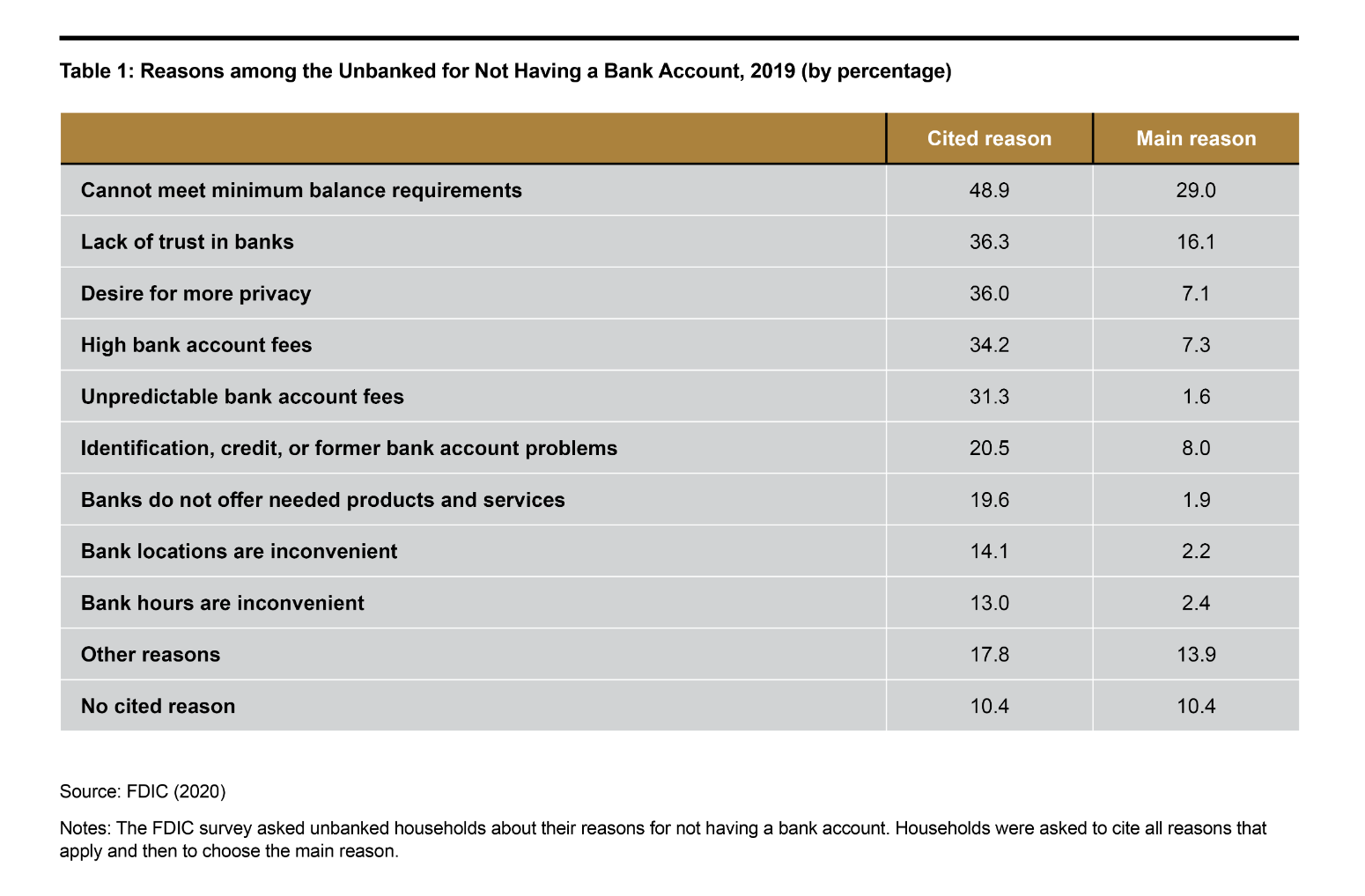
More than seven million Americans who are unbanked cite high account fees, insufficient funds to meet minimum balances and a lack of needed products and services as the main reasons for not having a checking or savings account.1

Credit unions understand that being unbanked comes at a steep cost and have turned their focus to developing products and strategies that prioritize financial inclusion — a movement to combat inequities in banking and better serve the financial needs of marginalized communities.

In 2022, the House passed Expanding Financial Access for Underserved Communities Act to allow federal credit unions to add underserved areas to their fields of membership as a means of improving financial inclusion. “We believe diversity, inclusion, equity, belonging and accessibility has to be weaved into the strategic fabric of an organization [and its] culture,” says Max Villaronga, President and Chief Executive Officer of Raiz Federal Credit Union. “When we don’t participate in [diversity, equity and inclusion], we are complicit in essentially keeping people out of the banking system.”

For credit unions, driving financial inclusion starts with setting a vision that will leave a lasting legacy that includes fostering financial empowerment, closing the credit gap and building generational wealth among the communities they serve. Here’s a roadmap for getting started.

Best practices for engagement

Establishing a set of best practices is the essential starting point for improving financial inclusion. The process begins with the mission statement and extends to all aspects of operations from hiring procedures to sponsorships and donations. Villaronga advocates three strategies for engagement:

Engage the leadership team

Conversations about financial inclusion need to start at the top. The C-suite must be willing to be honest about the barriers and willing to adopt changes that will make credit unions more inclusive.

“[T]hese systemic barriers will exist until somebody deliberately moves them out of the way,” Villaronga says. “The people who are feeling those barriers are not in the position to do the moving it’s up to [CEOs and CFOs] to decide to do something to make a difference.”

Making a difference starts with choosing a leadership team that reflects the demographics of local communities. Case in point: At Raiz Federal Credit Union in El Paso, Texas, senior management and the board have LGBTQIA+ representation and include members from diverse racial and ethnic identities. The board of directors has also prioritized creating a pipeline that will attract more diverse talent to the board.

“Many of [our board members] come from underserved backgrounds in our border community,” Villaronga says. “This is a very personal journey for them because they can see themselves in the lives of the people we’re serving.”

Build trust in underserved communities

According to an FDIC Survey, “unbanked” U.S. households listed a lack of trust in financial institutions as a top reason for not having a bank account. And lack of access to a checking or savings account is most prominent among racial and ethnic minorities and low-income communities.2
Actions speak louder than words, according to Villaronga. Raiz Federal Credit Union uses diverse images in its advertising and provides information in both English and Spanish. The credit union was also awarded the Juntos Avanzamos (Together We Advance) designation from Inclusiv for its commitment to serving and empowering Hispanic communities by providing safe, affordable and relevant financial services.

Villaronga believes that a designation like Juntos Avanzamos sends the message to the community that the credit union is committed to improving general financial literacy and pre-loan education, as well as reducing higher charge-offs and other barriers to accessing financial services that exist in lending and serving underserved communities.

Dispel financial inclusion myths

Among traditional financial institutions, myths about financial inclusion are widespread and include falsehoods that pricing products for marginalized communities are too challenging, reaching out is not profitable, and providing financial products to underserved markets is too risky.

“Credit unions were really built to extend credit [and] were also originally established to serve consumers that were being ignored by the existing systems that were in place but those consumers are still being ignored today,” Villaronga says. “Are those communities too risky to serve? Some companies are serving them [and] they would not be doing so if it was not profitable.”

Raiz Federal Credit Union offers several affordable loan products — from credit builder loans to citizenship loans and payday lender payoff loans along with credit cards — that allow members to build their credit scores and establish positive credit histories.

Rather than pricing loans based on what the competition is charging, Villaronga calculates the fixed and variable costs, failure fraction and target return on assets to get a floor pricing per unit. The approach, he adds, allowed Raiz Federal Credit Union to report earnings of over 150 basis points in 2021 while maintaining a 12 percent capital ratio, proving that financial inclusion is good for the bottom line.

“THE IDEA THAT YOU CANNOT [ACHIEVE FINANCIAL INCLUSION] IN A WAY THAT’S SAFE AND SOUND AND SATISFIES THE [NATIONAL CREDIT UNION ADMINISTRATION] IS TRULY A MYTH.”

– Max Villaronga, President and CEO, Raiz Federal Credit Union

Partner for Success

For credit unions, an important part of achieving financial inclusion goals is identifying partners that can help.

Raiz Federal Credit Union set a goal to increase automated lending from 20 percent to 60 percent, but using a traditional loan origination program was insufficient to hit that target. A partnership with Experian allowed the credit union to access tools that allowed it to better identify non-traditional risks and opportunities, as well as develop more robust lending and optimized decision strategies.

Experian launched Inclusion ForwardTM, an initiative to help boost financial inclusion and close the wealth gap, and support financial institutions by enhancing their inclusion approach by leveraging FCRA-regulated data sources (otherwise known as alternative data).3

In addition to providing a deeper view of unbanked and underbanked consumers and reducing friction and speed of decisioning through increased automation, Experian Lift PremiumTM uses income and employer data, social security and financial management insights — transaction behaviors that were historically credit invisible or unscorable — to help credit unions meet the needs of underserved markets and increase opportunities for inclusion.

“This automation also allows us to reduce our fixed cost per unit — [and] it’s a really big deal because this is not by little, but a lot,” Villaronga says. “This lower cost to produce [a loan] allows us to improve our interest rates to underserved members, further creating an appealing value proposition that’s in line with our financial inclusion strategy.”

Access our case study to learn more about how Experian can help grow your business with a frictionless digital prequalification experience.

1Federal Reserve Bank of Cleveland (May 2022). Unbanked in America: A Review of Literature
2 Federal Deposit Insurance Corporation (December 2021). American Banks: Household use of Banking and Financial Services
3When we refer to “Alternative Credit Data,” this refers to the use of alternative data and its appropriate use in consumer credit lending decisions, as regulated by the Fair Credit Reporting Act. Hence, the term “Expanded FCRA Data” may also apply in this instance and both can be used interchangeably


Related Posts

Rewriting the Road Ahead with Longer Loan Terms and Increased Refinancing Options

The automotive market is entering a new phase defined not just by what consumers are buying, but by how they’re choosing to finance it. According to Experian Automotive’s State of the Automotive Finance Market Report: Q1 2026, nearly one-third (35.55%) of all new vehicle loans now stretch more than six years, up from 30.83% in Q1 2025. Similarly on the used side, 31.54% of loans extended more than six years, an increase from 28.60% last year. The shift highlights why affordability is reshaping how consumers are financing their vehicles, particularly in larger and higher-priced vehicles. Refinancing gains traction as interest rates stabilize In addition to longer-term loans, consumers are becoming increasingly deliberate with their financing decisions and managing monthly payments as refinancing activity has gained momentum. For instance, consumers who refinanced this quarter lowered their interest rate by 2.2% and saved an average of $81 on their monthly payment. Credit unions, in particular, continued to play a major role in helping consumers secure more affordable payment options. In Q1 2025, credit unions accounted for the lion’s share of automotive refinancing at 63.43%, from 62.31% a year ago. By comparison, banks went from 23.51% to 22.59% year-over-year. Furthermore, those who refinanced with a credit union saved an average of $101 this quarter, whereas those who refinanced with banks saved $60. Expanding credit access through flexible financing Another notable trend this quarter was the incessant growth in subprime financing as credit accessibility across the market continues to increase. In the first quarter of this year, subprime borrowers made up 15.75% of total vehicle financing, from 14.40% last year. For new vehicles in particular, the subprime market went from 5.61% to 6.88% year-over-year, while subprime in used vehicle financing grew to 20.60% this quarter, from 19.36% a year ago. Increased activity in the subprime segment highlights continued confidence in the automotive market and underscores the importance of expanded financing options. As consumers seek greater flexibility with financing decisions that fit their lifestyle, lenders and dealers have the opportunity to approach them with more personalized solutions. These trends are helping keep both new and used vehicle markets moving forward, while creating new opportunities for consumers to manage payments and purchase confidently. To learn more about automotive finance trends, view the full State of the Automotive Finance Market Report: Q1 2026 presentation on demand.

Published: June 2, 2026 by Melinda Zabritski
Staying Competitive After Trigger Leads Evolve: A Roadmap For Lenders

Trigger leads have long been the preferred solution for identifying high-intent mortgage borrowers. But with the implementation of the Homebuyers Privacy Protection Act (HPPA), which introduces new limitations and consumer protections around trigger leads, that playbook will need to shift. Now, lenders are quickly facing a pivotal shift in how they discover, engage, and convert prospective borrowers into customers. The industry now stands at a crossroads. Lenders who adapt early—leaning into predictive tools, consent-based engagement, and smarter prescreening—will redefine borrower acquisition in a more privacy-centric era.  HPPA: A structural change to mortgage marketing  The HPPA amends the Fair Credit Reporting Act by significantly restricting the use of mortgage inquiries for prescreen purposes. As of March 5, 2026, credit bureaus may only provide or utilize mortgage inquiries to:  End users with explicit borrower consent  The originator of the consumer’s current mortgage  The servicer of the consumer’s current mortgage  An insured depository institution or credit union where the consumer has an existing account  While these exemptions may provide continuity for banks and credit unions, many mortgage brokers and nonbank lenders will need to overhaul their prescreen practices—or risk being cut off entirely from a previously high-performing acquisition channel.  Why this isn’t just a compliance shift—It’s a strategic recalibration  Mortgage triggers in prescreen allow lenders to react instantly to consumer intent. Lenders rely on a prompt and convincing narrative to entice applicants to switch lenders. Mortgage inquiry triggers are effective and were, therefore, a prospecting strategy for many lenders. Recent legislative changes significantly restrict the availability of these inquiry triggers, and impacted lenders are focusing on a more intentional prospecting strategy to compete.   Without these mortgage triggers in prescreen, lenders need to ask:  Who are we trying to reach?  What early signals can we act on?  How do we earn permission and attention before a mortgage inquiry ever happens?  Transforming the funnel: From reaction to anticipation  The shift in mortgage inquiry-based prescreen isn’t the end of high-intent lead targeting. It’s the beginning of a more strategic and intentional approach—one that leverages earlier indicators of mortgage readiness and focuses on building relationships, not just closing transactions.  Here’s where the momentum is evolving, creating a new and smarter funnel:  Prescreen marketing: Using credit and behavioral attributes to help identify consumers who meet specific lending criteria before they signal active intent.  Predictive modeling: Leveraging propensity scores or custom models to prioritize outreach based on conversion likelihood.  Consent-based engagement: Implementing compliant mechanisms to capture and manage borrower opt-ins at scale.  The power of predictive modeling  According to recent industry interviews, propensity modeling is emerging as one of the most effective replacements for trigger-based prescreen. These models analyze hundreds of credit attributes—such as utilization, account mix, account age, and depth—to help identify consumers statistically more likely to seek a mortgage.  For lenders just beginning to use predictive modeling, off-the-shelf models can be a quick way to identify potential borrowers. For example, when layering propensity scores on top of credit eligibility, which can improve borrower targeting, many lenders see an increase in open mortgage loan rates.  Meanwhile, custom-built models, which analyze a lender’s own campaign performance over time, offer the highest level of precise targeting. These models isolate the attributes most predictive of conversions within a specific product mix—optimizing not just volume, but fit.  Speed without traditional triggers? It’s possible  One of the biggest concerns among lenders is maintaining the speed historically enabled by trigger leads. But that concern may be overblown.  Self-service prescreen platforms now allow marketers to generate qualified lead lists in as little as 24 hours, enabling rapid response during rate drops, competitive shifts, or seasonal demand spikes.   For those new to prescreening, batch campaigns still offer value, especially with analyst support.   Don’t overlook retention  In an era of intense acquisition competition, retention becomes a key differentiator.  Lenders who monitor property status, cash flow, and consumer credit behavior can proactively identify when an existing borrower is likely to list, refinance, or exit. Armed with that intelligence, lenders can re-engage with the borrower at the right moment—sometimes before a competitor is considered or contacted.  This level of behavioral intelligence may soon separate proactive lenders from reactive ones.  Actions instead of reactions  The evolution of trigger-based prescreen doesn’t just require new tools; it demands new thinking. Lenders should begin by auditing their current pipelines and determining:  What percentage of our acquisition is dependent on triggers?  What share of our book falls under the HPPA exemptions?  How will we scale compliant opt-in collection?  Are our current prescreen or modeling capabilities future-ready?  Those who answer these questions today—and act on them—won’t just be in compliance with the new laws, they’ll lead in a transformed market. Lenders should also be asking:   Do we have the infrastructure to collect and act on borrower consent?  Are our acquisition teams equipped to run prescreen campaigns — both batch and self-service?  What predictive models are we using (or could we use) to prioritize leads?  Are we proactively monitoring our portfolio to catch retention risks early?  How are we preparing our sales teams for longer, more consultative buying journeys?  Conclusion  The HPPA signals a shift away from relying on passive, inquiry-based prescreen acquisition and the beginning of smarter, more strategic engagement with potential borrowers. Lenders who embrace this transition early will find themselves not just compliant, but competitive—with deeper borrower insights, better conversion rates, and stronger long-term customer relationships.  The market is moving. The only question is: will you lead the change or chase it?  Citation  Experian. (2025, November). Interview: How the Homebuyers Privacy Protection Act is reshaping mortgage marketing—and what lenders should do now [transcript]. Experian Mortgage Insights. Insights based on lender feedback, campaign performance data, and analysis of prescreen marketing strategies and predictive modeling outcomes were gathered from Experian client engagements and internal mortgage analytics between May and October 2025. Homebuyers Privacy Protection Act timeline and legal context referenced from legislation signed September 5, 2025, with implementation beginning March 5, 2026.   

Published: April 22, 2026 by Ivan Ahmed