Topics

The Threat of Replay Attacks and What It Means for Your Business

Replay attacks are network-based security hacks attackers use to fraudulently gain access to a network or system. Learn more.
September 12, 2024 by Brian Funicelli
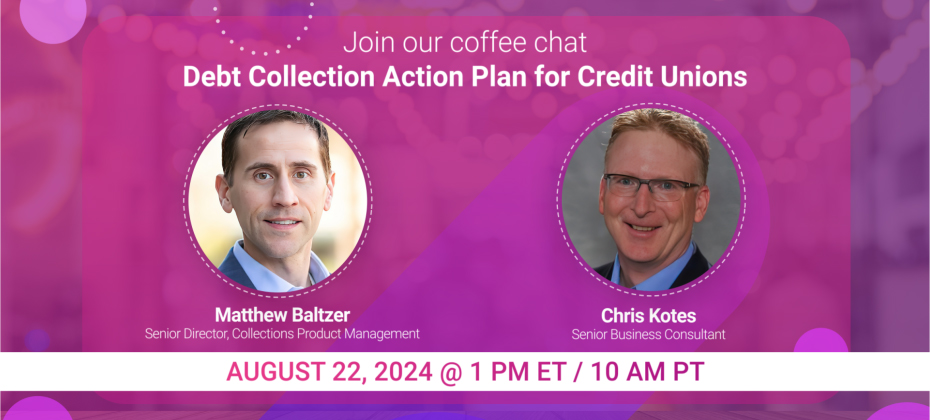
Coffee Chat: Debt Collection Action Plan for Credit Unions

Grab a cup of coffee and join our experts for a conversation on credit union collection trends and successful account management strategies.

August 8, 2024 by Laura Burrows
Skip-Tracing Best Practices for Debt Collectors

In this blog post, we'll explore skip-tracing best practices, offering valuable insights and practical tips and tools. Read more!

July 9, 2024 by Laura Burrows
Unlocking New Consumer Insights with Open Banking

Open Banking use cases are extensive and will continue to expand as access to permissioned data becomes more common. Learn more.

July 8, 2024 by Ashley Knight
Reducing Delinquent Debt Collection with Advanced Analytics 

Dealing with delinquent debt is a challenging task.Thankfully, advanced analytics offers a promising solution. Learn more!

June 17, 2024 by Laura Burrows
How TOAD Scams Manipulate and Cheat Customers

Learn what a TOAD attack is and effective measures you can take to safeguard your organization. Read more!

June 6, 2024 by Alex Lvoff
Preventing Chargeback Fraud

Preventing chargeback fraud is critical to protecting your organization. Learn how you can leverage fraud prevention solutions. Read more!

May 21, 2024 by Julie.JLee@experian.com
Preventing ‘Pig Butchering’ Scams: A Modern Investment Fraud

The world of finance can be a dangerous place, where cunning schemes lurk in the shadows, ready to pounce on unsuspecting victims. In the ever-evolving landscape of financial crime, the insidious ‘pig butchering’ scam has emerged as a significant threat, targeting both financial institutions and their clients. What is a ‘pig butchering’ scam? ‘Pig butchering’ scams are named after the practice of farmers fattening up their livestock before “butchering” them. This comparison describes the core of ‘pig butchering’ scams, where criminals entice victims to participate in investment schemes and cryptocurrency fraud. Originating in Southeast Asia and now rampant in the United States, these scams often start with online interactions via social media or dating applications. Scammers build trust with the victim, eventually gaining access to their online accounts. They "fatten the pig" by enticing more cryptocurrency investments and then make off with their ill-gotten gains. The repercussions are staggering, with reported losses exceeding $3.5 billion in 2023 alone according to an AP News article, and around 40,000 victims in the United States, including cases of losses as massive as $4 million. The real-life impact The story of “RB,” a San Francisco man who engaged with a scammer named "Janey Lee," serves as a stark warning. Through social media, Janey orchestrated an elaborate scheme, promising "RB” substantial returns in cryptocurrency investment. Seduced by false promises, “RB” emptied his life savings into the scam, only to be rescued by a Federal Bureau of Investigation (FBI) intervention, narrowly avoiding financial ruin.1 Malicious actors are improving their targeting skills, and often pursue executives and victims with a large sum of money, such as C-level officials from financial institutions. This past February, a $50 million pig slaughtering fraud incident caused the CEO of a local bank in Kansas to lose all his funds and the bank to collapse a few months later. FinCEN's vigilance and updates The Financial Crimes Enforcement Network (FinCEN) remains vigilant, issuing advisories to financial institutions to combat ‘pig butchering’ scams. Their latest advisory highlights evolving scam tactics, including aggressive promotions, using money mules for illegal fund transfers, and leveraging new financial products like decentralized finance (DeFi) platforms to obfuscate transactions. FinCEN also warns about red flags such as large and sudden investments from older customers, quick fund withdrawals after big deposits, and the frequent use of coins or mixers that hide transactions. Financial institutions are encouraged to: Report any suspicious activities by using specific terms like "pig butchering fraud advisory" in their reports to make analysis and response easier. File suspicious activity reports (SARs) using the key term “FIN-2023-PIGBUTCHERING.” Guide potential victims to report to the FBI’s IC3 or the Security and Exchange Commission (SEC’s) reporting system. A call to action for financial institutions The fight against ‘pig butchering’ scams requires proactive measures from financial institutions: Enhance fraud detection and anti-money laundering (AML) programs: Implement robust systems compliant with regulatory guidelines, conduct thorough customer enhanced due diligence, and leverage fraud detection software to spot anomalies and red flags., and leverage fraud detection software to spot anomalies and red flags. Leverage data analytics: Utilize data analytics tools to monitor customer behavior, identify irregular patterns, and swiftly detect potential ‘pig butchering’ activities. Employee training: Educate employees on scam risks, fraud detection techniques, and FinCEN red flags to empower them as the first line of defense., and FinCEN red flags to empower them as the first line of defense. Community education: Educate customers on recognizing and avoiding investment scams, promoting awareness, and safeguarding their assets. Navigating challenges with effective solutions ‘Pig butchering’ scams cause not only money losses but also personal troubles and reputational harm. Awareness, learning, and cooperation are essential in protecting from these complex financial fraudsters, securing the safety and confidence of your institutions and stakeholders. By combining the best data with our automated identification verification processes, you can protect your business and onboard new talents efficiently. Our industry-leading solutions employ device recognition, behavioral biometrics, machine learning, and global fraud databases to spot and block suspicious activity before it becomes a problem. Learn more 1San Francisco Chronical (2023). Crypto Texting Scam *This article includes content created by an AI language model and is intended to provide general information.

May 15, 2024 by Alex Lvoff
What Is Open Banking?

Open banking is revolutionizing the financial services industry. But what is open banking and how can you adapt to this new landscape?

April 25, 2024 by Laura Burrows
Improve Consumers’ Financial Literacy to Increase Their Financial Power and Help Drive More Business

Increasing consumers’ financial literacy may help them make better financial decisions and remain loyal customers to your business.

April 15, 2024 by Brian Funicelli
What is Trended Data?

To better understand a consumer's credit behavior over time, financial institutions must leverage trended data.

March 11, 2024 by Guest Contributor
From Definition to Prevention: Understanding Synthetic ID Fraud

A multilayered defense can help detect and prevent synthetic ID fraud, one of the fastest-growing types of fraud. Read more!

March 4, 2024 by Guest Contributor
Drive More New Account Openings with Credit Education

Credit education resources can create opportunities for consumers to open more new accounts, which can help drive more new business.

February 27, 2024 by Brian Funicelli
Identifying and Stopping Bot Attacks

Almost every business that has an online presence will have to face and counter bot attacks. Read more to learn how.

February 22, 2024 by Laura Burrows
Using Alternative Credit Data for Credit Underwriting

Using alternative data for credit underwriting is a modern and efficent approach to a risk-based credit approval strategy Read more!

February 13, 2024 by Laura Burrows

Subscribe to our thought leadership

Enter your name and email for the latest updates.

This site is protected by reCAPTCHA and the Google Privacy Policy and Terms of Service apply.

Subscribe to our thought leadership

Don't miss out on the latest industry trends and insights!
Subscribe