All posts by Guest Contributor

During our recent webinar, Detect and Prevent: The current state of e-commerce fraud, Julie Conroy, Aite Group research director, shared 5 key trends relating to online fraud: Rising account takeover fraud. Targeting of loyalty points. Growing global transactions. Frustrating false declines. Increasingly mobile consumers. Fraud is increasing. Be prepared. Protect your business and customers with a multilayered approach to fraud prevention. For more trends and predictions, watch the webinar recording.
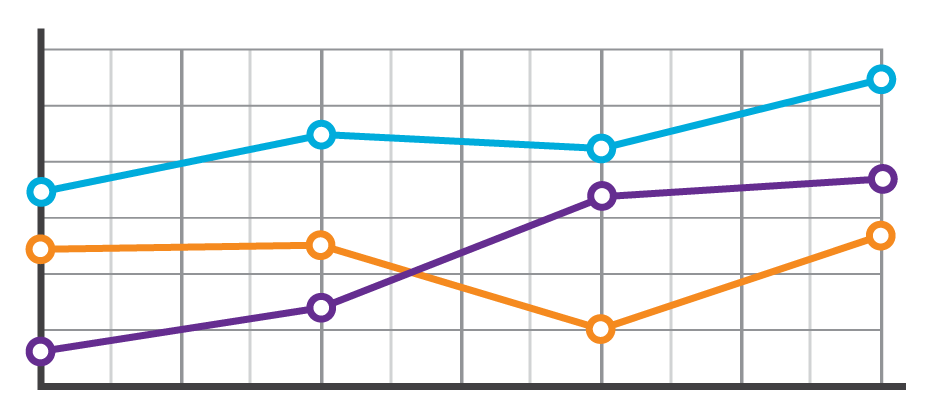
Sometimes life throws you a curve ball. The unexpected medical bill. The catastrophic car repair. The busted home appliance. It happens, and the killer is that consumers don’t always have the savings or resources to cover an additional cost. They must make a choice. Which bills do they pay? Which bills go to the pile? Suddenly, a consumer’s steady payment behavior changes, and in some cases they lose control of their ability to fulfill their obligations altogether. These shifts in payment patterns aren’t always reflected in consumer credit scores. At a single point in time, consumers may look identical. However, when analyzing their past payment behaviors, differences emerge. With these insights, lenders can now determine the appropriate risk or marketing decisions. In the example below, we see that based on the trade-level data, Consumer A and Consumer B have the same credit score and balance. But once we see their payment pattern within their trended data, we can clearly see Consumer A is paying well over the minimum payments due and has a demonstrated ability to pay. A closer look at Consumer B, on the other hand, reveals that the payment amount as compared to the minimum payment amount is decreasing over time. In fact, over the last three months only the minimum payment has been made. So while Consumer B may be well within the portfolio risk tolerance, they are trending down. This could indicate payment stress. With this knowledge, the lender could decide to hold off on offering Consumer B any new products until an improvement is seen in their payment pattern. Alternatively, Consumer A may be ripe for a new product offering. In another example, three consumers may appear identical when looking at their credit score and average monthly balance. But when you look at the trend of their historical bankcard balances as compared to their payments, you start to see very different behaviors. Consumer A is carrying their balances and only making the minimum payments. Consumer B is a hybrid of revolving and transacting, and Consumer C is paying off their balances each month. When we look at the total annual payments and their average percent of balance paid, we can see the biggest differences emerge. Having this deeper level of insight can assist lenders with determining which consumer is the best prospect for particular offerings. Consumer A would likely be most interested in a low- interest rate card, whereas Consumer C may be more interested in a rewards card. The combination of the credit score and trended data provides significant insight into predicting consumer credit behavior, ultimately leading to more profitable lending decisions across the customer lifecycle: Response – match the right offer with the right prospect to maximize response rates and improve campaign performance Risk – understand direction and velocity of payment performance to adequately manage risk exposure Retention – anticipate consumer preferences to build long-term loyalty All financial institutions can benefit from the value of trended data, whether you are a financial institution with significant analytical capabilities looking to develop custom models from the trended data or looking for proven pre-built solutions for immediate implementation.

Data is the cornerstone of retail success today. Yet only 39% of retailers trust their data when making important business decisions. Your organization — whether retail or not — can start depending on your data and gain actionable insights with these data management tips: Put the right people in place. Get the tools you need. Enrich your data. Collect accurate customer information Arranging for the right people, tools and processes to maintain accurate information helps you stay on top of your data now and lets you leverage that data to stay ahead of the curve. Learn more tips>

It should come as no surprise that reaching consumers on past-due accounts by traditional dialing methods is increasingly ineffective. The new alternative, of course, is to leverage digital channels to reach and collect on debts. The Past: Dialing for dollars. Let’s take a walk down memory lane, shall we? The collection approach used for many years was to initially send the consumer a collection letter recapping the obligation and requesting payment, usually when an account was 30 days late. If the consumer failed to respond, a series of dialing attempts were then made, trying to reach the consumer and resolve the debt. Unfortunately, this approach has become less effective through the years due to several reasons: The use of traditional landlines continues to drop as consumers shift to cell and Voice Over Internet Protocol (VOIP) services. The cost of reaching consumers by cell is more costly since predictive dialers can’t be used without prior consent, and the obtaining and maintaining consent presents its own set of tricky challenges. Consumers simply aren’t answering their phones. If they think a bill collector is calling, they don’t pick up. It’s that simple. In fact, here is a breakdown by age group that Gallup published in 2015, highlighting the weakness of traditional phone-dialing. The Present: Hello payment portal. With the ability to get the consumer on the phone to negotiate a payment on the wane, the logical next step is to go digital and use the Internet or text messaging to reach the consumer. With 71 percent of consumers now using smartphones and virtually everyone having an Internet connection, this can be a cost-effective approach. Some companies have already implemented an electronic payment portal whereby a consumer can make a payment using his or her PC or smartphone. Usually this is prompted by a collection letter, or if permitted by consumer consent, a text message to their smartphone. The Future: Virtual negotiation. But what if the consumer wants to negotiate different terms or payment plans? What if they want to try and settle for less than the full amount? In the past – and for most companies operating today – this translates into a series of emails or letters being exchanged, or the consumer must actually speak to a debt collector on the phone. And let’s be honest, the consumer generally does not want to speak to a collector on the phone. Fortunately, there is a new technology involving a virtual negotiator approach coming into the market now. It works like this: The credit grantor or agency contacts the consumer by letter, email, or text reminding them of their debt and offering them a link to visit a website to negotiate their debt without a human being involved. The consumer logs onto the site, negotiates with the site and hopefully comes to terms with what is an acceptable payment plan and amount. In advance, the site would have been fed the terms by which the virtual negotiator would have been allowed to use. Finally, the consumer provides his payment information, receives back a recap of what he has agreed to and the process is complete. This is the future of collections, especially when you consider the younger generations rarely wanting to talk on the phone. They want to handle the majority of their matters digitally, on their own terms and at their own preferred times. The collections process can obviously be uncomfortable, but the thought is the virtual negotiator approach will make it less burdensome and more consumer-friendly. Learn more about virtual negotiation.

With the recent switch to EMV and more than 4.2 billion records exposed by data breaches last year*, attackers are migrating their fraud attempts to the card-not-present channel. Our recent analysis found the following states to be the riskiest for e-commerce fraud in 2016. Delaware Oregon Florida New York Nevada Attackers are extremely creative, motivated, and often connected. Prevent e-commerce fraud by protecting all of your customer contact points. Fraud Heat Map>
Investors and financial institutions continue to invest in fintech to help meet the dynamic expectations of consumers who want fast, easy and hassle-free access to new financial products and services. Just last week, in his annual letter to shareholders, JP Morgan Chase CEO Jamie Dimon noted that the bank has invested approximately $600 million “on emerging fintech solutions – which include building and improving digital and mobile services and partnering with fintech companies.” Meanwhile, policymakers in Washington continue to grapple with how to spur responsible innovation and how fintech fits into the existing regulatory paradigm. The Office of the Comptroller of the Currency (OCC) continues to move forward with the development of a special purpose national charter for fintech lenders. On March 15, the OCC issued a draft supplement to its existing Licensing Manual that describes how the agency “will apply the licensing standards and requirements in its existing regulations and policies to fintech companies applying for a special purpose national bank charter.” The draft manual, which is open for a 30-day public comment period ending April 14, 2017, would prohibit fintech lenders from offering products “with predatory features” or entities that inappropriately mingle banking and commerce. The agency also defended its legal authority to make the move without a new law from Congress or any formal rulemaking process, saying it’s doing nothing more than expanding a longstanding practice. At the same time, a group of House Republicans, led by House Financial Services Committee Chairman Jeb Hensarling (R-Tex.), has asked Comptroller of the Currency Thomas Curry to slow down plans to grant special charters to fintech firms. In the letter, the lawmakers state that OCC should provide “full and fair opportunity” for public comment on standards for granting fintech charters and allow President Trump’s pick for the next comptroller to weigh in. The lawmakers go on to say that if OCC “proceeds in haste” to create new limited-purpose charter for fintech, Congress will examine the agency’s actions and “if appropriate, overturn them.” The issue will likely continue to bubble under the surface as Congress and the Trump Administration tackle larger issues such as tax reform, infrastructure spending and possibly wider financial services reform. However, the fintech charter is a legacy item for Comptroller Curry and he is likely to seek to move this to closure given that his term expires at the end of April (although he would remain in place until President Trump nominates and confirms his replacement).

Setting new records isn’t just for racecar drivers. The auto finance industry continues to achieve its own new highs. According to Experian’s State of the Automotive Finance Market report, the average amount financed for a new vehicle in Q4 2016 was $30,261 — up $710 from Q4 2015 and the highest amount on record. The report also shows that the number of consumers opting for auto loans with longer terms (73 to 84 months) increased from 29% in Q4 2015 to 32.1% in Q4 2016. These findings underscore the importance of closely monitoring consumer credit trends to stay competitive, meet consumer demands and set your own new records. Webinar: Latest consumer credit trends>

Pay your bills on time, have cash set aside for emergencies, and invest your money for the future. These are the rules financial pros say people should follow if they want to build wealth. Straightforward advice, but for many people these milestones can seem out of reach. A recent financial literacy study by Mintel shows that many Americans are struggling with money management and lack confidence in their financial knowledge, with just 19 percent of respondents giving themselves an “A” grade on financial knowledge. The survey and other reports released recently shed light on how well Americans are handling their money. Here are some of the prevailing trends: Young people are struggling. The Mintel study revealed less than 30 percent of Americans have an emergency savings account that equals 3-6 months of household income. Of that total number, 19 percent of iGeneration has saved for a rainy day, followed by Millennials (20 percent), Gen Xers (28 percent), Baby Boomers (37 percent) and World War II/Swing Generation (40 percent). Not surprisingly, people who make more money save a bigger percentage of their pay. People in the bottom 90 percent of the income scale save close to none of their pay each year, while those in the top 10 percent save close to 15 percent. Most are not planning for the future. The majority of people are not doing everything they can to prepare for retirement, including meeting with a financial adviser to devise a plan, researching Social Security or even talking to friends or family about planning. Even more, 21 percent of Americans are “not at all confident” they will be able to reach their financial goals. Parents plan more than non-parents. People with children have many demands on their money, and as a result think ahead and follow budgets, contribute to retirement accounts and hire a financial adviser to help them create plans and budgets. Consumers who don’t have children don’t have as many competing demands, but aren’t as sensible about following a financial plan. In Mintel’s study, just 10 percent of non-parents have a written financial plan and 26 percent contribute regularly to a retirement account. Most people have a budget. Nearly one in three Americans prepare a detailed written or computerized household budget each month that tracks their income and expenses, but a large majority do not. Those with at least some college education, conservatives, Republicans, independents, and those making $75,000 a year or more are slightly more likely to prepare a detailed household budget than are their counterparts, according to Gallup. The good news is, the majority of Americans are open to more financial education. April—which is Financial Literacy Month—is a great time to look at education efforts for your customers. Financial literacy won’t change overnight, nor in a year. Yet initiatives taken in schools, workplaces, and in communities add up. What are you doing for your customers to build financial literacy?

Knowing a consumer’s credit information at a single point in time tells only part of the story. For the whole story, lenders need to assess a consumer’s credit behavior over time. Understanding how a consumer uses credit or pays back debt over several months can better position you to: Offer the right products and terms to increase response rates. Identify profitable customers. Avoid consumers with payment stress. Trended data adds needed color to the consumer’s credit story. And with the right analytics and systems, you can derive valuable insights on consumers. Trended data>

Newest technology doesn’t mean best when it comes to stopping fraud I recently attended the Merchant Risk Conference in Las Vegas, which brings together online merchants and industry vendors including payment service providers and fraud detection solution providers. The conference continues to grow year to year – similar to the fraud and risk challenges within the industry. In fact, we just released analysis, that we’ve seen fraud rates spike to 33% in the past year. This year, the exhibit hall was full of new names on the scene – evidence that there is a growing market for controlling risk and fraud in the e-commerce space. I heard from a few merchants at the conference that there were some “cool” new technologies out to help combat fraud. Things like machine learning, selfies and other two-factor authentication tools were all discussed as the latest in the fight against fraud. The problem is, many of these “cool” new technologies aren’t yet efficient enough at identifying and stopping fraud. Cool, yes. Effective, no. Sure, you can ask your customer to take a selfie and send it to you for facial recognition scanning. But, can you imagine your mother-in-law trying to manage this process? Machine Learning, while very promising, still has some room to grow in truly identifying fraud while minimizing the false positives. Many of these “anomaly detection” systems look for just that – anomalies. The problem is, we’re fighting motivated and creative fraudsters who are experts at avoiding detection and can beat anomaly detection. I do not doubt that you can stop fraud if you introduce some of these new technologies. The problem is, at what cost? The trick is stopping fraud with efficiency – to stop the fraud and not disrupt the customer experience. Companies, now more than ever, are competing based on customer experience. Adding any amount of friction to the buying process puts your revenue at risk. Consider these tips when evaluating and deploying fraud detection solutions for your online business. Evaluate solutions based on all metrics What is the fraud detection rate? What impact will it have on approvals? What is the false positive rate and impact on investigations? Does the attack rate decline after implementing the solution? Is the process detectable by fraudsters? What friction is introduced to the process? Use all available data at your disposal to make a decision Does the consumer exist? Can we validate the person’s identity? Is the web-session and user-entered data consistent with this consumer? Step up authentication but limit customer friction Is the technology appropriate for your audience (i.e. a selfie, text-messaging, document verification, etc...)? Are you using jargon in your process? In the end, any solution can stop 100% of the fraud – but at what cost. It’s a balance - a balance between detection and friction. Think about customer friction and the impact on customer satisfaction and revenue.

Has the EMV liability shift caused e-commerce fraud to increase 33% in 2016? According to Experian data, CNP fraud increased with Florida, Delaware, Oregon and New York ranked as the riskiest states. Miami accounted for the most fraudulent ZIP™ Codes in the US for shipping and billing fraud.

Latest results from Experian's Market Trends report shows that 17.3 million new vehicles have been added to the U.S. Market of light-duty vehicles on the road.

The adoption of EMV terminals has pressured attackers to migrate their fraud attempts to the card-not-present channel. This is a major driver to the increase in e-commerce fraud attacks – more than 30% over last year. Here’s how this fraud victimization has increased across the country: 16% in North Central states. 25% in Northeastern states. 32% in Southern states. 25% in Western states. Attackers are extremely creative, motivated, and often connected. Protect all points of connection with your customers to prevent e-commerce fraud with a comprehensive, multilayered approach. Where does your state rank?

Experian recently acquired a minority stake in Finicity, a leading financial data aggregator enabling innovation in the FinTech industry through its modern RESTful API and Finicity Aggregation Platform. Steve Smith—chairman, CEO and co-founder of Finicity—has a passion and experience in developing innovative and disruptive technology, products and services that leads to efficiency for markets and, ultimately, improvements for consumers. Here he shares his thoughts about disruptive technology in the lending space and its benefits to lenders and consumers. Q: Finicity has said its objective is to take a loan application approval from weeks to minutes using its technology. That sounds pretty great, but how is that possible? How does this play out behind the scenes? A: Well, we’re living in a world where we, as consumers, expect very user-friendly experiences and we expect things to happen at digital speeds. The loan process is no exception. To deliver the experience consumers are expecting requires us to leverage the technology trends of digitization, mobility and big data. Finicity plays a foundational role by leveraging thousands of digital connections across financial institutions to aggregate consumer-permissioned account data. Once we have this data, we’re able to deliver real-time insights into an individual's financial health. This financial health assessment includes income and assets, two critical components to the loan approval process. All that’s required is the borrower to permission use of the data. Once that’s done, we’re able to gather all appropriate data across multiple accounts, rapidly analyze it and send a verification report to the lender. No papers. No multiple requests. No questions on the validity of the data. All done in minutes, not weeks. Q: This is very disruptive technology. What are the benefits for lenders? Consumers? A: Well, as we discussed, one of the major benefits is the speed to a loan. Furthermore, this reduces cost for the lender by maximizing loan officer’s time, while also freeing up loan capital as they can move through loans more quickly with a higher quality assessment. Another benefit for lenders is reduced fraud. Our information on income and assets is coming from real-time bank validated information. This eliminates the possibility of altered data. For consumers, it’s a dramatically simplified process. No need to chase down multiple documents. There are virtually no second requests for information, which we often see in the process. And they’re always in control of their information. All in all, it’s a dramatically better experience for both the lender and the borrower. Q: What sets this solution apart from others in the market? A: A few things set Finicity apart in delivering the quality of insights required. First, we are an industry leader in the number of financial institutions we connect with, ensuring broader access for more customers. Second, 95 percent of our integrations provide access to formatted data, something that’s critical to credit decisioning solutions. In these cases, we’re not screen scraping. This enhances our ability to collect bank validated transactions; we provide the financial institution transaction ID. This provides assurance of data quality. Finally, is our ability to categorize and analyze the transactions. This allows us to identify income streams and assets. Through this process, we’re also able to flag unusual transactions, like large deposits, that may skew actual assets. Q: The future of financial technology is still evolving. What lies ahead? A: We’re very excited about the future of financial technology and the impact that aggregation will have. Whether it’s financial management, digital payments or credit decisioning, real-time data will improve the experiences and the outcomes. As we’re talking about lending, this is one of the spaces that could see significant disruption. Our ability to generate a richer view of an individual’s or organization’s financial health will more accurately determine their ability to repay a loan. This will be a great benefit for those that have thin file or no credit history. We see a world where suitability for a loan will be driven by their actual financial life independent of their use of credit. One of the largest markets in the US is millennials. However, for consumers under 30, two-thirds have subprime or non-prime credit scores and one-third of millennials don't have any credit history. This is just one group underserved because legacy models don’t leverage the full extent of data available. Q: Is there anything else you can tell us about Finicity and its role changing customer experiences across financial service? A: For us, it all comes down to one thing: enabling individuals and organizations to have the information and insights they need to make smarter financial decisions. The data is there. We’re helping to unlock the potential of that data by working with innovative partners like Experian. To learn more about Experian and Finicity's account aggregation solutions, visit www.experian.com/finicity

Legitimate address discrepancies are common, which surprises most people. And handling every address discrepancy as a high fraud risk is operationally expensive and inhibits the customer experience. You can avoid this type of fraud by employing these best practices: Use a distinct Know Your Customer and underlying Customer Identification Program process. Avoid verifications based on self-reported data. Maintain hotlist addresses. Fraud always will find the path of least resistance, and organized criminals will test you daily to isolate the weakest link. Be sure to regularly revisit your own policies and procedures for handling this type of fraud. Address manipulation fraud