
A check-in on the latest Military Lending Act news

by Kerry Rivera 2 min read May 2, 2017

Blog-military-lending-act-930x420

As we enter May, a month dedicated to recognizing our U.S. Armed Forces, it’s only fitting to think about how we are honoring this special group of people.

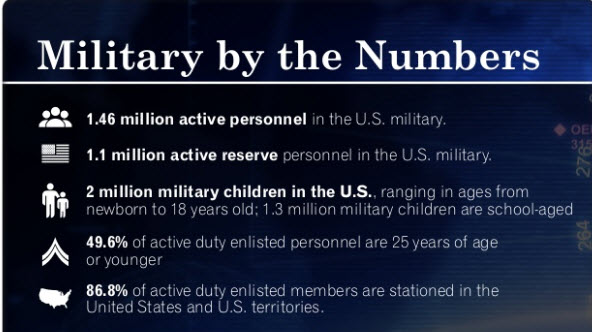
Yes, there will likely be car deals, coupons, and even a few beautiful ceremonies, but as both lawmakers and leaders have recognized, these individuals and their families deserve protections every day. Especially in the financial services universe.
experian-military-stats

There should be no exorbitant fees. No excessively high interest rates. And when they are called to active-duty, they should have avenues to ease their financial commitments and/or exit out of lease agreements.

Thankfully, the Servicemembers Civil Relief Act (SCRA) and a strengthened Military Lending Act (MLA) were introduced to help.

In fact, we are in year one of the enhanced MLA Final Rule in which compliance was mandated by Oct. 3, 2016. The extended MLA protections include a 36% Military Annual Percentage Rate (MAPR) cap to a wider range of credit products, including payday loans, vehicle title loans, refund application loans, deposit advance loans, installment loans and unsecured open-end lines of credit. The cap additionally applies to fees tacked on for credit-related ancillary products including finance charges and certain application and participation fees.

The amended rule covers credit offered or extended to active-duty service members and their dependents, if the credit is subject to a finance charge or is payable by written agreement in more than four installments.

And finally, one of the most important additions is that creditors must verify active-duty and dependents at origination. Right now, this can be accomplished by either working with a bureau, like Experian, or by vetting lists directly with the Department of Defense’s (DOD) own database. To continue to help with client need, the bureaus are working with the DOD and financial institutions to ensure alignment in delivery of military member and dependent data for a consistent, immediate and accurate MLA verification process.

While much has been introduced over the past year to strengthen protections, there is still more to come. The compliance date for credit cards is Oct. 3, 2017.

To date, the MLA status of millions upon millions of consumer credit applications have been verified, ensuring our military members and their dependents receive the financial protections they are entitled to under law.

There are roughly 3.4 million military members and dependents in the MLA database, and this is an audience who sacrifices a great deal for our country. Thankfully, protections are finally being enforced to ensure they are taken care of too.


Related Posts

The American Fintech Council on Responsible Innovation

Ian P. Moloney of the American Fintech Council discusses responsible fintech innovation and Experian’s role in expanding credit access.

Published: July 8, 2026 by Scarlet.Nickel@experian.com
Electric Vehicle Registrations Are Growing Beyond Traditional Locations

For years, most electric vehicle (EV) adoption has been concentrated in California, New York, and other traditional early-adopter markets. And while those markets still lead the nation in total registrations, as of last year, some of the fastest-growing EV markets are in regions that haven’t played a significant role in the past. According to Experian Automotive’s 2025 EV Year in Review Report, EV adoptions seem to be entering a new phase that is spreading well beyond coastal strongholds. In fact, the top designated market areas (DMAs) that saw the fastest year-over-year growth for new retail individual EV registrations in the last five years were Detroit, MI (34.5%), Naples, FL (32.6%), Atlanta, GA (20.6%), Buffalo, NY (18.7%), and Charlotte, NC (17.3%). However, despite the growing demand in these market areas over the last few years, Los Angeles, CA still holds a strong lead in new retail individual EV registrations, with over 164,000 new adopters in 2025. Rounding out the top five were San Francisco, CA (85,000+), New York, NY (78,000+), Miami, FL (45,000+), and Seattle, WA (35,000+). EV adoption expanding well beyond the early-adopter markets could be a result of charging infrastructure growth, vehicle availability improvement, and consumer interest reaching new levels across the country. What does this mean for dealers? The extension of EV adoption into emerging markets signals that these vehicles are becoming a mainstream consideration for more consumers. As dealers look for ways to grow their presence in this segment, adopting marketing strategies, service operations, and inventory planning will be beneficial to meet changing buyer expectations and capitalize on the growing demand. The biggest takeaway isn’t necessarily which markets are selling the most EVs, it’s seemingly where adoption is gaining momentum. As new regions start to embrace these vehicles, it’ll be important to monitor the next phase of growth and where future opportunities may emerge. To learn more about EV insights, visit Experian Automotive’s EV Resource Center.

Published: July 7, 2026 by Kirsten Von Busch
PREMIER Bankcard Expands Financial Access

Learn how PREMIER Bankcard and Experian are helping expand financial access through data, technology and personalized decisioning.

Published: July 6, 2026 by Scarlet.Nickel@experian.com