Tag: synthetic identity fraud

Fake IDs have been around for decades, but today’s fraudsters aren’t just printing counterfeit driver’s licenses — they’re using artificial intelligence (AI) to create synthetic identities. These AI fake IDs bypass traditional security checks, making it harder for businesses to distinguish real customers from fraudsters. To stay ahead, organizations need to rethink their fraud prevention solutions and invest in advanced tools to stop bad actors before they gain access. The growing threat of AI Fake IDs AI-generated IDs aren’t just a problem for bars and nightclubs; they’re a serious risk across industries. Fraudsters use AI to generate high-quality fake government-issued IDs, complete with real-looking holograms and barcodes. These fake IDs can be used to commit financial fraud, apply for loans or even launder money. Emerging services like OnlyFake are making AI-generated fake IDs accessible. For $15, users can generate realistic government-issued IDs that can bypass identity verification checks, including Know Your Customer (KYC) processes on major cryptocurrency exchanges.1 Who’s at risk? AI-driven identity fraud is a growing problem for: Financial services – Fraudsters use AI-generated IDs to open bank accounts, apply for loans and commit credit card fraud. Without strong identity verification and fraud detection, banks may unknowingly approve fraudulent applications. E-commerce and retail – Fake accounts enable fraudsters to make unauthorized purchases, exploit return policies and commit chargeback fraud. Businesses relying on outdated identity verification methods are especially vulnerable. Healthcare and insurance – Fraudsters use fake identities to access medical services, prescription drugs or insurance benefits, creating both financial and compliance risks. The rise of synthetic ID fraud Fraudsters don’t just stop at creating fake IDs — they take it a step further by combining real and fake information to create entirely new identities. This is known as synthetic ID fraud, a rapidly growing threat in the digital economy. Unlike traditional identity theft, where a criminal steals an existing person’s information, synthetic identity fraud involves fabricating an identity that has no real-world counterpart. This makes detection more difficult, as there’s no individual to report fraudulent activity. Without strong synthetic fraud detection measures in place, businesses may unknowingly approve loans, credit cards or accounts for these fake identities. The deepfake threat AI-powered fraud isn’t limited to generating fake physical IDs. Fraudsters are also using deepfake technology to impersonate real people. With advanced AI, they can create hyper-realistic photos, videos and voice recordings to bypass facial recognition and biometric verification. For businesses relying on ID document scans and video verification, this can be a serious problem. Fraudsters can: Use AI-generated faces to create entirely fake identities that appear legitimate Manipulate real customer videos to pass live identity checks Clone voices to trick call centers and voice authentication systems As deepfake technology improves, businesses need fraud prevention solutions that go beyond traditional ID verification. AI-powered synthetic fraud detection can analyze biometric inconsistencies, detect signs of image manipulation and flag suspicious behavior. How businesses can combat AI fake ID fraud Stopping AI-powered fraud requires more than just traditional ID checks. Businesses need to upgrade their fraud defenses with identity solutions that use multidimensional data, advanced analytics and machine learning to verify identities in real time. Here’s how: Leverage AI-powered fraud detection – The same AI capabilities that fraudsters use can also be used against them. Identity verification systems powered by machine learning can detect anomalies in ID documents, biometrics and user behavior. Implement robust KYC solutions – KYC protocols help businesses verify customer identities more accurately. Enhanced KYC solutions use multi-layered authentication methods to detect fraudulent applications before they’re approved. Adopt real-time fraud prevention solutions – Businesses should invest in fraud prevention solutions that analyze transaction patterns and device intelligence to flag suspicious activity. Strengthen synthetic identity fraud detection – Detecting synthetic identities requires a combination of behavioral analytics, document verification and cross-industry data matching. Advanced synthetic fraud detection tools can help businesses identify and block synthetic identities. Stay ahead of AI fraudsters AI-generated fake IDs and synthetic identities are evolving, but businesses don’t have to be caught off guard. By investing in identity solutions that leverage AI-driven fraud detection, businesses can protect themselves from costly fraud schemes while ensuring a seamless experience for legitimate customers. At Experian, we combine cutting-edge fraud prevention, KYC and authentication solutions to help businesses detect and prevent AI-generated fake ID and synthetic ID fraud before they cause damage. Our advanced analytics, machine learning models and real-time data insights provide the intelligence businesses need to outsmart fraudsters. Learn more *This article includes content created by an AI language model and is intended to provide general information. 1 https://www.404media.co/inside-the-underground-site-where-ai-neural-networks-churns-out-fake-ids-onlyfake/

Learn how background screeners can optimize pre-employment verification processes, reduce fraud risks, and ensure compliance.

Organizations must stay ahead of fraudsters by leveraging technology, training, and collaboration to combat synthetic ID fraud.

New account fraud can pose a serious risk to your business, and your current security methods might be hurting your customers' experience.

A multilayered defense can help detect and prevent synthetic ID fraud, one of the fastest-growing types of fraud. Read more!

Fraud and identity theft in the automotive industry continue to make headlines with the result bringing significant monetary losses for dealers. In 2022, more than 60% of automotive dealerships filed cases of identity theft losing three or more vehicles, with 84% saying there has been a noticeable increase in identity fraud since the pandemic. Even though dealers understand that fraud is on the rise, 66% stated they lacked adequate identity fraud protections [1]. In a recent episode of the Used Car Dealer Podcast, host Zach Klempf, spoke with Kanchana Sundaram, Experian's senior director of product and innovation for automotive, to discuss Fraud Protect, a new tool from Experian that helps dealers combat fraud. During the interview, Kanchana highlighted how dealers can use Fraud Protect to better identify potentially fraudulent behavior, without slowing down the sales process and still maintaining a positive experience for both them and the consumer. By leveraging the latest technology and advanced analytics, dealers are able to detect some of the most common fraud types that include: Third-party fraud: Fraudsters steal an individual’s identity to purchase a vehicle First-party fraud: A person knowingly misrepresents their identity or provides false information, often with the intention of not paying for the vehicle Synthetic identity fraud: Fraudsters create fake identities and build credit profiles over time before using them to finance a vehicle they do not intend to pay for The episode is now available across all major podcast platforms, click the link to watch: YouTube To learn more about Fraud Protect, visit Experian’s auto fraud prevention solutions webpage. For more information on the Used Car Dealer Podcast, visit https://www.sellyautomotive.com/podcast Facebook – @SellyAutomotive ‘X’ – @SellyAutomotive LinkedIn – @SellyAutomotive 1. https://www.elendsolutions.com/research/2022-Identity-Fraud-Survey-Report/
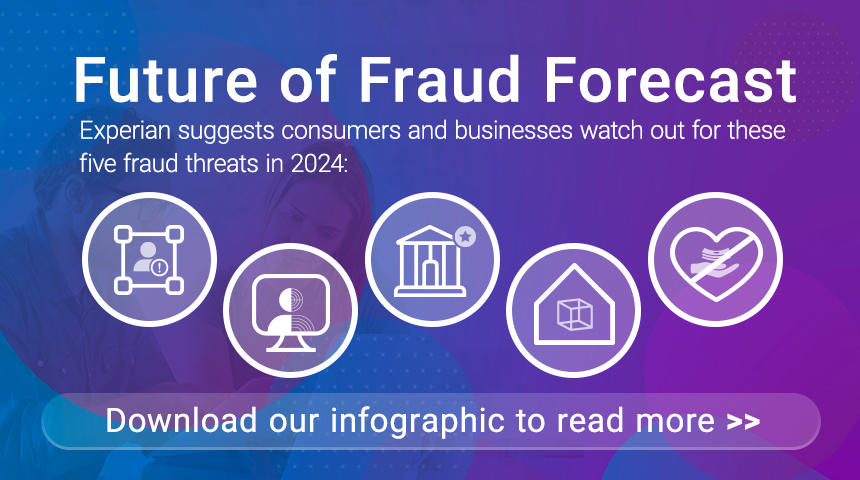
Spoiler alert: Gen AI is everywhere, including the top of Experian’s list of fraud trends 2024. “The speed and complexity of fraud attacks due to new technology and sophisticated fraudsters is leaving both businesses and consumers at risk in 2024,” said Kathleen Peters, chief innovation officer at Experian Decision Analytics in North America. “At Experian, we’re constantly innovating to deliver data-driven solutions to help our customers fight fraud and to protect the consumers they serve.” To deter fraudulent activity in 2024, businesses and consumers must get tactical for their fraud fighting strategies. And for businesses, the need for more sophisticated fraud protection solutions leveraging data and technology is greater than ever before. Experian suggests consumers and businesses watch out for these big five rounding out our fraud trends 2024. Generative AI: Generative AI accelerates DIY fraud: Experian predicts fraudsters will use generative AI to accelerate “do-it-yourself” fraud ranging from deepfake content – think emails, voice and video – as well as code creation to set up scam websites. A previous blog post of ours highlighted four types of generative AI used for fraud, including fraud automation at scale, text content generation, image and video manipulation and human voice generation. The way around it? Fight AI fraud with AI as part of a multilayered fraud prevention solution. Fraud at bank branches: Bank branches are making a comeback. A growing number of consumers prefer visiting bank branches in person to open new accounts or get financial advice with the intent to conduct safer transactions. However, face-to-face verification is not flawless and is still susceptible to human error or oversight. According to an Experian report, 85% of consumers report physical biometrics as the most trusted and secure authentication method they’ve recently encountered, but the measure is only currently used by 32% of businesses to detect and protect against fraud. Retailers, beware: Not all returns are as they appear. Experian predicts an uptick in cases where customers claim to return their purchases, only for the business to receive an empty box in return. Businesses must be vigilant with their fraud strategy in order to mitigate risk of lost goods and revenue. Synthetic identity fraud will surge: Pandemic-born synthetic identities may have been dormant, but now have a few years of history, making it easier to elude detection leading to fraudsters using those dormant accounts to “bust out” over the next year. Cause-related and investment deception: Fraudsters are employing new methods that strike an emotional response from consumers with cause-related asks to gain access to consumers’ personal information. Experian predicts that these deceptive cause-related methods will surge in 2024 and beyond. How businesses and consumers feel about fraud in 2024 According to an Experian report, over half of consumers feel they’re more of a fraud target than a year ago and nearly 70% of businesses report that fraud losses have increased in recent years. Business are facing mounting challenges – from first-party fraud and credit washing to synthetic identity and the yet-to-be-known impacts generative AI may have on fraud schemes. Synthetic identity fraud has been mentioned in multiple Experian Fraud Forecasts and the threat is ever growing. As technology continues to enhance consumers’ connectedness, it also heightens the stakes for various fraud attacks. As highlighted by this list of fraud trends 2024, the ways that fraudsters are looking to deceive is increasing from all angles. “Now more than ever, businesses need to implement a multilayered approach to their identity verification and fraud prevention strategies that leverages the latest technology available,” said Peters. Consumers are increasingly at risk from sophisticated fraud schemes. Increases in direct deposit account and check fraud, as well as advanced technologies like deepfakes and AI-generated phishing emails, put consumers in a precarious position. The call to action for consumers is to remain vigilant of seemingly authentic interactions. Experian can help with your fraud strategy To learn more about Experian’s fraud prevention solutions, please visit https://www.experian.com/business/solutions/fraud-management. Download infographic Watch Future of Fraud webinar

With rapid growth comes an increased risk of fraud, making "Buy Now, Pay Never" a crucial fraud threat to watch out for in 2024.

Third-party fraud involves an identifiable victim that is willing to collaborate in the investigation and resolution.

By leveraging an array of tools and technologies, businesses can tailor their fraud prevention strategies to suit the specific needs of their customers.

There’s an undeniable link between economic and fraud trends. During times of economic stress, fraudsters engage in activities specifically designed to target strained consumers and businesses. By layering risk management and fraud prevention tools, your organization can manage focus on growing safely. Download infographic Review your fraud strategy

Experian's 2023 Future of Fraud Forecast examines rising threats impacting businesses and consumers and how best to combat them.

Financial elder abuse fraud occurs when someone illegally uses a senior’s money or other property. Previngting it requires a robust fraud solution.

Between social unrest across the globe, the lingering pandemic, and the digital transformation brought on by the health crisis, the fraud landscape has expanded dramatically for businesses and consumers alike. According to Experian’s latest global identity and fraud report, 93% of U.S. companies have mid-to-high concern for fraud, and 81% say that their worries about fraud have increased over the past 12 months. Monitoring unused or dormant accounts for fraud is often a warning directed at consumers. However, it’s now advice an increasing number of businesses are wishing they’d followed, as growing synthetic identity (SID) fraud is fueling a dramatic increase in losses—SID related charge-offs ballooned to $20 billion in 2021 alone, according to the Federal Reserve Bank of Boston. The threat of SIDs SIDs are made to look like an actual consumer, combining both real and fake data to form a new composite identity. They typically evolve using a combination of tactics that include: Identifying and creating relationships with businesses that have a high tolerance for identity discrepancies. These include businesses whose products expose the business to low fraud risk and/or products offered to market segments where identity verification is expected to be challenging. Either of these enable an SID to be planted among consumer data sources. Attaching the SID to existing accounts and relationships that belong to other consumers. Often these existing accounts were established by collusive criminals or by using other SIDs, but there are also ways for legitimate consumers to collect ‘rent’ in exchange for adding other consumers to existing accounts. Either approach improves the SID’s appearance of credit worthiness. Progressively building the SID’s independent ability to access larger and larger amounts of credit until they spend quickly and default on all obligations, leaving no one for the victimized businesses to pursue. “They’re difficult to identify because of the combination of real and fake data and because there’s no actual victim reporting an identity theft. As a result, businesses typically have trouble separating SID losses from credit losses,” said Chris Ryan, Experian’s go-to-market lead for fraud and identity. “SID fraud isn’t committed haphazardly. It’s carefully planned and executed—and it adapts to policy changes. Some businesses change their underwriting policy or focus on early-lifecycle account activity like purchases, payments, and requests for additional credit to reduce SID losses that occur immediately after an account is opened. SIDs can adapt to this. If six months of responsible account behavior earns a credit line increase or the ability to spend large amounts in a single billing cycle, the perpetrators are willing to wait,” Ryan said. “It’s something businesses and lenders need to be on guard for, especially with the fast-paced holiday shopping season ahead,” he said. Addressing SIDs Solving the increasingly complex problem of SID fraud requires a thoughtful approach. The institutions seeing success at preventing multi-faceted fraud are using a layered approach to identifying and mitigating fraud. Here are three steps lenders can take today to prevent SID fraud across your portfolio: Use data and analytics that extend beyond credit to evaluate identities and their histories more completely. Apply those analytics across the lifecycle from marketing and origination to portfolio management recognizing that SID risk is not restricted to a single lifecycle stage. Have a rigorous verification process that escalates to document verification or the Social Security Administrations Electronic Consent Based SSN Verification (eCBSV) process For more information on how you can leverage a multi-layered approach to fraud in your business, visit our fraud and identity solutions hub or request a call to discuss customizing a solution for your company.

Experian created the 2022 Future of Fraud Forecast to help businesses anticipate and prevent new fraud trends in the year ahead.