Tag: partner solutions

Today’s consumers expect more from their banks, credit unions, and financial services providers than just basic transaction services. According to an MX Technologies report, one in three consumers feels providers do not do enough to support their financial needs. At the same time, 50% of banking consumers expect personalized offers for tools, products, and services to help them reach their financial goals.1 The same study found that more than half want financial providers to help them better manage their finances. As customers increasingly turn to their financial institutions for trustworthy information on achieving financial wellness, these institutions have a great opportunity to offer value-added financial services that meet those needs. Adopting a customer-centric approach—one that enables them to provide the specific resources and guidance customers are seeking—is essential for fostering stronger relationships. This, in turn, can be crucial for driving growth, increasing market share, and gaining a competitive edge. What are value-added financial services? Value-added financial services are offerings that go beyond basic financial products, such as bank accounts or loans, to provide additional benefits, convenience or personalized support to customers. These services aim to improve customer satisfaction and set a financial institution apart from competitors, and can include features such as loyalty programs, advanced fraud prevention, data analytics, online access to services and financial planning tools. How value-added financial services can build engagement and trust Savvy financial institutions are adapting to the evolving demands of consumers by offering innovative tools that help their customers make informed financial decisions and enhance their financial literacy. Offering value-added financial services, such as management and planning tools, along with advanced security and fraud protection, provides financial institutions with an essential way to increase customer engagement and foster greater loyalty. By providing deeper insights, better personalization, and reliable financial experiences, institutions can help customers manage their financial health more effectively. Addressing growing concerns over identity threats Fraud and identity theft are top-of-mind concerns for consumers these days as incidence of such attacks are on the rise. A recent Security.org study found that a staggering 60% of U.S. credit card holders have been victims of fraud, with 45% experiencing multiple instances.2 Meanwhile, the U.S. Federal Trade Commission (FTC) received over 1.1 million complaints of identity theft in 2024, resulting in financial losses exceeding $12.7 billion. For financial institutions, this creates an opportunity to address consumer concerns through value-added financial services. Solutions that help detect fraud early and monitor credit health can provide invaluable peace of mind. Institutions that offer services such as credit monitoring, identity alerts, and financial management tools can help customers stay protected while also opening the door to valuable recurring revenue streams. Best-in-class value-added financial services Experian® is uniquely positioned to support financial institutions with best-in-class value-added financial services. By leveraging a complete suite of financial health solutions, institutions can engage, educate and empower customers to be more in control of their financial lives. Our suite of solutions include: Credit monitoring and alert solutions – These advanced tools help increase retention and keep consumers engaged with robust credit monitoring that detects potential fraud and provides alerts, enabling them to respond more quickly. Credit report and score solutions – Provides customers with credit information and guidance to better understand, manage and strengthen their financial well-being. Financial management solutions – With a suite of comprehensive credit and financial management tools, financial institutions can improve a customer’s experience by providing a single platform to link accounts across different institutions and unify financial data. As customers regularly engage with the platform to manage both short and long-term financial goals, institutions can improve longer-term retention. Identity monitoring and alert solutions – This tool helps increase consumer engagement with continuous personal data monitoring and alerts. It empowers consumers to spot potential fraud, assess risks, and respond before they become a victim of identity theft. Identity restoration services – In the face of rising incidence of identity theft, this powerful suite of restoration services helps consumers navigate the complex identity recovery process and mitigate future financial harm. Gaining a competitive advantage As consumers increasingly demand exceptional customer service, offering innovative products and personalized solutions is key to preventing customer churn. When financial institutions deliver value-added financial services, they gain a competitive advantage. Failure to deliver the service, convenience, and personalized products or tools that consumers demand risks losing them to other providers. According to J.D. Powers, up to 54% of consumers will leave their bank in the next year, costing institutions millions. Salesforce reported that 72% of consumers indicated that better deals made them switch to another brand. Financial institutions that offer innovative value-added financial services benefit from continuous engagement that helps build trust and loyalty while generating recurring revenue through subscription-based offerings. Our innovative offerings saw: Credit alert login rates ten times higher than the financial services industry benchmark. Email open rates for alerts more than two times that of the national average for financial services. Top-performing clients with over 25% of their enrolled customers log in to the portal at least once per month. Consumers are opening twice as many credit cards and three times as many savings accounts when using regularly personalized features. Reasons to partner with us When it comes to providing accurate, real-time financial data that can lead to crucial insights for better decision making, Experian is an ideal partner. Our personalized, value-added financial service can be seamlessly integrated and embedded into your existing systems, making it easier for you to meet consumer demands for tools that help them make informed financial choices and improve their financial literacy. Learn more about our value-added financial services 1 https://www.experian.com/content/dam/marketing/na/thought-leadership/business/documents/infographic-fostering-relationships-to-unlock-growth.pdf 2https://www.experian.com/blogs/insights/infographic-stronger-customer-relationships/

Delivering a superior customer experience has become the key goal for nearly every business across almost every industry. The banking industry is no exception. A recent trend highlighting the importance of customer experience is the drop in customer loyalty. Customer expectations are higher than ever, heightening competition between traditional banks and newer market entrants. This creates a need for banks to stand out and succeed by offering a superior customer experience. That experience starts with customer engagement in banking. According to a recent Forrester study, only two out of 10 retail banks regularly engage with customers to enhance their experience. The same study found that when retail banks consistently focus on improving the customer experience, they tend to grow more than three times faster than their competitors that do not. Forrester also found that over 70% of retail banks consider digital customer engagement essential for their current success and future growth.1 The key to customer engagement in banking: understanding the customer The good news for banks is that when they engage with customers by offering the services and guidance they want, those customers tend to respond with increased loyalty. Research indicates that 54% of customers rely on their banks to help them achieve their financial objectives. Most encouragingly, this same research indicates that 71% of actively engaged customers are likely to stay with their bank for the foreseeable future.2 At the heart of today’s evolving efforts to retain customers and build stronger loyalty are innovative tools that deliver on consumer demand for greater personalization and digital experiences in day-to-day engagement with the bank. With rising interest rates and more choices in financial services, consumers are actively seeking better rates for savings accounts, loans, and credit products. A 2024 Salesforce survey reveals that 72% of consumers are motivated to switch providers in search of better deals.3 Another report indicates that 50% of banking customers expect personalized offers for tools, products, and services to help them achieve their financial goals.4 In response to this trend, banks have an opportunity to go above and beyond to attract and retain customers by focusing on delivering exceptional customer service, innovative product offerings and personalized solutions to prevent customer churn. This requires embracing innovative approaches to engagement. For example, banks can leverage customer engagement services that empower customers to better manage their financial well-being. Such services might include smart tools that provide timely alerts and reminders, enabling customers to avoid delinquency and stay current with their payments. Strategies for enhancing engagement Banks aiming to enhance customer engagement can achieve this by utilizing data-driven insights, innovative technologies and customized partner solutions to foster loyalty and long-term trust. Customer engagement strategies should consider the following: Omnichannel experience – Banks aim to deliver a seamless, consistent experience across all touchpoints, whether it is a branch, mobile device, online platform, or contact center. Customers should be able to start an interaction on one channel and finish it on another without any friction. Connecting physical and digital touchpoints builds trust, convenience, and loyalty. Financial wellness tools and empowerment - Banks can utilize customer engagement services to provide customers with smart financial management tools, including budgeting dashboards, automated savings features, credit score monitoring, and investment advice. Providing customers with real-time insights into their financial health enhances engagement and fosters long-term loyalty. Identity protection and security tools – Banks can build trust through proactive identity protection, continuous monitoring and alerts that help customers feel protected and in control. Customer education and financial literacy – The bank can engage customers through educational content like webinars, tutorials, and in-app tips that help clarify financial products and promote better decision-making. Educated customers tend to be more confident, satisfied, and more likely to expand their relationship with the bank. Personalization through data and analytics – Banks can utilize data to deliver highly personalized recommendations, product offers, and experiences specific to individual life stages, behaviors, and goals. Predictive analytics can forecast needs, such as suggesting mortgage advice when spending and saving habits indicate a possible interest in homebuying, thus improving relevance and connection. It can also alert customers about savings opportunities. This kind of proactive engagement helps build stronger relationships. Customer engagement services: the key to driving revenue growth and enduring relationships At Experian®, we offer world-class customer engagement services that can enable banks to meet customer expectations and build stronger, long-lasting relationships. By providing tailored financial services and credit education, banks can help customers reach their financial goals. At the same time, banks can build stronger trust by empowering customers to avoid risks and take action to recover when identity theft occurs. All our solutions can be smoothly integrated into a bank’s existing ecosystem, making it quicker and easier to deliver these services to customers. As banks continue to seek ways to deliver exceptional customer experiences, it is essential to offer innovative tools and services that better engage customers. Customer engagement in banking is crucial for attracting and retaining clients. When banks go the extra mile to meet the evolving needs of customers, they are repaid with greater loyalty and long-term trust. Learn more about our customer engagement services Download the infographic 1https://www.kameleoon.com/blog/18-stats-understand-future-cx-optimization-and-banking2https://www.postgrid.com/customer-engagement-strategies-banking/3https://www.experian.com/content/dam/marketing/na/thought-leadership/business/documents/infographic-fostering-relationships-to-unlock-growth.pdf4https://www.experian.com/content/dam/marketing/na/thought-leadership/business/documents/infographic-fostering-relationships-to-unlock-growth.pdf
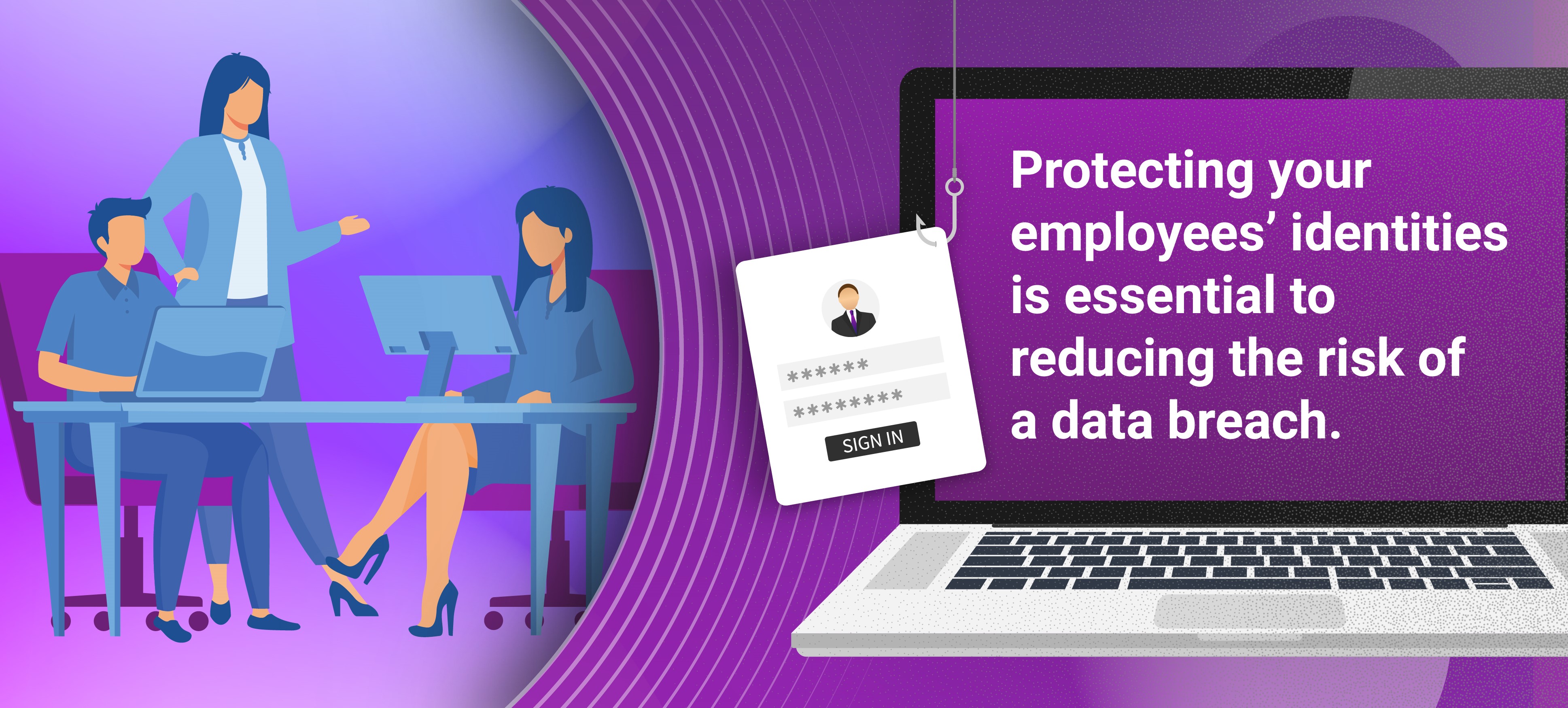
As data breaches become an ever-growing threat to businesses, the role of employees in maintaining cybersecurity has never been more critical. Did you know that 82% of data breaches involve the human element1 , such as phishing, stolen credentials, or social engineering tactics? These statistics reveal a direct connection between employee identity theft and business vulnerabilities. In this blog, we’ll explore why protecting your employees’ identities is essential to reducing data breach risk, how employee-focused identity protection programs, and specifically employee identity protection, improve both cybersecurity and employee engagement, and how businesses can implement comprehensive solutions to safeguard sensitive data and enhance overall workforce well-being. The Rising Challenge: Data Breaches and Employee Identity Theft The past few years have seen an exponential rise in data breaches. According to the Identity Theft Resource Center, there were 1,571 data compromises in the first half of 2024, impacting more than 1.1 billion individuals – a 490% increase year over year2. A staggering proportion of these breaches originated from compromised employee credentials or phishing attacks. Explore Experian's Employee Benefits Solutions The Link Between Employee Identity Theft and Cybersecurity Risks Phishing and Social EngineeringPhishing attacks remain one of the top strategies used by cybercriminals. These attacks often target employees by exploiting personal information stolen through identity theft. For example, a cybercriminal who gains access to an employee's compromised email or social accounts can use this information to craft realistic phishing messages, tricking them into divulging sensitive company credentials. Compromised Credentials as Entry PointsCompromised employee credentials were responsible for 16% of breaches and were the costliest attack vector, averaging $4.5 million per breach3. When an employee’s identity is stolen, it can give hackers a direct line to your company’s network, jeopardizing sensitive data and infrastructure. The Cost of DowntimeBeyond the financial impact, data breaches disrupt operations, erode customer trust, and harm your brand. For businesses, the average downtime from a breach can last several weeks – time that could otherwise be spent growing revenue and serving clients. Why Businesses Need to Prioritize Employee Identity Protection Protecting employee identities isn’t just a personal benefit – it’s a strategic business decision. Here are three reasons why identity protection for employees is essential to your cybersecurity strategy: 1. Mitigate Human Risk in Cybersecurity Employee mistakes, often resulting from phishing scams or misuse of credentials, are a leading cause of breaches. By equipping employees with identity protection services, businesses can significantly reduce the likelihood of stolen information being exploited by fraudsters and cybercriminals. 2. Boost Employee Engagement and Financial Wellness Providing identity protection as part of an employee benefits package signals that you value your workforce’s security and well-being. Beyond cybersecurity, offering such protections can enhance employee loyalty, reduce stress, and improve productivity. Employers who pair identity protection with financial wellness tools can empower employees to monitor their credit, secure their finances, and protect against fraud, all of which contribute to a more engaged workforce. 3. Enhance Your Brand Reputation A company’s cybersecurity practices are increasingly scrutinized by customers, stakeholders, and regulators. When you demonstrate that you prioritize not just protecting your business, but also safeguarding your employees’ identities, you position your brand as a leader in security and trustworthiness. Practical Strategies to Protect Employee Identities and Reduce Data Breach Risk How can businesses take actionable steps to mitigate risks and protect their employees? Here are some best practices: Offer Comprehensive Identity Protection Solutions A robust identity protection program should include: Real-time monitoring for identity theft Alerts for suspicious activity on personal accounts Data and device protection to protect personal information and devices from identity theft, hacking and other online threats Fraud resolution services for affected employees Credit monitoring and financial wellness tools Leading providers like Experian offer customizable employee benefits packages that provide proactive identity protection, empowering employees to detect and resolve potential risks before they escalate. Invest in Employee Education and Training Cybersecurity is only as strong as your least-informed employee. Provide regular training sessions and provide resources to help employees recognize phishing scams, understand the importance of password hygiene, and learn how to avoid oversharing personal data online. Implement Multi-Factor Authentication (MFA) MFA adds an extra layer of security, requiring employees to verify their identity using multiple credentials before accessing sensitive systems. This can drastically reduce the risk of compromised credentials being misused. Partner with a Trusted Identity Protection Provider Experian’s suite of employee benefits solutions combines identity protection with financial wellness tools, helping your employees stay secure while also boosting their financial confidence. Only Experian can offer these integrated solutions with unparalleled expertise in both identity protection and credit monitoring. Conclusion: Identity Protection is the Cornerstone of Cybersecurity The rising tide of data breaches means that businesses can no longer afford to overlook the role of employee identity in cybersecurity. By prioritizing identity protection for employees, organizations can reduce the risk of costly breaches and also create a safer, more engaged, and financially secure workforce. Ready to protect your employees and your business? Take the next step toward safeguarding your company’s future. Learn more about Experian’s employee benefits solutions to see how identity protection and financial wellness tools can transform your workplace security and employee engagement. Learn more 1 2024 Experian Data Breach Response Guide 2 Identity Theft Resource Center. H1 2024 Data Breach Analysis 3 2023 IBM Cost of a Data Breach Report