Stopping Unemployment Insurance Fraud

by Eric Thompson 2 min read November 11, 2020

In the wake of unprecedented unemployment fraud since the start of COVID-19, Experian announced it was selected as the exclusive partner for identity and fraud verification for the Unemployment Insurance (UI) Integrity Center’s centralized Identity Verification (IDV) capability. IDV is available to state agencies at no cost through UI Integrity Center, which is operated by the National Association of Workforce Agencies (NASWA) in partnership with the U.S. Department of Labor.

With the Federal Bureau of Investigations (FBI) reporting a spike in fraudulent unemployment insurance claims complaints related to COVID-19, it’s more important than ever for state agencies to use innovative solutions to verify identities that are applying for unemployment insurance to protect consumers. If improper unemployment insurance payments are made to fraudsters, the efforts of the CARES Act could be largely wasted.

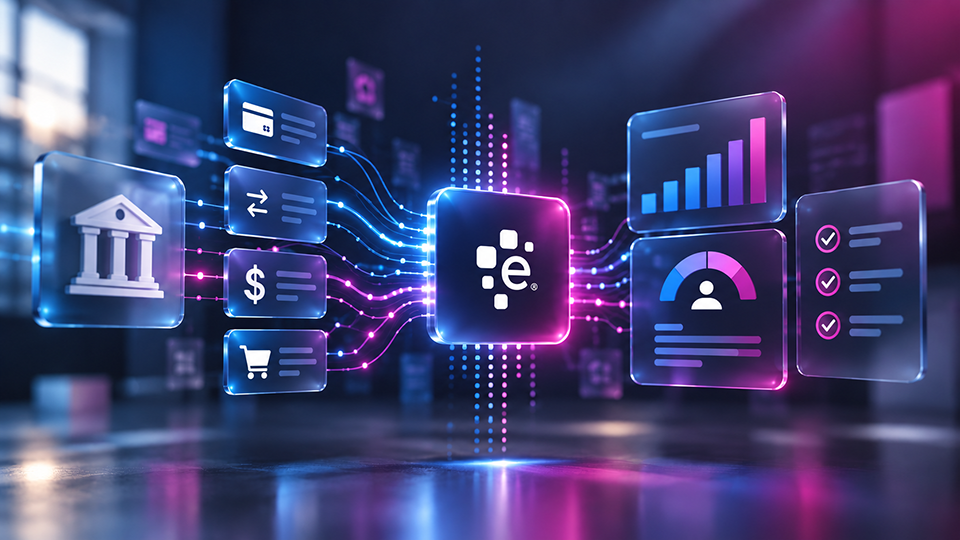
The IDV capability leverages Experian’s Precise IDTM to provide a centralized identity verification and proofing solution. Precise ID combines identity analytics with advanced fraud risk models to distinguish various types of fraud, which can help state agencies maximize time and resources. When state agencies submit claims, the IDV solution will return ID theft scoring and associated cause codes, enabling them to assess whether a claim may be fraudulent.

“Due to the COVID-19 health crisis, unemployment is high, with over roughly 60 million Americans filing for unemployment since March,” said Robert Boxberger, president of Experian’s Decision Analytics in North America. “At Experian, we’re proud to have a strong culture dedicated to continuous innovation that helps protect consumers’ financial health. We’re taking that same consumer focus and helping make the unemployment insurance application process more efficient and safer for constituents.”

The Integrity Data Hub (IDH) is a robust, multi-state data system that contains a continuously expanding set of sources to provide advanced cross-matching and analytic capabilities to states. It is designed to be easily implemented by any state Unemployment Insurance agency, regardless of claim volume, technology, or access to internal resources. The IDH was designed and built using the latest National Institute of Standards and Technology IT security standards, including the use of asymmetric encryption and other techniques to ensure the security of sensitive data.

“We’re excited to partner with Experian and utilize its Precise ID solution to assist states in mitigating fraud during these unprecedented times,” said Scott Sanders, NASWA Executive Director. “States are finding this to be a very valuable tool and we are pleased that we can offer this solution to states through our partnership with the U.S. Department of Labor.”

Read Press Release Learn More About Precise ID
Related Posts

The Email Address as Your Most Powerful Identity Signal

The why behind Experian's acquisition of AtData What happens when a comprehensive email intelligence database joins a global leader in data, analytics and fraud prevention? The acquisition of AtData adds 25+ years of building a complete view of email as an identity signal. Financial institutions can recognize, engage and protect customers unlocking a new standard for the way their teams work and the customer experience. That's what Experian's acquisition of AtData delivers. How we got here Not all email addresses tell the same story. Some are newly created. Some exhibit bot-like patterns. Some are inconsistent with every other signal you have about that person. Imagine a real customer. You have a job. You shop online. You have a primary email from your employer, a personal Gmail you've used for 15 years, and an old Yahoo address you still use for shopping because you've been using it since college. You're an engaged customer who interacts with brands, makes purchases and pays bills on time. But each system sees a different version of you. When you apply for credit, the lender sees one email. When you shop, the retailer sees another. When you sign up for a service, you might use the third. For financial institutions: You slow down the approval process to manually verify identity or approve applicants without the full picture. For retailers: You can't tell which version of "customer" is the most engaged, so you either over-mail or under-serve. For fraud systems: Sees a new account created under one email and flags it as suspicious because it doesn't have the history. This was the original problem AtData was built to solve in 1999. Twenty-five years later, that problem didn’t go away, it became more complex. Email fragmentation and device sharing are more common, and identity theft is more sophisticated. Capabilities that now work together Experian has built sophisticated identity and fraud solutions backed by consumer data resources and decades of expertise in credit and risk. AtData brought the ability to assess whether an email address is trustworthy, reachable and consistent—at scale, in real time. Experian is now making email intelligence foundational, not optional. This matters for: Fraud prevention and risk management: Distinguishing a returning customer from a new threat. Knowing whether an email is newly created, exhibiting bot-like patterns or inconsistent with other identities is crucial. Compliance: Building audit trails that can explain identity decisions. Email data history and behavioral signals create the documentation needed to defend your decisions. Credit: Verifying identity in a world where traditional signals are shifting. Email signals provide a persistent, durable identifier that confirms who someone actually is. Marketing: Reaching the right person across email, mail and digital channels. Email intelligence reveals which addresses are actively engaged and reachable. Research shows email remains one of the highest-ROI marketing channels outperforming paid search and social advertising1. The problem every marketer faces: You end up burning budget on addresses that bounce, are unmonitored or are associated with users who never open mail. For credit marketing specifically, email enables faster, more targeted delivery of firm offers across channels, something that's increasingly important in a post-cookie world. "Email is a persistent identifier in a fragmented world. It's what connects a person's postal address, phones, devices, behaviors—the full picture of who they are. By embedding that into our infrastructure, we're not just adding another data point. We're fundamentally improving how businesses understand who their customers are."- Ashley Knight, Senior Vice President, Financial Services and Data Why now? AI is reshaping how decisions are made in every industry. Models are getting faster, more automated and more embedded in core workflows. But AI is only as effective as the data behind it. Fragmented data + fast models = faster, larger-scale misclassifications. In an era of synthetic identities, AI agents, deepfakes and AI-generated activity, the value of durable, persistent, real-world data signals has increased dramatically. Deloitte’s Center for Financial Services projects that generative AI could drive fraud losses in the U.S. up to $40 billion by 2027, a 32% growth rate since 2023. And email sits at the center of it with business email compromise already being one of the most common and costly fraud types. People change phones, move homes and swap devices, but they often hold onto their email for years. That's the signal that protects your business, and the one we've built into the core of how we help you make decisions with confidence. View the press release here

August 6, 2026 by Zohreen Ismail
Building Financial Opportunity Through Purpose-Driven Partnership

Discover how the National Urban League and Experian partner to expand financial literacy and create economic opportunity.

August 6, 2026 by Scarlet Nickel
2026 U.S. Identity and Fraud Report 

Explore key findings and insights from our newly released 2026 U.S. Identity and Fraud Report. Read more now!

August 5, 2026 by Laura Burrows

Subscribe to our Newsletter

Enter your name and email for the latest updates.

This site is protected by reCAPTCHA and the Google Privacy Policy and Terms of Service apply.

Subscribe to our Newsletter

Don't miss out on the latest industry trends and insights!
Subscribe