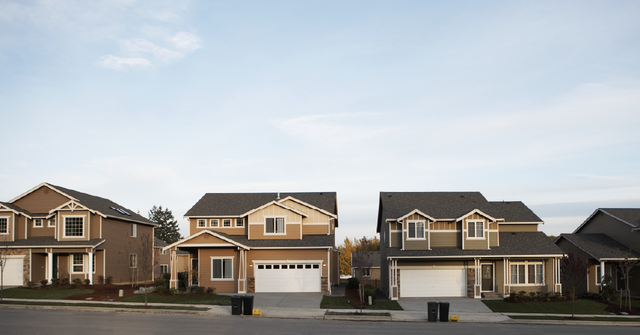
As the U.S. rental housing market moves through 2026, renters, landlords, and property management companies face an increasingly complex operating environment. Elevated housing costs, economic uncertainty, slowing construction activity, and a rapidly evolving fraud landscape are converging to reshape both risk and opportunity across the rental ecosystem.
At the same time, advances in data, analytics, and verification technologies are equipping housing professionals with new tools to adapt — shifting decision‑making from reactive to proactive at a moment when precision matters most.
Mortgage rates continue to constrain housing mobility
One of the most significant structural forces supporting rental demand remains the cost of homeownership. In early 2025, the average 30‑year fixed mortgage rate hovered near 7%, with Freddie Mac’s weekly survey reporting a rate of 7.04% for the week of January 16, 2025. The report also showed the year beginning near 7% before ending at 6.15% (Freddie Mac, 2025a, 2025b).
This environment has created a pronounced lock‑in effect: homeowners with pandemic‑era low fixed mortgage rates are reluctant to sell, limiting for‑sale inventory and suppressing turnover (Federal Housing Finance Agency [FHFA], 2024; Bankrate, 2025). For renters, this results in longer tenures and fewer pathways to homeownership. For landlords and lenders, it reinforces expectations that rental demand will remain elevated well into 2026, even if mortgage rates ease modestly.
Rental housing supply faces structural constraints
Despite strong rental demand, rental housing supply growth remains uneven. Multifamily development has slowed as financing costs and construction expenses have risen. Industry data indicate that multifamily units under construction fell roughly 20% year over year by early 2025, while completions have outpaced new starts—approximately 1.5 apartments completed for every one that begins construction on a three‑month moving‑average basis (Nanayakkara Skillington, 2025). Forecasts from Yardi Matrix pointed to elevated completions in 2025, followed by a notable slowdown in 2026, with starts continuing to slump (Dale, 2025). Absent a meaningful acceleration in new construction, these dynamics are likely to sustain pressure on rents and intensify affordability challenges, particularly in high‑growth and high‑migration markets (Joint Center for Housing Studies, 2025).
Fraud risk is escalating in a digital-first rental market
As rental transactions increasingly move online, fraud has become a fast‑growing operational risk for property managers and owners. The Federal Trade Commission’s Consumer Sentinel data show sustained reports of identity theft and imposter scams (Federal Trade Commission [FTC], 2024), while industry surveys identify account takeover, payment fraud, and synthetic identities as some of the most frequently encountered issues (Experian, 2023). From 2024 to 2025, housing and real estate professionals reported rising exposure to AI‑enabled schemes—including deepfake voices, manipulated documents, and increasingly sophisticated application fraud (Housing Wire, 2025; Veriff, 2025; First American, 2025).
As digital leasing accelerates, robust identity verification and fraud prevention have become core components of sustainable portfolio management. FTC Consumer Sentinel data continue to highlight persistent patterns of identity theft and imposter scams (FTC, 2024), and industry research consistently shows that account takeover, payment fraud, and synthetic identities remain significant operational threats (Experian, 2023). Between 2024 and 2025, housing professionals noted a growing prevalence of AI‑enabled fraud techniques, such as deepfake audio, falsified documents, and advanced application manipulation (HousingWire, 2025; Veriff, 2025; First American, 2025).
Data and analytics are becoming the defining advantage
Access to high‑quality data and real‑time insights is increasingly decisive. Data‑driven solutions enable rental housing professionals to move beyond static screening and manual processes, supporting continuous risk assessment and smarter decision‑making. These capabilities allow housing providers to evaluate applicants and portfolios with greater accuracy, reduce operational friction, and respond more proactively to emerging risks—making data and analytics a defining advantage across the rental housing ecosystem.
Rent reporting as a credit building and risk signal building and risk signal
Rental payment history has emerged as a valuable indicator of consumer financial behavior. Surveys and evaluations show strong renter interest in having on‑time rent payments included in credit scores, and many participants experience measurable benefits. For example, Fannie Mae reports that more than 80% of renters want rent payments factored into credit scoring models (Fannie Mae, n.d.). Randomized trials also demonstrate increased credit visibility and movement into near‑prime tiers for previously unscorable consumers (Theodos, Teles, & Leiberman, 2025; Credit Builders Alliance, 2025). For property managers and owners, this creates a dual benefit: renters gain meaningful credit‑building opportunities, while housing providers gain a deeper, more reliable signal of payment behavior beyond traditional credit files.
Smarter screening and verification
Income and employment verification remain among the most critical—and historically inefficient—steps in the rental lifecycle. Digital verification tools that leverage payroll and employment databases, along with consent‑based bank data, significantly reduce friction, deliver faster decisions, and help mitigate fraud by validating applicant information at the source (Truework, 2024; MeasureOne, n.d.; U.S. Government Accountability Office [GAO], 2025). As application volumes rise, automated verification is becoming a baseline requirement rather than a competitive differentiator. These tools enhance accuracy, streamline workflows, and strengthen fraud prevention—capabilities that are increasingly essential as application tactics grow more advanced.
What to watch as the market moves into 2026
Looking ahead, three trends are likely to shape the rental housing market over the next 12 to 18 months:
- Sustained rental demand amid elevated mortgage rates and constrained for‑sale inventory, as higher borrowing costs continue to limit mobility and suppress housing turnover (Freddie Mac, 2025a; Federal Housing Finance Agency [FHFA], 2024).
- Widening affordability gaps, with rent‑to‑income pressures intensifying—particularly in high‑cost and high‑growth regions (Joint Center for Housing Studies, 2025).
- Data‑driven decision‑making is becoming standard across screening, pricing, fraud prevention, and portfolio monitoring, reflecting broader industry adoption of automated tools and analytics (U.S. Government Accountability Office [GAO], 2025; Snappt, 2025).
Final perspective
The U.S. rental housing market in 2026 is defined by both complexity and opportunity. Success will depend on the ability to adapt quickly, manage risk proactively, and deploy data‑driven solutions with precision. For renters, tools such as rent reporting offer pathways to greater financial stability and transparency. Ultimately, this moment is about resilience, readiness, and the systems that will shape rental housing outcomes well into the next cycle. Organizations that invest now in smarter data, stronger controls, and forward‑looking strategies will be best positioned to navigate what comes next—for themselves and for the broader rental housing ecosystem.

VP, Product Management, EVH Housing
Manjit Sohal is an accomplished and proven product leader in the Rental Real Estate industry. He is currently the Vice President of Product Management at Experian, where he oversees the Rental Business, which serves multifamily and single-family property management companies.