
The world of online marketplace lending has grown tremendously over the past several years. Still, for as much hype as it has received, it’s important to note the sector represents only 1.1 percent of unsecured loans and 2.5 percent of small business loans in the United States. While the industry is still in its infancy, it’s expected to grow at an annual rate of 47 percent in the U.S by 2020, according to Morgan Stanley. And as it transitions from its “start-up” phase into “adolescence,” many expect it will become a high-growth, mature and stable market, bringing great benefit to consumers of financial services. So what does the future hold for online marketplace lenders? Who better to weigh in than those in the space, going through the evolution, seeing challenges first-hand and keeping a pulse on where they need to invest in order to survive. This video features a diverse group of leaders in the online marketplace lending industry. // Peter Renton, Founder, Lend Academy Scott Sanborn, COO, Lending Club Sam Hodges, Co-founder, Funding Circle USA Andrew Smith, Partner, Covington & Burling Joseph DePaulo, CEO, College Ave. Kathryn Ebner, VP, Credibly Without stealing all of their thunder, a few key themes emerged for 2016. Online marketplace lenders will look to expand their product offerings into all credit verticals – personal loans, auto, student, small business and beyond. Expect competition to continue to heat up. Large institutional investors will increasingly back and test the space. Some players will partner with large banks. Many will explore scoring with the use of alternative data. Innovations to come in customer service and product expansion. Bottom line, alternative finance doesn’t seem so “alternative” anymore. As such, competition will heat up, and regulators will continue to keep an eye on business practices, processes and what it all means for consumers. To learn more about online marketplace lending, visit https://www.experian.com/business-services/landing/marketplace-lending.html

Good News for Consumers: Identity Theft Protection is Now a Non-Taxable Benefit
Fraud & Identity ManagementThanks to a recent announcement from the Internal Revenue Service, identity theft protection will now be considered a non-taxable benefit.
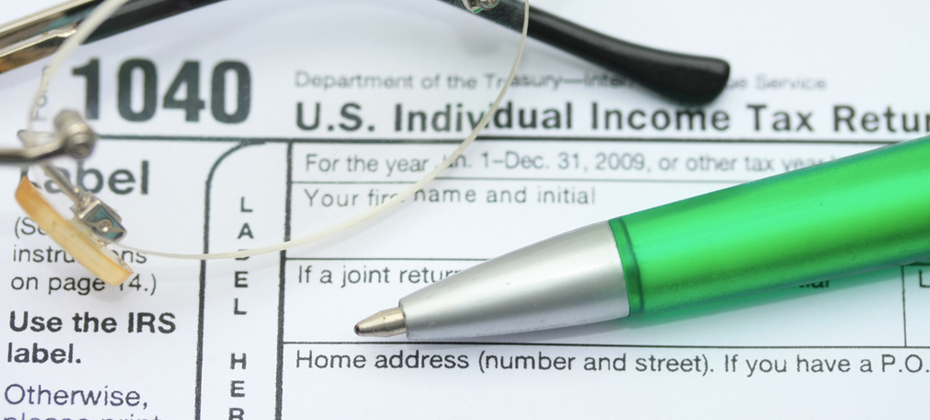
The new year has started, the champagne bottles recycled. Bye-bye holidays, hello tax season. In fact, many individuals who are expecting tax refunds are filing early to capture those refunds as soon as possible. After all, a refund equates to so many possibilities – paying down debt, starting a much-needed home improvement project or perhaps trading up for a new vehicle. So what does that mean for lenders? As consumers pocket tax refunds, the likelihood of their ability to make payments increases. By the end of February 2014, more than 48 million tax refunds had been issued according to the IRS – an increase of 5.6 percent compared to the same time the previous year. As of Feb. 28, the average refund in 2014 was $3,034, up 3 percent compared to the average refund amount for the same time in 2013. To capitalize on this time period, introducing collection triggers can assist lenders with how to manage and collect within their portfolios. Aggressively paying down a bankcard, doubling down on a mortgage payment or wiping out a HELOC signal to the lender a change in positive behavior, but without a trigger attached, it can be hard to pinpoint which customers are shifting from their status quo payments. Experian actually offers around 100 collection triggers, but lenders do not need all to seek out the predictive insights they require. A “top 20” list has been created, featuring the highest percentages in lift rates, and population hit rates. Experian has done extensive analysis to determine the top-performing collection triggers. Among the top 15 to 20 triggers, the trigger hit rate ranged from 2 to 8 percent on an average client’s total portfolio, taking into consideration liquidation rates, average percent of payment lifts, lift in liquidation rates over the baseline liquidation, percent of overall portfolio that triggered, percent of overall portfolio that triggered only on the top-selected triggers, and percent of volume by trigger on the total customers that had a trigger hit. With that said, it is essential to implement the right strategy that includes a good mixture of the top-performing triggers. The key is diversifying and balancing trigger selection and setting triggers up during opportune times. Tax season is one of those times. Some of the top-ranked triggers include: Closed-Zero Balance Triggers: This is when a consumer’s account is reported as closed after being delinquent for a certain number of days. Specifically, the closed-zero balance trigger after being delinquent for 120 days has the highest percent of payment lift over an average payment that you would receive from a customer (at a 710 percent lift rate). These triggers are good indicators the consumer is showing positive improvement, thus having a higher likelihood for collections. Paid Triggers: This is when a consumer’s account is reported as paid after being delinquent, in collections, etc. Five of the top 20 triggers are paid triggers. These triggers have good coverage and a good balance between high lift rates (100 percent to 500 percent) and percent of the triggered population. These triggers are also good indicators the consumer is showing positive improvement, thus having a higher likelihood for collections. Inquiry Triggers: This is when a consumer is applying for an auto loan, mortgage loan, etc. The lift rates for these triggers are lowest within the Top 20, but on the other hand, these triggers have the highest hit rates (up to a 33 percent hit rate). These triggers are good indicators consumers are seeking to open additional lines of credit. Home Equity Loan Triggers: These triggers indicate the credit available on a consumer’s home equity loan. They are specifically enticing to collectors due to the fact that home equity lines of credit are usually larger than your average credit on your bank card. The larger the line of credit, the more you are able to potentially collect. To learn more about collection triggers, visit https://www.experian.com/consumer-information/debt-collection.html