Marketing & Acquisition

It’s official. Millennials have surpassed Baby Boomers in population size, according to the US Census. And while they are quick to adopt the “selfie” and all things social, they have been slow to embrace the world of credit. Sure, there’s been increased regulation over the past decade, and coming into adulthood in the midst of the Great Recession hasn’t helped. But don’t count Millennials out of the credit game just yet. A deeper, more segmented view of this digital-dependent generation shows a very diverse population with plenty of opportunity for lenders. Plus, their sheer size in numbers and $200 billion in annual buying power demand financial institutions evolve to accommodate this massive market. As Gen Y comes of age, there is growing evidence they are open to building and growing their personal credit history. But if financial institutions wish to capture the attention and business of this demographic, they must adapt, leveraging deeper segmentation insights with more effective prospecting strategies to reach them. Experian's data reveals key trends in terms of how this generation is utilizing credit, tips and tools to find the most credit-ready individuals, and strategies to grow the thin-file Millennials as they come of age. “Given the significance millennials play in financial services and the credit marketplace, it is crucial to understand this influential consumer segment and how they use credit as a tool,” said Michele Raneri, vice president of analytics and business development. “While this generation may not look like they are on the right track financially, it’s important to keep in mind that credit scores are built on credit experiences, and while this generation has been slower to use credit, they have plenty of opportunities to build a positive credit history.” To learn more about Millennials and credit, visit Experian.com/millennials.

With Black Friday quickly approaching, a recent Experian study shows online Black Friday searches are already tracking ahead of last year. This October, the weekly search share for Black Friday averaged 12% higher than October 2014 and is expected to increase dramatically between now and Thanksgiving week. Top product searches for the week ending October 31, 2015 include: Marketers can design more successful campaigns and maximize rewards for both consumers and brands by staying on top of the latest search trends. >> Holiday Hot Sheet

While marketers typically begin deploying Halloween emails in September, last-minute mailings receive the highest response.

If Commerce is a conversation between a merchant and a consumer then it has become contorted and clustered around payments and point of sale.

With the holidays around the corner, retailers are getting ready to release their holiday campaigns.
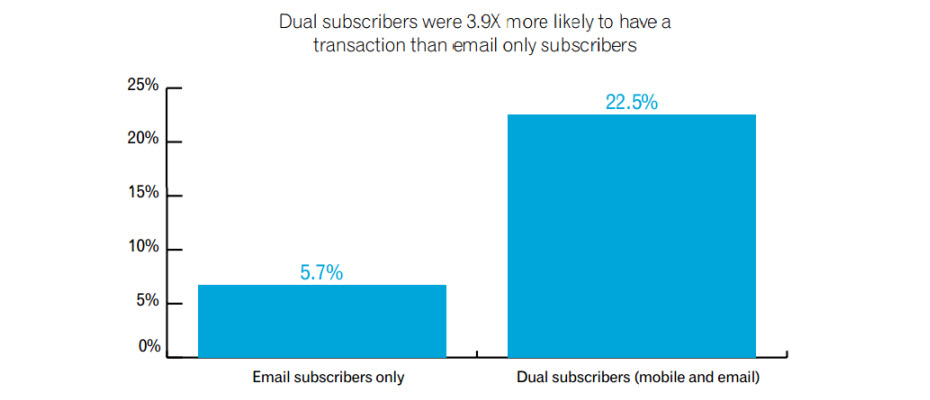
While mobile subscriber lists typically are much smaller than email lists, mobile subscribers tend to be loyal and highly engaged customers.

According to the latest Experian-Oliver Wyman Market Intelligence Report, mortgage originations for Q2 2015 increased 56% over Q2 2014 — $547 billion versus $350 billion.
According to a recent Experian analysis, millennials (ages 19–34) are now the largest segment of the U.S. population and are also the least credit savvy group.
According to the latest Experian-Oliver Wyman Market Intelligence Report, mortgage originations increased 25% year over year in Q1 2015 to $316 billion.
According to a recent Experian survey, 68% of vacationers spend more money than expected when traveling, often relying on credit cards to make up the difference. Millennials rank even higher when it comes to risky vacation spending. One-third report they have not been saving up in advance of vacation, 72% say they spend more than expected when traveling, and 50% plan to use their tax refund to pay for summer travel this year. Lenders can educate consumers about the impact of utilization on credit scores and reduce loss rates by offering According to a recent Experian survey, 68% of vacationers spend more money than expected when traveling, often relying on credit cards to make up the difference. Millennials rank even higher when it comes to risky vacation spending. One-third report they have not been saving up in advance of vacation, 72% say they spend more than expected when traveling, and 50% plan to use their tax refund to pay for summer travel this year. Lenders can educate consumers about the impact of utilization on credit scores and reduce loss rates by offering personalized credit-education services.personalized credit-education services. >> Infographic: Setting a budget for summer travel
While an influx of small businesses opened during the height of the recession, a recent Experian study found that between 2010 and 2014, small-business start-ups decreased by nearly 45%.
According to a recent Experian analysis, bankcard balances increased 6% year over year to $629 billion in Q1 2015, while delinquencies remained low with 60–89 day-past-due delinquencies declining 8%.
Apple eschewed banks for a retailer focus onstage at their Worldwide Developers Conference (WWDC) when it spoke to payments. I sense this is an intentional shift – now that stateside, you have support from all four networks and all the major issuers – Apple understands that it needs to shift the focus on signing up more merchants, and everything we heard drove home that note. That includes Square’s support for NFC, as well as the announcements around Kohls, JCPenney and BJ’s. MasterCard's Digital Enablement Service (MDES) - opposite Visa’s Token Service - is the tokenization service that has enabled these partnerships specifically through MasterCard’s partners such as Synchrony – (former GE Capital) which brought on JCPenney, Alliance Data which brought on BJ’s, and CapitalOne which enabled Kohls. Within payments common sense questions such as: “Why isn’t NFC just another radio that transmits payment info?” or “Why aren’t retailer friendly payment choices using NFC?” have been met with contemptuous stares. As I have written umpteen times (here), payments has been a source of misalignment between merchants and banks. Thus – conversations that hinged on NFC have been a non-starter, for a merchant that views it as more than a radio – and instead, as a trojan horse for Visa/MA bearing higher costs. When Android opened up access to NFC through Host Card Emulation (HCE) and networks supported it through tokenization, merchants had a legitimate pathway to getting Private label cards on NFC. So far, very few indeed have done that (Tim Hortons is the best example). But between the top two department store chains (Macy’s and Kohls) – we have a thawing of said position, to begin to view technologies pragmatically and without morbid fear. It must be said that Google is clearly chasing Apple on the retailer front, and Apple is doing all that it can, to dig a wider moat by emphasizing privacy and transparency in its cause. It is proving to be quite effective, and Google will have to “apologize beforehand” prior to any merchant agreement – especially now that retailers have control over which wallets they want to work with – and how. This control inherits from the structures set alongside the Visa and MasterCard tokenization agreements – and retailers with co-brand/private label cards can lean on them through their bank partners. Thus, Google has to focus on two fronts – first to incentivize merchants to partner so that they bring their cards to Android Pay, while trying to navigate through the turbulence Apple has left in its wake, untangling the “customer privacy” knot. For merchants, at the end of the day, the questions that remain are about operating costs, and control. Does participation in MDES and VEDP tokenization services through bank partners, infer a higher cost for play – for private label cards? I doubt if Apple’s 15bps “skim off the top” revenue play translates to Private Label, especially when Apple’s fee is tied to “Fraud Protection” and Fraud in Private Label is non-existent due to its closed loop nature. Still – there could be an acquisitions cost, or Apple may plan a long game. Further, when you look at token issuance and lifecycle management costs, they aren’t trivial when you take in to context the size of portfolio for some of these merchants. That said, Kohls participation affords some clarity to all. Second, Merchants want to bring payments inside apps – just like they are able to do so through in-app payments in mobile, or on online. Forcing consumers through a Wallet app – is counter to that intent, and undesirable in the long scheme. Loyalty as a construct is tangled up in payments today – and merchants who have achieved a clean separation (very few) or can afford to avoid it (those with large Private label portfolios that are really ‘loyalty programs w/ payments tacked on’) – benefit for now. But soon, they will need to fold in the payment interaction in to their app, or Apple must streamline the clunky swap. The auto-prompt of rewards cards in Wallet is a good step, but that feels more like jerry rigging vs the correct approach. Wallet still feels very v1.5 from a merchant integration point of view. Wallet not Passbook. Finally, Apple branding Passbook to Wallet is a subtle and yet important step. A “bank wallet” or a “Credit Union wallet” is a misnomer. No one bank can hope to build a wallet – because my payment choices aren’t confined to a single bank. And even where banks have promoted “open wallets” and incentivized peers to participate – response has been crickets at best. On the flip side, an ecosystem player that touches more than a device, a handful of experiential services in entertainment and commerce, a million and a half apps – all with an underpinning of identity, can call itself a true wallet – because they are solving for the complete definition of that term vs pieces of what constitutes it. Thus – Google & Apple. So the re-branding while being inevitable, finds a firm footing in payments, looks toward loyalty and what lies beyond. Solving for those challenges has less to do with getting there first, but putting the right pieces in play. And Apple’s emphasis (or posturing – depending on who you listen to) on privacy has its roots in what Apple wants to become, and access, and store on our behalf. Being the custodian of a bank issued identity is one thing. Being a responsible custodian for consumer’s digital health, behavior and identity trifecta has never been entirely attempted. It requires pushing on all fronts, and a careful articulation of Apple’s purpose to the public must be preceded by the conviction found in such emphasis/posturing. Make sure to read our perspective paper to see why emerging channels call for advanced fraud identification techniques
According to the latest Experian-Oliver Wyman Market Intelligence Report, HELOC originations increased 21% year over year, moving from $25.6 billion in Q1 2014 to $31 billion in Q1 2015.
Mortgage originations kicked off Q1 2015 with a 25% year over year increase to $315 billion.