All posts by Guest Contributor

Marketers are keenly aware of how important it is to “Know thy customer.” Yet customer knowledge isn’t restricted to the marketing-savvy. It’s also essential to credit risk managers and model developers. Identifying and separating customers into distinct groups based on various types of behavior is foundational to building effective custom models. This integral part of custom model development is known as segmentation analysis. Segmentation is the process of dividing customers or prospects into groupings based on similar behaviors such as length of time as a customer or payment patterns like credit card revolvers versus transactors. The more similar or homogeneous the customer grouping, the less variation across the customer segments are included in each segment’s custom model development. So how many scorecards are needed to aptly score and mitigate credit risk? There are several general principles we’ve learned over the course of developing hundreds of models that help determine whether multiple scorecards are warranted and, if so, how many. A robust segmentation analysis contains two components. The first is the generation of potential segments, and the second is the evaluation of such segments. Here I’ll discuss the generation of potential segments within a segmentation scheme. A second blog post will continue with a discussion on evaluation of such segments. When generating a customer segmentation scheme, several approaches are worth considering: heuristic, empirical and combined. A heuristic approach considers business learnings obtained through trial and error or experimental design. Portfolio managers will have insight on how segments of their portfolio behave differently that can and often should be included within a segmentation analysis. An empirical approach is data-driven and involves the use of quantitative techniques to evaluate potential customer segmentation splits. During this approach, statistical analysis is performed to identify forms of behavior across the customer population. Different interactive behavior for different segments of the overall population will correspond to different predictive patterns for these predictor variables, signifying that separate segment scorecards will be beneficial. Finally, a combination of heuristic and empirical approaches considers both the business needs and data-driven results. Once the set of potential customer segments has been identified, the next step in a segmentation analysis is the evaluation of those segments. Stay tuned as we look further into this topic. Learn more about how Experian Decision Analytics can help you with your segmentation or custom model development needs.

On May 11, 2018, financial institutions will be required to perform Customer Due Diligence routines for their legal entity customers, such as a corporation or limited liability company. Here are 3 facts that you should know about this upcoming rule: When validating ownership, financial institutions can accept what customers have provided unless they have a reason to believe otherwise. Some possible trigger events requiring review of beneficial ownership information for existing accounts include: change in ownership and law enforcement warrants or subpoenas. When collecting and updating beneficial ownership information, the financial institution must retain the original and updated information. While financial institutions are required to collect the same basic customer identification program information from business owners that is required from consumer customers, your current policies may not satisfy this new rule. Learn more

Optimizing your collections With a maximized approach to collections, you can see an uplift in performance of 5% to 30% in Key Performance Indicators against traditional techniques. Here are some suggestions for optimizing your strategies: Consider every combination of actions. Understand the tradeoffs between the different actions, which are forced by constraints. Choose the best set of actions to fit within the constraints. Maximize your collections efforts by knowing your customers better, segmenting and targeting your approach more effectively, and automating as much as possible. Learn more in our white paper Collections Optimization. Download now

Identify your customers to spot fraud. It’s a simple concept, but it’s not so simple to do. In our 2018 Global Fraud and Identity Report, we found that consumers expect to be recognized and welcomed wherever and whenever they do business. Here are some other interesting findings regarding recognition and fraud: 66% of consumers surveyed appreciate seeing visible security when doing business online because it makes them feel protected. 75% of businesses want security measures that have little impact on consumers. More than half of businesses still rely on passwords as their top form of authentication. Even though you can’t see your customers face-to-face, the importance of being recognized can’t be overemphasized. How well are you recognizing your customers? Can you recognize your customers?

From malware and phishing to expansive distributed denial-of-service attacks, the sophistication, scale and impact of cyberattacks have evolved significantly in recent years. Mitigate risk by employing these best practices: Manage third-party risks. Regularly review response plans. Opt in to software updates. Educate, educate, educate. Organizations must adopt stronger, more advanced technical solutions to protect sensitive data. While enhanced technology is necessary for defending against data breaches, it can’t work independently. Learn more

While it’s important to recognize synthetic identities when they knock on your door, it’s just as important to conduct regular portfolio checkups. Every circumstance has unique parameters, but the overarching steps necessary to mitigate fraud from synthetic IDs remain the same: Identify current and near-term exposure using targeted segmentation analysis. Apply technology that alerts you when identity data doesn’t add up. Differentiate fraudulent identities from those simply based on bad data. Review front- and back-end screening procedures until they satisfy best practices. Achieve a “single customer view” for all account holders across access channels — online, mobile, call center and face-to-face. With the right set of analytics and decisioning tools, you can reduce exposure to fraud and losses stemming from synthetic identity attacks at the beginning and across the Customer Life Cycle. Learn more
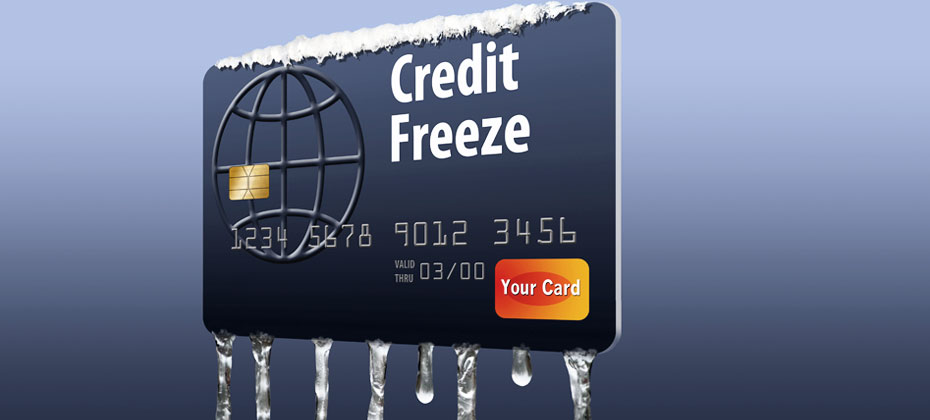
Millions of Americans placed a credit freeze or restricted access to their credit file in recent months to keep identity thieves at bay. Credit freezes keep any new creditors from seeing a consumer’s credit file, which makes it nearly impossible for hackers to open new accounts fraudulently. But a credit freeze can also be problematic for consumers when they are finally ready to consider new credit products and loans. We’ve heard from credit unions and other lenders about sharing best practices to help streamline the process for consumers who want to permanently or temporarily lift the freeze to apply for a legitimate line of credit. Following are the three ways to help clients with a frozen Experian report quickly and efficiently allow access. Unfreeze account: This will remove the freeze entirely from the consumer’s credit report so that it may be accessed with the consumer’s permission. To do this, the consumer will need to contact Experian online, by phone or mail and provide his unique personal identification number (PIN) code—provided when the consumer froze his account—to un-freeze the report. Thaw account: An action that will temporarily remove the freeze for a timeframe determined by the consumer. The consumer should contact Experian online, by phone, or mail and provide his unique PIN code to thaw the report. Grant a creditor one-time access: A consumer may provide a different/temporary PIN to a lender to access the report just once. The PIN can be emailed to the consumer, presented on screen if the consumer is online, or provided on the phone or by mail. Typically, a consumer’s request to thaw or un-freeze his credit file online or by phone will thaw or un-freeze the file within minutes. Download Checklist Experian can be reached: Online: www.experian.com/freeze Phone: 888-397-3742 Mail: P.O. Box 9554, Allen, Texas 75013 Remember, if a consumer has a frozen credit file with all three credit reporting agencies, he will need to contact each agency to enable access to his report.

Trended attributes and consumer lending Digging deeper into consumer credit data can help provide new insights into trending behavior, providing more than just point-in-time credit evaluation. The information derived through trended attributes can help you understand your customers’: Payment rates and account migration behavior. Slope of balance changes. Delinquency patterns over time. Today’s consumer lending environment is more dynamic and competitive than ever. Trended attributes can give additional lift in your segmentation strategies and custom models and provides a high-definition lens that opens a world of opportunity. Learn more

In 2017, a meaningful jump in consumer sentiment bolstered spending, and caused the spread between disposable personal income and consumer spending to reach an all-time high. This increase in spread was mostly financed through consumer debt, which according to the Federal Reserve Bank of New York has brought total consumer debt to a new peak of $12.8 Trillion surpassing the prior peak in 2008. The Experian eighth annual State of Credit report greatly supported the consumer behavior trends observed for the past year. Spanning the generations It is no surprise that generation Z (the “Great Recession Generation”) is conservative and prudent in their approach to credit because they are the most familiar with the post financial crisis economy. Results showed Millennials experienced a drop in overall debt, and an increase in mortgage debt reflects the national homeownership affordability challenge facing this generation. As first time homebuyers, millennials have to relatively tighten their spending as they dedicate an ever-growing portion of their income to housing. On the other end of the spectrum, the results of the study showed that Baby Boomers’ had sizable debt (including mortgage debt), which reflects the generation’s intent to stay active in their communities and in their homes much longer than prior generations have done. A recent Harvard study reported that by 2035, one out of three American households will be headed by an individual 65 years of age or older, compared to current ratio of one out of five households. What’s on the horizon? It is reasonable to assume that these trends may continue into 2018, as the underlying conditions continue to persist. A closer eye should be kept on student and auto loans due to the significant increase in portfolio size and increasing default rates compare to other debt. Editor’s note: This post was written by Fadel N. Lawandy, Director of the C. Larry Hoag Center for Real Estate and Finance and the Janes Financial Center at the George L. Argyros School of Business and Economics, Chapman University. Fadel joined the George L. Argyors School of Business and Economics, Chapman University after retiring as a Portfolio Manager from Morgan Stanly Smith Barney in 2009. He has two decades of experience in the financial industry with banking, credit management, commercial/residential real estate acquisition and financing, corporate finance, mergers and acquisitions, quantitative and qualitative analysis and research, and portfolio management. Fadel currently serves as the Chairman of the Board and President of CFA Society Orange County, and is an active member of the CFA Institute.

There are lots of reasons why people miss a bill payment. Unfortunately, the approaches for collecting those late payments tend to follow a one-size-fits-all approach. For example, a customer takes a long vacation and forgets to pay his credit card bill before he leaves. When he gets home ten days later he already has five phone calls and two official notices from the collections department. And the calls continue for the next few days until he has an opportunity to call them back to take care of the situation. How does this customer feel? Frustrated? Annoyed? Under-valued? The current collections process is outdated, especially in a world where personalized and relevant communications are becoming the norm. The collections process is driven by the measurement of delinquency and loss. Rarely does it consider the broader customer profile. Too often, this narrow view leads to one-size-fits all collections strategies and overly aggressive processes. Getting debt collection right is about more than the money. It needs to be about the customer. It’s about knowing the difference between a customer who has simply forgotten to make a payment or someone dealing with financial hardship. We recently released a paper on the collections process, looking at how common it is for overly aggressive collections to lead to account closures and erosion of customer lifetime value. In fact, we found 3 percent of 30-day delinquencies in card portfolios closed their accounts after paying their balance in full. Seventy-five percent of those closures came with the payment to bring the account current and the remaining 25 percent closed the account within the following 60 days. Our analysis also showed that people with the lowest balances and the lowest amount past-due had the highest incidence of paying off their debt and closing their accounts. That means that by being too aggressive over a fairly low dollar amount, you can damage the relationship with a customer who could bring a lifetime of more business. We also used our Mosaic® lifestyle segmentation system to do a deeper look into who was more likely to close their accounts. We found the likelihood to close accounts was four times higher in the young, urban, affluent population than it was with others. This particular segment usually has the greatest potential for lifetime value and are the hardest to attract. It seems counterproductive to let overly aggressive and perhaps unnecessary, debt collection end the relationship. However, if we become smarter about the collections process, it could be possible to not only keep the customer, but also strengthen the relationship. Consider this, the customer on that long vacation receives an email that says, “Hey we noticed you forgot to make your last payment. Can you email us back the reason why and when we should expect it?” This creates an opportunity to build the relationship with that customer and get a commitment to settle the payment by a particular date. Ten days later when he gets back from vacation, he receives a reminder to make the payment and takes care of it. Instead of feeling frustrated, annoyed or undervalued, the customer has a positive experience and continues doing business with a company who is focused on building relationships vs. simply collecting money. There is a real opportunity to take best practices around customer experience from earlier stages of the customer lifecycle and apply them to the collections stage. Sure, some situations may require a more aggressive approach, for others, the idea of an email and the option to log on to a virtual platform to handle the debt on their own terms is the preferred approach. Some customers may not need options other than a little more time to pay on their own terms. It comes down to knowing your customer and applying the insights we can uncover from data to handle debt collection. This will allow us to improve the customer experience and strengthen customer life-time value.

The average number of retail trades per consumer has been trending down since 2007. But the average consumer retail debt is trending up, roughly $73 year-over-year. When analyzing single-store credit card debt by state in 2017, we found: States with the highest retail debt: Texas ($2,198) Alaska ($2,170) Arkansas ($2,067) States with the lowest amount of retail debt: Wisconsin ($1,374) Minnesota ($1,440) Hawaii ($1,442) Whether you’re a retailer, credit union or financial institution, stay ahead of the competition by using advanced analytics to target the right customers and increase profitability. More credit trends

Credit card balances grew to $786.6 billion at the end of 2017, a 6.7% increase to the previous year and the largest outstanding balance in over a decade. And while the delinquency rate increased slightly to 2.26%, it is significantly lower than the 4.73% delinquency rate in 2008 when outstanding balances were $737 billion. The increase in credit card balances combined with the slight growth in delinquencies points to a positive credit environment. Stay up to date on the latest credit trends to maximize your lending strategies and capitalize on areas of opportunity. Get more credit trends and insights at our webinar on March 8. Register here

Today’s consumer lending environment is more dynamic and competitive than ever, with renewed focus on personal loans, marketplace lending and the ever-challenging credit card market. One of the significant learnings from the economic crisis is how digging deeper into consumer credit data can help provide insights into trending behavior and not just point-in-time credit evaluation. For example, I’ve found consumer trending behavior to be very powerful when evaluating risks of credit card revolvers versus transactors. However, trended data can come with its own challenges when the data isn’t interpreted uniformly across multiple data sources. To address these challenges, Experian® has developed trended attributes, which can provide significant lift in the development of segmentation strategies and custom models. These Trended 3DTM attributes are used effectively across the life cycle to drive balance transfers, mitigate high-risk exposure and fine-tune strategies for customers near score cutoffs. One of the things I look for when exploring new trended data is the ability to further understand payment velocity. These characteristics go far beyond revolver and transactor flags, and into the details of consumer usage and trajectory. As illustrated in the chart, a consumer isn’t easily classified into one borrowing persona (revolver, transactor, etc.) or another — it’s a spectrum of use trends. Experian’s Trended 3D provides details needed to understand payment rates, slope of balance growth and even trends in delinquency. These trends provide strong lift across all decisioning strategies to improve your business performance. In recent engagements with lenders, new segmentation tools and data for the development of custom models is at the forefront of the conversation. Risk managers are looking for help leveraging new modeling techniques such as machine learning, but often have challenges moving from prior practices. In addition, attribute governance has been a key area of focus that is addressed with Trended 3D, as it was developed using machine learning techniques and is delivered with the necessary documentation for regulatory conformance. This provides an impressive foundation, allowing you to integrate the most advanced analytics into your credit decisioning. Alternative data isn’t the only source for new consumer insights. Looking at the traditional credit report can still provide so much insight; we simply need to take advantage of new techniques in analytics development. Trended attributes provide a high-definition lens that opens a world of opportunity.

Organizations that can mobilize their data assets to power critical business initiatives will see a distinct advantage in the coming years. In fact, most C-level executives (87%) believe data has greatly disrupted their organization’s operations over the past 12 months. Here are more insights from the newly released 2018 global data management benchmark report: As digital transformation efforts proliferate and become commonplace, organizations will need to implement processes and technology that scale with the demands of data-driven business. Read the full report