 Every morning, I wake up and walk bleary eyed to the bathroom, pop in my contacts and start my usual routine. Did I always have contacts? No. But putting on my contacts and seeing clearly has become part of my routine. After getting used to contacts, wearing glasses pales in comparison.
This is how I view alternative credit data in lending. Are you having qualms about using this new data set? I get it, it’s like sticking a contact into your eye for the first time: painful and frustrating because you’re not sure what to do. To relieve you of the guesswork, we’ve compiled the top four myths related to this new data set to provide an in-depth view as to why this data is an essential supplement to your traditional credit file.
Myth 1: Alternative credit data is not relevant.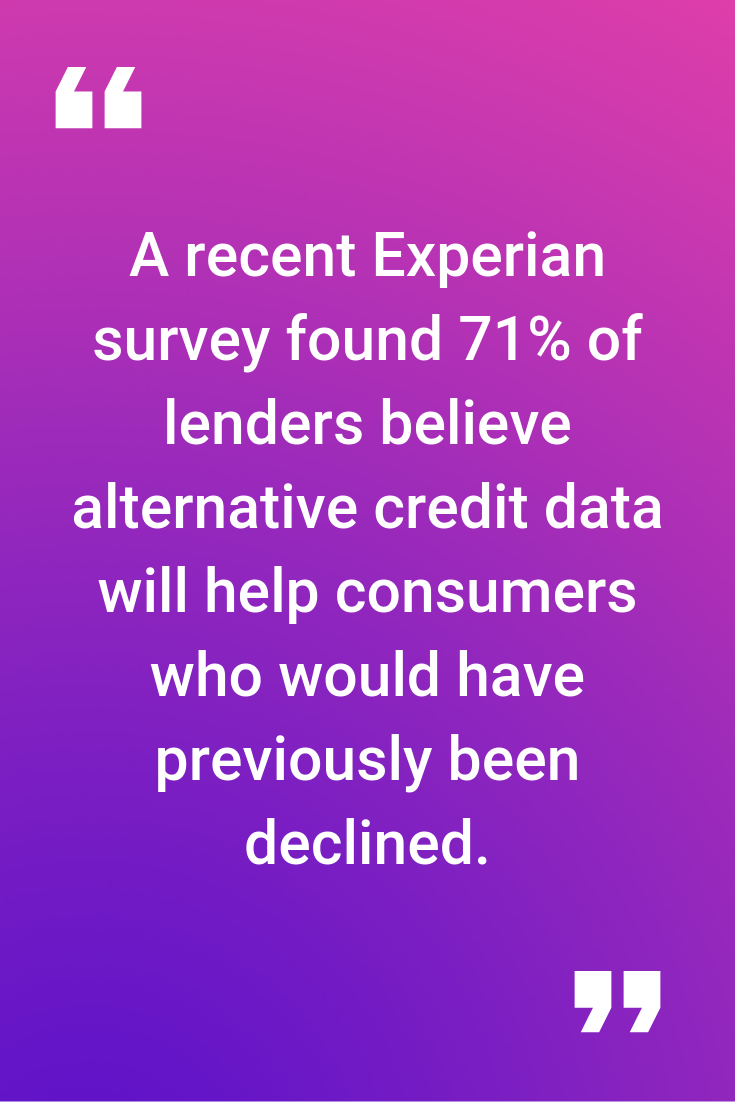
As consumers are shifting to new ways of gaining credit, it’s important for the industry to keep up. These data types are being captured by specialty credit bureaus. Gone are the days when alternative financing only included the payday store on the street corner. Alternative financing now expands to loans such as online installment, rent-to-own, point-of-sale financing, and auto-title loans.
Consumers automatically default to the financing source familiar to them – which doesn’t necessarily mean traditional financial institutions. For example, some consumers may not walk into a bank branch anymore to get a loan, instead they may search online for the best rates, find a completely digital experience and get approved without ever leaving their couches. Alternative credit data gives you a lens into this activity.
Myth 2: Borrowers with little to no traditional credit history are high risk.
A common misconception of a thin-file borrower is that they may be high risk. According to the CFPB, roughly 45 million Americans have little to no credit history and this group may contain minority consumers or those from low income neighborhoods. However, they also may contain recent immigrants or young consumers who haven’t had exposure to traditional credit products. According to recent findings, one in five U.S. consumers has an alternative financial services data hit– some of these are even in the exceptional or very good credit segments.
Myth 3: Alternative credit data is inaccurate and has poor data quality.
On the contrary, this data set is collected, aggregated and verified in the same way as traditional credit data. Some sources of data, such as rental payments, are monthly and create a consistent look at a consumer’s financial behaviors. Experian’s Clarity Services, the leading source of alternative finance data, reports their consumer information, which includes application information and bank account data, as 99.9% accurate.
Myth 4: Using alternative credit data might be harmful to the consumer.
This data enables a more complete view of a consumer’s credit behavior for lenders, and provides consumers the opportunity to establish and maintain a credit profile. As with all information, consumers will be assessed appropriately based on what the data shows about their credit worthiness. Alternative credit data provides a better risk lens to the lender and consumers may get more access and approval for products that they want and deserve. In fact, a recent Experian survey found 71% of lenders believe alternative credit data will help consumers who would have previously been declined.
Like putting in a new pair of contact lenses the first time, it may be uncomfortable to figure out the best use for alternative credit data in your daily rhythm. But once it’s added, it’s undeniable the difference it makes in your day-to-day decisions and suddenly you wonder how you’ve survived without it so long.
See your consumers clearly today with alternative credit data.