Tag: identity
Identity intelligence and alternative data can help lenders validate consumers and support more informed decisions across the customer lifecycle.

Fraudsters are getting surprisingly good at onboarding. Sometimes, better than your customers. Legitimate customers treat onboarding like an errand. They start an application between other tasks, get distracted, forget a password, switch devices, upload a document or come back later to finish. Their digital lives aren’t always linear, because real life isn’t either. Fraudsters approach onboarding differently. For them, opening an account is the objective. Every interaction is designed to increase the odds of success. The difference raises an uncomfortable question hanging over onboarding: What exactly are we rewarding? When smooth becomes suspicious Digital onboarding has traditionally rewarded experiences that feel smooth, consistent and complete. The challenge is that legitimate customers rarely behave that way. Most people approach onboarding somewhere between mildly distracted and mildly annoyed. They pause halfway through because dinner is burning. They reopen an old account only to realize everything is attached to an email they made in college and, somehow, still use for airline receipts. Digital life accumulates history unevenly, because ordinary life does too. Fraudsters have every reason to eliminate those inconsistencies. Applications may be rehearsed. Identity attributes are assembled deliberately. Contact points are prepared in advance. Every interaction is optimized to make the application appear credible. Ironically, the qualities organizations often associate with confidence — clean submissions, steady progression and few corrections — can also describe applications that have been carefully engineered to pass inspection. The challenge isn't that smooth onboarding is meaningless. It's that smooth onboarding, by itself, doesn't tell the whole story. Context changes interpretation A smooth onboarding experience should be the beginning of the evaluation, not the end. Behavior provides important context. How someone moves through an application can reveal whether the experience feels naturally human or unusually orchestrated. Do they interact naturally? Do they hesitate, correct mistakes or navigate in ways that resemble ordinary human behavior? Or does the session appear unusually scripted, automated or repetitive? Identity verification adds another layer. Matching information across trusted sources, validating identity details and strengthening confidence in account creation remain important, particularly when onboarding decisions carry financial, fraud or customer experience consequences. But verification largely answers a point-in-time question: Does this information match right now? A third layer comes from digital history. An inbox attached to years of airline receipts, loyalty accounts, subscription renewals, account recovery, financial notifications and familiar digital routines introduces a different kind of confidence. Legitimate digital identities leave behind patterns of persistence and engagement that develop gradually over time. Fraudsters can assemble convincing identity attributes, but creating years of ordinary digital life is much harder. Building confidence in an identity requires more than verifying information submitted during a single onboarding session. It requires understanding whether the identity reflects a broader history that supports what the application suggests. A multilayered approach builds stronger identity confidence No single signal can provide a complete view of identity risk. Organizations need multiple sources of confidence that reinforce one another. That's the thinking behind our approach: combining behavioral intelligence, identity verification and digital identity continuity into a more complete view of risk. We bring these complementary layers together through: • NeuroID adds behavioral context during onboarding and account creation, helping identify interaction patterns that may indicate automation, manipulation or coordinated fraud. • Precise ID® strengthens identity verification and resolution by comparing applicant information with trusted identity data. • AtData, recently added to our portfolio, contributes email-centered intelligence based on persistence, engagement and long-term digital history. Together, these capabilities help organizations move beyond evaluating a single moment in time to understanding whether an identity is supported by consistent behavior, trusted identity data and an established digital history. The future of fraud prevention isn't about rewarding the smoothest application. It's about recognizing the most trustworthy identity. Fraudsters can rehearse an application. They can optimize an onboarding journey. They can even assemble convincing identity attributes. What they can't easily manufacture is years of ordinary digital life. That's why digital identity continuity has become an important layer of modern fraud prevention. Combined with identity verification and behavioral intelligence, it helps organizations distinguish between identities that simply look convincing and those supported by a history that is much harder to fake. Learn more Contact us
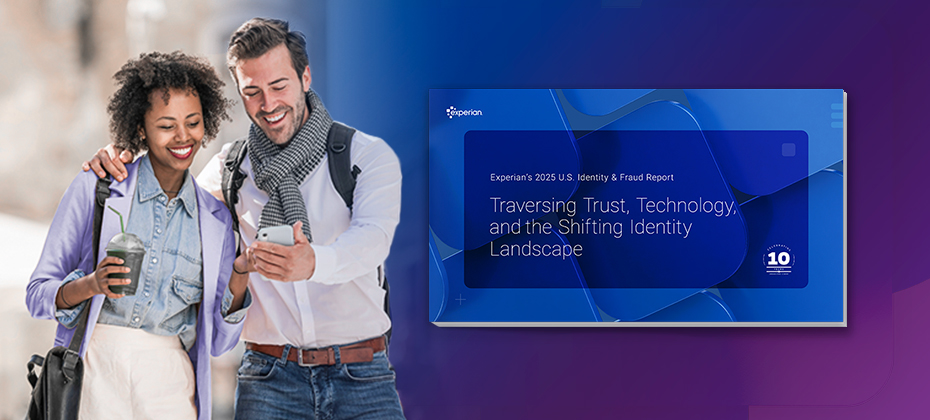
Now in its tenth year, Experian’s U.S. Identity and Fraud Report continues to uncover the shifting tides of fraud threats and how consumers and businesses are adapting. Our latest edition sheds light on a decade of change and unveils what remains consistent: trust is still the cornerstone of digital interactions. This year’s report draws on insights from over 2,000 U.S. consumers and 200 businesses to explore how identity, fraud and trust are evolving in a world increasingly shaped by generative artificial intelligence (GenAI) and other emerging technologies. Highlights: Over a third of companies are using AI, including generative AI, to combat fraud. 72% of business leaders anticipate AI-generated fraud and deepfakes as major challenges by 2026. Nearly 60% of companies report rising fraud losses, with identity theft and payment fraud as top concerns. Digital anxiety persists with 57% of consumers worried about doing things online. Ready to go deeper? Explore the full findings and discover how your organization can lead with confidence in an evolving fraud landscape. Download report Watch on-demand webinar Read press release

Romance scams target individuals of all ages and backgrounds. Financial institutions need to protect their customers from these schemes.

Organizations must stay ahead of fraudsters by leveraging technology, training, and collaboration to combat synthetic ID fraud.

By implementing effective identity risk management, financial institutions can protect themselves and their consumers from identity fraud.

Learn about the benefits of a fraud consortium and how Experian's solutions can help prevent fraud without inconveniencing consumers.

Leveraging an identity resolution solution, organizations can accurately recognize consumers, build targeted marketing campaigns and more.

Offering identity theft protection is an effective way to maintain strong customer relationships and deliver an engaging experience.
Managing digital identities is a necessity, responsibility and privilege. When done right, digital identity management solutions can help consumers feel recognized and safe. In turn, companies can build strong and personalized relationships with their customers while complying with regulatory requirements and combating hydra-like fraud attacks. What is digital identity? The concept and definition of a digital identity have expanded as everyday interactions increasingly happen in digital realms. Today, a digital identity is more than an online account. Identities can be created and depend on all the digital information associated with a unique entity, which may be a person, business or device. A person's digital identity often includes online and offline attributes that fall into one of three categories: Something a user knows, such as a username, password or PIN. Something a user has, such as a mobile phone or security token. Something that's part of the user, such as a fingerprint, iris, voice pattern, behavior or preferences. People are increasingly open to sharing this type of personal information if it serves a purpose. Our Global Identity and Fraud Report found that 57 percent of consumers are willing to share data if it ensures greater security or prevents fraud, and 63 percent of consumers think sharing data is beneficial (up from 51 percent in 2021).1 People can also use these identifiers to verify their identity at a later point. But digital identity verification tools should rely on more than user-provided verification alone. A person may have hundreds or thousands of digital interactions every day, and these can leave digital footprints that you can use to create or expand digital identities. These types of identifiers — such as search queries, geotags, behaviors and device information — can also help you authenticate a user and offer a more customized and seamless experience. However, when focusing on consumers' digital identities, it's important to remember that their identity is more than the sum of data points. A person's digital identity is unique and personal, and it should be managed accordingly. The business side's challenges A discussion of what makes up an identity can quickly turn philosophical. For instance, you can't authenticate identical twins based on a face scan or DNA test, so what is it that makes them unique? In some ways, the example gets to the heart of businesses' challenges today. To create a safe and enjoyable online identity verification experience, you need to be able to distinguish between a real person and an imitator, even when the two look nearly identical. Access to more information can make this easier, but you then need to ensure that you can keep this information secure. It can be a tricky balance, but if you get it right, your efforts will be rewarded. People want to be recognized as they move across channels and devices, and organizations want to be able to quickly and accurately identify users with a friction-right experience that also helps prevent fraud. However, while 84 percent of businesses say recognizing customers is "very" or "extremely" important, only about 33 percent of consumers are confident that they'll be repeatedly recognized online.1 There's a clear gap — and an opportunity to better meet customers' desires. Organizations across industries know they need a customer recognition strategy and 82% already have one in place.2 Some businesses address this challenge with identity platforms that are standardized and interoperable. Standardization allows the platform to gather and store the growing influx of data that it can use as part of a digital identity strategy. Interoperability allows the platform to match different types of data, including physical data, with a person to verify their digital identity and avoid the creation of duplicate identities. In short, the platforms can make sense of increasingly large amounts of internal and external data and easily incorporate new data sources as they become available. Regulatory compliance and digital identity Navigating the regulatory landscape is a significant challenge for organizations dealing with digital identities. Compliance is not only necessary for legal reasons but also critical to maintaining customer trust and safeguarding institutional reputation. Organizations must stay informed about the regulatory frameworks that affect digital identity, such as the General Data Protection Regulation (GDPR) in the European Union, the California Consumer Privacy Act (CCPA), and other pertinent laws in jurisdictions they operate. These regulations dictate how personal data can be collected, stored, used and shared. Staying ahead of regulatory changes: Regulatory landscapes are dynamic, particularly concerning digital data. Organizations should engage with policymakers and participate in industry forums to stay ahead of changes. By proactively managing compliance, organizations can avoid costly penalties, operational disruptions and reputational damage. The consumer's perspective Some organizations are adopting a consumer-centric approach to digital identity that puts consumers' needs and desires first. These can broadly be broken into four categories: Security: While people want a seamless and personalized experience, security and privacy are listed as top concerns year after year.1 That might not be surprising given that data breaches continually make headlines and there are growing concerns over identity theft. Privacy: Security is related to privacy, but privacy means more than keeping consumers' information safe from hackers. Our April 2022 Global Insight Report found that 90 percent of consumers want some or complete control over how their personal data is used. 3 Recognition: People want to be continually recognized once they share and verify their identity, even if they move between devices or channels. And nearly 70 percent of consumers say it's important for businesses to recognize them across multiple visits.1 Inclusion: Consumers may have varying levels of access to technology, comfort with technology and access to physical identifiers. Creating digital identity solutions for these potential barriers can also increase financial inclusion. While these are all areas of focus, organizations also need to find the right fit for each person and interaction. For instance, consumers may expect and even appreciate a robust verification process when they're opening a new financial account. But they could quickly be turned off by a similar process if they're making a small purchase or trying to play a new online game. What to look for in a digital identity partner Digital identity solutions and services have grown increasingly sophisticated to meet today's challenges. Identity hubs and data orchestration engines can connect with multiple services to help create, resolve, verify and authenticate identities. By moving away from a siloed approach, businesses can offer customers a better experience while minimizing their risk throughout the customer journey. When comparing potential partners, look for a company that: Has a customer-first approach: If your business is customer-first, then you need a partner who has a similar view. Uses multidimensional data: The partner should be able to offer and use offline and digital data sources to resolve, verify and authenticate digital identities. Its capabilities may become increasingly important as new data sources emerge. Isn't afraid to innovate: Look into how the partner is testing and using the latest advancements, such as artificial intelligence, in its digital identity solutions. Protects your brand: Understand how the partner helps detect and prevent fraud while creating a seamless experience for your customers and protecting their data. The right partner can increase your bottom line, help you build trust and improve your brand's reputation. Learn more about Experian Identity, an integrated approach to digital identity that builds on Experian's decades of experience managing and securing identifying information. Learn more 1“2022 Global Identity and Fraud Report: Building digital consumer trust amidst rising fraud activity and concerns," Experian, June 2022 2“2021 Global Identity and Fraud Report: Protecting and enabling customer engagements in the new digital era," Experian, April 2021. https://www.experian.com/content/dam/marketing/na/global-da/pdfs/GIDFR_2022.pdf https://www.experian.co.th/wp-content/uploads/2021/04/Experian-Global-Identity-Fraud-Report-2021.pdf 3"Global Insights Report: April 2022," Experian, April 2022. https://www.experian.com/blogs/global-insights/wp-content/uploads/2022/04/WaveReportApril2022.pdf *This article includes content created by an AI language model and is intended to provide general information.

Learn what automated ID verification is and tips on implementing automation identity verification solutions into your business practice.

Learn what identity verification is and how online identity verification services and methods help organizations address fraud.

Experian's identity and fraud report explores the evolving fraud landscape and influence on identity, the consumer experience, and business strategies.

What Is Identity Proofing? Identity proofing, authentication and management are becoming increasingly complex and essential aspects of running a successful enterprise. Organizations need to get identity right if they want to comply with regulatory requirements and combat fraud. It's also becoming table stakes for making your customers feel safe and recognized. 63 percent of consumers expect businesses to recognize them online, and 48 percent say they're more trusting of businesses when they demonstrate signs of security. Identify proofing is the process organizations use to collect, validate and verify information about someone. There are two goals — to confirm that the identity is real (i.e., it's not a synthetic identity) and to confirm that the person presenting the identity is its true owner. The identity proofing process also relates to and may overlap with other aspects of identity management. Identity proofing vs identity authentication Identity proofing generally takes place during the acquisition or origination stages of the customer lifecycle — before someone creates an account or signs up for a service. Identity authentication is the ongoing process of re-checking someone's identity or verifying that they have the authorization to make a request, such as when they're logging into an account or trying to make a large transaction. How does identity proofing work? Identity proofing typically involves three steps: resolution, validation, and verification. Resolution: The goal of the first step is to accurately identify the single, unique individual that the identity represents. Resolution is relatively easy when detailed identity information is provided. In the real world, collecting detailed data conflicts with the need to provide a good customer experience. Resolution still has to occur, but organizations have to resolve identities with the minimum amount of information. Validation: The validation step involves verifying that the person's information and documentation are legitimate, accurate and up to date. It potentially involves requesting additional evidence based on the level of assurance you need. Verification: The final step confirms that the claimed identity actually belongs to the person submitting the information. It may involve comparing physical documents or biometric data and liveness tests, such as a comparison of the driver's license to a selfie that the person uploads. Different levels of identity proofing may require various combinations of these steps, with higher-risk scenarios calling for additional checks such as biometric or address verification. Service providers can implement a range of methods based on their specific needs, including document verification, database validation, or knowledge-based authentication. Building an effective identity proofing strategy By requiring identity proofing before account opening, organizations can help detect and deter identity fraud and other crimes. You can use different online identity verification methods to implement an effective digital identity proofing and management system. These may include: Document verification plus biometric data: The consumer uploads a copy of an identification document, such as a driver's license, and takes a selfie or records a live video of their face. Database validations: The proofing solution verifies the shared identifying information, such as a name, date of birth, address and Social Security number against trusted databases, including credit bureau and government agency data. Knowledge-based authentication (KBA): The consumer answers knowledge-based questions, such as account information, to confirm their identity. It can be a helpful additional step, but they offer a low level of assurance, partially because data breaches have exposed many people's personal information. In part, the processes you'll use may depend on business policies, associated risks and industry regulations, such as know your customer (KYC) and anti-money laundering (AML) requirements. But organizations also have to balance security and ease of use. Each additional check or requirement you add to the identity proofing flow can help detect and prevent fraud, but the added friction they bring to your onboarding process can also leave customers frustrated — and even lead to customers abandoning the process altogether. Finding the right amount of friction can require a layered, risk-based approach. And running different checks during identity proofing can help you gauge the risk involved. For example, comparing information about a device, such as its location and IP address, to the information on an application. Or sending a one-time password (OTP) to a mobile device and checking whether the phone number is registered to the applicant's name. With the proper systems in place, you can use high-risk signals to dynamically adjust the proofing flow and require additional identity documents and checks. At the same time, if you already have a high level of assurance about the person's identity, you can allow them to quickly move through a low-friction flow. Experian goes beyond identity proofing Experian builds on its decades of experience with identity management and access to multidimensional data sources to help organizations onboard, authenticate and manage customer identities. Our identity proofing solutions are compliant with National Institute of Standards and Technology (NIST) and enable agencies to confidently verify user identities prior to or during account opening, biometric enrollment or while signing up for services. Learn more This article includes content created by an AI language model and is intended to provide general information.
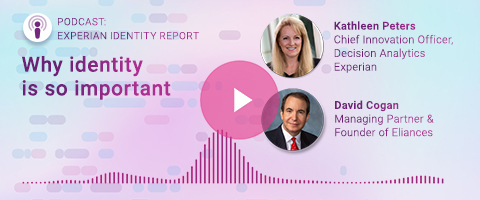
Kathleen Peters, Chief Innovation Officer, Decision Analytics for Experian, was recently featured on the Eliances Heroes podcast as part of the new weekly segment, the “Experian Identity Report.” In the introductory show, podcast host David Cogan, spoke with Kathleen about why identity is so important to our society. Listen to the podcast for the full discussion and see the transcript below. Learn more about Experian Identity David Cogan: How critical is it? Well, I’ll tell you. Payment fraud will exceed $206 billion in the next five years and let’s face it. Managing one’s personal identity is very complicated on its own and if the business enterprise managing customer identities in a strategic and secure way and scale across countless interaction is extremely complicated. And it’s only going to get more complex with the future from what I understand and all the technology that’s coming out if not by the day, by the hour. And that’s why we’re bringing this to you. Interviews with the world’s leading experts on the game changing impact of identity and the need to use reliable data to make confident decisions that securely accelerate customer engagement and that’s why we’re honored here today to have with us Kathleen Peters, Chief Innovation Officer, Experian Decision Analytics North America. Kathleen Peters: Thanks so much David, it’s great to be here with you. DC: $206 billion of payment fraud in the next five years? I mean who’s going to want to turn on their computer after this. That is a serious number. What do we do? KP: It’s really important that we get our arms around this both as consumers as well as businesses because we want to engage online. So much of what we’re doing is digital. It especially started in COVID when we were having our groceries delivered and everything else and even our grandparents are having to do their banking transactions online. The world is changing, and fraudsters take notice of that as well. Fraudsters are opportunistic and when they see a bunch of folks doing stuff online that they’ve never done before, they’re seeing that as an opportunity too. DC: You know the days of people horseback riding and overtaking trains are long gone and now it’s all digital. KP: It’s a lot easier these days. DC: Why is identity so important to our daily digital lives and in business? KP: It’s a great question, David. And as a consumer myself, you, and I when we transact online whether that’s to have food delivered, or I’m buying something for my kids or I’m even paying a bill, I want to be able to trust that my information will be safe, that my privacy will be protected and that my experience will be as smooth as possible. I think that’s what we all want. So as consumers and as businesses, how do we enable all the opportunities this new digital world is presenting to us in a way that we are safe and also businesses can transact with us securely and have confidence on who’s engaging with them online. DC: Let’s talk about identity. What really makes identity so challenging to manage at a business enterprise level especially with how complex the business portion is? KP: Absolutely. It really comes down to there are so many elements that comprise our identity. It’s multidimensional. So historically, when we think about identity, we probably think about the things that were on our DL or passport the kind of information that’s pretty static – name, address, SSN, date of birth – those kinds of things. Once we get online, that identity becomes a little more challenging. We’re not necessarily physically in front of the business that we’re engaging with so the business needs to determine if the person is who we say we are. There’s a famous Far Side comic from years ago where a dog is sitting in front of the computer and he says “On the internet, no one knows you’re a dog.” And that still rings true in that you need to be able to ensure that the customer that’s coming to your business online is a real person and not a bot, is a person with good intent and not a fraudster. You need to look no farther than some of the recent controversies around Twitter and Elon Musk’s on-again, off-again, on-again intent to buy the company. A few months ago he had pulled back because he wanted to know definitively how many users on Twitter are humans versus bots and sometimes determining that can be really hard. And that comes down to managing all these new definitions of identity. DC: That’s very important. The thing is businesses and consumers want to know really what to be able to do. So, what kinds of things is Experian able to offer to help with all of that? KP: We’re in a great position as Experian because we have such a depth and breadth of identity data. We have the analytics horsepower and really touchpoints that are really unique when it comes to thinking about identity. So we’ve been talking about these traditional identity elements and digital, online identity. When you think about it, Experian also really understands your financial identity. So when you bring those things together and a consumer is looking to maybe understand what their financial identity means, their credit score or even how to improve their credit score, Experian’s there. We’ve got a robust direct to consumer business, we’ve got offerings like Boost and Go that help people establish and build their credit. We’ve got marketplaces for cards, insurance, etc. And then when consumers want to open a new account at a financial institution, or a fintech, or a retailer, or even maybe buy some crypto or log into a business, Experian can bring that wealth of capability to help our clients, help businesses, separate those good consumers with good intent from the fraudsters and do that very quickly and efficiently so that consumers can have a great experience and build that trust with who they’re engaging with. DC: Kathleen, that’s really amazing. Alright, now with all of that going on, what is Experian doing now with innovating for the identity space? KP: This is a real passion of mine David and this is where I spend a lot of my time. We’re always looking ahead to see what is the new data, new capabilities that can help us improve that consumer experience and engagement, help clients find the right consumers online to engage and target, and really allow our clients to grow their businesses safely. So, we’re building some products in house, where we’re connecting new pieces that might be new to Experian like linking some of that traditional identity data with particular payment instruments. Is this Kathleen’s credit card? Is this my bank account? When I come and try to do transactions online. But we’re also partnering with new companies. There are a number of startups that are being formed that have been in business looking at new ways to stop fraud and new ways to help identify and authenticate users online. So, as we innovate, we’re building some things in house, we’re partnering, we’re investing in young companies, and sometimes we’re even acquiring. So, bringing together that breadth of data, analytics, really trying to think about what will be the next way that we’ll think about identifying ourselves online is some of the ways we’re innovating. DC: Well, we’re very fortunate to have you and your company here to be able to do that because it’s growing by leaps and bounds. I’m amazed by the number $206 billion which is probably going to go higher, so we’re very fortunate that Experian is around and really identifying this issue and trying to do something now. What do you think our audience will learn about these weekly, critical chats about identity with Experian experts? KP: These are going to be great conversations that we’re going to be able to share and talk about how rapidly things are changing and evolving and how this really relates to our daily lives and the things that are going on in this very dynamic economic climate, digital climate, the way things are changing the way we’re engaging. I think people are also going to learn a lot about Experian’s mission around financial inclusion and opportunity creation. We’re a very mission driven company and we’re the consumer’s bureau, so we want to do this journey in partnership with consumers so that you can take an active part in protecting yourself, understanding what’s going on, helping us fight fraud, but also just really be able to take advantage of all of these new opportunities in a safe way.