Tag: identity verification

Learn what identity verification is and how online identity verification services and methods help organizations address fraud.

To protect themselves against fraudulent applicants, apartment owners and operators need to leverage advanced screening tools and technologies.

Identity document verification safeguards the integrity of financial systems and protects consumers and organizations from fraud, money laundering and more.

Experian's identity and fraud report explores the evolving fraud landscape and influence on identity, the consumer experience, and business strategies.

Experian's 2023 Future of Fraud Forecast examines rising threats impacting businesses and consumers and how best to combat them.
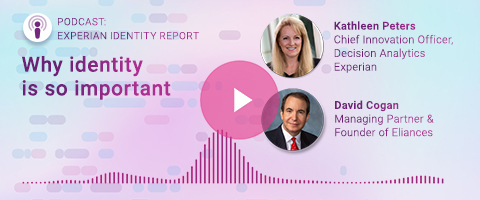
Kathleen Peters, Chief Innovation Officer, Decision Analytics for Experian, was recently featured on the Eliances Heroes podcast as part of the new weekly segment, the “Experian Identity Report.” In the introductory show, podcast host David Cogan, spoke with Kathleen about why identity is so important to our society. Listen to the podcast for the full discussion and see the transcript below. Learn more about Experian Identity David Cogan: How critical is it? Well, I’ll tell you. Payment fraud will exceed $206 billion in the next five years and let’s face it. Managing one’s personal identity is very complicated on its own and if the business enterprise managing customer identities in a strategic and secure way and scale across countless interaction is extremely complicated. And it’s only going to get more complex with the future from what I understand and all the technology that’s coming out if not by the day, by the hour. And that’s why we’re bringing this to you. Interviews with the world’s leading experts on the game changing impact of identity and the need to use reliable data to make confident decisions that securely accelerate customer engagement and that’s why we’re honored here today to have with us Kathleen Peters, Chief Innovation Officer, Experian Decision Analytics North America. Kathleen Peters: Thanks so much David, it’s great to be here with you. DC: $206 billion of payment fraud in the next five years? I mean who’s going to want to turn on their computer after this. That is a serious number. What do we do? KP: It’s really important that we get our arms around this both as consumers as well as businesses because we want to engage online. So much of what we’re doing is digital. It especially started in COVID when we were having our groceries delivered and everything else and even our grandparents are having to do their banking transactions online. The world is changing, and fraudsters take notice of that as well. Fraudsters are opportunistic and when they see a bunch of folks doing stuff online that they’ve never done before, they’re seeing that as an opportunity too. DC: You know the days of people horseback riding and overtaking trains are long gone and now it’s all digital. KP: It’s a lot easier these days. DC: Why is identity so important to our daily digital lives and in business? KP: It’s a great question, David. And as a consumer myself, you, and I when we transact online whether that’s to have food delivered, or I’m buying something for my kids or I’m even paying a bill, I want to be able to trust that my information will be safe, that my privacy will be protected and that my experience will be as smooth as possible. I think that’s what we all want. So as consumers and as businesses, how do we enable all the opportunities this new digital world is presenting to us in a way that we are safe and also businesses can transact with us securely and have confidence on who’s engaging with them online. DC: Let’s talk about identity. What really makes identity so challenging to manage at a business enterprise level especially with how complex the business portion is? KP: Absolutely. It really comes down to there are so many elements that comprise our identity. It’s multidimensional. So historically, when we think about identity, we probably think about the things that were on our DL or passport the kind of information that’s pretty static – name, address, SSN, date of birth – those kinds of things. Once we get online, that identity becomes a little more challenging. We’re not necessarily physically in front of the business that we’re engaging with so the business needs to determine if the person is who we say we are. There’s a famous Far Side comic from years ago where a dog is sitting in front of the computer and he says “On the internet, no one knows you’re a dog.” And that still rings true in that you need to be able to ensure that the customer that’s coming to your business online is a real person and not a bot, is a person with good intent and not a fraudster. You need to look no farther than some of the recent controversies around Twitter and Elon Musk’s on-again, off-again, on-again intent to buy the company. A few months ago he had pulled back because he wanted to know definitively how many users on Twitter are humans versus bots and sometimes determining that can be really hard. And that comes down to managing all these new definitions of identity. DC: That’s very important. The thing is businesses and consumers want to know really what to be able to do. So, what kinds of things is Experian able to offer to help with all of that? KP: We’re in a great position as Experian because we have such a depth and breadth of identity data. We have the analytics horsepower and really touchpoints that are really unique when it comes to thinking about identity. So we’ve been talking about these traditional identity elements and digital, online identity. When you think about it, Experian also really understands your financial identity. So when you bring those things together and a consumer is looking to maybe understand what their financial identity means, their credit score or even how to improve their credit score, Experian’s there. We’ve got a robust direct to consumer business, we’ve got offerings like Boost and Go that help people establish and build their credit. We’ve got marketplaces for cards, insurance, etc. And then when consumers want to open a new account at a financial institution, or a fintech, or a retailer, or even maybe buy some crypto or log into a business, Experian can bring that wealth of capability to help our clients, help businesses, separate those good consumers with good intent from the fraudsters and do that very quickly and efficiently so that consumers can have a great experience and build that trust with who they’re engaging with. DC: Kathleen, that’s really amazing. Alright, now with all of that going on, what is Experian doing now with innovating for the identity space? KP: This is a real passion of mine David and this is where I spend a lot of my time. We’re always looking ahead to see what is the new data, new capabilities that can help us improve that consumer experience and engagement, help clients find the right consumers online to engage and target, and really allow our clients to grow their businesses safely. So, we’re building some products in house, where we’re connecting new pieces that might be new to Experian like linking some of that traditional identity data with particular payment instruments. Is this Kathleen’s credit card? Is this my bank account? When I come and try to do transactions online. But we’re also partnering with new companies. There are a number of startups that are being formed that have been in business looking at new ways to stop fraud and new ways to help identify and authenticate users online. So, as we innovate, we’re building some things in house, we’re partnering, we’re investing in young companies, and sometimes we’re even acquiring. So, bringing together that breadth of data, analytics, really trying to think about what will be the next way that we’ll think about identifying ourselves online is some of the ways we’re innovating. DC: Well, we’re very fortunate to have you and your company here to be able to do that because it’s growing by leaps and bounds. I’m amazed by the number $206 billion which is probably going to go higher, so we’re very fortunate that Experian is around and really identifying this issue and trying to do something now. What do you think our audience will learn about these weekly, critical chats about identity with Experian experts? KP: These are going to be great conversations that we’re going to be able to share and talk about how rapidly things are changing and evolving and how this really relates to our daily lives and the things that are going on in this very dynamic economic climate, digital climate, the way things are changing the way we’re engaging. I think people are also going to learn a lot about Experian’s mission around financial inclusion and opportunity creation. We’re a very mission driven company and we’re the consumer’s bureau, so we want to do this journey in partnership with consumers so that you can take an active part in protecting yourself, understanding what’s going on, helping us fight fraud, but also just really be able to take advantage of all of these new opportunities in a safe way.

Reports of romance scams have spiked in the past two years, partly due to the rise in popularity of online dating and social apps while Americans were isolated at home. With more consumers looking for love online, fraudsters have jumped on the chance to build intimate, trusted relationships without the immediate pressure to meet in person. And these shams seemingly paid off: from January 1 to July 31, 2021, the Federal Bureau of Investigation (FBI) Internet Crime Complaint Center received over 1,800 complaints related to an online romance scam, resulting in losses of approximately $133 million. These romance scams carry financial and security risks that impact both the targets of the fraud and the businesses with which they interact. Experian predicts that romance scams will continue to rise in 2022, leaving consumers and businesses vulnerable to attacks and theft. What is a romance scam? According to the FBI, a romance scam occurs when “a criminal adopts a fake online identity to gain a victim's affection and trust." Typically, fraudsters seek out their marks in dating or socializing settings, such as online apps, and strive to build intimacy and trust as quickly as possible. To avoid suspicion, they may claim that they travel frequently for work or give other excuses about why they can't meet in person. Their attentions are in the context of love and dating, so it's not uncommon for romance scammers to offer marriage proposals or other commitments to intensify the relationship, but the whole point of this fraud is to get their targets to send money. Sometimes fraudsters simply ask for a “loan" to cover medical expenses, an unforeseen shortfall or even travel costs to see the victim in person. Other times, they might ask for gifts or gift cards. Requests for money – whether through direct deposit, gift cards or credit card payments – are all red flags. Increasingly, romance scammers have tried to lure people into investment deals, including cryptocurrency. Romance scams predate the internet by centuries, but the emergence of digital technologies has made them easier to accomplish – and easier to get away with, too. Romance scams are increasing In 2020, there were around 44 million users of online dating services in the United States and this increased to 49 million users in 2021, according to Statista Research Department. By 2022, two years into the COVID-19 pandemic, that number jumped to more than 50 million, and it's projected to rise to 53.3 million by 2025. More users mean more potential targets. According to the Federal Trade Commission (FTC), romance scams hit a record high in 2021, with consumers reporting $547 million in losses that year – up 80 percent from 2020. The median individual loss reported to the FTC from romance scams was $2,400. With the help of modern technologies, romance scammers have added new tactics to their grift. For example, in addition to usual requests for money, a target might be asked to participate in bogus investment schemes involving cryptocurrency. In these cases, the median loss was $10,000. According to the FTC, romance scammers have conned Americans out of an estimated $1.3 billion over the past five years. Worryingly, romance scams also present a serious data risk. Damage could spread beyond financial losses into even more hazardous territory if the scammer can gain access to a target's personally identifiable information (PII) or financial data. In these cases, fraudsters might engage in identity theft to create new accounts or take over existing ones. Breaking up with romance scammers Businesses may not be susceptible to the lure of love, but they're still vulnerable when it comes to the fallout from romance scams. Companies must ensure they have a layered solution that seamlessly recognizes returning customers, while monitoring for indicators that the user presenting an identity is not actually the owner of that identity. Some warning signs include logins from a new IP address nowhere near the user's registered physical address; unusual types or frequencies of transactions; and the addition of a suspicious new authorized user to a credit card account. Businesses also have access to fraud prevention help. Using vast data resources, decades of identity and credit risk management, consumer-permissioned data and industry-leading analytics, Experian enables businesses to detect and prevent fraud by identifying credible customers. This empowers businesses to apply the appropriate amount of friction to each interaction to protect their customers, their data and themselves. To learn more about how Experian is assisting businesses with their fraud prevention efforts, visit us or request a call. And keep an eye out for additional in-depth explorations of our Future of Fraud Forecast. Future of Fraud Forecast Fraud Prevention

Experian’s identity, verification, and fraud solutions can help government agencies of all sizes on their journey to digital modernization.
Experian recently announced Experian Identity and published an advertorial in American Banker outlining the integrated approach to identity that recognizes the full breadth of the company’s authoritative data solutions that help businesses better connect with their consumers in more personalized, meaningful and secure ways. The efforts address the rapidly changing definition and landscape of identity and take on the importance and needs for identity which span across the entire customer journey. From marketing to a specific consumer’s needs, to facilitating a friction-right customer experience, to protecting personal information. As such, there’s a gap for single-partner providers to help businesses navigate this change, while also putting the needs of the consumer first. “Identity data sets are constantly growing with inputs from new interactions. Many future sources of data have yet to be even conceived or developed,” said Kathleen Peters, Chief Innovation Officer, Experian Decision Analytics. “Staying ahead of the identity market curve is vital, and it requires building and continually evolving an enterprise-scale identity solution that interconnects with your own unique data and systems to create attribute-rich profiles of your customers that work across any identity application. That’s Experian Identity.” Experian Identity underscores the need businesses have to respond to increasing identity needs with interconnected, scalable technology, products and services that optimize the consumer experience. While the integrated approach announcement is new, the capability is not. Experian has been trusted for decades to secure individuals’ identity around the most important decisions in their lives – think purchasing a car or home, being identified at the doctor’s office, and more. As such, consumers remain at the center of every action. Experian Identity offers identity resolution, verification, authentication and protection, and fraud management solutions that include first- and third-party fraud, account takeover, credit card verification, identity resolution and restoration, risk-based authentication, synthetic identity protection and more. Additionally, we’ve included a special blog post introducing Experian’s identity capabilities from Kathleen Peters on the Experian Global News Blog and additional coverage. Stay tuned for more updates. Experian Global News Blog - Making Identities Personal: Experian Helps Businesses Build Consumer Trust American Banker – Making Identities Personal: Building Trust and Differentiating Your Brand Experian White Paper - Making Identities Personal For more information about Experian Identity, visit www.experian.com/identity-solutions.

Rewards are among the most appealing features of any credit card. While upfront benefits, like sign-up bonuses and cashback, are most influential in card acquisition, ancillary benefits, like fraud and identity protection, can amplify a card’s overall value.1 Credit card fraud ranked as the second most common form of identity theft in 2021,2 and is expected to become even more frequent as consumers continue to bank and shop online.3 42% of consumers are concerned for the safety of their banking and shopping transactions. With digital identity theft and fraud on the rise, it’s no surprise that safety measures are “very” or “extremely” important to consumers when deciding between different credit cards.4 In response, many card issuers have started to market their security and protection-related benefits more frequently to better capitalize on their cards’ value to consumers. The ways they’ve highlighted these benefits include: A fraud protection campaign From spotlighting their fraud protection benefits in card welcome kits to providing privacy tips on social media, credit card issuers have crafted compelling campaigns to demonstrate their commitment to protecting their customers from fraud and identity theft. In turn, issuers can differentiate their cards from the competition and improve response rates. Reminders about their fraud prevention efforts Issuers have also sent out ongoing reminders outlining the protections their credit cards offer, such as credit monitoring services 5 that notify cardholders of suspicious activity on their credit report. By consistently promoting their efforts to keep their customers’ accounts and data safe, issuers can earn their cardholders’ trust, build loyalty and drive card usage. While benefits like cashback and travel points can help with card acquisition, fraud and identity protection benefits can help drive long-term customer relationships, especially now that card fraud is becoming a growing concern.6 To learn more about how businesses have worked to meet the consumer demand for secure interactions, check out our 2021 Global Identity and Fraud Report. Learn more 1Jonathan O'Connor. "Most Consumers Aren't Aware of Their Credit Cards' Ancillary Benefits. How Does This Impact Card Acquisition and Usage?" TSYS, January 2019 2FTC. "Consumer Sentinel Network" Data Book, 2021 3April Berthene. "Coronavirus pandemic adds $219 billion to US ecommerce sales in 2020-2021" Digital Commerce 360, March 2022 4"Consumers Consider as Many as Six Factors When Choosing Credit Card" PYMTS.com, December 2021 5David McMillin. "Identity theft is a major problem, but these 5 credit card protection programs can help keep you safe" Business Insider, June 2021 6"New FICO Survey Finds Overconfidence Could Put US Consumers at Risk From Scams" Business Wire, February 2022
The right technology can help your business maintain TCPA compliance through data scrubbing, phone type indicators, phone number scoring, and more.

In our newest white paper, we explore the obstacles hindering digital identity management, and the best way to build a layered identity solution.

According to Experian data analysis and a recent study on unemployment insurance fraud, at least 25% of new claims are a result of identity theft.

For the last several months, Experian has participated as the only credit bureau in the pilot of the SSA's eCBSV service.

Last year’s predictions of a new set of Roaring 20’s may not have panned out the way we imagine, but many did evolve. Here are six trends to watch in 2021.