Tag: gasoline vehicles

From the vehicles we drive to the way we purchase them, everything in the automotive industry is evolving as new technologies, shifting incentives, and changing consumer expectations continue to develop. As electrified vehicles continue to grow their presence on the road, Experian’s Automotive Market Trends Report: Q3 2025 took a deep dive into this segment and found that 5.5 million electric vehicles (EVs) and 11.7 million hybrids were in operation this quarter. Furthermore, data through the third quarter of this year found that 73.8% of EV owners returning to market replaced their EV with another EV and only 16.5% switched to a gas-powered vehicle. The significant EV loyalty among consumers signals that the ownership experience is delivering on core expectations. While some owners continued to opt for an EV because they’ve grown accustomed to certain conveniences such as charging stations at home or workplace to avoid traditional fueling and the perks of lower maintenance needs, others took advantage of the EV tax credits before they expired at the end of September. However, as these motivations shift, it will be important to monitor how the EV market unfolds over the next six months. Notably, 11.7% of gas-powered vehicle owners replaced their vehicle with a gas-hybrid vehicle this quarter, suggesting that hybrids are acting as an effective bridge toward deeper electrification. In fact, drivers may see hybrids as the ‘happy medium’ vehicle that offers improved fuel efficiency without requiring full reliance on charging infrastructure. Why this matters for the aftermarket As the majority of consumers replace their EVs with another one and some switch their gas-powered vehicle for an electrified one, these trends signal potential long-term commitment to alternative fuel segments. This is important to monitor for aftermarket professionals as the EV service volume continues to grow, requiring different parts and technician training. With consumers increasingly turning to the aftermarket for cost-effective support, professionals who adapt to diverse powertrains will be best positioned to navigate this evolving wave of post-warranty demand. To learn more about EVs and other vehicle market trends, view the full Automotive Market Trends Report: Q3 2025 presentation on demand.

While the dynamics of the electric vehicle (EV) market continue to drive headlines, recent data reveals that although EV registrations remain steady, hybrids are becoming a practical bridge between gas-powered vehicles and EVs. Experian’s Automotive Consumer Trends Report: Q2 2025 found EVs accounted for 9.2% of new retail registrations, down from 10.5% in Q2 2024, and gas-powered vehicles declined from 73.7% to 71.9% year-over-year. Meanwhile, hybrids jumped from 15.8% to 18.9% in the same time frame. Digging a bit deeper, one of the most telling insights from the data was the apparent transition that consumers make when returning to the market for another vehicle purchase. The data shows that as consumers become familiar with alternative fuel types, some “graduate” into more electrified vehicles. For example, nearly 13% of gas-powered vehicle owners replaced their vehicle with a hybrid (10.8% for hybrids and 2.0% for plug-in hybrids [PHEV], respectively). Meanwhile, 52.2 % of hybrid owners returned to the market to purchase another hybrid and 5.0% returned to purchase a PHEV. Further along in the electrified vehicle funnel, we’re seeing 11.0% of PHEV owners returning to market to purchase a hybrid, while 31.7% returned to purchase another PHEV and 22.2% purchase an EV. Most EV households are not exclusively electric Data in the second quarter of this year found 80% of EV-owning households also have a gas-powered vehicle and 14.9% also own a hybrid, demonstrating that consumers are looking for ways to accommodate their diverse driving needs. While the interest in EVs remains strong, many consumers still rely on more traditional fuel types for various reasons. Though, hybrids are notably becoming a middle ground solution as they offer fuel efficiency without the other concerns that can accompany an EV. As alternative fuel types continue to create a household name in the automotive industry, hybrids are starting to play a notable role in the transition to electrification. Data from this quarter not only shows that consumers are experimenting with alternative fuel types, but they’re also integrating them into multi-vehicle households. With their growing popularity reflects a pragmatic approach to balancing the latest innovation with everyday practicality, hybrids may be the key steppingstone that brings mainstream consumers closer to the electrified space. To learn more about alternative fuel type insights, view the full Automotive Consumer Trends Report: Q2 2025 presentation.
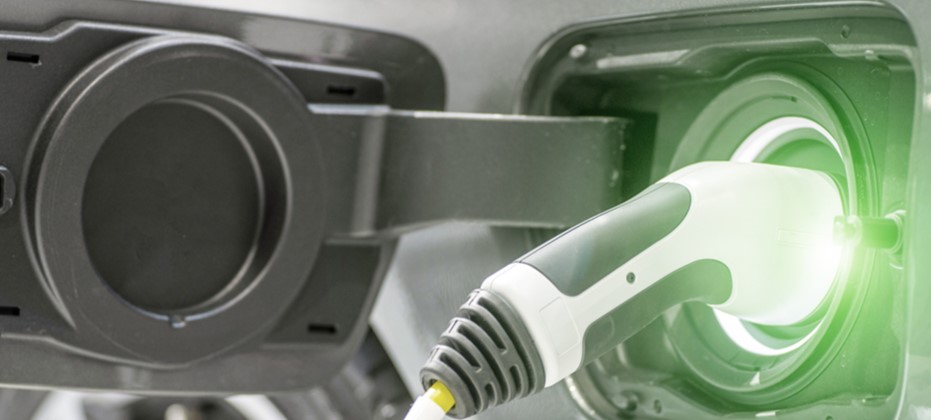
As the desire for flexibility and affordability continues to grow across the overall vehicle market, it seems the trend is carrying over into the electric vehicle (EV) space—resulting in more manufacturers rolling out new models as the number of consumers opting for the electric fuel type rises. According to Experian’s Automotive Consumer Trends Report: Q2 2024, non-luxury EV registrations grew to 26.6%, from 22.7% last year, while exotic and luxury declined from 77.3% to 73.4% year-over-year. Furthermore, of the 291.1 million vehicles on the road in Q2 2024, EVs accounted for over 3.5 million, an increase from more than 2.7 million last year. Historically, EVs were often viewed as luxury vehicles that offered limited model availability to choose from. Though, it’s notable that as more non-luxury models are introduced, the EV market share is witnessing a shift in consumer preference. For instance, Ford led the new retail non-luxury EV market at 21.9% in Q2 2024, from 24.0% last year. Hyundai increased from 15.2% to 19.3% year-over-year, Chevrolet decreased from 24.2% to 13.2%, Kia went from 9.2% to 12.5%, and Volkswagen declined to 11.2% this quarter, from 15.8% in Q2 2023. Consumers continue to embrace EVs While understanding the current EV market share allows automotive professionals to assist in-market shoppers more effectively, leveraging multiple data points allows for a more nuanced perspective while helping them prepare for the future as the market continues to evolve. It’s notable that 77.4% of EV owners replaced their current EV with another one in the last 12 months. Meanwhile, 16.2% transitioned to a gasoline fuel type and 3.2% switched to a hybrid. With the EV model lineup expanding, consumers are potentially intrigued by the new options or holding steadfast to a manufacturer. Regardless, the majority of current EV owners are remaining loyal to the fuel type. However, data found that 81% of households with at least one EV also own a gasoline-powered vehicle, 14% also own a hybrid, and 12% own an additional EV. There are a number of factors that can play a role in owning another vehicle alongside an EV—such as range anxiety or tasks that require a larger and more versatile vehicle—so having a secondary option allows consumers to maintain the flexibility to meet diverse transportation needs. To learn more about EV insights, view the full Automotive Consumer Trends Report: Q2 2024 presentation.

New EV registrations have increased almost 60% since this time last year—and while gasoline vehicles continue to dominate the market, data shows new gasoline registration volumes are dropping year-over-year.

According to Experian’s Automotive Market Trends Report: Q1 2022, new vehicle registrations were down 19% from the prior year—declining to 3.4 million. Used registrations went from 11.4 million to 9.9 million year-over-year, decreasing 13.2%.