Fraud & Identity

In today's fast-paced financial landscape, financial institutions must stay ahead of the curve when it comes to account opening and onboarding. Digital account opening, empowering a prospective client to securely and efficiently open a new account, is key to how banks, credit unions and other financial institutions grow their business and expand their portfolio. Regardless of the time, money and other resources a financial institution invests in marketing to the right target prospect and tailoring an attractive offer, it’s worthless if that prospective customer can’t complete the process due to a poor account opening experience. Unhappy customers vote with their feet. A recent Experian study found that of the more 2,000 consumers surveyed who’d opened a new account in the last six months, 37% took their business elsewhere due to a negative account opening experience. The choice of a reliable partner can make all the difference to your account opening and onboarding experience. The right partner must provide your financial institution with access to the freshest credit data; advanced analytics, scores and models to empower you to say yes to the right customers that meet your lending criteria; and industry-leading decision engines that make the best decisions and enable you to provide a seamless customer experience. Moreover, the right partner will also help you in maintaining high levels of security without compromising user experience, all while adhering to regulatory compliance. Recently, Liminal, a leading advisory and market intelligence firm specializing in the digital identity, cybersecurity, and fintech markets, released its highly anticipated Link™ Index Report for Account Opening in Financial Services, which evaluates solution providers in the financial sector, in the areas of compliance and fraud prevention for account opening. The report recognized Experian as a market leader for compliance and fraud prevention capabilities and market execution. Experian’s identity verification and fraud prevention solutions, including CrossCore® and Precise ID®, received the highest score out of the 32 companies highlighted in the report. It found that Experian was recognized by 94% of buyers and 89% identified Experian as a market leader. “We’re thrilled to be named the top market leader in compliance and fraud prevention capabilities and execution by Liminal’s Link Index Report,” said Kathleen Peters, Chief Innovation Officer for Experian’s Decision Analytics business in North America. “We’re continually innovating to deliver the most effective identity verification and fraud prevention solutions to our clients so they can grow their business, mitigate risk and provide a seamless customer experience.” You can access the full report here. To learn more about Experian’s award-winning fraud solutions, visit our identity fraud hub. Download Liminal Link Index Report

Explore the advantages of using both instant and permissioned verification and how they can synergistically enhance coveragea and reduce costs.

Learn what automated ID verification is and tips on implementing automation identity verification solutions into your business practice.

Learn how you can boost your preparedness against cyberattacks—download the new Data Breach Response Guide now.

The Fed launched FedNow, a new instant payment service. While it offers advantages, there's concerns that fraudsters may exploit it with fraud schemes.

"Grandma, it’s me, Mike.” Imagine hearing the voice of a loved one (or what sounds like it) informing you they were arrested and in need of bail money. Panicked, a desperate family member may follow instructions to withdraw a large sum of money to provide to a courier. Suspicious, they even make a video call to which they see a blurry image on the other end, but the same voice. When the fight or flight feeling settles, reality hits. Sadly, this is not the scenario of an upcoming Netflix movie. This is fraud – an example of a new grandparent scam/family emergency scam happening at scale across the U.S. While generative AI is driving efficiencies, personalization and improvements in multiple areas, it’s also a technology being adopted by fraudsters. Generative AI can be used to create highly personalized and convincing messages that are tailored to a specific victim. By analyzing publicly available social media profiles and other personal information, scammers can use generative AI to create fake accounts, emails, or phone calls that mimic the voice and mannerisms of a grandchild or family member in distress. The use of this technology can make it particularly difficult to distinguish between real and fake communication, leading to increased vulnerability and susceptibility to fraud. Furthermore, generative AI can also be used to create deepfake videos or audio recordings that show the supposed family member in distress or reinforce the scammer's story. These deepfakes can be incredibly realistic, making it even harder for victims to identify fraudulent activity. What is Generative AI? Generative artificial intelligence (GenAI) describes algorithms that can be used to create new content, including audio, code, images, text, simulations, and videos. Generative AI has the potential to revolutionize many industries by creating new and innovative content, but it also presents a significant risk for financial institutions. Cyber attackers can use generative AI to produce sophisticated malware, phishing schemes, and other fraudulent activities that can cause data breaches, financial losses, and reputational damage. This poses a challenge for financial organizations, as human error remains one of the weakest links in cybersecurity. Fraudsters capitalizing on emotions such as fear, stress, desperation, or inattention can make it difficult to protect against malicious content generated by generative AI, which could be used as a tactic to defraud financial institutions. Four types of Generative AI used for Fraud: Fraud automation at scale Fraudulent activities often involve multiple steps which can be complex and time-consuming. However, GenAI may enable fraudsters to automate each of these steps, thereby establishing a comprehensive framework for fraudulent attacks. The modus operandi of GenAI involves the generation of scripts or code that facilitates the creation of programs capable of autonomously pilfering personal data and breaching accounts. Previously, the development of such codes and programs necessitated the expertise of seasoned programmers, with each stage of the process requiring separate and fragmented development. Nevertheless, with the advent of GenAI, any fraudster can now access an all-encompassing program without the need for specialized knowledge, amplifying the inherent danger it poses. It can be used to accelerate fraudsters techniques such as credential stuffing, card testing and brute force attacks. Text content generation In the past, one could often rely on spotting typos or errors as a means of detecting such fraudulent schemes. However, the emergence of GenAI has introduced a new challenge, as it generates impeccably written scripts that possess an uncanny authenticity, rendering the identification of deceit activities considerably more difficult. But now, GenAI can produce realistic text that sounds as if it were from a familiar person, organization, or business by simply feeding GenAI prompts or content to replicate. Furthermore, the utilization of innovative Language Learning Model (LLM) tools enables scammers to engage in text-based conversations with multiple victims, skillfully manipulating them into carrying out actions that ultimately serve the perpetrators' interests. Image and video manipulation In a matter of seconds, fraudsters, regardless of their level of expertise, are now capable of producing highly authentic videos or images powered by GenAI. This innovative technology leverages deep learning techniques, using vast amounts of collected datasets to train artificial intelligence models. Once these models are trained, they possess the ability to generate visuals that closely resemble the desired target. By seamlessly blending or superimposing these generated images onto specific frames, the original content can be replaced with manipulated visuals. Furthermore, the utilization of AI text-to-image generators, powered by artificial neural networks, allows fraudsters to input prompts in the form of words. These prompts are then processed by the system, resulting in the generation of corresponding images, further enhancing the deceptive capabilities at their disposal. Human voice generation The emergence of AI-generated voices that mimic real people has created new vulnerabilities in voice verification systems. Firms that rely heavily on these systems, such as investment firms, must take extra precautions to ensure the security of their clients' assets. Criminals can also use AI chatbots to build relationships with victims and exploit their emotions to convince them to invest money or share personal information. Pig butchering scams and romance scams are examples of these types of frauds where AI chatbots can be highly effective, as they are friendly, convincing, and can easily follow a script. In particular, synthetic identity fraud has become an increasingly common tactic among cybercriminals. By creating fake personas with plausible social profiles, hackers can avoid detection while conducting financial crimes. It is essential for organizations to remain vigilant and verify the identities of any new contacts or suppliers before engaging with them. Failure to do so could result in significant monetary loss and reputational damage. Leverage AI to fight bad actors In today's digital landscape, businesses face increased fraud risks from advanced chatbots and generative technology. To combat this, businesses must use the same weapons than criminals, and train AI-based tools to detect and prevent fraudulent activities. Fraud prediction: Generative AI can analyze historical data to predict future fraudulent activities. By analyzing patterns in data and identifying potential risk factors, generative AI can help fraud examiners anticipate and prevent fraudulent behavior. Machine learning algorithms can analyze patterns in data to identify suspicious behavior and flag it for further investigation. Fraud Investigation: In addition to preventing fraud, generative AI can assist fraud examiners in investigating suspicious activities by generating scenarios and identifying potential suspects. By analyzing email communications and social media activity, generative AI can uncover hidden connections between suspects and identify potential fraudsters. To confirm the authenticity of users, financial institutions should adopt sophisticated identity verification methods that include liveness detection algorithms and document-centric identity proofing, and predictive analytics models. These measures can help prevent bots from infiltrating their systems and spreading disinformation, while also protecting against scams and cyberattacks. In conclusion, financial institutions must stay vigilant and deploy new tools and technologies to protect against the evolving threat landscape. By adopting advanced identity verification solutions, organizations can safeguard themselves and their customers from potential risks. To learn more about how Experian can help you leverage fraud prevention solutions, visit us online or request a call

Learn what identity verification is and how online identity verification services and methods help organizations address fraud.

To protect themselves against fraudulent applicants, apartment owners and operators need to leverage advanced screening tools and technologies.
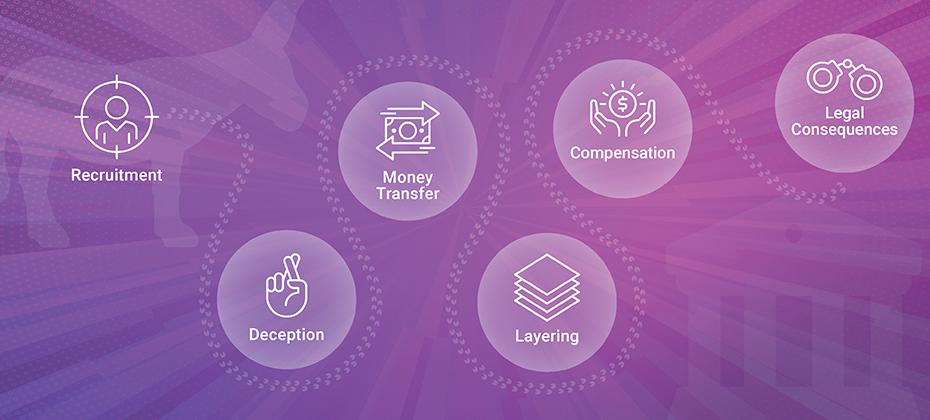
Money mule fraud is a type of financial scam in which criminals exploit individuals, known as money mules, to transfer stolen money or the proceeds of illegal activities. Money mule accounts are becoming increasingly difficult to distinguish from legitimate customers, especially as criminals find new ways to develop hard-to-detect synthetic identities. How money mule fraud typically works: Recruitment: Fraudsters seek out potential money mules through various means, such as online job ads, social media, or email/messaging apps. They will often pose as legitimate employers offering job opportunities promising compensation or claiming to represent charitable organizations. Deception: Once a potential money mule is identified, the fraudsters use persuasive tactics to gain their trust. They may provide seemingly legitimate explanations like claiming the money is for investment purposes, charity donations or for facilitating business transactions. Money Transfer: The mule is instructed to receive funds to their bank or other financial account. The funds are typically transferred from other compromised bank accounts obtained through phishing or hacking. The mule is then instructed to transfer the money to another account, sometimes located overseas. Layering: To mask the origin of funds and make them difficult to trace, fraudsters will employ layering techniques. They may ask the mule to split funds into smaller amounts, make multiple transfers to different accounts, or use various financial platforms such as money services or crypto. Compensation: The money mule is often promised a percentage of transferred funds as payment. However, the promised monies are lower than the dollars transferred, or sometimes the mule receives no payment at all. Legal consequences: Regardless whether mules know they are supporting a criminal enterprise or are unaware, they can face criminal charges. In addition, their personal information could be compromised leading to identity theft and financial loss. How can banks get ahead of the money mule curve: Know your beneficiaries Monitor inbound paymentsEngage identity verification solutionsCreate a “Mule Persona” behavior profileBeware that fraudsters will coach the mule, therefore confirmation of payee is no longer a detection solution Educate your customers to be wary of job offers that seem too good to be true and remain vigilant of requests to receive and transfer money, particularly from unknown individuals and organizations. How financial institutions can mitigate money mule fraud risk When new accounts are opened, a financial institution usually doesn’t have enough information to establish patterns of behavior with newly registered users and devices the way they can with existing users. However, an anti-fraud system should catch a known behavior profile that has been previously identified as malicious. In this situation, the best practice is to compare the new account holder’s behavior against a representative pool of customers, which will analyze things like: Spending behavior compared to the averagePayee profileSequence of actionsNavigation data related to machine-like or bot behaviorAbnormal or risky locationsThe account owner's relations to other users The risk engine needs to be able to collect and score data across all digital channels to allow the financial institution to detect all possible relationships to users, IP addresses and devices that have proven fraud behavior. This includes information about the user, account, location, device, session and payee, among others. If the system notices any unusual changes in the account holder’s personal information, the decision engine will flag it for review. It can then be actively monitored and investigated, if necessary. The benefits of machine learning This is a type of artificial intelligence (AI) that can analyze vast amounts of disparate data across digital channels in real time. Anti-fraud systems based on AI analytics and predictive analytics models have the ability to aggregate and analyze data on multiple levels. This allows a financial institution to instantly detect all possible relationships across users, devices, transactions and channels to more accurately identify fraudulent activity. When suspicious behavior is flagged via a high risk score, the risk engine can then drive a dynamic workflow change to step up security or drive a manual review process. It can then be actively monitored by the fraud prevention team and escalated for investigation. How Experian can help Experian’s fraud prevention solutions incorporate technology, identity-authentication tools and the combination of machine learning analytics with Experian’s proprietary and partner data to return optimal decisions to protect your customers and your business. To learn more about how Experian can help you leverage fraud prevention solutions, visit us online or request a call

The rapid acceleration of digital shopping and transactions highlights the need for marketplaces to refine their fraud and identity proofing strategies.

Identity document verification safeguards the integrity of financial systems and protects consumers and organizations from fraud, money laundering and more.

The ability to verify customer identities is essential for financial institutions for numerous reasons: regulatory requirements, for the protection of their consumers and their business, mitigating risk and more. Being able to detect high-risk customers and large transactions is a critical component of Know Your Customer (KYC) strategies. In addition to being good business practices, this type of risk mitigation is also outlined in industry regulations. In an increasingly complex regulatory environment, companies may be faced with meeting multiple KYC and Anti-Money Laundering (AML) requirements. Actions taken to validate customers such as enhanced due diligence in KYC compliance have impacts spanning far beyond just regulatory compliance. As with any business, bottom line and budget are primary drivers for many financial institutions. Enhanced due diligence (EDD) can positively impact a business's bottom line by contributing to the reduction of fraud rates. And with increased security to discover potential fraudsters, organizations can protect both customers and reputational value. Enhanced due diligence explained: Why KYC, CIP and AML are critical in financial services EDD takes Customer Due Diligence (CDD) to the next level. Financial institutions conduct CDD to protect their organizations from financial crime. CDD is also a critical component of KYC steps to comply with AML laws. AML legislation requires financial institutions to validate their customers to ensure they aren’t part of explicitly illegal financial activity or funding terrorism. EDD is, as it sounds, a more involved form of due diligence, which encompasses additional procedures. EDD involves determining a customer’s risk, often requiring additional information and evidence to determine their viability. While CDD is performed on all customers, EDD is reserved for high-risk potential customers. Because EDD is often more costly and involved in terms of time and resources, a risk-based approach is recommended to flag only the instances when this additional level of validity is required. KYC references the mandatory process of identifying and verifying a client’s identity at account opening and over the course of their relationship with a company to ensure they are the person they say they are. KYC consists of three parts: Customer identification program (CIP), CDD and EDD. CIP requires, at minimum, that financial institutions provide four pieces of identifying information including name, date of birth, address and identification number. CDD consists of classifying the identifying information that was collected. After identifying who the client is (via CIP), CDD assesses the information to determine risk. Enhanced due diligence in KYC In order to establish a competent EDD program, you must improve your CIP and KYC programs. Objective, automated and efficient identity verification capabilities help you acquire profitable, legitimate customers and monitor them effectively over time to meet regulatory compliance expectations. How can EDD benefit your business? Failing to comply with EDD regulations can result in countless risks for financial institutions like fines and reputational losses. While many customers pose little to no risk, high-risk individuals must be flagged quickly and efficiently. The primary benefit of EDD is to protect both financial institutions and their customers from financial crimes such as money laundering and terrorist financing, but there are other risks as well. By mitigating potential risks associated with higher-risk customers, EDD can prevent financial institutions from incurring regulatory fines, legal action, and damage to their reputation. In turn, this ensures that customers have more trust in their financial service providers. Financial institutions can then gain a competitive advantage by offering more secure financial products and services that investors, businesses and customer demand. Access EDD from Experian Experian leverages our advanced analytics, reliable data sources, and team of experts to conduct objective, full and comprehensive due diligence with confidence and certainty. Our solutions, including flexible monitoring and segmentation tools, allow you to resolve discrepancies and fraud risk in a single step, all while keeping pace with emerging fraud threats with effective customer identification software. Improving your Customer Identification Program (CIP) and KYC programs In conclusion, Enhanced Due Diligence in KYC, CIP, and AML are critical components of the financial services regulatory compliance framework. EDD goes beyond the standard KYC, CIP, and AML checks to mitigate risks associated with higher-risk customers. Implementing EDD can help financial institutions comply with regulatory requirements, protect against potential risks, and prevent financial crimes. Ultimately, this benefits not only the institutions but also their customers and the broader economy. It’s vital that financial institutions understand and appreciate the importance of EDD and take appropriate measures to implement it effectively. Experian offers objective, automated and efficient identity verification solutions to help you acquire profitable, legitimate customers and monitor them over time to meet regulatory compliance expectations. Discover the power of CIP and KYC solutions. Learn more
More than half of U.S. businesses say they discuss fraud management often, making fraud detection in banking top-of-mind. Banking fraud prevention can seem daunting, but with the proper tools, banks, credit unions, fintechs, and other financial institutions can frustrate and root out fraudsters while maintaining a positive experience for good customers. What is banking fraud? Banking fraud is a type of financial crime that uses illegal means to obtain money, assets, or other property owned or held by a bank, other financial institution, or customers of the bank. This type of fraud can be difficult to detect when misclassified as credit risk or written off as a loss rather than investigated and prevented in the future. Fraud that impacts financial institutions consists of small-scale one-off events or larger efforts perpetrated by fraud rings. Not long ago, many of the techniques utilized by fraudsters required in-person or phone-based activities. Now, many of these activities are online, making it easier for fraudsters to disguise their intent and perpetrate multiple attacks at once or in sequence. Banking fraud can include: Identity theft: When a bad actor steals a consumer’s personal information and uses it to take money, open credit accounts, make purchases, and more. Check fraud: This type of fraud occurs when a fraudster writes a bad check, forges information, or steals and alters someone else’s check. Credit card fraud: A form of identity theft where a bad actor makes purchases or gets a cash advance in the name of an unsuspecting consumer. The fraudster may takeover an existing account by gaining access to account numbers online, steal a physical card, or open a new account in someone else’s name. Phishing: These malicious efforts allow scammers to steal personal and account information through use of email, or in the case of smishing, through text messages. The fraudster often sends a link to the consumer that looks legitimate but is designed to steal login information, personally identifiable information, and more. Direct deposit account fraud: Also known as DDA fraud, criminals monetize stolen information to open new accounts and divert funds from payroll, assistance programs, and more. Unfortunately, this type of fraud doesn’t just lead to lost funds – it also exposes consumer data, impacts banks’ reputations, and has larger implications for the financial system. Today, top concerns for banks include generative AI (GenAI) fraud, peer-to-peer (P2P) payment scams, identity theft and transaction fraud. Without the proper detection and prevention techniques, it’s difficult for banks to keep fraudsters perpetrating these schemes out. What is banking fraud prevention? Detecting and preventing banking fraud consists of a set of techniques and tasks that help protect customers, assets and systems from those with malicious intent. Risk management solutions for banks identify fraudulent access attempts, suspicious transfer requests, signs of false identities, and more. The financial industry is constantly evolving, and so are fraudsters. As a result, it’s important for organizations to stay ahead of the curve by investing in new fraud prevention technologies. Depending on the size and sophistication of your institution, the tools and techniques that comprise your banking fraud prevention solutions may look different. However, every strategy should include multiple layers of friction designed to trip up fraudsters enough to abandon their efforts, and include flags for suspicious activity and other indicators that a user or transaction requires further scrutiny. Some of the emerging trends in banking fraud prevention include: Use of artificial intelligence (AI) and machine learning (ML). While these technologies aren’t new, they are finding footing across industries as they can be used to identify patterns consistent with fraudulent activity – some of which are difficult or time-consuming to detect with traditional methods. Behavioral analytics and biometrics. By noting standard customer behaviors — e.g., which devices they use and when — and how they use those devices — looking for markers of human behavior vs. bot or fraud ring activity — organizations can flag riskier users for additional authentication and verification. Leveraging additional data sources. By looking beyond standard credit reports when opening credit accounts, organizations can better detect signs of identity theft, synthetic identities, and even potential first-party fraud. With real-time fraud detection tools in place, financial institutions can more easily identify good consumers and allow them to complete their requests while applying the right amount and type of friction to detect and prevent fraud. How to prevent and detect banking fraud In order to be successful in the fight against fraud and keep yourself and your customers safe, financial institutions of all sizes and types must: Balance risk mitigation with the customer experience Ensure seamless interactions across platforms for known consumers who present little to no risk Leverage proper identity resolution and verification tools Recognize good consumers and apply the proper fraud mitigation techniques to riskier scenarios With Experian’s interconnected approach to fraud detection in banking, incorporating data, analytics, fraud risk scores, device intelligence, and more, you can track and assess various activities and determine where additional authentication, friction, or human intervention is required. Learn more

Experian's identity and fraud report explores the evolving fraud landscape and influence on identity, the consumer experience, and business strategies.

By leveraging an array of tools and technologies, businesses can tailor their fraud prevention strategies to suit the specific needs of their customers.