Latest Posts

Organizations are beginning to use data to optimize or improve nearly every aspect of their organization. Make your data quality business case.

Bank executives don’t realize is they’re facing fraud because they’re literally inviting the fraudsters in bank branches.

Time heals countless things, including credit scores. Many of the seven million people who saw their VantageScore® credit scores drop to sub-prime levels after suffering a foreclosure or short sale during the Great Recession have recovered and are back in the housing market. These Boomerang Buyers — people who foreclosed or short sold between 2007 and 2014 and have opened a new mortgage — will be an important segment of the real estate market in the coming years. According to Experian data, through June 2016 roughly 800,000 people had boomeranged, with Los Angeles, Phoenix, and Sacramento housing the most buyers. Some analysts believe more than three million Americans will become eligible for a home over the next three years. Are potential Boomerang Buyers a great opportunity to boost market share or a high risk for a portfolio? Early trends are positive. The majority of Boomerang Buyers who opened mortgages between 2011 and June 2016 are current on their debts. An Experian study revealed more than 29 percent of those who short sold have boomeranged, and just 1.5 percent are delinquent on their mortgage —falling below the national average of 2.8 percent. This group is also ahead of or even with the national average for delinquency on auto loans (1.2 percent vs. the national average of 2.2 percent), bankcards (3 percent vs. 4.3 percent) and retail (even at 2.7 percent). For those Boomerang Buyers who had foreclosed, the numbers are also strong. More than 12 percent have boomeranged, with just 3 percent delinquent on their mortgage. They also match or are below national average delinquency rates on auto loans (1.9 percent) and bankcards (4.1 percent), and have a slightly higher delinquency rate for retail (3.5 percent). Due to their positive credit behaviors, Boomerang Buyers also have higher VantageScore® credit scores than before. On average, the overall non-boomerang group’s credit score sunk during a foreclosure but went up 10 percent higher than before the foreclosure, and Boomerang Buyers rose by nearly 14 percent. For people who previously had a prime credit score, their number dropped by nearly 5 percent, while those who boomeranged returned to the score they had prior to the foreclosure. By comparison, the overall non-boomerang and boomerang group saw their credit score drop during a short sale and increase more than 11 percent from before the short sale. For people who previously had prime credit, they dropped 2 percent while those who boomeranged were almost flat to where they were before the short sale. Another part of the equation is the stabilized housing market and relatively low loan-to-value (LTV) limits that lenders have maintained. In the past, borrowers most often strategically defaulted on their mortgages when their LTV ratios were well over 100 percent. So as long as lenders maintain relatively low LTV limits and the housing market remains strong, strategic default is unlikely to re-emerge as a risk.

Experian’s annual global fraud report reveals trends that can help organizations mitigate fraud and improve the customer experience

Experian estimates card-to-card consumer balance transfer activity to be between $35 and $40 billion a year, representing a sizeable opportunity for proactive lenders seeking to grow their revolving product line. This opportunity, however, is a threat for reactive lenders that only measure portfolio attrition instead of working to retain current customers. While billions of dollars are transferred every year, this activity represents only a small percentage of the total card population. And given the expense of direct marketing, lenders seeking to capitalize on and protect their portfolio from balance transfer activity must leverage data insights to make more informed decisions. Predicting a consumer’s future propensity to engage in card-to-card balance transfers starts with trended data. A credit score is a snapshot in time, but doesn’t reveal deep insights about a consumer’s past balance transfer activity. Lenders that rely only on current utilization will group large populations of balance revolvers into one bucket – and many of these individuals will have no intention of transferring to another product in the near future. Still, balance transfer activity can be identified and predicted by utilizing trended data. By analyzing the spend and payment data over time to see when one (or multiple) trade’s payment approximately matches another trade’s spend, we have the logic that suggests there has been a card-to-card transfer. What most people don’t realize is that trended data is difficult to work with. With 24 months of history on five fields, a single trade includes 120 data points. That’s 720 data points for a consumer with six trades on file and 72,000,000 for a file with 100,000 records, not to mention the other data fields in the file. It’s easy to see why even the most sophisticated organizations become paralyzed working with trended data. While teams of analysts get buried in the data, projects drag, costs swell, and eventually the world changes as rates climb and fall. By the time the analysis is complete, it must be recalibrated. But there is a solution. Experian has developed powerful predictions tools that combine past balance transfer history, historical transfer amounts, current trades carried and utilized, payments, and spend. Combined, these data fields can help identify consumers who are most likely to transfer a balance in the future. With Experian’s Balance Transfer Index the highest scoring 10 percent of consumers capture nearly 70 percent of total balance transfer dollars. Imagine the impact on ROI of reducing 90 percent of the marketing cost of your next balance transfer campaign and still reaching 70 percent of the balance transfer activity. Balance transfer activity represents a meaningful dollar opportunity for growth, but is concentrated in a small percentage of the population making predictive analytics key to success. Trended data is essential for identifying those opportunities, but financial institutions must assess their capabilities when it comes to managing the massive data attached. The good news is that regardless of financial institution size, solutions now exist to capture the analytics and provide meaningful and actionable insights to lenders of all sizes.
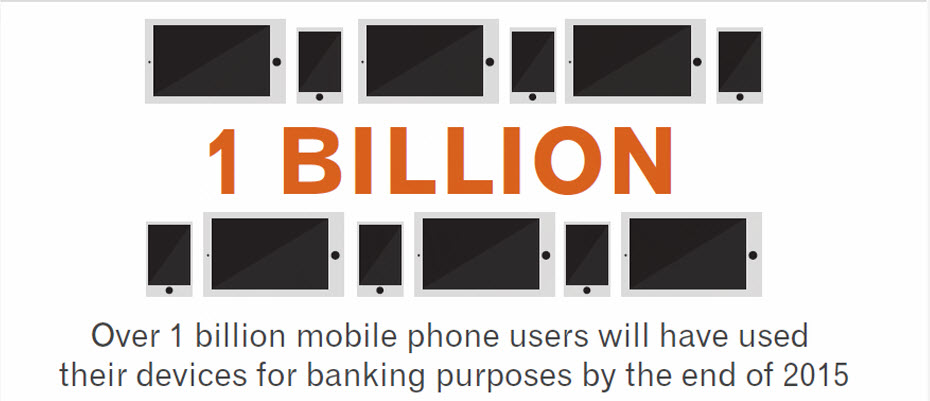
In an attempt to stay ahead of fraud, systems have become more complex, more expensive and more difficult to manage, leading to more customer friction

We are excited to announce that Experian Fraud and Identity Solutions will be presenting at Finovate Fall 2016!

The pendulum has swung again. The great recession brought a glacial freeze to access to capital. The thaw brought rapid, frictionless underwriting with an almost obsessive focus on growth and customer experience. Enter Marketplace Lenders and their more “flexible” approach to credit risk assessment. While much good has come from this evolution in financing, new challenges have surfaced – especially as it pertains to fraud prevention and credit risk management. Stacking has emerged as a particularly knotty problem in the small business lending space. Applicants have the opportunity to apply for and be approved for multiple loans in a matter of days or even hours. Technology allows for underwriting that is at least somewhat automated and depositing often occurs within hours of approval. The speed of fulfillment is a boon for small businesses. However, it also makes it possible to be approved and draw down funds on multiple loans in quick succession. Core underwriting metrics, such as debt-to-income ratios and cashflow, are unreliable in the face of ratcheting debt from concurrent online business loans. This situation occurs because the window between the approval of the loan and delivery of the funds is much shorter than the timeframe to report the loan to credit reporting agencies and other third-party data suppliers. Not all lenders report small business loans, further compounding the problem. Lenders’ risk and pricing strategies are hamstrung in the face of stacking, whether intentional on the part of the small business or not. If a struggling small business applies for credit and receives multiple loan offers, should we rely on their ability to resist the temptation to accept them all and use the funds wisely? No. The burden rests squarely on the credit provider to proactively address the problem. Technology-enabled frictionless underwriting underpins the online consumer loan space and facilitates a similar, yet subtly different stacking problem. There are a large number of loan providers, with a spectrum of risk appetites and pricing strategies. This all but ensures that a consumer has access to additional loans at an ever-increasing interest rate. The underlying assumption, among the more mainstream, lower-rate providers, is that the consumer is disclosing all of their obligations – including any recent loans. Although reporting in the consumer space is more robust and timely, it is still possible for an applicant to quickly access and draw funds on several loans within a very short timeframe, making it difficult for loan providers to get a full and complete picture of their capacity to repay the loan. The situation is further complicated by lenders at the higher risk, higher rate end of the market whose business models are structured to allow for, and perhaps even encourage, stacking by the consumer. Fortunately, there are a number of steps lenders can take to improve the situation: Contribute credit data to the credit reporting agencies. Know your customer, their industry, their market and underwrite appropriately. Develop a tailored underwriting approach that achieves a balance between frictionless customer experience and prudent credit and risk assessment. All applicants are not equal, and some require additional scrutiny and more time to underwrite. Understand the drivers and indicators of stacking. The latter point is worth emphasizing. The time to address stacking is prior to funding. This requires the lender to anticipate, identify and pre-empt stackers. There is no 100 percent foolproof remedy. However, lenders can stack (pun-intended) the odds in their favor. For example, if an existing loan has a high balance and is delinquent, might that be an indicator of a propensity to stack? What if the business owner has applied for multiple loans, resulting in multiple inquiries, over a 45-day period? A proactive, data-driven anti-stacking strategy can yield positive results, reducing delinquency and losses. In combination with consistent comprehensive reporting to the bureaus, it can go a long way toward reducing the risk posed by this largely invisible threat.

As credit behavior and economic conditions evolve, using a model that's validated regularly can give lenders greater confidence in the model’s performance.

Congress recently took several actions signaling a growing interest in regulatory issues surrounding the Fintech sector. This growing attention follows a number of recent inquiries by federal and state regulators into the business practices in the industry. Subcommittee takes a deep dive into Fintech and OML regulatory landscape In July, the House Subcommittee on Financial Institutions and Consumer Credit held a hearing entitled Examining the Opportunities and Challenges with Financial Technology (“Fintech”). Witnesses and lawmakers voiced optimism that online marketplace lending can help to expand access to capital for consumers and small businesses, but the hearing also focused on a growing schism as to whether new regulations or changes to the underlying framework is necessary to ensure consumers are protected. Some lawmakers and the witness from the American Banking Association expressed concerns that the Fintech and marketplace lenders may benefit from being outside of the supervisory scope of prudential regulators and the Consumer Financial Protection Bureau (CFPB). Witnesses from the marketplace lending industry argued that they are obligated to meet all of the same regulatory compliance requirements as traditional lenders. Rep. McHenry introduces package of Fintech bills aimed at spurring innovation In addition, Congressman Patrick McHenry (R-NC), a member of the House Republican Leadership team and the Vice Chairman of the House Financial Services Committee, introduced two bills this month aimed at spurring innovation in the Fintech industry. H.R. 5724, the Protecting Consumers’ Access to Credit Act of 2016, would clarify that federal law preempts a loan’s interest rate as valid when made. The bill is in response to the Supreme Court’s recent decision not to hear Madden v Midland, a case in which the Second Circuit court ruled that the National Bank Act does not have a preemptive effect after the national bank has sold or otherwise assigned the loan to another party. The reading of this law has created uncertainty for Fintech companies and the banks that partner with them. H.R. 5725, the IRS Data Verification Modernization Act of 2016, requires the IRS to automate the Income Verification Express Service process by creating an Application Programming Interface (API). The legislation is aimed at speeding up and improving the automation of the loan application process. In particular, it is aimed at streamlining the process by which lenders gain access to tax transcript data. Currently, lenders may require applicants to fill out IRS form “4506-T,” which gives the lender the right to access a summarized version of their tax transcript as part of the process to confirm certain data points on their application. According to industry reports, this manual process at the IRS takes two to eight days, creating unnecessary delays for Fintech companies and banks that rely on leveraging data and technology to make faster, informed decision for consumer and small business lending Both bills have been referred to the House Financial Services Committee for review.

First annual global fraud report covering the convergence of growth strategies and fraud threats and prevention.

Recent survey by Experian revealed opportunities for businesses to build relationships with future homebuyers before they’re ready to obtain a loan.

All customers are not created equal - at least when it comes to ability to pay. So what are the natural moments for a lender to assess?
Many fraud and compliance teams are struggling to keep pace with new business dynamics.

Financial health open doors for people, creating opportunities for credit, cars, homes and stability. So how can you get "healthy?"