
Identifying and Stopping Bot Attacks

Updated: June 12, 2026 by Laura Burrows 6 min read February 22, 2024

While bots have many helpful purposes, they have unfortunately become a tool for malicious actors to gain fraudulent access to financial accounts, personal information and even company-wide systems. Almost every business that has an online presence will have to face and counter bot attacks. In fact, a recent study found that across the internet on a global scale, malicious bots account for 30 percent of automated internet activity.1 And these bots are becoming more sophisticated and harder to detect.

What is a bot attack and bot fraud?

Bots are automated software applications that carry out repetitive instructions mimicking human behavior.2 They can be either malicious or helpful, depending on their code. For example, they might be used by companies to collect data analytics, scan websites to help you find the best discounts or chat with website visitors. These “good” bots help companies run more efficiently, freeing up employee resources.

But on the flip side, if used maliciously, bots can commit attacks and fraudulent acts on an automated basis. These might even go undetected until significant damage is done. Common types of bot attacks and frauds that you might encounter include:

  • Spam bots and malware bots: Spam bots come in all shapes and sizes. Some might scrape email addresses to entice recipients into clicking on a phishing email. Others operate on social media sites. They might create fake Facebook celebrity profiles to entice people to click on phishing links. Sometimes entire bot “farms” will even interact with each other to make a topic or page appear more legitimate. Often, these spam bots work in conjunction with malware bots that trick people into downloading malicious files so they can gain access to their systems. They may distribute viruses, ransomware, spyware or other malicious files.
  • Content scraping bots: These bots automatically scrape content from websites. They might do so to steal contact information or product details or scrape entire articles so they can post duplicate stories on spam websites.
  • DDoS bots and click fraud bots: Distributed denial of service (DDoS) bots interact with a target website or application in such large numbers that the target can’t handle all the traffic and is overwhelmed. A similar approach involves using bots to click on ads or sponsored links thousands of times, draining advertisers’ budgets. 
  • Credential stealing bots: These bots use stolen usernames and passwords to try to log into accounts and steal personal and financial information. Other bots may try brute force password cracking to find one combination that works so they can gain unauthorized access to the account. Once the bot learns consumer’s legitimate username and password combination on one website, they can oftentimes use it to perform account takeovers on other websites. In fact, 15 percent of all login attempts across industries in 2022 were account takeover attacks.1
  • AI-generated bots: While AI, like ChatGPT, is vastly improving the technological landscape, it’s also providing a new avenue for bots.3 AI can create audio and videos that appear so real that people might think they’re a celebrity seeking funds. 

What are the impacts of bot attacks?

Bot attacks and bot fraud can have a significant negative impact, both at an individual user level and a company level. Individuals might lose money if they’re tricked into sending money to a fake account, or they might click on a phishing link and unwittingly give a malicious actor access to their accounts.

On a company level, the impact of a bot attack can be even more widespread. Sensitive customer data might get exposed if the company falls victim to a malware attack. This can open the door for the creation of fake accounts that drain a company’s money. For example, a phishing email might lead to demand deposit account (DDA) fraud, where a scammer opens a fraudulent account in a customer’s name and then links it to new accounts, like new lines of credit. Malware attacks can also cause clients to lose trust in the company and take their business elsewhere.

A DDoS attack can take down an entire website or application, leading to a loss of clients and money. A bot that attacks APIs can exploit design flaws to steal sensitive data. In some cases, ransomware attacks can take over entire systems and render them unusable.

How can you stop bot attacks?

With so much at risk, stopping bot attacks is vital. But some of the most typical defenses have core flaws. Common methods for stopping bot attacks include:

  • CAPTCHAs: While CAPTCHAs can protect online systems from bot incursions, they can also create friction with the user process.
  • Firewalls: To stop DDoS attacks, companies might reduce attack points by utilizing firewalls or restricting direct traffic to sensitive infrastructures like databases.4
  • Blocklists: These can prevent IPs associated with attacks from accessing your system entirely.
  • Multifactor authentication (MFA): MFA requires two forms of identification or more before granting access to an account.
  • Password protection: Password managers can ensure employees use strong passwords that are different for each access point.

While the above methods can help, many simply aren’t enough, especially for larger companies with many points of potential attacks. A piecemeal approach can also lead to friction on the user’s side that may turn potential clients away. Our 2024 Identity and Fraud Report revealed that up to 38 percent of U.S. adults stopped creating a new account because of the friction they encountered during the onboarding process. And often, this friction is in place to try to stop fraudulent access.

Incorporating behavioral analytics to combat attacks

Another effective way to enhance bot detection is through the use of behavioral analytics. This technology helps track user activity and identify patterns that may suggest malicious bot behavior. By analyzing aspects such as typing speed, mouse movement and the way users interact with websites, businesses can gain real-time insights into whether a visitor is human or a bot.

Behavioral analytics in fraud uses machine learning and advanced algorithms to continuously monitor and refine user behavior patterns. This allows businesses to identify bot attacks more accurately and prevent them before they cause harm. By analyzing real-time behaviors, such as how fast someone enters information or their browsing habits, businesses can flag suspicious activity that traditional methods might miss.

Why partner with Experian?

What companies need is fraud and bot protection with a positive customer experience. We provide account takeover fraud prevention solutions that can help protect your company from bot attacks, fraudulent accounts and other malicious attempts to access your sensitive data. Experian’s approach embodies a paradigm shift where fraud detection increases efficiency and accuracy without sacrificing customer experience. We can help protect your company from bot attacks, fraudulent accounts and other malicious attempts to access your sensitive data. 

This article includes content created by an AI language model and is intended to provide general information.

1“Bad bot traffic accounts for nearly 30% of APAC internet traffic,”SMEhorizon, June 13, 2023.https://www.smehorizon.com/bad-bot-traffic-accounts-for-nearly-30-of-apac-internet-traffic/
2“What is a bot?”AWS.https://aws.amazon.com/what-is/bot/
3Nield, David. “How ChatGPT — and bots like it — can spread malware,”Wired, April 19, 2023.https://www.wired.com/story/chatgpt-ai-bots-spread-malware/
4“What is a DDoS attack?”AWS.https://aws.amazon.com/shield/ddos-attack-protection/

Related Posts

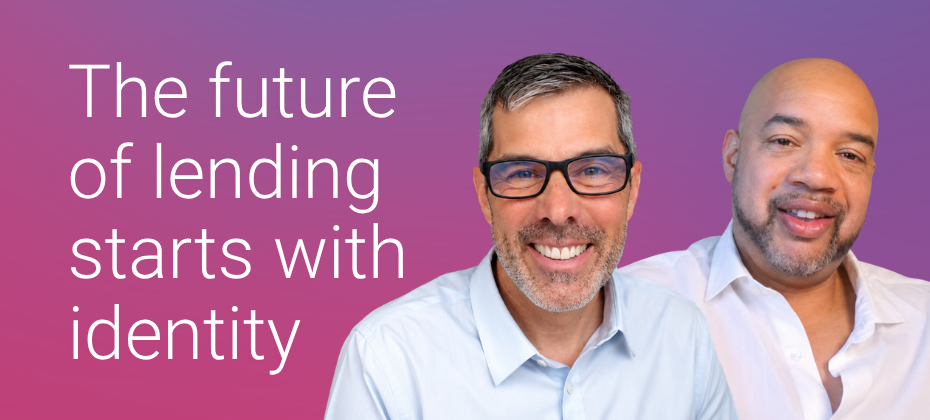
Ask the Expert: The Future of Lending Starts With Identity With Shawn Rife and Brian Cardona

Identity intelligence and alternative data can help lenders validate consumers and support more informed decisions across the customer lifecycle.

September 16, 2026 by Julie Lee
Financial Institutions Are Rethinking Customer Acqusition

Customer acquisition strategies are constantly evolving toward more precise targeting. From a marketing lens, you can track every step, optimize communication channels and still miss the person most likely to convert. Attribution can tell us which channels work and automation can make marketing spend more efficient. But both assume we know who is actually on the other end. Financial institutions are learning that finding audiences and targeting them is no longer the biggest challenge. As acquisition optimization marketing becomes more sophisticated, teams can measure and act on more signals than before. What they can't always know is whether the person on the receiving end is real. Customer acquisition has evolved into an identity problem. The challenge is not that every questionable signal represents malicious activity. It's that acquisition systems must make increasingly intelligent decisions with an imperfect understanding of who they're actually engaging. When identities are fragmented, duplicated, temporary or synthetic, optimization becomes a question of trust as much as targeting. When your signals don't reliably identify customers The customer journey often includes searching, filling out a form, creating an account, requesting a quote and subscribing. All of these signals work well when identity is relatively stable.  However, financial institutions are finding that these signals are becoming less reliable. A single person can operate across multiple personas, devices, browsers, aliases, accounts and intermediaries while several apparent “people” may actually represent one underlying actor. Financial instituions are finding: Fragmented customer signals Difficulty distinguishing an old account from a new one Different digital pathways associated with the same individual Signals that are generated by automation Real customers getting flagged because signals are too thin to evaluate confidently Legacy signals continue to be challenged Marketing has historically treated intent as a valuable signal because intent was relatively difficult to produce. A search required human intent. A form required someone to fill it out. An inquiry implied a meaningful amount of human effort. Financial institutions are already combating AI-enabled fraud, and now marketing teams are starting to face it on a massive scale. AI can mimic human behavior by researching products, comparing prices, filling out forms, creating accounts and signing up for services. A valid email address is no longer enough. Marketers need to know: How long has it existed? How recently has it been active? Does its activity appear consistent or suddenly anomalous? Has it gone dormant and returned? Is it associated with patterns that suggest stability or unusual behavior? How to build on your strongest signal Email remains one of the most persistent identifiers in digital commerce, following people across devices, platforms, transactions, subscriptions, accounts and years of activity. For over two decades, this has shaped how AtData thinks about identity. Now, as part of Experian, it’s shaping how an entire platform and team approach identity. A marketer doesn’t need every prospect to have existed online for twenty years. But understanding whether a newly acquired prospect has meaningful identity context can dramatically improve the quality of the decision being made around it. Better identity intelligence can help organizations reduce unnecessary friction by improving their ability to recognize legitimate customers. With a strong identity foundation, marketing teams can better address: Which audiences are more likely to convert? Which leads are high quality? Which channels are driving incremental growth? What do the best prospects look like? The value isn't simply having an email address. It's understanding the history and behavioral context associated with it. That context can provide a stronger digital identity signal, helping marketers understand how long they have been active, whether its behavior is consistent with that of a real person and whether current activity aligns with past patterns. It continues to be one of the most persistent identifiers in digital commerce. An infrastructure built for what's coming The acquisition of AtData by Experian reflects a fundamental shift in how identity infrastructure needs to work. Experian's scale and decisioning capabilities, combined with AtData's real-time email intelligence, create a strong platform. Read more about the why behind the acquisition and see how email works as an identity anchor for fraud prevention. Contact us to learn about our customer acquisition solutions

September 15, 2026 by Zohreen Ismail
As Electric Vehicle Adoption Eases, Dealers Can Find New Opportunities To Reach Consumers

After years of rapid growth, new electric vehicle (EV) registrations have moderated, and the EV market has entered a new chapter. But slower growth shouldn’t be mistaken for disappearing demand, with data suggesting the reality is much more nuanced. According to Experian Automotive’s Automotive Consumer Trends Report: Q2 2026, battery EVs accounted for 8.21% of new retail registrations in the last 12 months, down from 9.23% a year earlier. However, consumers aren’t simply walking away from electrification. In fact, more than one million new EVs were registered during the past 12 months and the used EV market recorded more than 540,000 registrations over the same period. The opportunity may be less about waiting for the EV market to grow and more about understanding where EV demand is present, who is driving them, and how to reach those consumers more effectively. Who is likely to purchase an EV and what vehicle types are they interested in? Understanding who’s in the market for an EV can allow dealers to position themselves around consumers’ needs as they choose a vehicle that fits their everyday lifestyle. In the second quarter of 2026, Millennials and Gen X accounted for 67.83% of new EV registrations, nearly 10 percentage points above their combined share of all new, retail registrations. Millennials were also the largest generational audience across both new and used EV market share, coming in at 35.76% and 38.42%, respectively. It’s important to consider that the EV shopper isn’t necessarily looking for an unfamiliar or new type of vehicle. In many cases, they’re seemingly looking for an electric version of the practical vehicle they already know. For instance, SUVs accounted for 77.47% of new EV registrations in Q2 2026, which was similar to SUVs’ 63.49% share of all new retail registrations. For these shoppers, creating messaging around value, practicality, and available choices may resonate differently than premium technology messaging aimed at some new-EV prospects. The more precisely dealers can identify those audiences, the less they need to depend on broad EV market momentum to generate demand. To learn more about EV insights, view the full Automotive Consumer Trends Report: Q2 2026 presentation.

September 15, 2026 by Kirsten Von Busch

Subscribe to our Newsletter

Enter your name and email for the latest updates.

This site is protected by reCAPTCHA and the Google Privacy Policy and Terms of Service apply.

Subscribe to our Newsletter

Don't miss out on the latest industry trends and insights!
Subscribe