
How Vehicle History Data Can Help Consignors Make More Informed Decisions Before Auction

by Kirsten Von Busch 2 min read January 10, 2022

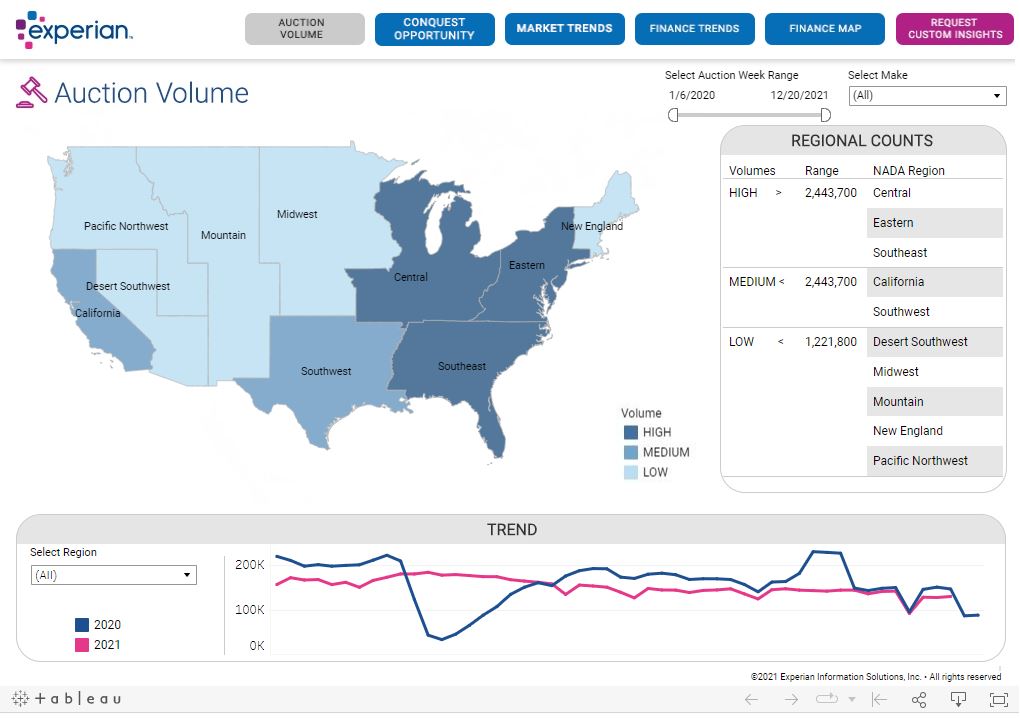
As we head into 2022 there continues to be heightened interest in auto auctions. Experian has observed a little cooling in auction activity in some parts of the western U.S., but the Central, Eastern and Southern geographies continue to see high unit activity, as depicted in the chart below.  Let’s take a look at how vehicle history data can help consignors make more informed decisions before auction. (Click here to access these insights directly).
Review vehicle history data before auction assignment

During this current climate, you can make the most of every auction (whether physical or digital) by reviewing vehicle history data before assignment. Have you ever brought inventory to a physical auction only to realize the vehicle had issues you didn’t know about?  This can catch consignors off-guard and prove costly.

So, how can you take advantage of vehicle history reports to help make better purchasing decisions? Vehicles with damage aren’t a lost cause, but rather consignors need to be strategic about where they send damaged vehicles to auctions to ensure the sale and maximize the sales price. A little extra research can help uncover hidden issues and vehicle damage. Vehicle history reports reviewed prior to auction assignment can assist consignors in uncovering vehicle damage and determine if the vehicles are appropriately priced to move before locking in their auction location.

A quick review of the vehicle’s history report for major state title brands can reveal areas of concern and will also show other major problems, such as accidents, damage and total insurance loss.
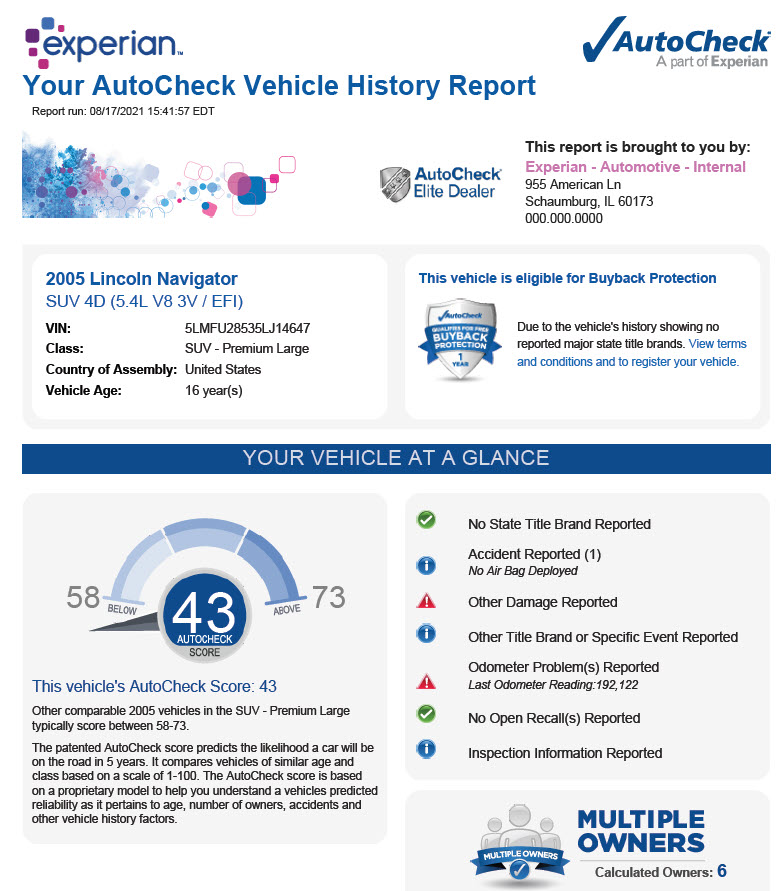
If damage or a major concern is uncovered, consignors can proactively evaluate the auction assignment.  For example, the vehicle might have a better chance at selling in a hotter market like the Central, Southern, or Eastern U.S. than in a Midwest market. The key is to always know before you go by taking advantage of region and channel data to help ensure the most profitable sale.

“Know before you go and tell before you sell,” says Joe Miller, VP of Client Experience at AutoIMS, the popular inventory management platform serving auctions and commercial consignors. “We continue to hear how vehicle history is influencing decisions not only about which auction to send the car to, but what repairs to perform, how best to floor price the car, and how to represent it in the lane. A new era of data-rich transparency is upon us in auto remarketing, and those tapping into the VHR will ultimately save time and make more money as they improve their reputation in the lanes.”

By leveraging the Experian AutoCheck Vehicle History Report, consignors have quick and easy access to information that can help them make more informed, profitable decisions. To become an AutoCheck Vehicle History Report subscriber, sign up today.


Related Posts

How Union Credit Expands Access to Credit Unions with Experian

Discover how Union Credit and Experian help credit unions reach younger consumers through personalized digital lending experiences.

Published: July 1, 2026 by Scarlet.Nickel@experian.com
Faster Decisions, Better Outcomes: Experian Verify™ Now Available Through Centro, Mezzo’s Orchestration Engine 

Explore how Experian Verify™ and Mezzo’s Centro orchestration engine are helping mortgage lenders modernize income and employment verification, reduce workflow complexity, and make faster, more confident lending decisions at scale.

Published: July 1, 2026 by Lizel Ferrer
Used EV Growth Signals a New Phase of Consumer Purchasing Behavior

The electric vehicle (EV) revolution isn’t slowing down, it’s changing lanes. While recent conversations have seemingly focused on softening demand for new EVs, the used segment has been gaining momentum. According to Experian Automotive’s 2025 EV Year in Review Report, new retail individual EV registrations fell 35.9% year-over-year. Meanwhile, the used retail individual EV registrations grew 25.4% from a year ago. As affordability and growing model availability reshapes consumer behavior, buyers are increasingly turning to pre-owned EVs, which has shown an interesting market divergence that is redefining how consumers are adopting this segment and what it can mean for automakers, dealers, and the overall industry. Key players behind rising used EV demand Notably, Tesla accounted for over half (60.5%) of used retail individual EV registrations in 2025, followed by Chevrolet at 6.4% and Nissan (5.5%). Diving a bit deeper, Tesla made up the top three models of the used individual registrations last year, with the Model 3 coming in at 27.2%, Model Y at 21.7%, and Model S (6.6%). The Chevrolet Bolt EV followed at 4.8% and the Nissan Leaf was at 4%. Tesla’s position as the leading make in the used EV market is a natural extension of its long-standing dominance in new EV sales. The brand’s leadership over the years created a large fleet of vehicles that are now entering the pre-owned market. What the used EV boom means for automotive professionals The growing demand for used EVs can present more opportunities for automotive professionals. Dealers that provide a healthy supply of pre-owned EVs can increase accessibility and play a role in adoption for consumers who are actively looking to purchase, while marketers can emphasize value and ownership benefits. As the market continues to evolve, automotive professionals who understand and respond to these changing dynamics will be best positioned to capitalize on the expanding pool of used EV shoppers. To learn more about EV insights, visit Experian Automotive’s EV Resource Center.

Published: June 30, 2026 by Kirsten Von Busch

Subscribe to our Auto blog

Enter your name and email for the latest updates.

This site is protected by reCAPTCHA and the Google Privacy Policy and Terms of Service apply.