Fraud & Identity

Account farming is the process of creating and cultivating multiple user accounts, often using fake or stolen identities.

AI is significantly transforming the landscape of real estate fraud, enabling criminals to execute schemes like deed theft with greater ease.

By implementing effective identity risk management, financial institutions can protect themselves and their consumers from identity fraud.

Bot attacks are plaguing financial institutions. The risks are significant, weakening both security and financial stability.
With fraudsters continuously refining their methods, fintechs must invest in advanced fintech fraud detection and prevention solutions.
Learn how e-commerce merchants can reduce card abandonment and increase conversions during the holiday shopping season.

Call center fraud is a growing threat, and it’s crucial for businesses to take steps to protect their operations and their consumers.

Fraud-as-a-Service (FaaS) represents an emerging and increasingly sophisticated business model within cybercrime. Read more.

Replay attacks are network-based security hacks attackers use to fraudulently gain access to a network or system. Learn more.
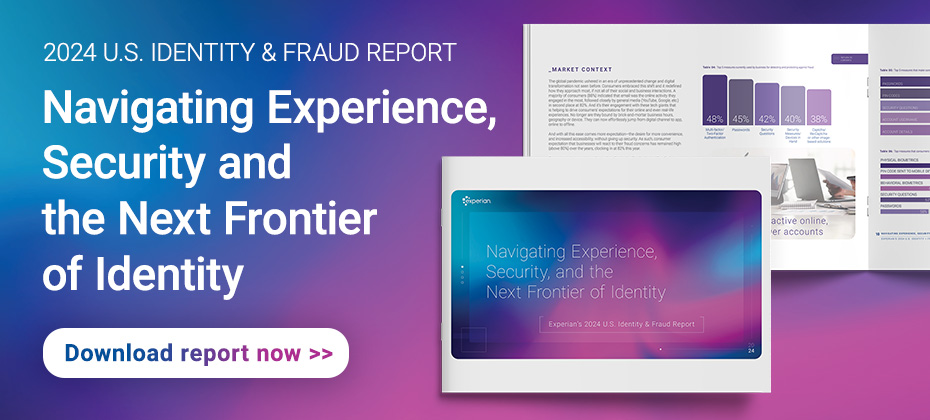
In this report, we explore how the evolving fraud landscape is impacting identity verification, customer experience, and business priorities for the future.

To authenticate identities and combat fraud within the Gen Z population, financial organizations need to implement comprehensive strategies.

AI fraud detection helps organizations enhance their security measures, reduce fraud losses, authenticate identity, and improve customer experience.

In this article...What is credit card fraud?Types of credit card fraudWhat is credit card fraud prevention and detection?How Experian® can help with card fraud prevention and detection With debit and credit card transactions becoming more prevalent than cash payments in today’s digital-first world, card fraud has become a significant concern for organizations. Widespread usage has created ample opportunities for cybercriminals to engage in credit card fraud. As a result, millions of Americans fall victim to credit card fraud annually, with 52 million cases reported last year alone.1 Preventing and detecting credit card fraud can save organizations from costly losses and protect their customers and reputations. This article provides an overview of credit card fraud detection, focusing on the current trends, types of fraud, and detection and prevention solutions. What is credit card fraud? Credit card fraud involves the unauthorized use of a credit card to obtain goods, services or funds. It's a crime that affects individuals and businesses alike, leading to financial losses and compromised personal information. Understanding the various forms of credit card fraud is essential for developing effective prevention strategies. Types of credit card fraud Understanding the different types of credit card fraud can help in developing targeted prevention strategies. Common types of credit card fraud include: Card not present fraud occurs when the physical card is not present during the transaction, commonly seen in online or over-the-phone purchases. In 2023, card not present fraud was estimated to account for $9.49 billion in losses.2 Account takeover fraud involves fraudsters gaining access to a victim's account to make unauthorized transactions. In 2023, account takeover attacks increased 354% year-over-year, resulting in almost $13 billion in losses.3,4 Card skimming, which is estimated to cost consumers and financial institutions over $1 billion per year, occurs when fraudsters use devices to capture card information from ATMs or point-of-sale terminals.5 Phishing scams trick victims into providing their card information through fake emails, texts or websites. What is credit card fraud prevention and detection? To combat the rise in credit card fraud effectively, organizations must implement credit card fraud prevention strategies that involve a combination of solutions and technologies designed to identify and stop fraudulent activities. Effective fraud prevention solutions can help businesses minimize losses and protect their customers' information. Common credit card fraud prevention and detection methods include: Fraud monitoring systems: Banks and financial institutions employ sophisticated algorithms and artificial intelligence to monitor transactions in real time. These systems analyze spending patterns, locations, transaction amounts, and other variables to detect suspicious activity. EMV chip technology: EMV (Europay, Mastercard, and Visa) chip cards contain embedded microchips that generate unique transaction codes for each purchase. This makes it more difficult for fraudsters to create counterfeit cards. Tokenization: Tokenization replaces sensitive card information with a unique identifier or token. This token can be used for transactions without exposing actual card details, reducing the risk of fraud if data is intercepted. Multifactor authentication (MFA): Adding an extra layer of security beyond the card number and PIN, MFA requires additional verification such as a one-time code sent to a mobile device, knowledge-based authentication or biometric/document confirmation. Transaction alerts: Many banks offer alerts via SMS or email for every credit card transaction. This allows cardholders to spot unauthorized transactions quickly and report them to their bank. Card verification value (CVV): CVV codes, typically three-digit numbers printed on the back of cards (four digits for American Express), are used to verify that the person making an online or telephone purchase physically possesses the card. Machine learning and AI: Advanced algorithms can analyze large datasets to detect unusual patterns that may indicate fraud, such as sudden large transactions or purchases made in different geographic locations within a short time frame. Advanced algorithms can analyze large datasets to detect unusual patterns that may indicate fraud, such as sudden large transactions or purchases made in different geographic locations within a short time frame. Behavioral analytics: Monitoring user behavior to detect anomalies that may indicate fraud. Education and awareness: Educating consumers about phishing scams, identity theft, and safe online shopping practices can help reduce the likelihood of falling victim to credit card fraud. Fraud investigation units: Financial institutions have teams dedicated to investigating suspicious transactions reported by customers. These units work to confirm fraud, mitigate losses, and prevent future incidents. How Experian® can help with card fraud prevention and detection Credit card fraud detection is essential for protecting businesses and customers. By implementing advanced detection technologies, businesses can create a robust defense against fraudsters. Experian® offers advanced fraud management solutions that leverage identity protection, machine learning, and advanced analytics. Partnering with Experian can provide your business with: Comprehensive fraud management solutions: Experian’s fraud management solutions provide a robust suite of tools to prevent, detect and manage fraud risk and identity verification effectively. Account takeover prevention: Experian uses sophisticated analytics and enhanced decision-making capabilities to help businesses drive successful transactions by monitoring identity and flagging unusual activities. Identifying card not present fraud: Experian offers tools specifically designed to detect and prevent card not present fraud, ensuring secure online transactions. Take your fraud prevention strategies to the next level with Experian's comprehensive solutions. Explore more about how Experian can help. Learn More Sources 1 https://www.security.org/digital-safety/credit-card-fraud-report/ 2 https://www.emarketer.com/chart/258923/us-total-card-not-present-cnp-fraud-loss-2019-2024-billions-change-of-total-card-payment-fraud-loss 3 https://pages.sift.com/rs/526-PCC-974/images/Sift-2023-Q3-Index-Report_ATO.pdf 4 https://www.aarp.org/money/scams-fraud/info-2024/identity-fraud-report.html 5 https://www.fbi.gov/how-we-can-help-you/scams-and-safety/common-scams-and-crimes/skimming This article includes content created by an AI language model and is intended to provide general information.

Explore the essentials of identity authentication, its importance for financial institutions, and what effective solutions look like.

Explore what email account takeover is and why it's more important than ever for organizations to prevent it now.