
All posts by Rachel Alfred
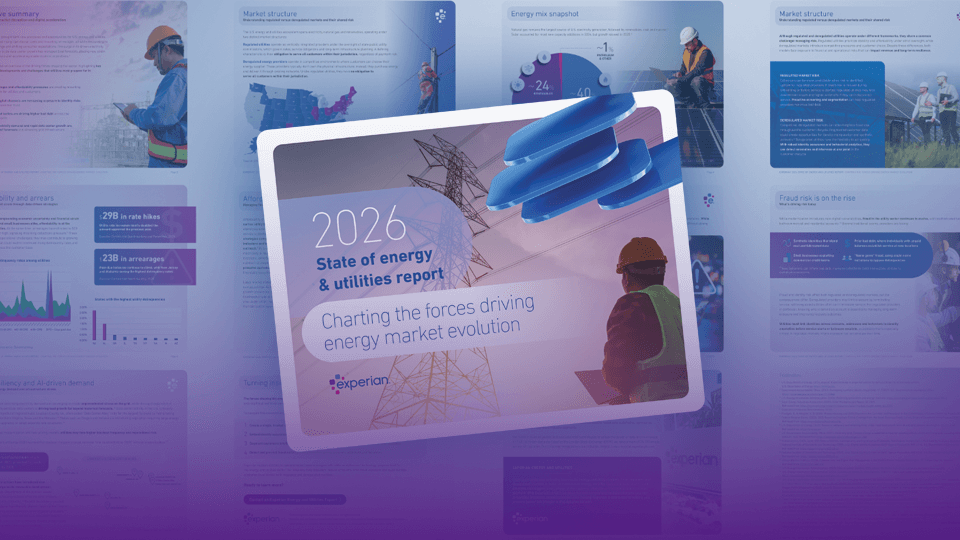
Utilities are managing elevated arrears, expanding digital service channels and shifting grid demand patterns at the same time. These developments are appearing at key points, including service starts, billing and collections. Energy and utilities industry trends for 2026 reflect how these dynamics are surfacing across the customer lifecycle and influencing broader planning decisions. Energy and utilities trends shaping the industry The state of energy and utilities 2026 reflects a sector adapting to financial exposure, fraud risk and demand variability across both regulated and deregulated markets. Rising arrearagesArrearage levels across the utilities sector are estimated at approximately $23 billion. Economic uncertainty may be contributing to a rise in arrearages, often reflected in delayed payments, extended repayment plans or variability in monthly collections. Digital expansion introduces new risk considerationsAs utilities expand digital service channels and self-service tools, identity-based fraud risk may appear during digital service starts and account changes, particularly as more interactions shift online. Fraud behaviors are becoming more sophisticatedMore complex fraud patterns, including synthetic identities, name game fraud and prior bad debt, may span multiple points of the customer journey, making risk more difficult to detect. Grid demand uncertaintyIn certain regions, data center expansion may influence load forecasting and long-term infrastructure planning timelines. Data centers consumed approximately 4.4% of U.S. electricity in 2023 and are projected to account for between 6.7% and 12% by 2028, reflecting the potential scale of demand shifts utilities may be evaluating. What these trends signal for utility planning Together, these energy and utilities industry trends 2026 highlight where risk could first emerge. When risk indicators appear during service start, screening before service starts may help reduce downstream exposure rather than relying only on collections-based controls. As more interactions shift online, identity risk may be harder to identify without stronger verification. When fraud spans from service start through collections, visibility across systems becomes more important. As grid demand grows, planning for reliability may require adjustments to how forecasting and infrastructure decisions are informed. Enabling data-driven utility decisions To navigate these energy sector trends, utilities may benefit from a more connected view of identity, risk and customer behavior. Experian supports providers with data-driven energy and utilities solutions designed to help reduce losses, strengthen customer trust and support utility fraud prevention across the customer lifecycle. For a closer look at how these themes are unfolding across the sector, explore our 2026 State of Energy and Utilities Report, which examines each trend in greater depth through data-driven insights and industry examples. Read our first-ever State of Energy and Utilities Report examining the forces shaping the industry this year. Download now

Across agencies, decisions about digital services, staffing and oversight are often tied together. Public sector trends for 2026 reflect how these considerations are shaping modernization efforts and citizen trust today. At the federal, state and local levels, the public sector outlook 2026 highlights how modernization, program integrity, workforce resilience and citizen trust influence how services are delivered and how resources are prioritized. Four trends shaping the public sector in 2026 Agencies are navigating a set of trends that are influencing both strategic planning and day-to-day execution. Fiscal pressure and program integrityBudget volatility and increased scrutiny may elevate the importance of payment accuracy and operational consistency, particularly as eligibility rules evolve and caseloads remain high. This can surface in areas such as eligibility verifications, benefits recertifications or grant administration, where data inconsistencies may have a broader operational impact. Modernization and technology accelerationAs agencies continue public sector modernization, digital access may expand faster than existing controls can keep pace. This is often most visible in online applications, self-service portals and account management tools, where verification processes may not evolve at the same pace as access. Fraud losses across the U.S. have been estimated at approximately $160 billion, highlighting the extent of identity and payment risks present in digital environments. Decisions about identity assurance and fraud prevention can influence how agencies scale online services. Workforce resilienceStaffing constraints and skill gaps may affect processing timelines, oversight capacity and institutional knowledge, potentially contributing to longer review cycles or greater reliance on manual quality checks. Workforce data shows roughly 200,000 federal positions were reduced in the past year, which may influence how agencies approach automation and oversight. Automation and government data analytics can play a more central role in supporting consistency across programs. Citizen trust and digital experienceAs more interactions move online, citizen trust may be influenced by both security and usability. Public sector fraud prevention approaches that apply friction only when risk indicators are present can help agencies maintain accessibility while managing exposure. What these signal for agencies Together, these trends point to a shift in how agencies evaluate risk and prioritize investment. Choices about modernization, staffing and oversight may increasingly shape one another. Approaches that strengthen government program integrity, improve visibility across digital interactions and support informed decision-making may help agencies sustain service levels while managing evolving risk. For a closer look at how these trends are unfolding across agencies, explore our 2026 Public Sector Trends and Impact Report, which delves into each theme in greater depth through data-driven insights and real-world agency use cases. Read our first-annual 2026 Public Sector Trends & Impact Report to understand the forces reshaping agency operations and trust. Download now