What Is Fraud Orchestration? A Guide for Lenders

by Gary Stockton 8 min read November 20, 2026

Fraud prevention in lending has become increasingly complex. As consumers expect faster, more seamless digital experiences, fraudsters are using increasingly sophisticated tactics to exploit gaps in identity verification, application processes and account security.

In response, many lenders have added new fraud tools and data sources to their technology stacks. But simply adding more tools doesn’t necessarily create a stronger fraud strategy. When solutions operate independently, lenders may struggle to connect risk signals, respond quickly to emerging threats and determine when additional verification is actually necessary.

Fraud orchestration can help solve this challenge by bringing fraud tools, data and risk signals together within a coordinated decisioning workflow. Instead of treating each fraud solution as a separate checkpoint, organizations can use orchestration to determine which checks to perform and what action to take based on the risk associated with each interaction.

For lenders, this can lead to faster decisions, stronger fraud prevention and a more seamless experience for legitimate customers.

What is fraud orchestration?

Fraud orchestration is the process of coordinating multiple fraud prevention tools, data sources, analytics and risk signals within a unified workflow.
A lender may use a wide range of capabilities to identify and prevent fraud, including:

  • Identity verification
  • Device intelligence
  • Document verification
  • Biometrics
  • Behavioral signals
  • Email and phone intelligence
  • Consortium and bureau data
  • Velocity checks
  • Internal fraud data
  • Rules and machine learning models

Individually, these capabilities can provide valuable information about an applicant or customer. Fraud orchestration helps lenders bring those signals together and determine the appropriate response.

Rather than requiring every applicant to pass through the same sequence of fraud checks, an orchestrated workflow can adapt based on the risk presented.
For example, an applicant whose identity, device and application information show little indication of fraud may be able to proceed without additional verification. An application displaying inconsistencies or elevated risk signals could trigger additional identity verification, document verification or manual review.

In this way, fraud orchestration helps turn a collection of individual fraud tools into a coordinated fraud prevention strategy.

Why lenders need fraud orchestration

Digital lending has made it possible for consumers to apply for credit quickly and conveniently. But it has also created more opportunities for fraudsters to exploit digital channels.

Lenders may encounter identity theft, synthetic identities, account takeover, first-party fraud, automated attacks and other forms of fraud throughout the customer lifecycle. At the same time, fraudsters can adapt their methods as organizations introduce new controls.

The challenge is compounded when fraud prevention tools operate in silos.

A device intelligence solution may identify one risk signal, while an identity verification service identifies another. Behavioral data may reveal additional anomalies. Internal data and third-party information may provide still more context.

Evaluating these signals separately can make it difficult to develop a complete picture of risk. It can also lead organizations to apply additional controls broadly, potentially creating unnecessary friction for legitimate applicants.

Fraud orchestration provides a framework for connecting these capabilities so organizations can assess risk more holistically and respond appropriately.

How fraud orchestration works

While fraud orchestration strategies vary by organization, an orchestrated fraud workflow generally involves several interconnected steps.

1. Collect risk signals

The process begins by gathering relevant information about an application or customer interaction. Depending on the use case, this might include identity information, device characteristics, behavioral signals, application data, historical information and third-party fraud intelligence.

2. Analyze the interaction

Rules, risk models and advanced analytics can evaluate the available signals and identify patterns associated with legitimate or potentially fraudulent activity.

Technologies such as AI fraud detection can help organizations analyze large volumes of information and identify complex patterns that may be difficult to detect using static rules alone.

Similarly, fraud detection machine learning can help uncover relationships across large datasets and adapt as fraud patterns change.

3. Determine the appropriate next step

The orchestration layer uses the available risk information to determine what should happen next.

A low-risk interaction might proceed without additional verification. An interaction with conflicting signals could trigger another fraud check. Higher-risk activity could require step-up authentication, document verification or manual review.

The goal is not necessarily to perform every available fraud check. It is to perform the appropriate checks based on the risk presented.

4. Make and execute the decision

Once the necessary information has been evaluated, the workflow can support a decision or route the interaction to the appropriate next step.

This approach allows organizations to automate more decisions while reserving additional verification and human review for situations where they may provide the greatest value.

Fraud orchestration across the lending journey

Although fraud prevention is often associated with the initial application, fraud risk doesn’t disappear after an account is opened.
An effective orchestration strategy can help organizations manage fraud risk throughout the customer lifecycle.

Application and onboarding

At application, lenders can combine identity information with device, behavioral, application and other risk signals to evaluate potential fraud.
Passive capabilities can be particularly valuable at this stage because they can help identify risk without automatically requiring additional actions from the applicant.

For example, behavioral analytics can analyze how users interact with digital forms and provide additional insight into potential risk. When incorporated into an orchestrated workflow, behavioral signals can help determine whether an application should continue normally or whether additional verification may be warranted.

Identity verification

When an application contains inconsistencies, orchestration can trigger additional identity checks based on the type and level of risk detected.

Rather than requiring every applicant to upload an identity document or complete another verification step, lenders can reserve additional controls for situations where they are needed.

Credit decisioning

Fraud risk and credit risk are distinct, but both can influence lending decisions. Connecting fraud insights with broader decisioning workflows can help lenders evaluate applications efficiently while applying appropriate fraud controls.

Account management

Fraud orchestration can continue after origination. Changes to contact information, login behavior, devices or other account characteristics may create new risk signals.

An orchestrated workflow can use those signals to determine whether additional authentication or verification is appropriate.

Transactions and disbursements

Fraud controls can also be applied when funds are disbursed or when other sensitive transactions occur. Combining account, identity and transaction-related signals can help organizations identify potentially suspicious activity before completing an action.

Benefits of fraud orchestration for lenders

Bringing fraud capabilities together within an orchestrated workflow can create several advantages.

Faster decision making

Running every applicant through every available fraud check can slow decisions and create unnecessary complexity.

Fraud orchestration allows lenders to dynamically select the appropriate tools and data sources based on risk. Straightforward applications can move through the process quickly, while higher-risk applications receive additional scrutiny.

Stronger fraud prevention

Fraud signals become more useful when they can be evaluated together.

Combining identity, device, behavioral and other information can provide a more complete picture of an interaction. Advanced analytics and machine learning can identify patterns across those signals, while orchestration determines the appropriate response.

This layered approach can also make fraud strategies more adaptable as threats evolve.

Reduced manual review

Manual review can be valuable for complex cases, but it can also increase operating costs and extend decision times.

Better coordination of fraud signals can help organizations automate decisions where sufficient information is available and direct investigators toward applications that genuinely require additional attention.

Better customer experiences

Strong fraud prevention doesn’t have to mean creating more friction for every customer.

Orchestration can help organizations distinguish between interactions that can proceed normally and those that warrant additional verification.

Legitimate applicants may encounter fewer unnecessary challenges, while additional controls can be introduced when risk increases.

The result is a more risk-based approach to friction: applying it where it adds value rather than making every customer prove their legitimacy through the same process.

Greater flexibility

Fraud threats, business strategies and technology change over time. An orchestration approach can make it easier to adjust workflows, incorporate new data sources and deploy additional fraud capabilities without rebuilding the entire fraud process.

This flexibility can help organizations respond more quickly as fraud patterns and customer expectations evolve.

Building an effective fraud orchestration strategy

Fraud orchestration isn’t simply a technology implementation. Organizations also need to determine how data, analytics, policies and customer experience should work together.

A useful framework is to think about four capabilities:

Connect. Bring together relevant fraud tools, internal information and third-party data sources.

Analyze. Use rules, models and analytics to evaluate signals collectively and develop a clearer view of risk.

Orchestrate. Determine which capabilities should be invoked and what action should occur based on the risk presented.

Adapt. Monitor results and adjust strategies as fraud patterns, business needs and customer behavior change.

The objective is to create a fraud strategy that can respond differently to different levels and types of risk rather than applying a fixed set of controls to every interaction.

Turning fraud signals into coordinated decisions

Lenders have access to more fraud data and technology than ever before. The challenge is making those capabilities work together.

Fraud orchestration provides the connective layer between data, fraud detection and action. By coordinating fraud tools and risk signals within a unified workflow, lenders can identify risk earlier, dynamically apply the appropriate controls and make faster decisions.

Experian helps organizations connect data, analytics and fraud prevention capabilities to support identity verification and fraud decisioning throughout the customer lifecycle. With an orchestrated approach, lenders can strengthen fraud prevention while reducing unnecessary friction for legitimate customers.

As fraud threats continue to evolve, the ability to connect, analyze and act on risk signals in real time can help lenders stay ahead of emerging threats while delivering the fast, convenient experiences consumers expect.

Explore our Fraud Orchestration Infographic
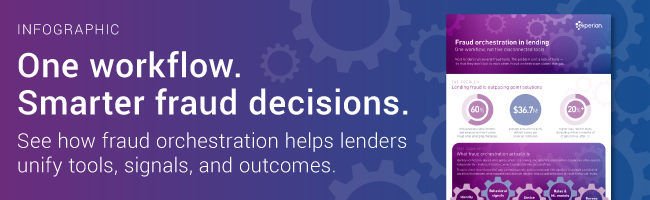
Download our fraud orchestration infographic

Related Posts

New data indicate signs of increased VantageScore 4.0 adoption. Recent Experian Capital Markets data reporting points to gradual growth in VantageScore 4.0 adoption, and more loans beginning to appear in a larger share of GSE pools.

November 20, 2026 by Angad Paintal
What Is a Ransomware Attack? How to Prepare and Respond

Ransomware attacks can create challenges that extend far beyond an organization’s IT systems. When critical applications become unavailable or sensitive information is compromised, businesses may face operational disruption, financial losses and difficult decisions about how to support affected customers. While cybersecurity defenses are essential, organizations also need clear response procedures, coordinated communication and recovery plans. Understanding how ransomware attacks happen, their potential impact and the steps organizations can take to prepare can help businesses respond more effectively when an incident occurs. What is a ransomware attack? A ransomware attack is a type of cyberattack in which criminals use malicious software or extortion tactics to demand payment from an organization. Traditionally, ransomware encrypts files or systems, preventing authorized users from accessing information until a ransom is paid. Some attackers also steal sensitive data and threaten to release it unless their demands are met. These tactics may occur separately or together, creating challenges for organizations trying to restore operations and protect sensitive information. Paying a ransom does not guarantee that attackers will restore access, delete stolen information or refrain from making additional demands. How do ransomware attacks happen? Ransomware attacks often begin when cybercriminals gain unauthorized access to an organization’s systems or accounts. Once inside, attackers may attempt to expand their access, steal information or deploy malicious software. Common attack methods include: Phishing and social engineering: Deceptive emails or messages that trick employees into opening malicious attachments, visiting harmful websites or sharing login credentials Compromised credentials: Stolen passwords or authentication information used to access business systems and accounts Unpatched vulnerabilities: Security weaknesses in software, servers or network devices that attackers exploit Third-party access: Compromised vendors or connected systems that provide a potential entry point Malicious downloads: Harmful software installed through deceptive websites, compromised applications or unsafe downloads Understanding these methods can help organizations identify potential weaknesses and strengthen their security practices. How do ransomware attacks affect businesses and customers? The consequences of a ransomware attack depend on the systems affected, the information involved and the organization's ability to contain the incident. Business disruption and financial losses When critical systems become unavailable, organizations may experience interruptions to customer service, payment processing, internal operations or other essential functions. The financial impact can be significant. According to the FBI's 2025 Internet Crime Report, reported ransomware-related losses reached approximately $32.3 million, up from $12.5 million in 2024. These figures do not capture the full financial impact of ransomware incidents, including business interruption, recovery expenses and other indirect costs. Customer data exposure and fraud risks Some ransomware incidents involve the theft of sensitive information, potentially exposing customers to identity theft or fraud. If attackers obtain login credentials or personal information, organizations may also need to consider related threats, including account takeover. Customer trust and reputation Customers expect organizations to protect their information and communicate clearly when incidents affect them. Delayed or confusing communication may create additional uncertainty. A coordinated response can help organizations provide timely information and appropriate support to affected individuals. What should organizations do after a ransomware attack? When a ransomware incident is suspected, organizations should activate their incident response procedures and work with qualified professionals to assess and contain the threat. Important response steps include: Activate the response team: Bring together IT, cybersecurity, legal, privacy, communications and leadership teams as appropriate. Contain the incident: Identify affected systems and take steps to limit further unauthorized activity while preserving relevant evidence. Investigate the impact: Determine which systems and information may have been compromised, including whether sensitive data was accessed or removed. Evaluate notification requirements: Work with legal and privacy advisers to determine applicable regulatory, contractual and customer communication obligations. Support affected customers: Prepare clear communications and appropriate resources when personal information has been exposed. An established data breach response strategy can help organizations coordinate customer notification and support activities following an incident. How can organizations prepare for and recover from ransomware attacks? Organizations can prepare for ransomware attacks by combining security controls, tested backups, employee training and a documented incident response plan. Recovery planning should also address how teams will restore systems, assess data exposure and communicate with affected customers. Key preparedness measures include: Maintain secure backups: Keep protected backups and regularly test restoration procedures. Strengthen access controls: Implement multifactor authentication and limit access to sensitive systems. Update software: Address known vulnerabilities through consistent patch management. Train employees: Help staff recognize phishing attempts and suspicious activity. Monitor security threats: Use appropriate detection and monitoring tools to identify potential attacks. Test response plans: Conduct exercises that evaluate technical recovery, communication and decision-making responsibilities. Following an incident, recovery should focus on restoring systems safely, addressing remaining vulnerabilities and evaluating potential risks to affected individuals. Organizations may also need to consider whether compromised information could contribute to additional fraud. Depending on the circumstances, fraud prevention solutions may support broader identity risk management efforts. Security teams should also evaluate related threats, including automated bot attacks, when assessing potential misuse of compromised accounts or credentials. Once operations are restored, reviewing lessons learned can help organizations strengthen their security controls, response procedures and future preparedness. How can breach response planning help protect customers? Ransomware preparedness should account for both operational recovery and the potential impact on customers. If sensitive information is compromised, organizations may need to coordinate notifications, respond to customer questions and provide appropriate support. Experian® offers data breach resolution services that help organizations plan for and manage customer-facing aspects of a breach, including notification management and response support. By establishing response procedures before an incident, organizations can improve coordination and prepare to address customer needs when a breach occurs. Prepare for a more coordinated breach response Explore Experian's data breach response solutions and learn how to plan for customer notification and support. Explore data breach response solutions Download the 2027 Data Breach Response Guide

November 20, 2026 by Julie Lee
How GenAI Fraud Bots Fly Under the Radar (and How to Ground Them Before It’s Too Late)

Today’s AI-powered fraud bots are exceptionally good at mimicking human behavior. Learn why a modern defense strategy is key.

November 18, 2026 by Laura Burrows

Subscribe to our Newsletter

Enter your name and email for the latest updates.

This site is protected by reCAPTCHA and the Google Privacy Policy and Terms of Service apply.

Subscribe to our Newsletter

Don't miss out on the latest industry trends and insights!
Subscribe