Financial Services

To improve the customer experience during the busy holiday shopping season many businesses loosen their fraud criteria.

As the electronic signature industry matures and acceptance of e-signatures increases, so does the need for more robust, flexible options in authentication.
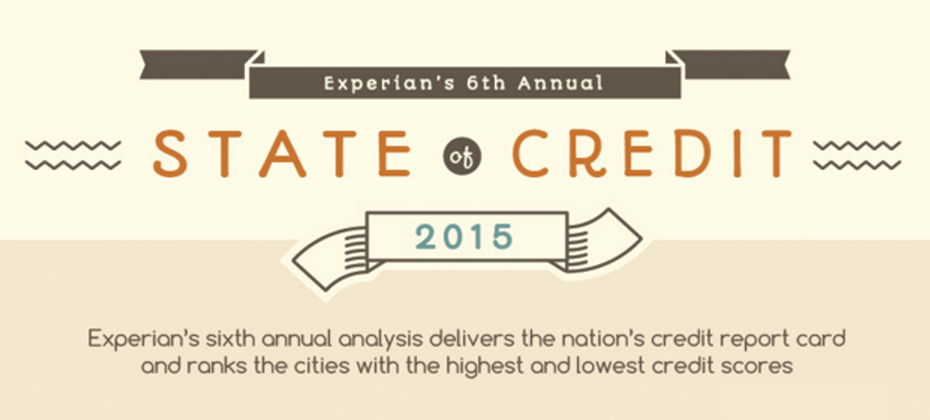
Hello from the other side ... While Adele scores big on the Billboard Hot 100 by crooning of coming to terms with a lover from the past, a new Experian “State of Credit” reveals we are officially on the “other side” of the recession – at least if you’re looking at the nation’s credit scores. While the bottom of the Great Recession was reached in the second quarter of 2009, steady job growth was not seen until 2011, and even since, some economists claim it has been a "Tortoise Recovery.” But key findings from Experian’s 6th annual study, ranking top and bottom cities across the nation in regards to credit, suggests the U.S. is strong. “If I were to give a grade to the overall picture of credit in the United States, I would give it an A minus,” said Michele Raneri, Experian’s vice president of analytics and new business development. “I’m optimistic about the state of credit as we are seeing more loans being extended, late payments are decreasing and consumers are continuing to gain more confidence in originating loans. There definitely is growth and momentum — we’re back to prerecession levels in nearly every category, which means lenders are in a prime position to capitalize on this market and foster business growth.” Which states topped the credit charts? As in previous years, Minnesota continues to shine with three of its cities — Mankato, Rochester and Minneapolis — leading with credit scores of 706, 705 and 704, respectively. Greenwood, Miss. and Albany, Ga. ranked the lowest with scores of 612 and 622. While still at the bottom of the list with a score of 612, Greenwood, Miss., residents did improve their score by three points, more than any other city in the bottom 10. Overall, the report reveals the national credit score increased by three points over the last year (and by five points since 2013) and the 10 cities with the highest credit scores in the nation increased their scores by an average of 1.8 points. Additionally, bankcards, retail cards and mortgage lending showed significant growth, making this year’s study an indicator of the nation’s confidence in the credit market. Just in time for the election year, this year’s study includes insight into how residents of these top and bottom metropolitan statistical areas (MSAs) identify politically. The study found that half of the highest-scoring cities have residents whose views skew more middle of the road, while residents of lower-scoring cities are more likely to lean conservative. The full lists of the top 10 and bottom 10 cities are featured (scores are rounded to the nearest whole number). Detailed study highlights include the following changes over the last year: The national VantageScore® credit score is up by three points, from 666 to 669. Bankcard lending continues to increase, with new bankcards up 7.7 percent. The average number of bankcards per consumer is up 2.8 percent to 2.24 cards. Retail card lending also is on the rise, with a 10.8 percent increase in new originations. The average number of retail cards per consumer is up 0.3 percent to 1.55 cards from last year and up by 7 percent since 2013. Instances of late payments (includes bankcard and retail) decreased by 4.4 percent over the last year and by 17.3 percent since the height of the recession in 2010. Average debt2 is up 2.1 percent to $29,093 per consumer. Mortgage originations increased by 42.5 percent. For a more complete look at the above cities as well as the other MSAs studied, visit http://www.livecreditsmart.com to view a fully interactive map and infographic. Purchase The Experian Market Intelligence Brief, a quarterly report that includes more than 70 charts and data trends on loan originations, outstanding loans and delinquency performance metrics spanning three years.

I recently read a study about the profile of an online Fraudster. One may jump to conclusions about what is a good indicator for catching cybercriminals.
I recently facilitated a Webinar looking at myths and truths in the market regarding the EMV shift and what it means for both merchants and issuers.

The themes of the game of Risk are relevant to the world of real-life fraud risk prevention. The difference is that the stakes are real and much higher.

What will the EMV shift really mean for consumers and businesses here in the U.S.? Businesses and consumers across the U.S. are still adjusting to their new EMV credit cards. The new credit cards are outfitted with computer chips in addition to the magnetic strips to help prevent point-of-sale (POS) fraud. The new system, called EMV (which stands for Europay, MasterCard and Visa), requires signatures for all transactions. EMV is a global standard for credit cards. In the wake of the rising flood of large-scale data breaches at major retailers – and higher rates of counterfeit credit card fraud – chip-and-signature, as it is also called, is designed to better authenticate credit card transactions. Chip-and-signature itself is not new. It has been protecting consumers and businesses in Europe for several years and now the U.S. is finally catching up. But what will the EMV system really mean for consumers and businesses here in the U.S.? There is the potential for businesses that sell both offline and online, to see an increase in fraud that takes place online called Card Not Present (CNP) fraud. Will credit card fraud ever really be wiped out? Can we all stop worrying that large-scale point-of-sale breaches will happen again? Will the EMV shift affect holiday shopping and should retailers be concerned? Join us as we explore these questions and more on an upcoming Webinar, Chipping Away at EMV Myths. Our panel of experts includes: David Britton, Vice President, Industry Solutions, Experian Julie Conroy, Research Director, Aite Group Mike Klumpp, Director of Fraud Prevention, Citibank Moderated by: Keir Breitenfeld, Vice President, Product Management, Experian

Auto lending success: Issues within auto lending are unique to other financial services ecosystems. The challenge for many lenders is to…

Key drivers to auto financial services are speed and precision. What model year is your decisioning system? In the auto world the twin engineering goals are performance and durability. Some memorable quotes have been offered about the results of all that complex engineering. And some not so complex observations. The world of racing has offered some best examples of the latter. Here’s a memorable one: “There’s no secret. You just press the accelerator to the floor and steer left. – Bill Vukovich When considering an effective auto financial services relationship one quickly comes to the conclusion that the 2 key drivers of an improved booking rate is the speed of the decision to the consumer/dealer and the precision of that decision – both the ‘yes/no’ and the ‘at what rate’. In the ‘good old days’ a lender relied upon his dealer relationship and a crew of experienced underwriters to quickly respond to a sales opportunities. Well, these days dealers will jump to the service provider that delivers the most happy customers. But, for all too many lenders some automated decisioning is leveraged but it is not uncommon to still see a significantly large ‘grey area’ of decisions that falls to the experienced underwriter. And that service model is a failure of speed and precision. You may make the decision to approve but your competition came in with a better price at the same time. His application got booked. Your decision and the cost incurred was left in the dust – bin. High on the list of solutions to this business issue is an improved use of available data and decisioning solutions. Too many lenders still underutilize available analytics and automated decisions to deliver an improved booking rate. Is your system last year’s model? Does your current underwriting system fully leverage available third party data to reduce delays due to fraud flags. Is your ability to pay component reliant upon a complex application or follow-up requests for additional information to the consumer? Does your management information reporting provide details to the incidence and disposition of all exception processes? Are you able to implement newer analytics and/or policy modifications in hours or days versus sitting in the IT queue for weeks or months? Can you modify policies to align with new dealer demographics and risk factors? The new model is in and Experian® is ready to help you give it a ride. Purchase auto credit data now.
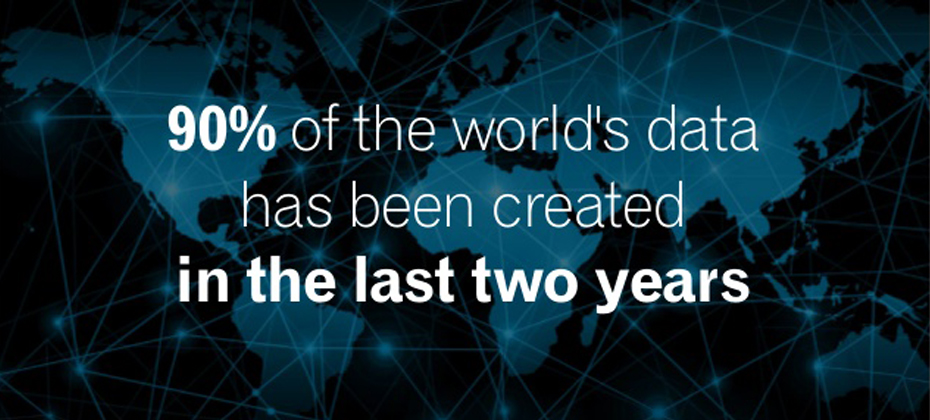
As Big Data becomes the norm in the credit industry and others, the seemingly non-stop efforts to accumulate more and more data leads me to ask the question - when is Big Data too much data? The answer doesn’t lie in the quantity of data itself, but rather in the application of it – Big Data is too much data when you can’t use it to make better decisions. So what do I mean by a better decision? From any number of perspectives, the answer to that question will vary. From the viewpoint of a marketer, maybe that decision is about whether new data will result in better response rates through improved segmentation. From a lender perspective, that decision might be about whether a borrower will repay a loan or the right interest rate to charge the borrower. That is one the points of the hype around Big Data – it is helping companies and individuals in all sorts of situations make better decisions – but regardless of the application, it appears that the science of Big Data must not just be based on an assumption that more data will always lead to better decisions, but that more data can lead to better decisions – if it is also the “right data”. Then how does one know when another new data source is helping? It’s not obvious that additional data won’t help make a better decision. It takes an expert to understand not only the data employed, but ultimately the use of the data in the decision-making process. It takes expertise that is not found just anywhere. At Experian, one of our core capabilities is based on the ability to distinguish between data that is predictive and can help our clients make better decisions, and that which is noise and is not helpful to our clients. Our scores and models, whether they be used for prospecting new customers, measuring risk in offering new credit, or determining how to best collect on an outstanding receivable, are all designed to optimize the decision making process. Learn more about our big data capabilities
Fraud management is an ongoing issue for businesses, especially when it comes to identifying likely fraudulent customers and delivering excellent customer service
Solving the regulatory compliance issue: In terms of best practice, it all really starts with the data, creating sound risk management strategies, and...

Increased volume of fraud attempts during back to school shopping season. Is your fraud strategy prepared to handle the increased volume?

Surveillance and fraud staging are the seemingly benign and often-transparent account activities that fraudsters undertake after an account has been compromised but before that compromise has been detected or money is moved.

Understanding shelf companies and shell companies In our world of business challenges with revenues level or trending down and business loans tougher than ever to get, “shelf” and “shell” companies continue to be an easy option for business opportunities. Shelf companies are defined as corporations formed in a low-tax, low-regulation state in order to be sold off for its excellent credit rating. Click on the internet and you will see a plethora of vendors selling companies in a turn-key business packages. Historically off-the-shelf structures were used to streamline a start-up, where an entrepreneur instantly owns a company that has been in business for several years without debt or liability. However, selling them as a way to get around credit guidelines is new, making them unethical and possibly illegal. Creating companies that impersonate a stable, well established companies in order to deceive creditors or suppliers in another way that criminals are using shelf companies for fraudulent use. Shell companies are characterized as fictitious entities created for the sole purpose of committing fraud. They often provide a convenient method for money laundering because they are easy and inexpensive to form and operate. These companies typically do not have a physical presence, although some may set up a storefront. According to the U.S. Department of the Treasury’s Financial Crimes Enforcement Network, shell companies may even purchase corporate office “service packages” or “executive meeting suites” in order to appear to have established a more significant local presence. These packages often include a state business license, a local street address, an office that is staffed during business hours, a conference room for initial meetings, a local telephone listing with a receptionist and 24-hour personalized voice mail. In one recent bust out fraud scenario, a shell company operated out of an office building and signed up for service with a voice over Internet protocol (VoIP) provider. While the VoIP provider typically conducts on-site visits to all new accounts, this step was skipped because the account was acquired through a channel partner. During months one and two, the account maintained normal usage patterns and invoices were paid promptly. In month three, the account’s international toll activity spiked, causing the provider to question the unusual account activity. The customer responded with a seemingly legitimate business explanation of activity and offered additional documentation. However, the following month the account contact and business disappeared, leaving the VoIP provider with a substantial five figure loss. A follow-up visit to the business showed a vacant office suite. While it’s unrealistic to think all shelf and shell companies can be identified, there are some tools that can help you verify businesses, identify repeat offenders, and minimize fraud losses. In the example mention above, post-loss account review through Experian’s BizID identified an obvious address discrepancy – 12 businesses all listed at the same address, suggesting that the perpetrator set up numerous businesses and victimized multiple organizations. It is possible to avoid being the next victim and refine and revisit your fraud best practices today. Learn more about Experian BizID and how to protect your business.