Financial Services

With a wave of HELOCs reaching the end-of-draw period, lenders are anxious to see how this will impact their portfolio. A new Experian study reveals likely consumer behaviors.

Bank executives don’t realize is they’re facing fraud because they’re literally inviting the fraudsters in bank branches.

Time heals countless things, including credit scores. Many of the seven million people who saw their VantageScore® credit scores drop to sub-prime levels after suffering a foreclosure or short sale during the Great Recession have recovered and are back in the housing market. These Boomerang Buyers — people who foreclosed or short sold between 2007 and 2014 and have opened a new mortgage — will be an important segment of the real estate market in the coming years. According to Experian data, through June 2016 roughly 800,000 people had boomeranged, with Los Angeles, Phoenix, and Sacramento housing the most buyers. Some analysts believe more than three million Americans will become eligible for a home over the next three years. Are potential Boomerang Buyers a great opportunity to boost market share or a high risk for a portfolio? Early trends are positive. The majority of Boomerang Buyers who opened mortgages between 2011 and June 2016 are current on their debts. An Experian study revealed more than 29 percent of those who short sold have boomeranged, and just 1.5 percent are delinquent on their mortgage —falling below the national average of 2.8 percent. This group is also ahead of or even with the national average for delinquency on auto loans (1.2 percent vs. the national average of 2.2 percent), bankcards (3 percent vs. 4.3 percent) and retail (even at 2.7 percent). For those Boomerang Buyers who had foreclosed, the numbers are also strong. More than 12 percent have boomeranged, with just 3 percent delinquent on their mortgage. They also match or are below national average delinquency rates on auto loans (1.9 percent) and bankcards (4.1 percent), and have a slightly higher delinquency rate for retail (3.5 percent). Due to their positive credit behaviors, Boomerang Buyers also have higher VantageScore® credit scores than before. On average, the overall non-boomerang group’s credit score sunk during a foreclosure but went up 10 percent higher than before the foreclosure, and Boomerang Buyers rose by nearly 14 percent. For people who previously had a prime credit score, their number dropped by nearly 5 percent, while those who boomeranged returned to the score they had prior to the foreclosure. By comparison, the overall non-boomerang and boomerang group saw their credit score drop during a short sale and increase more than 11 percent from before the short sale. For people who previously had prime credit, they dropped 2 percent while those who boomeranged were almost flat to where they were before the short sale. Another part of the equation is the stabilized housing market and relatively low loan-to-value (LTV) limits that lenders have maintained. In the past, borrowers most often strategically defaulted on their mortgages when their LTV ratios were well over 100 percent. So as long as lenders maintain relatively low LTV limits and the housing market remains strong, strategic default is unlikely to re-emerge as a risk.

Experian’s annual global fraud report reveals trends that can help organizations mitigate fraud and improve the customer experience

Experian estimates card-to-card consumer balance transfer activity to be between $35 and $40 billion a year, representing a sizeable opportunity for proactive lenders seeking to grow their revolving product line. This opportunity, however, is a threat for reactive lenders that only measure portfolio attrition instead of working to retain current customers. While billions of dollars are transferred every year, this activity represents only a small percentage of the total card population. And given the expense of direct marketing, lenders seeking to capitalize on and protect their portfolio from balance transfer activity must leverage data insights to make more informed decisions. Predicting a consumer’s future propensity to engage in card-to-card balance transfers starts with trended data. A credit score is a snapshot in time, but doesn’t reveal deep insights about a consumer’s past balance transfer activity. Lenders that rely only on current utilization will group large populations of balance revolvers into one bucket – and many of these individuals will have no intention of transferring to another product in the near future. Still, balance transfer activity can be identified and predicted by utilizing trended data. By analyzing the spend and payment data over time to see when one (or multiple) trade’s payment approximately matches another trade’s spend, we have the logic that suggests there has been a card-to-card transfer. What most people don’t realize is that trended data is difficult to work with. With 24 months of history on five fields, a single trade includes 120 data points. That’s 720 data points for a consumer with six trades on file and 72,000,000 for a file with 100,000 records, not to mention the other data fields in the file. It’s easy to see why even the most sophisticated organizations become paralyzed working with trended data. While teams of analysts get buried in the data, projects drag, costs swell, and eventually the world changes as rates climb and fall. By the time the analysis is complete, it must be recalibrated. But there is a solution. Experian has developed powerful predictions tools that combine past balance transfer history, historical transfer amounts, current trades carried and utilized, payments, and spend. Combined, these data fields can help identify consumers who are most likely to transfer a balance in the future. With Experian’s Balance Transfer Index the highest scoring 10 percent of consumers capture nearly 70 percent of total balance transfer dollars. Imagine the impact on ROI of reducing 90 percent of the marketing cost of your next balance transfer campaign and still reaching 70 percent of the balance transfer activity. Balance transfer activity represents a meaningful dollar opportunity for growth, but is concentrated in a small percentage of the population making predictive analytics key to success. Trended data is essential for identifying those opportunities, but financial institutions must assess their capabilities when it comes to managing the massive data attached. The good news is that regardless of financial institution size, solutions now exist to capture the analytics and provide meaningful and actionable insights to lenders of all sizes.
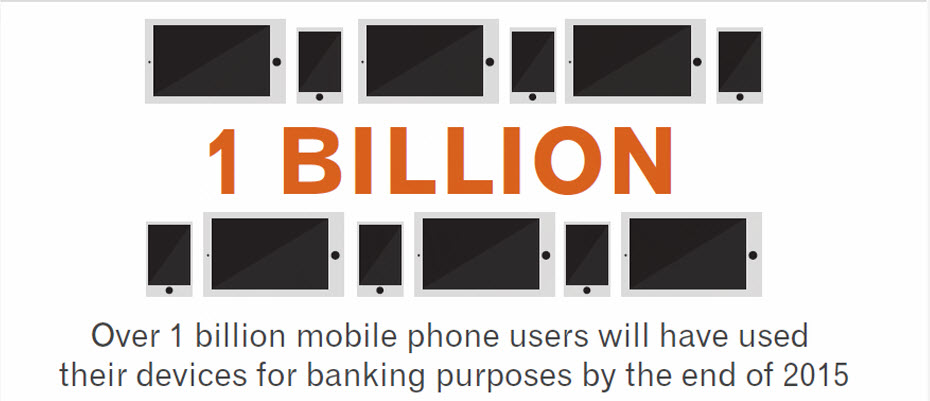
In an attempt to stay ahead of fraud, systems have become more complex, more expensive and more difficult to manage, leading to more customer friction

First annual global fraud report covering the convergence of growth strategies and fraud threats and prevention.

All customers are not created equal - at least when it comes to ability to pay. So what are the natural moments for a lender to assess?
Many fraud and compliance teams are struggling to keep pace with new business dynamics.

Financial health open doors for people, creating opportunities for credit, cars, homes and stability. So how can you get "healthy?"

In an attempt to stay ahead of the speed of fraud, systems have become more complex, more expensive and even more difficult to manage.

While organizations increasingly rely on data to make decisions, when it comes to data accuracy, too many wait to correct errors rather than implement proactive solutions.

Experian®, today announced that it has been included in Forrester’s 2016 “Vendor Landscape: Mobile Fraud Management Solutions” report

Definition of first-party versus third-party fraud trends and shared actual case study of a first-party fraud scheme.

As net interest margins tighten and commercial real estate concentrations begin to slowly creep back to 2008 levels, financial institutions should consider looking to their branch networks to drive earnings. Why wouldn’t you, right? The good news is branch networks can embrace that challenge by simply using some of the tools they already have access to – most notably the credit report. Credit reports are generally seen as a tool to assist financial institutions in assessing credit risk. However, if used properly, credit reports can provide a wealth of insight on selling opportunities as well. Typically when a customer’s credit report is pulled, the personal banker or customer service representative is primarily focused on whether or not a loan application is approved based on the institution’s approval parameters. Instead, what if a lender elected to view this customer interaction as an opportunity to deepen the relationship? So, here are three ways to utilize credit reports to generate earnings through retail loan growth: 1. Opportunities to Consolidate Debt Looking for debt consolidation opportunities is probably the simplest way to mine for opportunities. For example: Personal Banker: “It looks like you also have a card credit with XYZ and ABC Bank. Based on your application, we can consolidate both of those balances into one and give you a lower interest rate.” Be specific. Tell the customer exactly how much money per month they would be able to save and the benefits of consolidation. Not to mention, debt consolidation often reduces a lender’s credit risk and enhances customer loyalty, so this is a win for the institution as well. 2. Opportunities to Provide Additional Credit Another method would be to “soft pull” a segment of your portfolio to identify customers who qualify for larger credit card balances or refinance opportunities. This strategy is best executed at the portfolio management level, as insight is needed on the bank risk appetite and concentration levels. Layering on a basic prescreen helps qualify and segment your prospect list according to your unique credit criteria. You can also expand the universe with an Experian extract list, identifying new consumers who might be open to new offers. 3. Find Hidden Opportunities Credit scoring models are not perfect. There are times when a person’s credit score does not reflect an applicant’s true risk profile. For example, a person who was temporarily out of work may have missed two to three payments during that period. A deeper scan of the credit report during underwriting may reveal an opportunity to lend to a person rebounding from financial difficulties not yet reflected by their credit score. For example, this individual may have missed two credit card payments but hasn’t missed a mortgage or car payment in 20 years. A score is just one dimension to the story, but trended insights can shine a light on who best to lend to in the future. Conclusion: With the proper tools and training, your retail team can get more out of the basic credit report and find additional opportunities to deepen customer relationships while maintaining your desired risk profile. The credit report can be a workhorse for your team, so why not leverage it for more business. Note: The information above outlines several uses for a credit report. Separate credit reports are required for each use with the intended permissible purpose. Ancin Cooley is principal with Synergy Bank Consulting, a national credit risk management and strategic planning firm. Synergy provides a rangeof risk management services to financial institutions, which include loan reviews, IT audits, internal audits, and regulatory compliance reviews. As principal, Ancin manages a growing portfolio of clients throughout the United States.