Search Results for: ai
Loading...

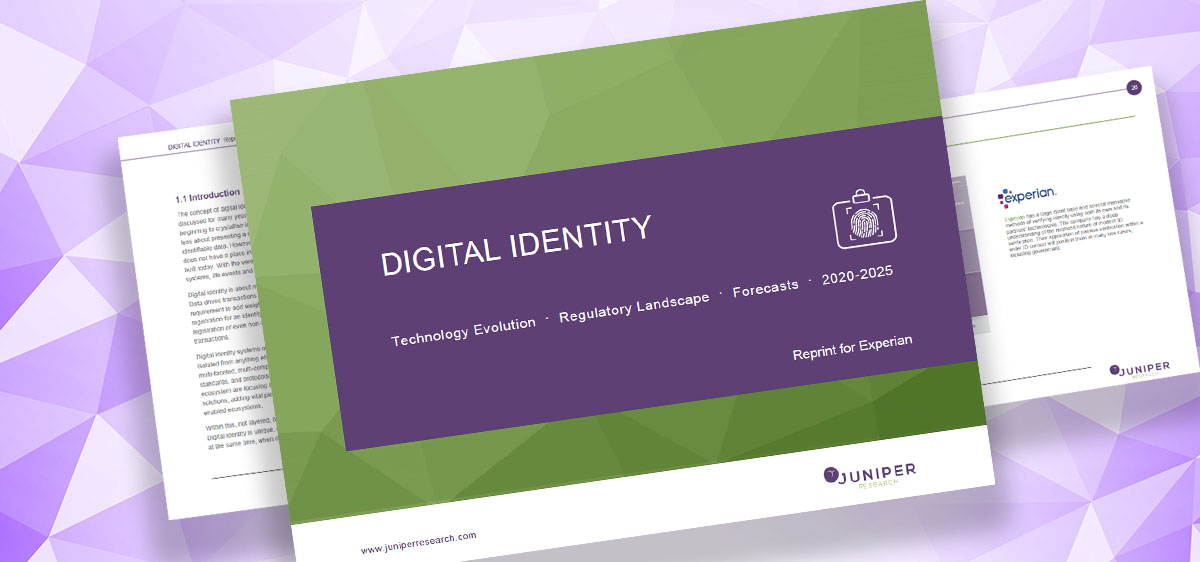
As the world witnessed, the Covid-19 pandemic led to a swift and dramatic digital explosion. As lockdowns began, our day-to-day quickly shifted to a virtual environment. Now, on the back of this widespread response, businesses are forced to rethink their customer engagement model. And, with new digital-first customer journeys, there must be a shift to recognize customers in a predominantly digital way as well. The concept of identity – even digital identity – must evolve. Digitally observable information Recently, I spoke with Juniper Research about this imperative. After analyzing the global digital identity market, they’ve offered insights on current dynamics and trends shaping its future in their Digital Identity Report 2020-2025. Importantly, as we progress digital identities, we must consider more than what a user might typically provide about themselves. We must include digitally observable information, which forms part of a consumer's digital identity. This data includes their device (what they use), and behavioral insights (how they use the device or interact with an app or website). It even includes the specific context of their efforts (what they are doing), such as signing up for an account, moving money, making a payment, virtual window shopping, etc. Related story: View digital identity market trends infographic Intelligent data processing Of course, pulling these kinds of observations together in a meaningful and useful way requires intelligent data processing. This need leads to the use of technologies such as advanced analytics and machine learning to help make sense of the broad streams of data. The double benefit of understanding how to use this aggregated data is that, given the transparent and passive nature of observing data of this nature, it can be used without requiring the consumer to "do" anything other than going about their business. So, businesses can achieve multiple benefits by adopting a forward-looking stance to identity, including reduced risk of fraud, improved customer experience, and stronger consumer/business relationships, which ultimately leads to increased top-line growth. Consumer privacy preferences Finally, to maintain consumer trust as we progress, it's important to acknowledge consumer privacy preferences. Given consumers' concerns around privacy and security, this is an important element within the path forward. Businesses that are transparent around the use of data have been shown to garner greater consumer trust than those that don't offer that transparency. So, any reimagining of digital identity must also have "privacy by design" as a foundation to the approach – not only to meet growing regulatory demands – but, more importantly, to manage consumer expectations. “[It’s] estimated that in 2024 over $43 billion will be lost due to online payment fraud. As we carry on into an unknown future, disrupted by the pandemic, this interwoven nature of identity-security-privacy will play a vital part in making sure our internet, workplace, government services, and banking are safe havens.” -Digital Identity Report 2020-2025, Juniper Research Learn more about: Importance of the evolution of digital identities, including the ability to manage and access the growing volume of online accounts. Advancement of the identity space occurring through the simplified transmission of information via APIs, but the challenge remaining to ensure data is valid, authentic, and from an authorized person. Government attempts at digital identities have faced many challenges, but these use cases continue to progress the development of the digital identity landscape. Benefits to fraud management through the adoption of digital identities can be tremendous – decreasing risk by decoupling identities from transactions, making them more secure from both ends. Usability is king – a good customer experience underlying the use of digital identities will be critical to adoption, and therefore success. Maturation of identity offerings is currently occurring and what’s likely to be successful includes solutions that simplify identity services and those that rely on broader ecosystems. Remote working changes the enterprise approach, with the adoption of Zero Trust Architectures and relevant supporting technologies continuing to emerge to create a safe, yet flexible working environment. The digital identity competitive landscape is evaluated, including vendor analysis and Juniper’s leaderboard. Related stories: Fraud trends during a very pandemic holiday Digital Identity and Blockchain: What lenders need to know Why consumer trust in the digital experience is so important in a pandemic era

Published: January 11, 2021 by David Britton, SVP of Strategy & Business Development

Check out the 10 most popular stories of 2020 that will help to kick-start your 2021. It includes a look back on how trends evolved throughout the past year, which trends will be durable in the new year, and what the global pandemic has taught us about creating meaningful relationships between consumers and businesses. Top 10 list of the best stories in 2020: 10. Model recalibration drives impactful results during constant change Banks have managed through stressed scenarios in the past but none have ever had to predict customer behavior in a pandemic. General indicators of risk or stress didn’t reveal enough about what was going on in customer portfolios. Active model calibration in our current situation had a measurable effect on approvals and expected losses but executives still needed to regain control over disrupted models. Read full article 9. Digitally managing your at-risk customers most impacted by Covid-19 Lenders felt a tremendous amount of pressure this year trying to help reduce the impact of the financial burden Covid-19 put on consumers by supporting payment forgiveness and deferment programs. This made it difficult, though, to understand changes in the credit profile of a previous solvent customer and mobilize their operations teams to service these good but at-risk customers. Read full article 8. The rising need for identity verification Consumers turned to digital when mass closures of businesses prevented in-person transactions. Even as some businesses re-opened with precautions in place, many consumers still felt it was safer to do business online emphasizing the importance of security and identity verification. But while some level of friction invokes a sense of security, too much or unnecessary friction had an adverse effect. Read full article 7. Proactively restructuring debt to help improve customer affordability At the beginning of the year, no one could accurately predict how the world would be impacted by Covid-19 or how long it would last. Customer affordability models shifted into unknown territory and businesses tried to figure out how to assess customer risk in this new context. Lenders relied on the customer data and insights available to them and needed them to work harder at anticipating changes. Read full article 6. Be mindful of these 3 strategies when engaging customers digitally The road to digital was already being paved when the pandemic started but consumers and businesses were pushed there to engage en masse this year. There were practical challenges that needed to be addressed in the short-term, like managing call volume with a remote workforce. But more importantly, it put the spotlight on massive areas in need of modernization, such as the management of liquidity and risk. Read full article 5. Banking trends and opportunities in the post-Covid-19 crisis era This year was marked by adaptation, resilience, and reflection – which can be said for our personal lives – but in the context of the banking industry, it created an opportunity to change or accelerate priorities. Moving operations to the cloud, making sure decision strategies are fit-for-purpose, and applying analytics in a more useful way are some of the stickier trends we’ll likely see continue in 2021. Read full article 4. Why consumer trust in the digital experience is so important in a pandemic era Despite the uncertainty of this past year, one thing remained certain – cultivating customer trust is critical to brand loyalty. Digital customer trust, however, required businesses to consider several specific factors that inform and build trust. Digital adoption was mistakenly considered the most important of those yet being treated fairly, customer recognition, and fraud prevention were stronger signals. Read full article 3. Game changers: Women in Artificial Intelligence Artificial intelligence offers a lot of value, especially when used to better support customers’ financial needs. As more businesses processed huge amounts of data with advanced analytics and AI this year, human oversight was key to ensure transparency and explainability. This “human element” was the inspiration for an article mini-series featuring five women who are making a real difference using AI innovation. Read full article 2. Digital transformation through cloud-first decisioning The credit and fraud risk decision management landscape changed this year – including how the customer journey is being redefined. Mounting consumer expectations for a better digital experience meant the front and back end of a business’ operations were no longer mutually exclusive. Cloud-based applications was the reset needed to move away from functional and product silos to focus on the customer. Read full article 1. Covid-19 as a gateway to fraud Fraudsters are opportunistic which exposed another ugly side of the pandemic throughout the year. As people and businesses moved to digital to engage with one another, criminals exposed weaknesses in the tools, processes, and systems used to protect those interactions. Investment in fraud prevention was already on the rise but steadily increased throughout the year as new fraud trends emerged. Read full article

Published: December 28, 2020 by Managing Editor, Experian Software Solutions

The rise of digital decisioning software enables organizations to scale a similar level of personalization, offering customers what they need at the exact right time. And organizations that do it well dramatically improve the customer experience and drive loyalty and revenue in the process. But realizing this promise takes the right tools. The most effective decisioning platforms include a powerful combination of data, analytics, and technology. Equally important, the software must allow non-technical users to update and change strategies to better meet customer and organization needs without burdening IT. Good versus great From a credit risk perspective, there's a vast difference between good decisions and really great decisions. For many organizations, the current status quo still involves decisions made in silos, with business groups sitting in different locations (now even more so, given the prevalence of work-from-home). Creating usable predictive models and then putting them to use can take weeks or even months. What's more, changing the model often requires that business users make requests of perpetually overloaded IT teams. To be sure, the process eventually yields decisions. However, from the customer's POV, they may be slightly irrelevant or feel less than personal. On the business side, the model may lack essential data from across the organization or not yet include critical factors in a rapidly changing landscape. A great decision, on the other hand, benefits the customer and organization alike. Robust analytics enable the decisioning process to reflect the most relevant customer data, from websites they've recently browsed to purchases they've made. The decisions, as a result, reflect that thoughtfulness. They're immediately useful and relevant to customers, putting forth guidance and products when customers need it most. Exponential organizational value Improved customer experience is a key objective for many organizations. Digital decisioning can help further that goal while also providing returns in multiple other ways. For instance, an advanced digital decisioning platform enables organizations to pivot quickly in the face of crisis. Organizations can add new data sources and explore new models in rapid fashion, tailoring them to immediate demands. In doing so, they not only improve predictive power, but they also produce better decisions. The process allows companies to discover and launch new products, reach new markets, and surface early signs of trouble within customer segments. This past year, we witnessed first-hand how organizations leveraged digital decisioning to deftly navigate a challenging environment. For instance, one of our customers, a large bank, used the software to run simulations of new strategies it was considering in response to the pandemic. In doing so, the bank gleaned a better understanding of how the plan would impact its portfolio. The company was also able to identify areas of overlapping services and take proactive measures to eliminate duplication and reduce expenses at a critical time. The cumulative result of improved digital decisioning is an increased ability for companies to differentiate themselves from the crowd. This is true across industries and verticals, from innovating consumer financing for automotive companies to helping healthcare organizations better manage patient debt. That secret sauce Like the friend that really gets you, a great decisioning platform is invaluable. But what makes a platform rise to the top? As noted above, the ability to incorporate and integrate lots of high-quality data is essential. Timely customer data helps identify customer trends and fuels more accurate predictions of future behavior. Platforms should also take regulatory obligations, business constraints, and changing risk factors into account. Solutions that leverage advanced analytics can then transform an ever-growing body of data into decision insights. The software should capture the data used in making those thousands or millions of decisions and make it available real-time to business users, creating a continuous feedback loop. The latter ensures that businesses can stay relevant and nimble. Notably, leading digital decisioning platforms also prioritize the business user along with IT expertise. At a moment that demands quick responses and near real-time solutions to customer needs, business users also need the ability to design, build, test, and deploy strategies. The democratization of the software ensures that the organizations can experience a digital decisioning platform's full potential. In this new era, the organizations that deliver value across the customer journey will be the ones that thrive. Digital decisioning empowers organizations to manage costs and risk while keeping the focus on the customer. They can do this even as they grow, building healthier, more responsive companies with customers at the core of every decision. Related stories: Cloud-based decision management is a must for re-imagining the customer journey Impact of technology on changing business operations Digitally managing your at-risk customers most impacted by Covid-19

Published: December 17, 2020 by Managing Editor, Experian Software Solutions

  The need for advanced technologies, such as artificial intelligence, has surged in the wake of Covid-19. The strain of the pandemic on businesses and economies has created tension in operational models requiring a quick and dramatic response to this digital disruption. As transformation efforts continue, there are several considerations for the growing field of AI – including ethical AI, the need for diversity and gender balance, and striving to be consciously unbiased. This final post in our “Game Changers: Women in AI” series takes a deep dive into AI careers. Our experts share important lessons on how to thrive, including having mentors and sponsors, staying relevant with new related skills, understanding problems to be solved, believing in yourself and actively seeking growth opportunities. New to the Game Changers: Women in AI series? Read Part 1 - Game Changers: Women in AI Read Part 2 - Game Changers: Women in AI   Q: What advice would you give to help other women in AI thrive? He: "I would suggest being brave. Don't be afraid of trying new things. Sometimes we fear we cannot do something, but once you try it you find it’s not very difficult, you can do it. You can do it very well. So, I think the first thing is just try it. Don’t be afraid of making mistakes. If you go this route, be confident. Women are very smart and competitive, but they may not recognize how good they are. Also, if you find that you may be interested in this area, find resources and see if this is something you want to dedicate yourself to. There are a lot of options online. Even a lot of the universities now offer their courses online. People also share code online, so there are lots of good resources to help you explore and start learning. Overall, remember to believe you can do it." Kazmi: "For everyone that wants to try AI, or if you’re already working here and want to remain in the industry and do good work, you have to keep yourself relevant — learning and keeping yourself updated with the newest research that's happening. There is no end to learning in this field. At the same time, you need to have business knowledge to truly understand a business problem statement and convert that to a data science problem statement, and then start developing solutions for it. I really think that women can be strong contributors in this regard by leveraging their management and analytical skills to bridge the gap between the two areas." Kung: "I think we all need to be ourselves and respect ourselves. You need to have a goal and work hard for it. I think it is the same for anyone who wants a successful career. You need to set a goal and work hard for it and you will achieve it. Really, it's all about working hard. Also, my experience in AI has included a lot of brilliant women, so I never really felt like this is a job for men vs. women. The truth is we want more people to understand what we are doing – that there are many great things we can do with data. It is not something to fear. It’s not this magical thing. It is statistics. It is computing. It's coding. It's everything good." Peters: "It's so important to reach out and look for both mentors and sponsors, and this can be at any age. Mentors are our sounding boards to help with career development. There's some overlap with sponsors, who are opening the doors and speaking about you on your behalf in order to accelerate the track to the next place that you want to be. Mentors and sponsors are good starting from a very young age – and I think that’s a critical aspect of bringing more women along. Find these folks, make those connections, nurture those relationships, and have those mentors and sponsors. I really think that's a key aspect. Also, women do not necessarily need their network to be all women. You need to find the best people positioned to help you in your journey." Stoddart: "Having a mentor is good, especially someone who's more senior in your target field. And, it doesn't necessarily have to be somebody who you're working with or somebody who's your boss. They can be from academia or a different company. It's nice to have the outside perspective. It’s also helpful to network – I’m using virtual events now. I’ve met a lot of women in data science through activities outside of my current role. There are so many opportunities beyond your day to day job. I try to have a few things going at once -- I'll mentor somebody, I'll have a side project or volunteering, and my full-time job as well. For example, for the social enterprise I'm working with, I'm getting experience forecasting. It's nice to give back, but it also makes you a stronger data scientist to work on these different projects." Q: Is there a person or experience you are grateful towards that helped set you on the path to where you are today? He: "First, after graduation, I got a job in transaction analytics, detecting fraud transactions in credit cards. Essentially, it has the same goal as other projects, understanding human behavior from large amounts of data. That's what amazed me and kind of drove me into this direction. After that, I got the job here at Experian and I was exposed to a lot of great innovations and projects." Kazmi: "In the eight and a half years I’ve been in the AI industry, I’ve had the opportunity to work with multiple organizations across different domains. Through this diverse experience, I’ve met and worked with women from different backgrounds both as leaders, as well as colleagues. I’ve seen successful women leaders from all walks of life – from different educational backgrounds, whether from computer science, engineering, mathematics, or economics management, et cetera, or even differing nationalities and ethnicities. It has been impactful to see successful women leaders cutting across industries and localities." Kung: "Professionally, the person that I'm grateful to is my first boss. He was a teacher for me and taught me a lot. Everything that I am today, everything that I do at work, professionally, he was who trained me for it. When I think of the professional Jennifer, I always think of him. I think in my whole career, everyone who was part of my path, they helped me somehow. Maybe in little ways, and maybe in some big ways, they all helped me." Peters: "There are so many people I am grateful to in my career. Overall, where I am today comes down to the opportunities I was given. I had the opportunity earlier on in a prior role to be exposed to big data and frameworks, an exciting precursor to my work with AI. Today, when I think about my work with fraud and identity, AI is such a critical piece of that. And it's becoming increasingly important as we apply these concepts into financial services. I’ve been able to join collaborative and innovative colleagues, fraud experts, in a unified quest to solve the fraud challenge." Stoddart: "I am grateful to the person who brought me into this department. He saw something in me, he understood that I really wanted to learn, and he created a position for me. They were not hiring for a data analyst at the time, so that was really energizing. Also, I don't look for positions that already exist, because if everybody applies for positions that exist, it’s limiting your scope. A lot of the things that I've obtained in my life, it's because I've been a bit brave and asked for it. Even if it's not there on a plate, here I am." Related stories: New Podcast from AI in Business: The evolution of the data business in the age of AI Game Changers: Women in AI (part 1) Game Changers: Women in AI (part 2) Yi He Yi He works as a data scientist in the Experian NA DataLab. She is dedicated to using machine learning and AI to extract information from large amounts of data to identify, understand and help people, and prevent fraud. She aims to bridge online and offline worlds by linking identity data from these unique sources. With a focus on minimizing friction to customers, Yi’s work helps organizations identify synthetic identities to avoid fraudulent applications. Recently, she contributed to a Covid Outlook & Response Evaluator (CORE) Model – a “heat map” of geographic populations across the U.S. most susceptible to severe cases of Covid-19. Deeba Kazmi In her role as a data scientist at the Experian APAC DataLab, Deeba Kazmi is focused on solving business problems with analytics, including the development of consumer and small to medium enterprise credit risk models that leverage alternative data. Deeba is passionately focused on leveraging AI to create solutions that can help address issues faced by developing markets. Most prominently, this work includes her data science leadership contributions to solving a crucial economic and societal problem – financial inclusion. This effort is helping disadvantaged socio-economic consumer groups gain access to vital credit and financial services by leveraging the power of technology to deliver better outcomes. Jennifer Kung Jennifer Kung is an analytics consultant for Serasa Experian Decision Analytics, where she combines her knowledge of financial services with her data analysis expertise. Jennifer aims to harness the power of data through robust, descriptive and predictive analytical solutions to help clients realize the benefits of the massive amounts of data available to them. She recognizes the magnificence in powering discoveries through data analysis and enjoys revealing these capabilities to businesses who can benefit from these robust, yet approachable solutions. Jennifer enjoys knowing that her work helps to simplify and accelerate decisions that consumers rely on at important times in their life. Kathleen Peters Kathleen Peters leads innovation and business strategy for Decision Analytics in North America. As the prior Head of North America Fraud & Identity business, Kathleen is well-recognized as an identity industry innovator, being named a “Top 100 Influencer in Identity” by One World Identity the last two years. As of 2020, Kathleen was named Chief Innovation Officer for Decision Analytics. Kathleen and her team rely on the power of AI to continuously find new ways to solve customer challenges by defining product strategies, new paths to market and investment priorities. Underlying these efforts is a key focus on the ethical use of technology and the need to be consciously unbiased. Laura Stoddart Laura Stoddart is a physicist turned data scientist who works at the Experian DataLab in London. From her first exposure to AI, she recognized how quickly it can have an impact on the world, which has driven her to get and stay involved in the industry – both professionally and personally. Laura’s recent work has focused on ethical AI, having recently contributed to her first paper addressing the removal of bias from models. In addition, she is concentrated on leveraging emerging datasets to evaluate risk. Outside the DataLab, Laura also volunteers her data science skills to good causes such as Bankuet and helps expose others to the world of AI through mentoring.

Published: December 16, 2020 by Managing Editor, Experian Software Solutions

In this episode of Insights in Action, we talk about currently available technology used in machine learning, including APIs, SaaS and IaaS. Businesses of all sizes can leverage these methods to build the right cloud ecosystem and accelerate their AI operations. Experian Global Decision Analytics experts Mark Spiteri, SVP of Software Engineering, and Srikanth Geedipalli, SVP of Analytics & AI Products, share practical advice to help businesses identify core capabilities needed to get MLOps right. Get useful insights about: Ways for businesses to leverage AI and machine learning to drive greater impact and ultimately improve the lives of consumers How to use AI and advanced analytics to help manage your business in the current marketplace Setting business goals and strategic plans to operationalize and deploy your machine learning models at scale The 4Cs of a successful MLOps framework Real-life examples of businesses set for success with MLOps Listen now: Related stories: New Tech Talks Daily Podcast: Machine learning and AI in business — investment trends pre- and post-pandemic Impact of technology on changing business operations Game changers: Women in artificial intelligence  

Published: December 15, 2020 by Managing Editor, Experian Software Solutions

In this episode of Insights in Action, Mark Spiteri, SVP of Software Engineering, and Mariyan Dichev, Manager of Software Engineering, cover what it takes to build award-winning technology teams. They explore the dynamics of their work and how the ability to automate the decision-making process alongside the customer journey has become paramount in today’s dynamic environment. Mark and Mariyan walk us through their own transformational journey to enable organizations of all sizes to gain direct access to advanced tools and actionable insights. They give background on Experian Global Decision Analytics Technology Team winning AIBEST's Project of the Year 2020 Award in recognition of the strides they have made to enable quick, accurate, and effective credit decisions. Some of the topics discussed in this 20-minute podcast: Practical advice to get industry recognition for outstanding information technology processes and results. How to navigate the IT talent crisis successfully. What IT executives should look for when hiring for their teams. Tips on identifying the right fit: 3 types of people every award-winning engineering and software development team needs. How to manage and grow high-performing technology teams.

Published: December 1, 2020 by Managing Editor, Experian Software Solutions

Explore these November headlines to stayin-the-know. Coverage includes forward-looking fraud prevention, International Fraud Awareness Week, and consumer and business research takeaways from our global experts. Fraud prevention strategies to prepare for the future Chris Ryan, Senior Fraud Solutions Consultant, provides tips on proactively combatting fraud risks to be positioned for success in a post-Covid-19 world — including categorizing fraud and using advanced analytics and technology to keep pace. #IFAW2020 Interview: David Britton, VP of Industry Solutions, Experian For International Fraud Awareness Week, David Britton, Vice President of Industry Solutions, speaks with Infosecurity Magazine about the current fraud landscape, common fraudster tactics, and best practices for preventing fraud. Only 30 seconds to impress — meeting APAC consumers’ online expectations Sisca Margaretta, Chief Marketing Officer for Experian Asia Pacific, explains why speed, seamlessness, and a thoughtful user experience are no longer nice-to-haves, but musts in today's environment. Pandemic entitlement: Consumers demand more online, Experian finds This MediaPost article explores business sentiment verse consumer expectations for their digital experience in the wake of Covid-19, with insights on how businesses can win from Steve Wagner, Global Managing Director of Decision Analytics. Are APAC banks equipped to help consumers in financial distress while juggling credit risk? Ben Elliot, CEO, Experian Asia Pacific, discusses the impact of Covid-19 on consumer financial wellbeing and spending power, and what the financial services and insurance industries can do to help those in financial distress while effectively managing credit risk. Stay in the know with our latest insights:

Published: November 30, 2020 by Managing Editor, Experian Software Solutions

Fraud rates have held steady throughout the year despite the move to digital, but a few factors could change that this holiday season bringing greater losses than those of Christmas past. Globally, we’ve seen a spike in digital traffic as a result of Covid-19 the past 6-9 months, with some countries like Brazil reporting a 200% increase in digital traffic to retail sites. This means some physical fraud controls, like EMV or chip-and-pin, are no longer relevant. The number of data breaches this year compromised more than 36 billion records, eclipsing history’s reported record total. This means more legitimate credentials have been stolen, sold, and/or being used to commit fraud. On top of that, many businesses may be starting to loosen their online security restrictions in order to take full advantage of the topline revenue that comes with the influx of holiday traffic. This is especially true for those who’ve struggled to stay in business during Covid-19, who will look to increased holiday spending to offset declines earlier in the year. Unfortunately, fraud at the holidays is difficult to detect and there can often be a significant lag until fraud is realized, in some cases up to 3-6-months. So how do businesses protect themselves while providing a secure place for customers to shop online this year, especially during big events like Black Friday and Cyber Monday, while still offering a convenient digital experience? Businesses will need a layered approach to fraud management, and it starts by knowing what to expect. Holiday fraud trends to watch: Payment behavior: Most consumers will do all their holiday shopping online which means card-not-present payment fraud will likely spike, as fraudsters hide in the increased volume of traffic. With the shift from physical to digital transactions, traditional fraud controls, like EMV or chip-and-pin which are effective at minimizing card-present fraud, simply are not available to protect digital transactions. Average order value also tends to increase during the holiday season, requiring retailers to establish higher value thresholds for each order, to avoid flagging legitimate orders for review. Shipping behavior: Generally shipping behavior at the holidays is different than the rest of the year. People buy gifts and ship directly to the recipient, which means fraud detection logic that matches billing and shipping addresses to the legitimate cardholder may cause more false positives than fraud detection. Chargeback fraud: Holiday gift-giving pressure or loss of household income can sometimes lead to chargeback or friendly fraud, where a person may purchase an item – typically entertainment services or devices – use it and then return it, with or without intent to pay. Or in some cases, purchase an item, then issue a chargeback claiming no knowledge of the purchase. In-account fraud: Many retailers are now requiring a customer to set-up an account when making a purchase to identify their behavior and track purchase history. Like we’ve seen in the banking industry, fraudsters will use stolen login credentials to gain access to these legitimate accounts, make purchases using a card on file, and set up a secondary shipping address to re-route the items. Mule behavior: A newer form of fraud that’s gaining traction is where a legitimate customer is recruited to use either their shipping address or in some cases, their validated account to make a transaction using stolen payment information, receive the package, and forward to the fraudster’s address. Sadly, these fraudsters are known as “mule herders” are exploiting desperate, out of work people by recruiting them to work on their behalf. In the financial services space, victims may knowingly or unknowingly use their own bank accounts, to allow fraudsters to funnel money from other stolen accounts as part of an elaborate wire transfer or P2P payments fraud schemes. Phishing: The accelerated digital traffic during the holidays presents fraudsters a great opportunity to get consumers to click on all sorts of “offers” or fake merchant websites and steal personal information. This increase in phishing can take place across all known channels – email, phone, social, text, and web – and is a trend we’ve seen attack businesses and consumers alike. Unfortunately, fraudsters are appallingly impersonating health organizations, setting up fake cleaning and healthcare supply stores, Covid-19 statistic maps, and websites, all in an attempt to lure victims into divulging sensitive data. Who does fraud hurt the most? Online fraud during the holidays hurts many players in the transactional relationship – the legitimate customer, the merchant, and the bank or payment provider – but merchants tend to bear the biggest burden. This is best illustrated by the dispute process.  When making a purchase, the main relationship is between the customer and the merchant. However, when a stolen credit card is used, or when a consumer has been a victim of account takeover fraud or some other fraudulent behavior, the person will dispute the charge directly with their bank or credit card company (card issuer). Card issuers and banks will either hold the charges back or reverse the financial transaction until a resolution can be met with the merchant. It then lies with the merchant to prove that the transaction was in fact legitimate, and to dispute that chargeback. The consequences of fraud for the merchant include multiple pain points: the cost of the stolen goods (and any shipping fees), the chargeback fee, potential fines by the merchant’s acquiring bank, and potential reputational challenges. Fraud prevention during the holidays The pandemic has already put an incredible amount of pressure on businesses and the rise in sophisticated fraud attacks may seem insurmountable.  Creating a secure and convenient experience for your customers is possible and there are strategies and tools that can be implemented. Tools to layer into your fraud strategy: Require (and check) signatures upon postal delivery Offer immediate email confirmation and tracking number information Use a wide variety of digital and transactional data to make optimal risk/trust decisions Adopt dynamic risk strategies where controls can be adjusted to match the threat level Leverage machine learning models to access a variety of niche solutions or data sources for accuracy If 2020 taught us anything, it’s flexibility and resilience – two words that should describe your approach to fraud management this holiday season. The holidays can be a time of great joy, and this year most people are hoping the holidays will lift their spirits. Don’t let fraudsters dampen those holiday spirits! Related stories: New research available: The continued impact of Covid-19 on consumer behaviors and business strategies  Better identifying your customers leads to greater trust How to get more from your existing credit risk and fraud risk technology

Published: November 25, 2020 by David Britton, SVP of Strategy & Business Development

It’s not a surprise that we have seen an increase in digital activity during the pandemic. Lockdowns, store closures, various restrictions, and social distancing measures have led more people to the digital channel. In the months to come, it’s likely we’ll see more consumers adopt the digital channels as the world is going through a second wave of the COVID-19 pandemic.  Many people have realized how convenient, safe, and fast it is to conduct their activities online. Our recent global research study shows some key numbers on how consumer behavior has changed over the past several months and what the expectations are for the months to come: Consumers are currently being driven more to use online activities, with 61% stating that they are ordering food or shopping for groceries online 36% of consumers conduct their personal banking activities online 34% purchase clothing, electronics, or beauty and wellness products online More than 2-in-5 consumers anticipate increased spending on items purchased online; both in the next 3-6 months (46%) and longer-term (45%) An increase in digital activity creates more opportunities for fraudsters The digital channel is here to stay, and more and more customers will be opening new accounts online as a result. This, however, creates some challenges for the institutions trying to onboard new customers as it also gives criminals many opportunities to legally enroll with an organization. The increased online activity raises the likelihood that fraudsters will be able to hide better inside genuine traffic. At the same time, it also presents them with a great chance to take advantage of synthetic identities that have been carefully put together over a long period of time and are harder to spot now that more activities are handled online. Furthermore, fraudsters are engaging in human farming attacks with the intent of impersonating their victims better and navigating through security measures that are set up to detect bots and automated attacks. This means that businesses need to make sure that they know who they are engaging with online: their customer or a fraudster. Pay close attention to how you handle consumer onboarding and customer authentication Identity verification is one key area that should be carefully considered by institutions and merchants. For a long time, it’s been perceived as a process that adds unnecessary friction and might drive customers away. However, new tools and capabilities have been introduced recently that make it a much smoother process.  It not only reduces friction but it speeds up the onboarding of new customers through extracting data from identity documents and pre-filling registration forms. What might be even more exciting is that it can be combined with passive methodologies such as behavioral biometrics and device intelligence. Behavioral biometrics can help distinguish between normal and fraudulent activity at the sign-up stage, while device intelligence can be used to screen new customers for multiple fraud indicators. On top of that, businesses also need to continuously authenticate customers, in order to make sure that the person behind the screen is the same one that registered with them in the first place. Consumers will expect that any such interaction will be smooth and fast without unnecessary friction added to their online experience, such as re-entering the same personal information again and again. Nearly 30% of global consumers are only willing to wait up to 30 seconds before abandoning an online transaction and only 35% are willing to wait more than 1 minute, especially when accessing their bank accounts. More than half of consumers will abandon their basket if they are made to wait in the excess of 1 minute for online groceries 62% of consumers say biometrics enhances their experience and improves their opinion of a business Orchestration platforms could solve multiple problems So, on one side are criminals, who are always looking for system or process vulnerabilities and will not hesitate to exploit them, while on the other side consumers will be looking for a smooth online experience without any interruptions. This all means that account opening and continuous authentication (or re-authentication) should be looked at very seriously. 57% of businesses expect to increase their fraud management budgets in the next 6 months – this is highest in India (76%) followed by the U.S. (69%) –  and supporting or upgrading their onboarding and screening capabilities is necessary. It’s likely, though, that organizations won't be able to solve these problems with a single solution which is why orchestration platforms are becoming so popular and valuable. These platforms offer multiple verification capabilities at the account opening stage as well as continuous authentication using device intelligence and behavioral biometrics, which is further enriched by a layer of advanced analytics, e.g. machine learning. So, while more than 30% of businesses are focused exclusively on activities to generate revenue (over fraud detection), we encourage prioritizing both during the pandemic so acquiring new, authentic customers online will lead to greater trust and lifetime value

Published: November 20, 2020 by Mihail Blagoev, Lead Global Solution Strategy Analyst

The artificial intelligence (AI) market is expected to grow 159% by 2025 to $190.61 Billion, according to Markets and Markets, and there’s considerable value for businesses and consumers. In our July global survey of businesses and consumers, we found that 60% of businesses planned to invest in advanced analytics and AI to better support their customers' financial needs during Covid-19. As more businesses adopt AI, processing their vast amounts of data with advanced analytics for automated decisions, human oversight is and will remain key to ensure transparency and explainability. This “human element” in AI was the inspiration for our latest “game changers” series. We recently sat down with five industry experts to get their view on how AI is making the world a better place, and how its use in financial services can be realized. Yi He, Deeba Kazmi, Jennifer Kung, Kathleen Peters, and Laura Stoddart are visionaries and leaders in data science and innovation making a real difference in how advanced technologies are helping consumers and businesses engage more meaningfully. Q: What excites you most about the AI Industry? He:  "As AI is more involved in our lives, it provides benefits we couldn’t imagine before – such as using your face to unlock your phone security. With the development of AI and machine learning, we can find patterns in data or in behaviors of people to solve complicated problems. That’s really it; helping people make life easier." Kazmi: "The main thing is that AI is not only transforming the way we live and communicate, it's changing the way almost every industry around the world is going to operate. To positively contribute to this growth, it’s not just that you need to learn and then deliver, but to keep innovating and coming up with new solutions that others learn from." Kung: "The technology improvement excites me. Things are getting easier, giving us more time to focus on what really matters. We usually don’t have time to focus on some of these areas because we are used to doing things manually. Now with AI, we have a machine to do a job that is manual, so we can focus on analysis and improvement." Peters: "What’s most exciting for me are ways AI technology can augment human decisions and innovation, in new directions that we historically run out of horsepower for. And, it can be applied to virtually every industry — the ways that it can better help us leverage big data, robotics, the Internet of Things — there are so many directions we can go with AI." Stoddart: "One of the most exciting things about AI is that people benefit from it every day — using social media, or maps to get to the shops, sometimes without even realizing it. And, if you can create an algorithm that can help somebody get credit who previously couldn't, you can have a real impact on the world that actually changes people's lives for the better." Q: What concerns you most about the AI industry? He: "I think the key things are data security and privacy protection. People are more and more sensitive about their information being used and released, which is understandable, and why opportunities exist to opt-out of information being used or sold to third parties. The key is to offer comfort by building in how to secure the data and protect privacy." Kazmi: "There are pros and cons of everything, especially with a stream of faster evolutions in prominent areas affecting our day-to-day lives. Since it’s still so innovative, when AI is introduced, there’s bound to be reluctance. But, to progress, we need acceptability, encouragement and patience; an understanding between AI research and stakeholders that these developments are going to bring huge positive change." Kung: "My main concern is that we need to keep in mind that AI is just a tool to help us. The machine will not replace humans and it cannot tell you what to do. An algorithm can give you a number based on its design. You need to analyze that result and ensure decisions make sense for your business." Peters: "The more we know and learn about AI, the better we can anticipate potential risk areas. These include the ethical aspects of technology, and striving to be consciously unbiased. As we progress, explainability and other model governance practices will help us stay within the right guardrails and mold the necessary regulations." Stoddart: "Lack of diversity concerns me – both in the boardroom and on the programming side. Decisions that we make in our programming are based on assumptions as human beings and our lived experience. If the people writing the code are not diverse, you’re missing out on whole groups of people in the wider society." Q: Can you share with us the “backstory” of how you decided to pursue this career path? He: "My educational background includes cognitive science, neuroscience, and psychology, and it involved a lot of data analysis and modeling. I wanted to understand how humans behave. In my first job, I did essentially the same work — understanding human behavior from large amounts of data — but to detect fraud. That amazed me and driving my focus today." Kazmi: "My education included subjects around analytics, and had a lot of flavor of data science, predictive modeling, mathematics and statistics. AI was very new at the time. I studied these topics and began to understand how data science is developing, and what's the future of it. I really got excited and interested into it. And once I started my career, there was no looking back." Kung: "As a child, I thought I wanted to be an engineer. Statistics was my second choice. But, I am really glad I had the opportunity to follow this path, because statistics and data analysis are amazing. When I started my course, I was so amazed at how data analysis can help you discover a world. You can do anything with data. I realized that this was my true passion." Peters: "I became interested in AI from the business aspects – working in a big data environment, we really needed machine learning and AI to handle data at scale. When joining Experian in the identity and fraud area, our mission was clear – harnessing the power of one of the largest data assets in the world to make a difference; finding new ways to stop fraud." Stoddart: "I studied physics at university and attained a master's in particle physics. But, during my final year, I started to learn about AI and machine learning. It was inspiring, especially how quickly they can have an impact on the world compared to academic research, which can be over many years. Realizing how quickly it was progressing, I thought it would be really exciting to get involved." Q: Can you tell our audience about the most interesting projects you’re working on now? He: "Recently, I’ve been working on use cases and projects surrounding identity. We have been working to link identity data from various sources – online and offline. Here at Experian, we have information from many sources, across different business areas. This project is providing a platform to link all this data together, which in the past was not very easy to accomplish. With this platform to provide linkages, it provides a 360-degree view of a person and helps provide conclusions such as whether two identities are the same person. To do this, we utilize machine learning techniques and AI. It’s very exciting." Kazmi: "I would like to mention something I'm very proud of, which has been a turning point in the way I look at data science solutions. I have the privilege of playing a prominent role in solving for a crucial economic and societal problem of the world, financial inclusion. This issue has historically blocked growth for financially weak and less established sections of society. I am leading data science as part of the initiative, exploring different sources of information beyond credit history, to increase access to financial products. This is the beauty of data science and how it helps us." Kung: "At Experian, I work in a consulting area, so I advise our customers and show them the power of data. Often, it’s not easy for a client to recognize this power. That’s our job – showing them how data can help their business or their decisions. We developed a credit decisioning model for one client using machine learning. This showed them how powerful it can be to use the data we make available to them. They were so amazed with the results. It was a really great experience." Peters: "The newest aspect of my role is leading innovation and strategy for decision analytics in North America. I am constantly on the watch for opportunities to incubate and try to apply Experian’s data and analytics and AI capabilities to solve new problems. We are looking at the role of identity and how we might apply capabilities in new ways. There is an expansion of needs, especially as the world evolves, and how we’re identified is evolving. So the application of Experian’s differentiated capabilities to new areas and markets is an area of focus of mine that I'm really excited about right now." Stoddart: "One of the most interesting projects I've worked on since joining the lab is around fairness of machine learning algorithms, decision-making. It’s about tackling the bias that can come when you use machine learning in a real world scenario. This happens when an algorithm is not being checked properly and it's discriminating against a certain group. To be part of building this vision about treating everybody fairly is great. Especially to be part of a company that values this effort and recognizes that it's going to be increasingly important going forward." Related stories: What is the right approach to AI and analytics for your business? Four fundamental considerations Maximizing impact from AI investment: 4 pillars of holistic AI Forbes: Are we comfortable with machines having the final say? Yi He Yi He works as a data scientist in the Experian NA DataLab. She is dedicated to using machine learning and AI to extract information from large amounts of data to identify, understand and help people, and prevent fraud. She aims to bridge online and offline worlds by linking identity data from these unique sources. With a focus on minimizing friction to customers, Yi’s work helps organizations identify synthetic identities to avoid fraudulent applications. Recently, she contributed to a Covid Outlook & Response Evaluator (CORE) Model – a “heat map” of geographic populations across the U.S. most susceptible to severe cases of Covid-19. Deeba Kazmi In her role as a data scientist at the Experian APAC DataLab, Deeba Kazmi is focused on solving business problems with analytics, including the development of consumer and small to medium enterprise credit risk models that leverage alternative data. Deeba is passionately focused on leveraging AI to create solutions that can help address issues faced by developing markets. Most prominently, this work includes her data science leadership contributions to solving a crucial economic and societal problem – financial inclusion. This effort is helping disadvantaged socio-economic consumer groups gain access to vital credit and financial services by leveraging the power of technology to deliver better outcomes. Jennifer Kung Jennifer Kung is an analytics consultant for Serasa Experian Decision Analytics, where she combines her knowledge of financial services with her data analysis expertise. Jennifer aims to harness the power of data through robust, descriptive and predictive analytical solutions to help clients realize the benefits of the massive amounts of data available to them. She recognizes the magnificence in powering discoveries through data analysis and enjoys revealing these capabilities to businesses who can benefit from these robust, yet approachable solutions. Jennifer enjoys knowing that her work helps to simplify and accelerate decisions that consumers rely on at important times in their life. Kathleen Peters Kathleen Peters leads innovation and business strategy for Decision Analytics in North America. As the prior Head of North America Fraud & Identity business, Kathleen is well-recognized as an identity industry innovator, being named a “Top 100 Influencer in Identity” by One World Identity the last two years. As of 2020, Kathleen was named Chief Innovation Officer for Decision Analytics. Kathleen and her team rely on the power of AI to continuously find new ways to solve customer challenges by defining product strategies, new paths to market and investment priorities. Underlying these efforts is a key focus on the ethical use of technology and the need to be consciously unbiased. Laura Stoddart Laura Stoddart is a physicist turned data scientist who works at the Experian DataLab in London. From her first exposure to AI, she recognized how quickly it can have an impact on the world, which has driven her to get and stay involved in the industry – both professionally and personally. Laura’s recent work has focused on ethical AI, having recently contributed to her first paper addressing the removal of bias from models. In addition, she is concentrated on leveraging emerging datasets to evaluate risk. Outside the DataLab, Laura also volunteers her data science skills to good causes such as Bankuet and helps expose others to the world of AI through mentoring.

Published: November 13, 2020 by Managing Editor, Experian Software Solutions

In the not so distant past, consumers mostly interacted with their banks in person. Retail customers, for instance, waited in line to make a deposit or talk to a banker. And though the branch may have been busy, a moving line gave comfort to customers that the wait wouldn't be much longer. However, customer expectations in the digital era are dramatically different. According to Experian's new research, one in three customers will abandon a transaction if they have to wait more than 30 seconds, especially when accessing bank accounts. And that's just the tip of the iceberg. When it comes to the digital experience, consumers increasingly want seamless service at every point of their journey. Now, as the Covid-19 crisis continues to accelerate digital demand, financial institutions face more and more customers with similar if not greater expectations. Expectations for things like personalized products, contextual lending decisions, and offline-online seamlessness. And those organizations that understand these evolving needs and deploy cloud-based decision management to ensure they meet them will likely be the winners in this new world. Right here, right now Banking digital transformation was already underway before the pandemic began. Most retail banks provided some customer-facing app. In efforts to automate and streamline business processes, many organizations have also started to migrate their backend infrastructure from on-premise software to the cloud. The pandemic, though, ramped up the demand for everything digital seemingly overnight. Consider that consumer adoption of mobile wallets has jumped 11% since July, largely due to increased contactless in-payments. In the height of the crisis, customers turned to online platforms for financial assistance, from federal loans and grants to mortgage relief and credit applications to small business loans. Businesses that had already migrated to cloud-based solutions were able to scale their response to meet that growth. But that those hadn't? They faced the combined challenge of needing to scale existing services to serve the influx of online customers while simultaneously adding new digital capabilities. As a result, some organizations have ended up playing catch up with their digital offerings. Experian research shows, though, that it's a race worth finishing. Sixty percent of customers say they have higher expectations of their digital experience now than they did before the pandemic. To be sure, the crisis will end. Those expectations, however, are here to stay. A glimpse of the future Banks may see fewer customers in person, but that doesn't mean their service can't be personal. The data analytics features of cloud-based decision management software allow businesses to know more about their customers, providing personalized offers and services right when customers need them most. One bank we work with in India provides an ideal example. They've leveraged deep analytics and decisioning solutions to accelerate their online loan approval process from days down to seconds. They're no longer turning people away who are good candidates for loans. And they've increased their lending without having to take on additional risk. It's a win-win that reveals how organizations can leverage technology to satisfy customer expectations during the height of a crisis and continue to in a post-Covid reality. With cloud-based solutions, organizations can become 100% customer-centric, both in convenience and personalization. The data gives financial institutions a holistic view of their customers, enabling them to anticipate needs and tailor solutions to the individual. Transformation and soon No organization is going to digitally transform overnight. But given the urgency of the demand, there are proven ways to improve their digital customer experience sooner rather than later. Small-to-mid-sized organizations, for instance, should consider out-of-the-box Software-as-a-Service (SaaS) solutions. These offer pre-determined, high-demand use cases such as online eligibility checks and customer acquisition tools. Organizations can modify these solutions to meet specific market needs while saving time on ramping up a fully custom solution. Additionally, even with the imperative to meet the digital demand, it's important to remember that proper planning leads to successful cloud migrations. Consider all the possibilities of what could go wrong and right in terms of incident management, customer service, links to data sources, and more. Rehearse your transition as much as feasible. The preparation may add a bit of time on the front end, but you'll decrease the likelihood of significant disruption when you do migrate and that's worth the effort. The march toward an increasingly digital customer experience only moves in one direction: forward. The pandemic may have pushed financial institutions to speed up their transition to cloud-based decision management, perhaps a bit earlier than some anticipated. But the outcome of a proactive, data-driven organization centered on serving customers promises to be better for everyone. Related stories: New research available: The continued impact of Covid-19 on consumer behaviors and business strategies  Automating fairness: Using analytics to help consumers in a pandemic era In digital transformation, small wins lead to big outcomes 

Published: November 12, 2020 by Chris Fletcher, SVP Decision Management & Cloud Services

Subscribe to our blog

Enter your name and email for the latest updates.

This site is protected by reCAPTCHA and the Google Privacy Policy and Terms of Service apply.