




Tech & Innovation

At Experian, we are continually innovating and using technology to find solutions to global issues, modernize the financial services industry and increase financial access for all.
Financial Empowerment

Our deep commitment to social and financial inclusion is reflected in our workplace culture, our partnerships and our efforts to break down the barriers to financial equity.
Financial Health

Our initiatives are dedicated to getting tools, resources and information to underserved communities so that consumers can best understand and improve their financial health.
Latest Posts:

Experian launches first smart plug-and-play fraud platform for companies to connect their solutions, Experian products and third-party vendors in one place

Small businesses serve as the engine of job creation for local communities, as well as the central hub for most innovation. So, it stands to reason that the financial health and growth of small businesses are of the upmost importance to all parties involved.

In this eCampusNews article by Eric Haller, Executive Vice President of Experian’s DataLabs, he discusses how the rising cost of college tuition against the backdrop of a challenging job market brings new meaning to the question “What do you want to be when you grow up?”

Experian, the global information services company, has identified five key factors currently making people and organisations more vulnerable to large-scale cyber fraud. Speaking at the renowned Merchant Risk Council EU Congress on May 19th in Seville, Spain, Experian’s Global Identity and Fraud Director, Hugh Steed, shared his insights with nearly 500 eCommerce fraud and payments professionals. A wealth of stolen data available to fraudsters. Wholesale data theft is one of the fastest growing crimes facing people and organisations today, with hundreds of millions of digital identities compromised every year. Fraudsters are increasingly targeting on-line credentials over previously preferred data, such as credit cards. The exponential growth of malware. After data breaches, malware is the criminal’s key method of obtaining digital identities. From mobile applications to traditional desktop platforms, malware manifests itself in many different forms and its volume is ever increasing. Fraudsters are targeting both end users and enterprises to acquire these valuable credentials for use in sophisticated frauds. The frequent username and password reuse by consumers. Experian’s research revealed that the majority of internet users consistently use a small set of usernames and passwords to secure multiple different accounts; including social media, email and online shopping sites. More specifically, people have on average up to 26 online accounts protected by only five different passwords. This greatly increases the risk that fraudsters can use data stolen from one source to successfully access other accounts held by the same user. An increase of multi-channel interaction between customers and business. People now have access to multiple digital and physical channels, enabling them to interact with businesses, manage accounts and make transactions. However, this diverse channel environment also facilitates the work of cyber criminals as each open channel is an opportunity to commit fraud and securing these channels is a significant challenge for enterprises. The trade-off between security and user experience. As companies consider the necessary steps required to increase online account security, they are conscious that they cannot risk adversely affecting the customer experience. Customers making transactions online today expect a seamless journey and are likely to be put off by onerous visible security procedures. Hugh commented: “Experian’s research shows that fraud today is often a complex cycle that starts with data theft and proceeds through a set of discrete staging points, ending with a fraudulent transaction. “Rather than being instantaneous, the fraud process can span weeks or even months often with different criminal organisations involved and data changing hands. However, the very nature of this cycle means that there are systems that can be implemented to detect and stop such fraud early and before it causes losses that are significant in scale. To put things into context, for a handful of our largest customers alone, we have helped them detect and prevent fraud worth over $500 million dollars.” Felipe Fernandez-Atela, President of Experian in Spain, said: “Protecting people and businesses from the threat of fraud is one of our main goals. In fact, companies using our fraud prevention solutions consistently outperform the industry benchmarks in areas such as ‘decline rates’ and ‘fraud rate by order’ – both of which are typically 15 times below the industry average. We have the expertise, both in our products, services and skills of our people to help ensure society is more protected against this type of crime.”
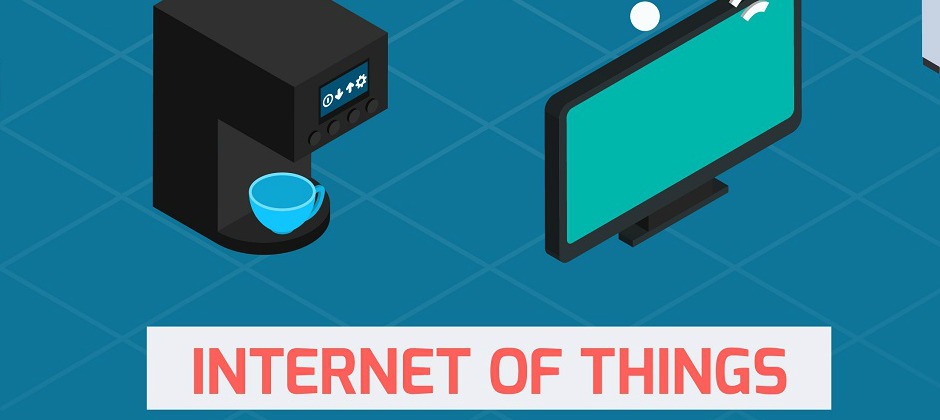
Experian’s global Fraud and Identity business provided tips for businesses and consumers to help prevent fraud from the security risks with IoT products

Experian DataLabs in North America and Gimbal, Inc., a leading mobile engagement and location intelligence solution, are working together on breakthrough data and advanced analytics experiments.

Emad Georgy, global CTO of Experian Marketing Services, explains how marketers can enhance customer journey to attain success in their business.

National Small Business Week is finally upon us, and we are proud to recognize the businesses that have had such a profound impact on the country, as well as our local communities. They truly are the heartbeat of the U.S. economy.

Headlines bemoan the lack of personal finance being taught in our schools. Most students will graduate with little to no education on personal finance basics. But, with Experian’s help, LifeSmarts is making a difference for students across the country. Together, we are helping students get on the right path to a lifetime of success by equipping them with the financial knowledge and consumer skills they need to make informed, responsible choices.

Experian Marketing Services, a recognized leader in data-driven marketing and cloud-based marketing technology, today unveiled an audience management platform that will change the way the advertising industry buys and measures media.

I’m pleased to share that Experian has taken another important step in the transformation of our Consumer Services business, having signed an agreement to acquire CSIdentity Corporation (CSID).

On Tuesday, Experian held a press conference and ribbon cutting ceremony with San Diego Mayor, Kevin Faulconer to announce and celebrate the expansion of the data and innovation lab in North America.