Financial Education
One of the largest barriers to financial inclusion is a lack of financial education. Experian is changing that. Our partnerships and initiatives are dedicated to getting the proper tools, resources and information to underserved communities so that consumers can best understand and improve their financial health. Read about our financial education news below:

In 2012, employees across Experian’s Turkish office began a program to promote financial awareness and education for young people ages 18-30, which we called the Manage Your Future Now Project. For young people pursuing higher education in universities, financial literacy is a required life skill, especially since many depend on educational loans and credit cards to pay for their education. Bad loan management resulting in a poor credit score can hurt the financial future of these students. We found that most local universities lack the human resources necessary to train students on the topic. We decided that the best way to promote financial literacy was through a peer education model. Using this model, we would train volunteers to help their fellow students calculate their credit risk, manage their budget and understand the long-lasting effects of bad credit. We partnered with the Turkish Credit Bureau, the United Nations Development Program (UNDP) and the Happy Thought organization to launch the program. With our partners, we provide a two-day training session for student volunteers in Istanbul. We give our volunteers the resources and tools they need to train others on financial risk, while also training them on how to present the same materials to others. These volunteers then go back to their local communities to train their peers through one-on-one sessions, or – if they generate enough interest at a university – organize a conference where they invite Experian experts to share their knowledge with a group of 100 or more students and faculty. The Manage Your Future Now Project has become a leading contributor in improving the financial skills and knowledge of young people and improving the financial literacy rate throughout Turkey. Since we began the program, we’ve reached more than 8,500 people and offered more than 100 training courses at universities, carried out by our growing number of volunteers. For me, the most rewarding part of this project is helping inspire and equip these students. I recently traveled to a university in Turkey as a speaker, giving a financial literacy conference to about 200 people. After I taught them about their credit scores and ways to secure their financial futures, one of the students came up to me, telling me how passionate he was about financial education and how eager he was to become a peer volunteer with the Manage Your Future Now Project. Our team at Experian was able to help convince his family to let him join the program so he could attend a training session and become a speaker in that city. To date, he has met with and educated more than 100 fellow students, guiding them through the program’s tools. Understanding how finance works has a huge impact on people’s daily lives, because it’s relevant for both their present and future welfare. It’s amazing to see year after year how we are helping change people’s lives in Turkey, by opening new doors for them as they understand how to manage credit.

Spring clean your credit during Financial Literacy Month with our finances in order. #FLM2017 is dedicated to teaching Americans healthy credit habits.

Experian celebrates Financial Literacy Month each year to enrich financial education in America and why we have a dedicated team educating consumers.

By volunteering through Experian’s Sohos Reais – Real Dreams – project, I taught a mother of five about understanding basic business concepts so she could expand her sewing business and keep pursuing her dream. I grew up with parents who loved helping others, which fostered my love for volunteerism. Now that I work at Experian, this passion has blossomed as I’ve volunteered in many different capacities, from dressing as a clown to cheer up people in hospitals, to helping teach financial literacy to small-business owners in São Paulo, Brazil. Experian’s Sohos Reais – Real Dreams – program is designed to help connect entrepreneurs and small-business owners with experts who can advise them on how to help their business succeed. My volunteer partner, Diana, and I went through the training together, and a few months later were contacted by Aliança Empreendedora – Experian’s project partner – to help support a local entrepreneur. We were sent information about a woman named Adriana who was looking for advice for her sewing business. When we first met at Adriana’s house, she welcomed us into her home, fed us toast and black coffee, and introduced us to her five children. Adriana is a single mom whose husband left her after becoming a drug dealer. She told us how he had stopped supporting her and the children financially, and how Adriana now relied on her sewing business to support herself and the children – two of whom had serious health issues. Creating this business had been her dream since she was 12, when she had made her first dress for a school party. Now, she sewed colorful shopping bags and purses every day that she sold for R$1.25 a piece – a tiny price compared with the amount of work it took her to produce them. While she loved her job, Adriana told us that the money she made from her sales barely allowed her to cover basic living expenses, like water and electricity. She was on the brink of giving up her dream. The more we talked with Adriana, the more Diana and I realized that what she needed most was someone to help her understand basic business concepts, like cost and revenue. I thought that if we could help her control the money going out, we could solve a lot of her problems. Adriana was eager to learn, so right then and there, I showed her how, by keeping track of costs and profits, she could pay her bills and start to save money for her family. After our first meeting, a group of us from Experian were so inspired by her story that we raised R$1,415 for Adriana to buy fabric for her bags, and gave her a book to help her track her finances. Now every time we meet, Adriana brings the book with her, full of notes – she says it helps her work out her profit from the bags she sells so she knows how much more fabric she can buy. I never imagined that just sharing my financial knowledge with someone could help change their life. By volunteering with Real Dreams, Diana and I helped Adriana get back on her feet and continue pursuing her dream as a small-business owner and provider for her family.

Experian donates Intelliview data to InCharge Debt Solutions to help consumers repay debt and increase their financial literacy to achieve greater success.

The benefits of financial education are clear — higher economic growth, lower poverty rates and greater consumer confidence. This is why we put education as a top priority.

Serasa today launches a new service that allows Brazilian consumers to check their credit reports online for free. By visiting serasaconsumidor.com.br or by downloading the SerasaConsumidor App on Google Play or iTunes, consumers can check if they are delinquent, what led them to this status and whether it relates to bank, credit card, financial, retail, utilities, protested securities, checks without funds or lawsuits checks. Consumers will also have information about lenders, such as telephones, address, email and website as well as the value of the debt and repayment date for the delayed debt. Additionally, the consumer can renegotiate the debt directly, without intermediaries, if the company is a partner of Serasa’s free service Limpa Nome Online. People can make a free online inquiry as often as they would like. To participate in the free online program, consumers must access serasaconsumidor.com.br and fill out a registration or enter an email address and password if already registered. The service is also available on mobile Apps Android and iOS. To properly verify the user accessing the information in Serasa, after the registration, the consumer must go through an authentication process. One of the steps is to enter the mobile number and confirm the validation code received via SMS. This validation is required only on the first access. For the director of SerasaConsumidor, Fernanda Monnerat, this new service presents the opportunity for consumers to easily and safely check the existence debts in a single digital environment. "It's another tool that we provide to Brazilians so they can have access to services that make possible, above all, their financial citizenship and ability to build a more sustainable relationship with the credit. Therefore, we reaffirm once again the commitment of Serasa with the consumer,” said Monnerat. Among other free services available on the SerasaConsumidor website, consumers can opt-in to the positive data initiative, which gathers information on the consumer’s payment history, measures their payment timeliness of debts and evaluates the risk of debt distress. Through the program, it is also possible to make a document alert and stolen checks alert. Free registration in Serasa helps to reduce risk of fraud and to avoid the challenges of having personal information used by scammers. Also on the website, users will find guidelines and tests on financial education on the newly launched page www.serasaconsumidor.com.br/organizar-financas.
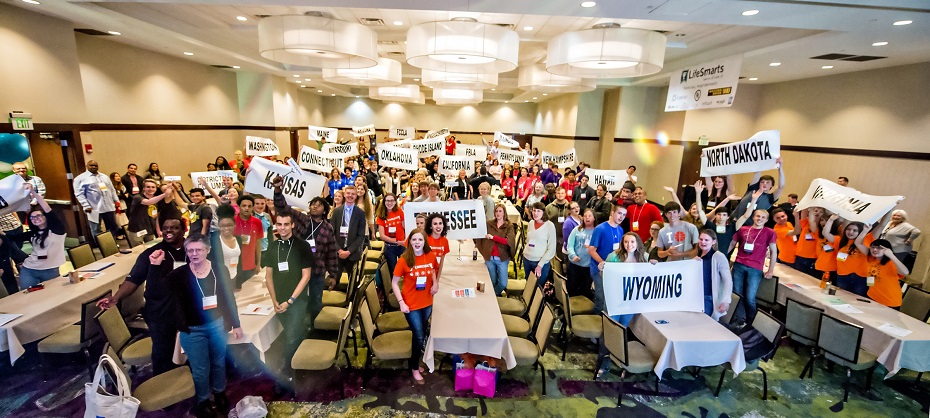
Headlines bemoan the lack of personal finance being taught in our schools. Most students will graduate with little to no education on personal finance basics. But, with Experian’s help, LifeSmarts is making a difference for students across the country. Together, we are helping students get on the right path to a lifetime of success by equipping them with the financial knowledge and consumer skills they need to make informed, responsible choices.
 Small Business Saturday is just around the corner, and as it approaches there are a growing number of advertising campaigns encouraging consumers to forego the big box retailers in favor of shopping local.
As a supporter of my own neighborhood small businesses, I can appreciate the effort. After all, the success of small businesses is what really drives our economy forward. Not only do they provide employment opportunities for those in the community, but small businesses often bring a level of innovation and can stimulate growth.
Small Business Saturday is just around the corner, and as it approaches there are a growing number of advertising campaigns encouraging consumers to forego the big box retailers in favor of shopping local.
As a supporter of my own neighborhood small businesses, I can appreciate the effort. After all, the success of small businesses is what really drives our economy forward. Not only do they provide employment opportunities for those in the community, but small businesses often bring a level of innovation and can stimulate growth.