
All posts by Abigail Lovell

At Experian, our mission is to bring financial power to all. That means breaking down traditional boundaries, creating pathways for those historically left out of the financial system, and working alongside organizations that share our commitment to inclusion. Credit Builders Alliance (CBA) is one of those partners. For years, CBA has connected community-based nonprofits with the major credit reporting agencies, helping credit-challenged consumers to build or rebuild credit – often for the first time. Our latest analysis done in partnership with CBA shows just how transformative this work can be. From unscored consumers reaching prime tiers to deep-subprime consumers seeing meaningful improvements, the data underscores a truth CBA has championed from the beginning: when people are given the opportunity to build credit, they use it to move forward. I recently had the opportunity to sit down with Dara Duguay, CEO of Credit Builders Alliance, to discuss these findings, the work her organization leads, and what’s needed to continue expanding access to fair, affordable credit for underserved communities. Q1: For those who may be unfamiliar, what is Credit Builders Alliance? Who do you serve and what role do you play in the financial ecosystem? Dara:Credit Builders Alliance is a national nonprofit network made up of community-based organizations, nonprofit lenders, and financial capability providers. Our mission is to help low- and moderate-income individuals and families build credit as an asset and gain access to the financial mainstream. We help nonprofits report loan repayment data to credit bureaus like Experian and we support organizations in strengthening their credit-building programs with training, tools, and technical assistance. Many of the consumers our member organizations serve start out with limited or no access to traditional financial products. Our work helps create pathways for them to demonstrate trustworthiness, build credit, and eventually qualify for mainstream financial opportunities. Q2: Experian recently released an analysis highlighting the impact of CBA tradelines on consumer creditworthiness. What stood out to you in the findings? Dara:The data was incredibly affirming. Seeing that 70% of previously unscored consumers with a CBA tradeline reached prime or near-prime within a year highlights just how powerful inclusive credit reporting can be. It shows that when people with limited credit histories are given the opportunity to demonstrate responsible repayment, they make enormous progress. I was also encouraged by the 48-point average increase among deep subprime consumers. These gains can dramatically change someone’s financial trajectory through lower borrowing costs, access to better financial products, and more stability for their families. More broadly, this analysis reinforces what we see daily: thoughtful credit-building programs, when paired with education and support, create real and lasting change for consumers who need it most. It shows subprime consumers can perform when given the opportunities that they are often denied. Q3: From CBA’s perspective, what approaches best help financial institutions better serve underserved consumers? Dara:A major opportunity is for financial institutions to embrace alternative data that reflects consumers’ real financial lives. Data plays such a vital role in lending decisions and expanding access to fair and affordable resources; we have to modernize our approach. Many people pay their rent, utilities, and telecom bills on time every month, yet historically these payments haven’t counted toward building credit. We’ve seen incredible momentum around rent reporting, and the impact is significant –especially for people with thin or nonexistent credit histories. Rent is often a person’s largest monthly expense, and when that positive payment history is reported, it can quickly establish or improve credit. This progress has become even more meaningful with the Federal Housing Finance Agency’s approval of VantageScore 4.0 for use in mortgage underwriting. Because VantageScore 4.0 incorporates rental payment data where available, these reporting efforts can now play a more direct role in expanding fair access to homeownership for consumers who have historically been left out. In addition, programs like Experian Boost show how empowering it can be when consumers have agency over the information included in their credit files. This feature allows people to get credit for utility, telecom, streaming, rent payments and many other things they are already doing responsibly. It’s a great example of meeting consumers where they are and acknowledging financial behaviors that have historically gone unrecognized. Financial institutions should continue looking for ways to bring these types of innovations to more consumers, especially those overlooked by traditional models. Q4: From your view, how do companies like Experian help advance financial inclusion? Dara:Experian plays an essential leadership role in expanding access to credit, especially through initiatives that rethink how data can work for consumers rather than against them. They’ve been a leader in modernizing the credit reporting industry. Programs like Experian Boost are great examples of that—giving consumers the option to add positive payment information and potentially improve their credit in a matter of minutes. It’s a simple concept, but it has opened doors for millions of people who previously struggled to gain traction in the system. Similarly, Experian’s commitment to supporting rent reporting has been a major step forward. The ability for tenants to build credit through their rent payments, which is one of the most consistent household expenses, helps create equity for people who might not have access to traditional credit-building products. And on a broader level, Experian’s willingness to partner with mission-driven organizations like CBA demonstrates a shared belief that credit is a gateway to opportunity. With analytical insights like our most recent study, Experian is helping validate the importance of inclusive reporting and informing the industry about the real-world benefits for underserved communities. Q5: What misconceptions do you see about credit-challenged consumers, and what should the financial industry understand? Dara:One of the biggest misconceptions is that people with limited or poor credit histories lack financial discipline. In reality, many of them pay significant bills, including rent, utilities, childcare and more, on time every month but simply don’t receive credit for it in the traditional scoring system. Another misconception is that credit building loans or other community-based nonprofit lender products don’t make enough of a difference to report. But as this analysis shows, they absolutely do. Even a single tradeline can serve as a bridge toward greater financial stability. The industry should recognize that credit-building is a foundational tool for economic mobility, and millions of people need better access to programs that support it. My conversation with Dara reinforces what makes Credit Builders Alliance an essential component of the financial ecosystem: their work is grounded in equity, powered by community, and focused on creating lasting pathways to economic mobility. At Experian, we are proud to stand alongside CBA as a partner in expanding inclusive credit reporting, advancing responsible use of alternative data, and ensuring consumers have more control and visibility over their financial futures. The insights from our collaborative analysis make one thing clear: when people are given the chance to demonstrate their financial capabilities, they do. And together, we can make that chance available to millions more. If you’re interested in learning more about Credit Builders Alliance, their mission, and the powerful work they’re leading to expand financial opportunity, I encourage you to visit creditbuildersalliance.org. Whether you represent a nonprofit, a financial institution, or simply want to understand how credit-building strengthens communities, CBA offers resources, tools, and programs that make a meaningful difference. Together, we can continue to open doors, unlock potential, and bring financial power to all.

As COP30—the world’s largest UN climate summit—wraps up in Belém, Brazil, the global community is focused on turning commitments into action. At Experian, climate action is not just about reducing emissions. It’s about creating a fair and inclusive opportunities that benefit everyone. We’re using data and innovation to make that vision a reality, and this global summit is an important platform to share and accelerate this work. An area we’re particularly excited about is inclusive economic growth, in other words, creating opportunities for everyone to prosper while protecting the planet. For example, we’re seeing great progress in our agribusiness sector, where Experian is helping small producers access affordable credit through responsible, tech-enabled financial inclusion. This is sustainability in action, where climate resilience and social impact go hand in hand. Experian has also officially launched our Net Zero Transition Plan, detailing how we’re reducing emissions across our operations and supply chain while supporting a fair and inclusive transition. Here’s how we’re tracking: Operations: Progressing toward our target to cut Scope 1 and 2 emissions, meaning, those we generate directly such as fuel we burn on-site or in company vehicles, and energy we purchase to power our operations, by 50% by 2030 (a baseline we set in 2019), reaching 84% reduction in the first half of our 2026 fiscal year. Supply Chain: Advancing our Scope 3 goal to have 78% of suppliers adopt science-based targets by 2029, with coverage in the first half of our 2026 fiscal year, reaching 38%. These milestones reflect our award winning commitment to climate leadership and transparency. COP30 is about implementation, emphasizing collaboration and action. Experian’s participation reinforces our commitment to harness the power of data as a catalyst for climate solutions. From enabling businesses to measure and manage emissions to unlocking financial inclusion for communities most vulnerable to climate impacts, Experian is creating pathways for growth that are future-ready.

We all have a role to play in protecting our planet. At Experian, we believe that when businesses lead with purpose, we can drive meaningful change—together. That’s why we’re proud to share we’ve earned a trio of honors reflecting our commitment to reducing our environmental impact and building a more sustainable future: the Financial Times Europe’s Climate Leaders 2025, Newsweek’s World’s Greenest Companies 2025 and TIME World’s Most Sustainable Companies 2025 lists. These recognitions reflect our commitment to reducing our environmental impact and building a more sustainable future. Since 2019, we’ve reduced our Scope 1 and 2 emissions by 82%, meaning, those we generate directly such as fuel we burn on-site or in company vehicles, and energy we purchase to power our operations. Since 2024, we cut emissions by 30% and 87% of our electricity comes from renewable sources. We’re also making progress across indirect sources of emissions: 32% of our suppliers now have science-based targets in place, with another 13% committed to reducing their emissions. Our method of gathering data about suppliers is best in class; we use a hybrid approach that combines spend data with data gathered directly from suppliers to calculate our emissions from purchased goods and services. This is our second year appearing on the TIME list. The Financial Times list highlights companies making the greatest strides in emissions intensity reduction, while Newsweek’s global ranking—based on over 25 environmental metrics—recognizes leadership in emissions, water, waste, and transparency. We’ve set ambitious, science-based targets because we believe in accountability, transparency, and the power of collective action. By focusing on these priorities, we grow our customers, our partnerships and our revenue. That is doing well by doing good and making our business resilient for generations to come.

Modernizing the conversation around credit and financial literacy is a key commitment for Experian, especially for young adults. That’s why we partner with organizations like the Singleton Foundation to produce “Your World on Money,” to meet young people where they are, with engaging, easy-to-understand video shorts about credit, budgeting, and saving and more. We’re thrilled this commitment and creativity has earned both Gold and Bronze Anthem Awards, which recognize excellence in social good, celebrate the impactful work of organizations and initiatives that are driving positive change. Financial literacy is often not taught in schools, and the language around credit and personal finance can be intimidating. By normalizing these conversations, we hope to inspire confidence and action, helping young adults make informed financial decisions as they navigate life’s milestones. Our United for Financial Health partnership with the Singleton Foundation continues with our new series, the Finance Couch, where college students join our experts on a coach in the middle of a Los Angeles campus to answer their money questions. And our Anthem Award-winning series, HeartBroke, helps couples whose relationships are tested with financial issues to determine if they can work through it or end up HeartBroke(n).
We are thrilled to announce that Experian has been named to TIME Magazine’s inaugural "World’s Most Sustainable Companies 2024" list, a testament to our ongoing commitment to environmental stewardship and sustainability leadership. This award is granted on a comprehensive research study conducted by Statista to identify the most sustainable companies across the globe, recognizing companies that are committed to preserving the planet and ensuring future generations inherit a world rich in natural beauty and resources. Experian achieved significant milestones in our sustainability journey in just the past year alone: Our renewable energy usage increased from 62% to an impressive 75%, marking a substantial step towards our goal of maximizing sustainable energy sources. We reduced our overall energy consumption by 19%, contributing to a remarkable 75% reduction, putting us well ahead of schedule in achieving our ambitious goal of a 50% reduction in direct emissions by 2030. As our business has grown, Experian has managed to decrease the carbon intensity of our direct emissions by an impressive 35%. This achievement underscores our dedication to operational efficiency and sustainable practices across our global operations. Looking beyond our direct impact, Experian has committed to working with suppliers that also adopt science-based targets by 2029, demonstrating our influence in driving sustainability throughout our supply chain. At Experian, sustainability is not just a corporate responsibility but a core part of our business strategy. We are dedicated to advancing environmental sustainability, driving positive change in our industry, and contributing to a healthier planet for future generations. As we continue on our journey to Net Zero, we remain committed to setting new benchmarks and leading by example in corporate sustainability. For more information on our sustainability initiatives and progress, click here.
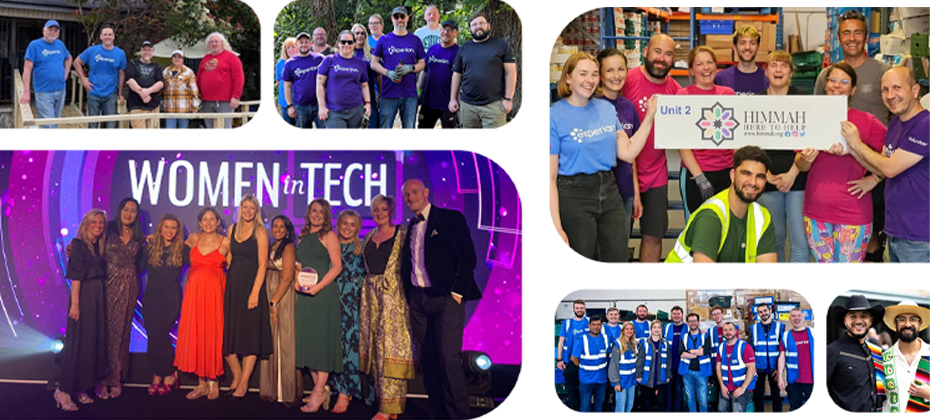
Making a real difference in the world starts with embracing Diversity, Equity, and Inclusion (DEI) and accelerating social impact. It's not just the right thing to do, but it's also key to our mission of creating a better tomorrow, together. DEI isn't just a buzzword for us; it's at the heart of everything we do. Whether it's in our sustainability strategy or our day-to-day operations, we're committed to driving positive social impact and closing the financial wealth gap in underserved communities. It starts with our people. We’re proud to share their dedication and work in this year’s Experian Power of YOU Report 2024: Driving social impact and diversity, equity and inclusion in English, Portuguese and Spanish. Within these pages, you’ll see how we foster belonging with our teammates, and champion DEI beyond the walls of Experian. From developing products like Experian Smart Money to expanding Experian Boost in the United Kingdom, and launching Advance XScore in Peru, we're dedicated to making a difference in the world around us. To that end, you’ll see we’ve also included, for the first time, our new Positive Social Impact Framework, which will reinforce and help our clients, consumers and employees further understand how we are making a difference in our communities. At Experian, we strive to build a brighter, more inclusive future – for our employees, our clients, and our communities. Together, we can make a real difference.

We often say creating a better tomorrow isn’t just a slogan, it’s our goal. From our talent recruiting to our products and services, we want to play a positive role in your financial future. That desired impact extends to the work we do in the communities in which we live work and serve. That’s why our recent honor from the 2024 Anthem Awards is so exciting. Created in 2021 by The Webby Awards, The Anthem Awards honors the purpose and mission-driven work of people, companies and organizations worldwide. We are thrilled that our modern and more relatable approach to financial health has been honored with a Bronze Anthem Award for the video series, “HeartBroke,” produced in partnership with The Singleton Foundation. As part of our United for Financial Health initiative, the show brings together couples for frank and honest conversations about their finances and how relationships are tested with financial issues. Financial expert Misty Lynch coaches them through those issues to help them determine if they can work through it or end up HeartBroke(n). It’s no surprise that money matters can put enormous strain on relationships and our daily lives. That’s why we’re also working with The Singleton Foundation to help young adults master money basics in the show “Your World on Money.” Now in its second season, “Your World on Money” explores topics like insurance, how to negotiate your salary, credit invisibility and stock market basics. It’s exciting to be among the distinguished winners honored this year. But for Experian, helping you feel empowered when it comes to your credit and finances is the bigger reward.

We’re very proud to have been awarded a top 75 score in the third edition of Europe’s Climate Leaders, which is compiled by The Financial Times in partnership with Statista, in recognition of our success in reducing our carbon emissions and our commitment to tackling climate change. The awards provide each company listed with a score based on their performance in cutting, and reporting transparently on, greenhouse gas emissions, as well as collaboration with environmental reporting group CDP and the Science Based Targets initiative. Our score acknowledges Experian’s ongoing commitment to reducing our environmental footprint, as we work towards our target of becoming carbon neutral in our own operations by 2030. In 2022 we continued our reduction in Scope 1 and 2 emissions and achieved a 44% reduction since 2019, as we work towards our science-based target to achieve a 50% reduction by 2030. We’re also continuing to engage with our suppliers in order to reduce the level of our scope 3 emissions through the footprint of the products and services we buy. We want to further our ambition and we are currently developing our Net Zero Transition Plan, to decarbonise our operations even further.

There are topics that can be hard to talk about in general conversation. Money and how best to achieve financial health shouldn’t be one of those. That’s why we’re excited to announce our newest United for Financial Health partner, singer-actress Coco Jones. She may play a rich social media influencer on the hit show “Bel-Air” (Peacock), but her approach to her financial health is thoughtful, personal and relatable. She and content creator Freddie Ransome have launched their new video series with Experian, In My Bag, sharing how they manage balancing gift giving with financial health. The money series will give viewers a peek into their lives as they talk about the money strategies and resources that work for them. Coco has a passion for financial health and financial security. She is very transparent about telling her own story, and helping people thrive on financial health journey. By sharing her ideas and personal approach in a fun way, she gets others excited about their own journey. We hope watching the conversations on In My Bag spark real conversations with your friends and family about financial wellness. Check out the first episode of In My Bag on Coco’s TikTok, Twitter and Instagram and Freddie’s TikTok, Twitter and Instagram. #IMBExperian