At A Glance
Identity resolution unifies fragmented IDs into complete customer profiles, helping companies understand their audiences and deliver personalized, privacy-compliant experiences in a cookie-light world. With Experian’s AI-powered identity resolution solution, marketers gain the scale, accuracy, and compliance to compete while making marketing more human.In this article…
Every marketer has seen it: a customer browses reviews on a laptop, adds items to a cart on mobile, then “disappears.” In reality, they just likely switched devices or logged in with a different email. Identity resolution connects these scattered signals into a single profile so you never lose sight of the customer journey.
Identity resolution is what helps you keep track of customers who bounce around.
Connecting scattered signals into a single customer profile can help you deliver seamless experiences, meet strengthening privacy standards, turn first-party data into measurable results, and fuel better customer analytics.
See our identity resolution solution in action
What is identity resolution?
Identity resolution is the process of pulling together the different identifiers a customer uses and connecting them to a single profile. Without it, you’re left with an incomplete picture of the customer — like a cart tied to one email, an app login tied to another device, or a loyalty swipe that never links back to the same person.
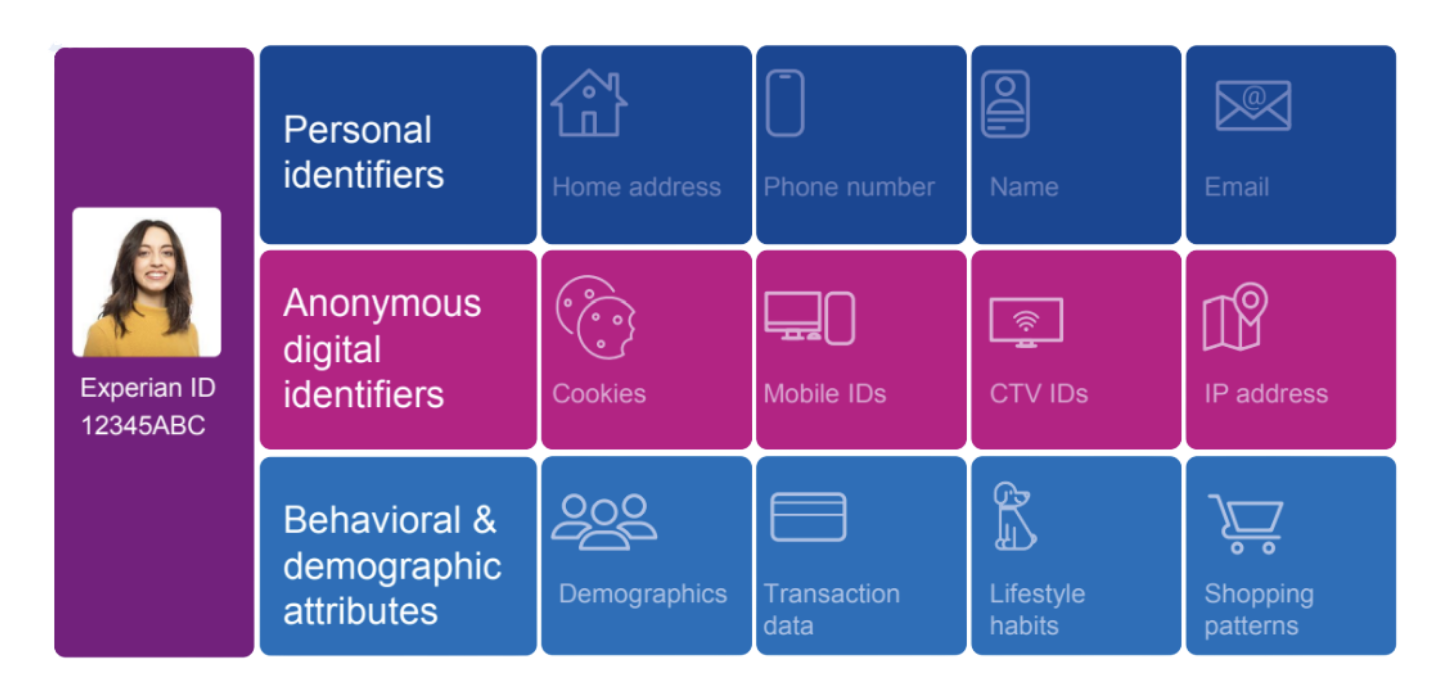
Common identifiers include:
- Cookies: Short-lived browser data
- Emails: Plain-text and hashed
- Device IDs: Mobile advertising IDs (MAIDs) or app-based identifiers
- Loyalty IDs: Program numbers that tie online and offline activity
- Hashed PII: Personally identifiable information (PII) encrypted for privacy
Ultimately, identity resolution can help you recognize the same customer wherever they engage.
Why does identity resolution matter now?
Marketers face incomplete views, data silos, privacy regulations, and shrinking visibility:
- Rising consumer expectations: People want seamless, personalized journeys across touchpoints.
- Privacy-first environment: Consumer privacy legislation (like the GDPR, CCPA, GLBA, FCRA, and new state laws) makes compliance non-negotiable.
- Signal loss: The decline of cookies, MAIDs, and walled gardens are pushing brands toward first-party data.
Experian utilizes AI and machine learning to fill these gaps, predict behaviors, and connect signals across devices — providing marketers with a clear, privacy-safe view of their customers, even when traditional identifiers are missing.
In this environment, identity resolution matters because it gives marketers a way to deliver seamless, personalized customer experiences and engage audiences effectively while respecting their privacy. It’s the basis for turning consented first-party data into measurable marketing outcomes without sacrificing trust.
Why is identity resolution critical in a privacy-first world?
Even as cookies linger, marketers have already shifted their strategies to rely on first-party data, where choice and transparency are the baseline expectation. At Experian, our long history as a regulated data steward makes us a uniquely capable and trusted partner for managing modern compliance expectations. Our identity resolution solutions maximize the value of permission-based data while meeting consumer demand for privacy, personalization, and control.
Struggling with scattered customer data? Experian makes identity resolution seamless
How does identity resolution help brands?
Identity resolution turns fragmented signals into unified profiles that drive personalization, efficiency, and compliance. Here’s how it creates measurable business impact.
Creates a unified customer view
One of the biggest advantages of identity resolution is the ability to integrate data from loyalty programs, point-of-sale (POS) systems, customer relationship management (CRM) platforms, web analytics, and offline sources into a single, comprehensive profile. Experian strengthens identity resolution with AI-driven clustering models that resolve household and individual identities across billions of signals with greater accuracy.
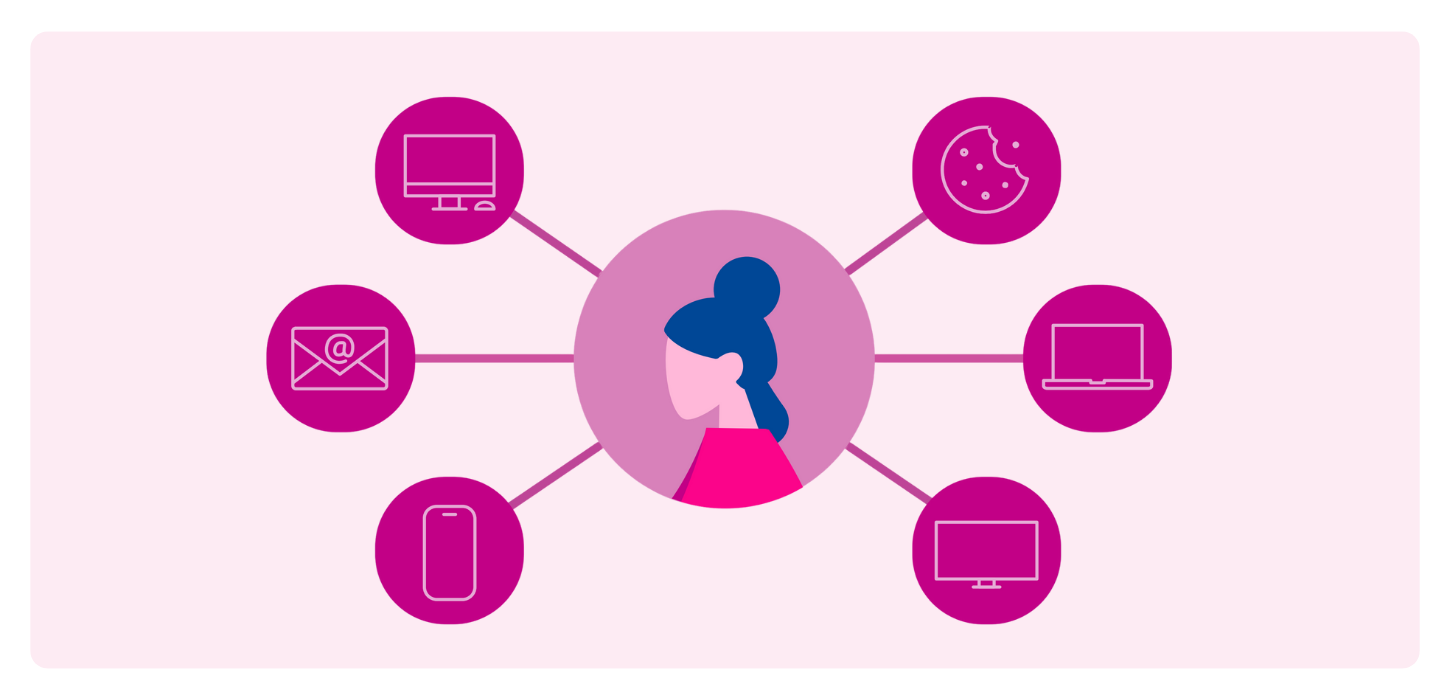
With a clearer picture of each customer, brands see higher match rates and larger addressable audiences, which translates to more substantial reach and better return on ad spend (ROAS).
Enables better personalization
Customers constantly switch devices, update their information, and change preferences. Experian makes it easier to keep pace with these changes through frequent data enrichment and near-real-time identity resolution via Activity Feed.
Combined with our long-standing use of AI and machine learning, this approach ensures shifting behaviors are captured quickly, enabling timely personalization, and more responsive engagement.

With less delay from data to action, the result is faster response times and higher conversion rates.
Improves the customer experience
Customers notice when brands deliver relevant ads and contextual content across every channel. Consistency matters! But consistency doesn’t just happen on its own; it comes from identity resolution, which keeps the customer journey connected.
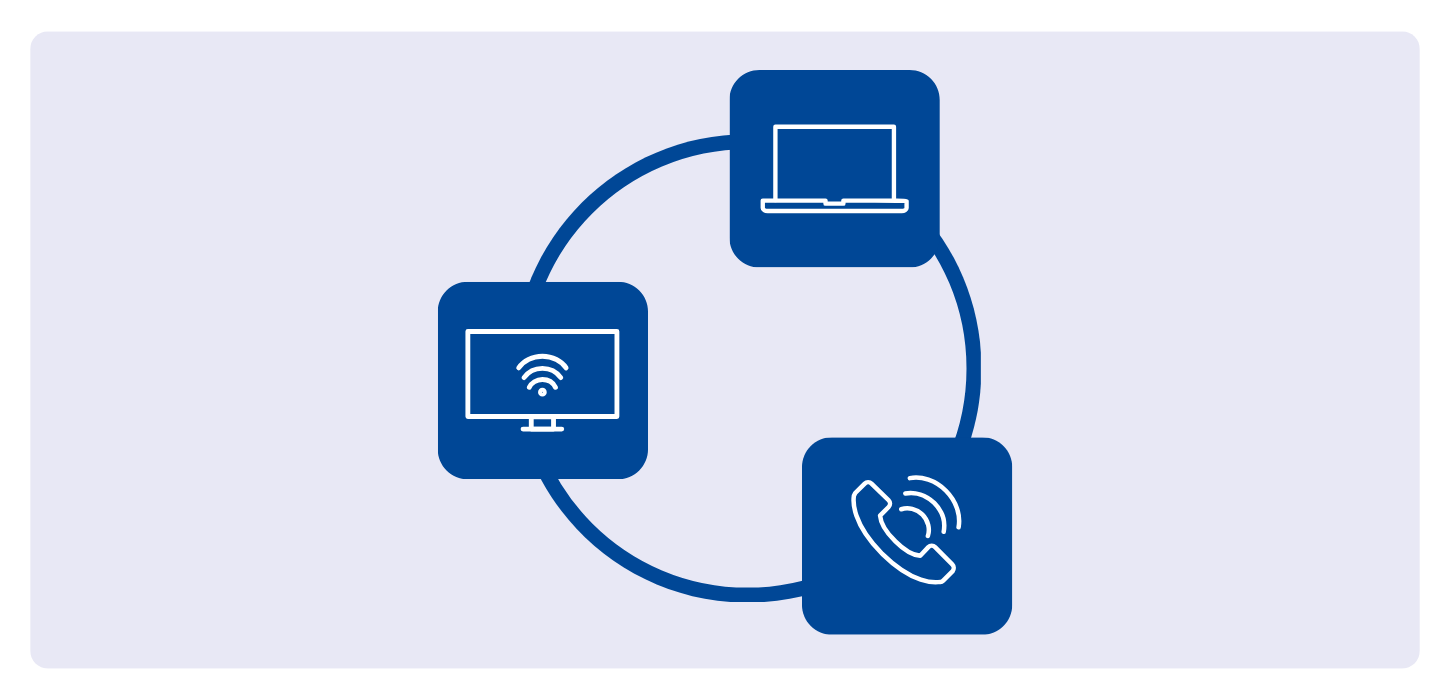
As brands maintain continuity, they build trust, strengthen engagement, and increase customer lifetime value.
Drives better marketing ROI
Not every profile is valuable. Identity resolution helps marketers identify the highest-value audiences and reduce wasted spend.

That efficiency leads to lower CPA and a higher overall ROI across campaigns.
The power of modeling from a stronger foundation
When you have a unified customer view, your models are built on better data. That means you can find more people who look like your best customers, build more responsive audience segments, and target with greater accuracy. This foundation can lead to better spending, more relevant campaigns, and a higher ROI.
Maintains privacy compliance
With GLBA/FCRA-grade standards and consumer choice mechanisms like opt-outs and data correction, you can protect your brand while maintaining personalization — without compromising legal or ethical safeguards.

What are some identity resolution use cases and examples?
Every industry faces its own unique identity challenges, but identity resolution is the common thread that turns scattered data into connected experiences. Let’s break down how companies in different verticals are putting it to work (and the kinds of results they’re seeing).
Retail and e-commerce
Shoppers bounce between websites, carts, and checkout lines, leaving behind scattered signals in the process. In retail, identity resolution bridges the gap between online and in-store experiences by matching online carts with loyalty swipes or connecting connected TV (CTV) exposure to in-store sales. This means fewer silos, better targeting, and more personalized offers wherever people shop.

Our 2025 Digital trends and predictions report calls out that omnichannel experiences aren’t optional anymore. With CTV and social dominating spend, brands need identity resolution to cut through silos and build a complete view of customer behavior.
Financial services
In financial services, identity resolution makes it possible to deliver personalized, compliant offers like refinancing options for likely mortgage switchers or the right rewards card for frequent spenders.
Our partnership with FMCG Direct to create Consumer Financial Insights® and Financial Personalities® segments helps banks, insurers, and lenders understand behaviors — such as credit card use, deposit balances, and investment habits — without exposing sensitive details.
Read more below about how our financial audiences enable privacy-safe personalization.
Travel and hospitality
Travel decisions aren’t always planned out in advance. Many bookings happen spur-of-the-moment, which is why real-time identity resolution is so powerful; it keeps the journey seamless when travelers jump from phone to laptop to tablet and presents relevant offers right as decisions are being made.
Windstar Cruises put this information into action with Experian’s identity graph to connect digital interactions with actual bookings, which drove 6,500+ reservations and $20 million in revenue.
Media and TV
Viewers tend to hop around between linear TV, streaming apps, and social feeds. And without identity resolution, every screen looks like a different person. Marketers can accurately plan, activate, and measure campaigns by unifying viewing behaviors into one ID with Experian’s AI-powered identity graph.

Optimum Media tackled its multiscreen challenge by partnering with Experian for identity solutions. Layering our audience insights and our AI-driven Digital Graph onto their subscriber data, they were able to connect the dots across channels, reach the right households, and measure results instead of just impressions. In the end, they finally got a clear view of what works across every screen.
Curious how identity resolution can power your customer analytics? We can walk you through it.
Healthcare and pharma
Healthcare marketers can’t afford slip-ups with HIPAA regulations. Identity resolution makes it possible to engage the right patients and providers with de-identified audiences rather than third-party cookies.
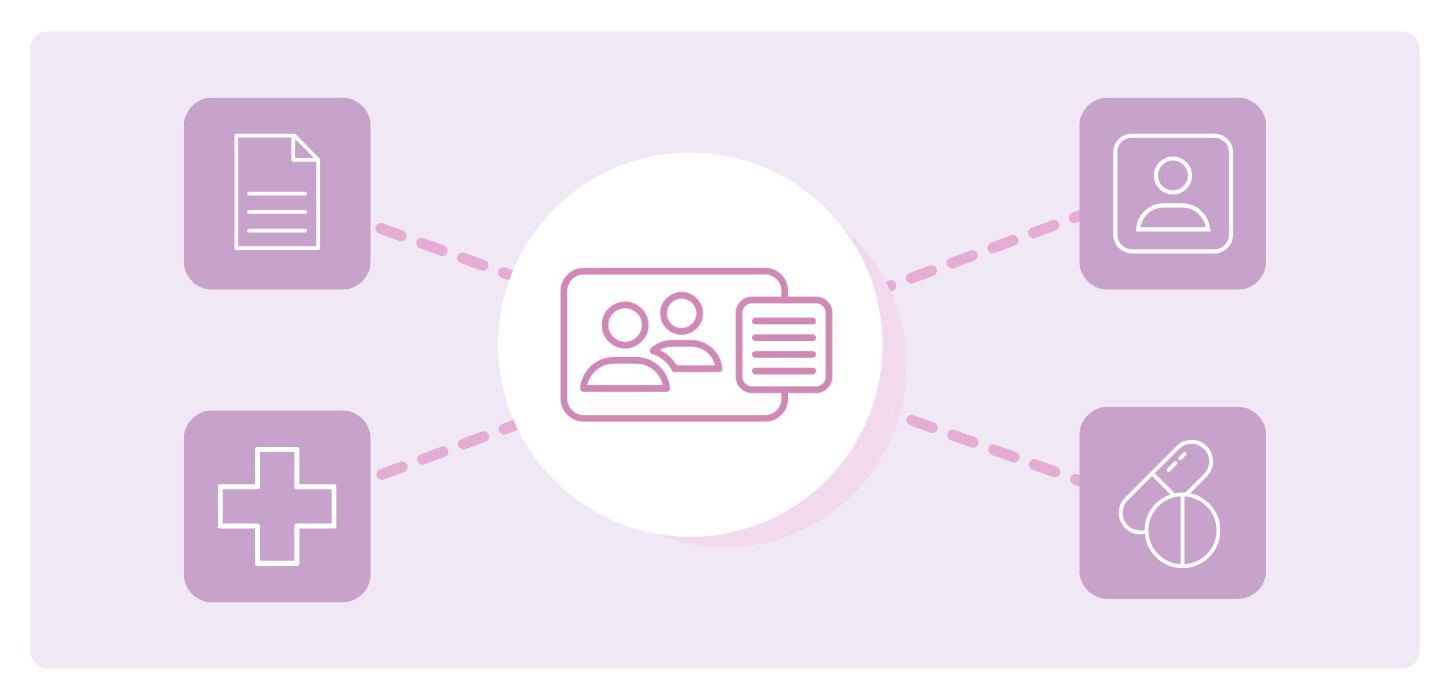
At Experian, AI and machine learning have always been part of how we power identity resolution. In healthcare, that means using AI-enhanced modeling to connect de-identified clinical and claims data with lifestyle insights. The result is a more comprehensive picture of the patient journey that helps close care gaps, reduce wasted spending, and improve outcomes.
By working with partners like Komodo, PurpleLab, and Health Union, we make it possible to activate campaigns at scale that boost engagement and adherence while keeping patient privacy front and center:
- Komodo Health enriches our identity graph with insights from millions of de-identified patient journeys plus lifestyle data, giving brands a fuller view of where care gaps exist and how to close them.
- PurpleLab connects real-world clinical and claims data to Experian’s platform, letting advertisers activate HIPAA-compliant audiences across CTV, mobile, and social with the ability to measure real outcomes like prescription lift and provider engagement.
- Health Union contributes a data set built from 50 million+ patient IDs and 44 billion+ patient-reported data points. Combined with our identity and modeling capabilities, this expands match rates and unlocks up to 76% net-new reach, so campaigns reach patients and caregivers in critical health moments.
As a result, healthcare brands can launch campaigns that are privacy-first, highly targeted, and proven to drive meaningful impact.
Audio
People use audio while commuting, working out, and even folding laundry. It can be one of the hardest channels to track because of how frequently listeners switch between apps, stations, and devices.
Experian’s identity resolution partnerships with Audacy and DAX change the game:
- Audacy helps tie scattered listening into a single view, so advertisers can follow audiences across devices and keep ads relevant in the moment.
- DAX pairs Experian’s 2,400+ syndicated audiences with its audio network, enabling brands to target precisely and launch impactful campaigns at scale.
These partnerships turn audio into an accurate channel where ads feel personal, privacy-safe, and measurable.
Gaming
Gamers don’t stick to one platform. Player data gets scattered across mobile, console, and PC, so it’s tough to keep track of individuals. Experian helps stitch those signals together so publishers can finally see the whole picture, personalize gameplay, and keep players coming back.
With enriched profiles, publishers can deliver offers that resonate and unlock fresh revenue by packaging high-value gaming audiences for advertisers outside the industry.
Unity, a leading gaming platform, is tapping into Experian’s syndicated audiences to gain player insights and help advertisers reach gamers across mobile, web, and CTV. For global publishers, unifying player data with Experian has driven higher engagement and stronger ad ROI.
How should I evaluate identity resolution providers?
When choosing an identity resolution partner, look for:
- Data scale and quality: The value of identity resolution depends on how complete and accurate the underlying data is. The right provider should bring together a wide range of identifiers from online and offline sources, maintaining high accuracy so your customer profiles are broad and reliable.
- Match accuracy and recency: The best partners also refresh their data regularly and can blend deterministic (exact, one-to-one matches) with probabilistic (pattern-based matches) methods. That way, you get the accuracy of “this email is definitely that customer” with the reach of “this device likely belongs to the same person.”
- Privacy and compliance readiness: Compliance can’t be an afterthought. Your identity partner should be ready for GLBA, FCRA, GDPR, CCPA, and the latest state-level rules with built-in tools for opt-outs, corrections, and deletions.
- Integration flexibility: A good provider fits into your world, not the other way around. Look for pre-built integrations with your customer data platform (CDP), demand-side platform (DSP), or marketing tech (MarTech) stack so you can get up and running without the heavy IT lift.
- Data analytics capabilities: You need proof that identity resolution drives ROI. Look for closed-loop measurement that ties unified IDs directly to campaign performance, so you can see what’s working and optimize with confidence.
How Experian enables enterprise-grade identity resolution
Experian delivers identity resolution at the scale, accuracy, and compliance required by the world’s largest enterprises. Our solutions are:
- Built on trust: Backed by 40+ years as a regulated data steward and rated #1 in data accuracy by Truthset, so you can act with confidence.
- Powered by our proprietary AI-enhanced identity graph: Combining breadth, accuracy, and recency across four billion identifiers, continuously refined by machine learning for maximum accuracy.
- Seamlessly connected: Pre-built data integration with leading CDPs, DSPs, and MarTech platforms for faster time to value.
- Always up to date: Frequent enrichment and near-real-time identity resolution through Activity Feed for timely personalization and more responsive customer engagement.
- Privacy-first by design: Compliance with GLBA, FCRA, and emerging state regulations baked in at every step, supported by rigorous partner vetting.
The bottom line
Identity resolution turns fragmented signals into connected, measurable, and compliant experiences. From retail to gaming, brands using it see stronger personalization, engagement, and ROI.
With Experian, you get the data, trust, and responsible AI innovation to make identity resolution work across every channel. Our approach uses AI to connect identities, predict behaviors, and deliver personalization that balances privacy with performance. If you’re ready to turn fragmented data into growth, now’s the time to start.
The world’s leading brands trust us to power identity resolution at scale. See how we can do the same for you.
Identity resolution FAQs
Deterministic uses exact identifiers (like an email) for accuracy, while probabilistic uses signals and algorithms to expand reach. Best-in-class providers usually combine both.
Identity resolution helps with personalization by unifying scattered signals into one profile. It reduces wasted spend and increases match rates, which means bigger addressable audiences and higher ROAS.
Yes. With first-party data and hashed PII, brands can still maintain addressability and personalization.
Retail, finance, travel, media, gaming, and audio all use identity resolution to personalize, attribute sales, and improve efficiency.
A customer data platform unifies the data you already own. Meanwhile, we add depth, scale, and higher match rates by layering in our identity graph and data enrichment.
Yes. Experian is GLBA/FCRA compliant, GDPR/CCPA ready, and supports consumer opt-outs and corrections to ensure responsible personalization.
Latest posts

With the long-term effects to the economy unknown, many consumers are feeling the financial impact, while others are looking for opportunities, resulting in a transformational shift in spending. Some brands are experiencing decreased or paused marketing budgets, and you may be trepidatious about making the right decisions in your efforts to grow share of wallet. Recent events have been an impetus for change and we’re seeing brands make modifications to traditional marketing strategies. Some are developing innovative technologies and utilizing new sources of data and analytics. As we look at how these changes impact marketing results, we see the gap grow between those brands who are equipped to pivot and implement new strategies quickly, versus those who are not. So what steps can your organization implement now to make the smartest choices for both your customers and your business to secure more share of wallet? Here are four ideas to accelerate the success of your next financial marketing campaign: 1. Meet your customers wherever they are: Digital-first strategies have never been more relevant than they are right now. While consumers have fully embraced online engagement, marketers are even more focused on reaching high-value segments in the channels they utilize. By using an informed, data-driven strategy that includes preferred marketing communication channels and decision-making styles, engagement increases across those channels your target audience frequents the most. For example, are they heavy social media users? Do they prefer streaming TV? Or do they tend to rely on financial advice vs. performing their own research? To drive take rates, your audience must be exposed to a tailored message, in the right channel, and possibly multiple times. 2. Use messaging that resonates: As consumers refocus priorities, their expectations of brands with whom they do business are ever-increasing. Reflecting an understanding of the current needs and interests of your customers and prospects is an undertone that can only help strengthen their view of your brand. Consumer behavior has changed and is unlikely to revert to what was, so you want to be relevant, but you also do not want to be seen as ‘tone deaf’. As a result, consider revising your segmentation strategy to leverage predictive insights, such as household economic indicators, financial behaviors, lifestyle propensities and interests to help shape your message into one that truly makes an impact. 3. Prove the worth of your campaign: New consumer journeys are being formulated and showing ROI is imperative as your marketing budget is scrutinized. Having the right industry-relevant metrics and reports to analyze and share with leadership are key. Demonstrate that your campaigns are contributing to bottom-line success—and justify future campaigns—by using data-driven measurement insights collected across multiple reads and countless touchpoints. Marketing budgets are being scrutinized now more than ever, so showing ROI is critical. Having the right metrics and reports to analyze and share with leadership are key. 4. Follow government regulations—leverage Fair Lending-friendly audiences: Whether you’re cross-selling or prospecting, now is the time to identify the right audiences with rich data insights to not only execute impactful campaigns but adhere to government regulations that protect consumers and your organization. Trusting that the data you are activating follows Fair Lending Laws, including the Equal Credit Opportunity Act (“ECOA”) and the Fair Housing Act (“FHA”) is crucial. The Federal ECOA prohibits creditors from discriminating against credit applicants on the basis of several prohibited factors. Developing people-based segments that are not derived using these factors positions you to follow these regulations. Check out our previous blog post about Fair Lending-friendly audiences here. As you transition to new operating models, access to current and accurate consumer data can provide confidence in campaign potential, help you avoid business risk, enable you to respond to market changes and make better decisions. Experian can help you implement these strategies and put your brand unique position for growth. From start to finish, we provide the marketing solutions you need to plan, build and execute successful, Fair Lending-friendly campaigns to cross-sell to existing customers and acquire new customers. *Experian Fair Lending-friendly audiences do not constitute legal advice or otherwise assure compliance with the FHA, ECOA, or any other applicable laws. It’s recommended to seek legal advice with respect to the use of data in connection with lending decisions or application and compliance with applicable laws. Contact us today

Tapad, part of Experian, and Reveal Mobile partner to launch new audience and attribution capabilities for ad buyers
FeaturedCross-device matching and pixel-based foot traffic attribution reporting empower digital marketers with greater control of location-based campaigns.RALEIGH, N.C. (PRWEB) AUGUST 04, 2020 Tapad, part of Experian a global leader in digital identity resolution, and Reveal Mobile, a leader in location-based marketing, today announced a collaboration that combines Tapad’s digital cross-device matching technology and pixel-based attribution features with Reveal Mobile’s VISIT Local, the software that hundreds of digital agencies and brands use for location-based analytics. The partnership is designed to drive improved performance by optimizing ad targeting and messaging for location-based campaigns. Powered by Tapad’s privacy-safe cross device matching, marketers using VISIT Local to power location-based campaigns can enhance how they reach shoppers. When one member of a household shops for groceries, clothes, household goods or any other consumer item, a conversation between multiple members of the household typically takes place beforehand. With cross device matching, marketers can reach everyone who has influence over what to buy and where to buy it. VISIT Local users can expand location-based services with a single click to include devices that share the same household, including targeting across multiple devices owned by the same user, allowing advertisers to maximize messaging and increase their share of wallet among consumers. “VISIT Local has always given our customers access to high-intent location-based audiences. With the addition of cross device matching from Tapad, advertisers can boost audience sizes up to 300 percent while maintaining full confidence in quality and relevance,” says Brian Handly, CEO of Reveal Mobile. “VISIT Local users can now apply multiple criteria and attributes to a single location-based audience, giving them the advanced control and transparency they need.” As reliable attribution becomes increasingly complex for marketers and ad buyers who need to prove value, the addition of Tapad’s pixel-based foot traffic attribution to VISIT Local enables the measurement of actual campaign effectiveness by tying ad views to in-store foot traffic. This new feature, which will be available in VISIT Local this fall, lets Reveal Mobile customers understand who visited a retail location as a result of being served an ad, providing a more accurate view into return on ad spend during and after advertising campaigns. “Tapad’s goal is to empower marketers with digital advertising efficiencies at scale across devices,” says Mark Connon, COO of Tapad. “With cross device matching and pixel-based foot traffic attribution, marketers using VISIT Local can better address the consumer’s preferences and habits, and deliver them consistently actionable information on user behavior. These capabilities advance location-based advertising in ways marketers need and want.” In addition to these new features, VISIT Local’s location-based audience builder now enables marketers to create custom audiences made up of people who have visited different places on different dates. This gives VISIT Local users the ability to segment and create the most highly targeted audiences possible. For example, a marketer who wants to advertise for a chain of restaurants can easily target visitors of different competitors in different cities. Or a marketer who wants to advertise vacation destinations can target people who have been to various resorts at different times of year. Or a marketer who wants to advertise the release of new music can target people who have been to concert venues in different cities on different dates. “Many of our customers need to create highly custom audiences so they can run experiments, test messaging, and run increasingly competitive campaigns,” says Handly. “Everyone who uses VISIT Local can now apply multiple criteria and attributes to a single location-based audience, giving them the advanced control and transparency they need.”To learn more about Tapad’s digital identity resolution products, visit our identity solution page. To learn more about Reveal Mobile’s location-based marketing offerings, visit http://www.revealmobile.com. About TapadTapad, Inc. is a global leader in digital identity resolution. The Tapad Graph, and its related solutions, provide a transparent, privacy-safe approach connecting brands to consumers through their devices globally. Our one-of-a-kind Graph Select offering enables marketers the flexibility and freedom of choice to correlate devices to varied objectives, driving campaign effectiveness and business results. Tapad is recognized across the industry for its product innovation, workplace culture and talent, and has earned numerous awards including One World Identity’s 2019 Top 100 Influencers in Identity Award. Headquartered in New York, Tapad also has offices in Chicago, London, Oslo, Singapore and Tokyo. About Reveal MobileReveal Mobile is a leader in location-based marketing, analytics, audiences, and attribution. Creator of VISIT Local, VISIT Match and VISIT Data, the company’s products help digital agencies, brands and retailers of any size leverage location data to understand and reach the right audiences. Reveal Mobile is CCPA compliant and a member of the Network Advertising Initiative, which conducts an annual privacy certification. The company is based in Raleigh, NC. For more information, visit https://revealmobile.com. Contact us today
Overview Chartable leverages The Tapad Graph to improve cross-device attribution rates and remove non-addressable IPs for clients. Challenge Chartable needs to differentiate between consumer and potential business IP addresses to provide accurate household modeling and reduce excess data for their customers. Podcasting generally only has access to IP addresses as a form of digital ID which limits its ability to connect activity to individuals and extend it across all devices. The Tapad + Experian solution Using Tapad, now a part of Experian, Chartable is able to cut through the noise of IP data and discard any addresses deemed a shared IP or business. Then, Tapad + Experian connects individual users to their other digital IDs and users in their household; creating a richer attribution model for Chartable customers. Increase in podcast attribution rates Contact us today