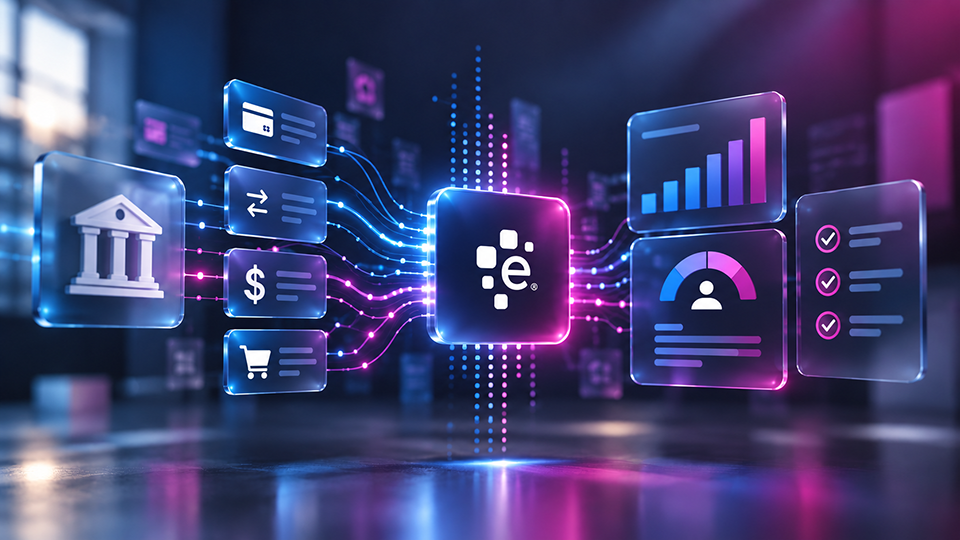
Solving the Fraud Problem: What is Third-Party Fraud?

by Chris Ryan 4 min read November 9, 2023

This article was updated on November 9, 2023.

Fraud – it’s a word that comes up in conversations across every industry. While there’s a general awareness that fraud is on the rise and is constantly evolving, for many the full impact of fraud is misunderstood and underestimated. At the heart of this challenge is the tendency to lump different types of fraud together into one big problem, and then look for a single solution that addresses it. It’s as if we’re trying to figure out how to un-bake a terrible cake instead of thinking about the ingredients and the process needed to put them together in the first place.

This is the first of a series of articles in which we’ll look at some of the key ingredients that create different types of fraud, including first party, third party, synthetic identity, and account takeover. We’ll talk about why they’re unique and why we need to approach each one differently.

At the end of the series, we’ll get a result that’s easier to digest. I had second thoughts about the cake metaphor, but in truth it really works. Creating a good fraud risk management process is a lot like baking. We need to know the ingredients and some tried-and-true methods to get the best result. With that foundation in place, we can look for ways to improve the outcome every time. Let’s start with a look at the best known type of fraud, third party.

What is third-party fraud?

Third-party fraud – generally known as identity theft – occurs when a malicious actor uses another person’s identifying information to open new accounts without the knowledge of the individual whose information is being used. When you consider first-party vs third-party fraud, or synthetic identity fraud, third-party stands out because it involves an identifiable victim that’s willing to collaborate in the investigation and resolution, for the simple reason that they don’t want to be responsible for the obligation made under their name.

Third-party fraud is often the only type of activity that’s classified as fraud by financial institutions. The presence of an identifiable victim creates a high level of certainty that fraud has indeed occurred. That certainty enables financial institutions to properly categorize the losses.

Since there is a victim associated with it, third party fraud tends to have a shorter lifespan than other types. When victims become aware of what’s happening, they generally take steps to protect themselves and intervene where they know their identity has been potentially misused. As a result, the timeline for third-party fraud is shorter, with fraudsters acting quickly to maximize the funds they’re able to amass before busting out.

How does third-party fraud impact me?

As the digital transformation continues, more and more personally identifiable information (PII) is available on the dark web due to data breaches and phishing scams. Given that consumer spending is expected to increase1, we anticipate that the amount of PII readily available to criminals will only continue to grow. All of this will lead to identity theft and increase the risk of third-party fraud.

More than $43 billion in total losses was reported due to identity theft and fraud in the U.S. in 2022.2

Solving the third-party fraud problem

We’ve examined one part of the fraud problem, and it is a complex one. With Experian as your partner, solving for it isn’t. Continuing my cake metaphor, by following the right steps and including the right ingredients, businesses can detect and prevent fraud.

Third-party fraud detection and prevention involves two distinct steps.

  1. Analytics: Driven by extensive data that captures the ways in which people present their identity—plus artificial intelligence and machine learning—good analytics can detect inconsistencies, and patterns of usage that are out of character for the person, or similar to past instances of known fraud.
  2. Verification: The advantage of dealing with third-party fraud is the availability of a victim that will confirm when fraud is happening. The verification step refers to the process of making contact with the identity owner to obtain that confirmation and may involve identity resolution. It does require some thought and discipline to make sure that the contact information used leads to the identity owner—and not to the fraudster.

In a series of articles, we’ll be exploring first-party fraud, synthetic identity fraud, and account takeover fraud and how a layered fraud management solution can help keep your business and customers safe and manage third-party fraud detection, first-party fraud, synthetic identity fraud, and account takeover fraud prevention. Let us know if you’d like to learn more about how Experian is using our identity expertise, data, and analytics to create robust fraud prevention solutions.

Contact us

1 Experian Ascend Sandbox

2 2023 U.S. Identity and Fraud Report, Experian.
Related Posts

As Electric Vehicle Adoption Eases, Dealers Can Find New Opportunities To Reach Consumers

After years of rapid growth, new electric vehicle (EV) registrations have moderated, and the EV market has entered a new chapter. But slower growth shouldn’t be mistaken for disappearing demand, with data suggesting the reality is much more nuanced. According to Experian Automotive’s Automotive Consumer Trends Report: Q2 2026, battery EVs accounted for 8.21% of new retail registrations in the last 12 months, down from 9.23% a year earlier. However, consumers aren’t simply walking away from electrification. In fact, more than one million new EVs were registered during the past 12 months and the used EV market recorded more than 540,000 registrations over the same period. The opportunity may be less about waiting for the EV market to grow and more about understanding where EV demand is present, who is driving them, and how to reach those consumers more effectively. Who is likely to purchase an EV and what vehicle types are they interested in? Understanding who’s in the market for an EV can allow dealers to position themselves around consumers’ needs as they choose a vehicle that fits their everyday lifestyle. In the second quarter of 2026, Millennials and Gen X accounted for 67.83% of new EV registrations, nearly 10 percentage points above their combined share of all new, retail registrations. Millennials were also the largest generational audience across both new and used EV market share, coming in at 35.76% and 38.42%, respectively. It’s important to consider that the EV shopper isn’t necessarily looking for an unfamiliar or new type of vehicle. In many cases, they’re seemingly looking for an electric version of the practical vehicle they already know. For instance, SUVs accounted for 77.47% of new EV registrations in Q2 2026, which was similar to SUVs’ 63.49% share of all new retail registrations. For these shoppers, creating messaging around value, practicality, and available choices may resonate differently than premium technology messaging aimed at some new-EV prospects. The more precisely dealers can identify those audiences, the less they need to depend on broad EV market momentum to generate demand. To learn more about EV insights, view the full Automotive Consumer Trends Report: Q2 2026 presentation.

September 15, 2026 by Kirsten Von Busch
Infographic – The Mortgage Conversion Opportunity: How Finding the Right Borrowers Drives More Closings

With only one in three mortgage shoppers who submit a hard credit inquiry ultimately closing, lenders have an opportunity to rethink how they identify and engage prospective borrowers. This post explores why credit scores alone may not provide a complete picture of borrower readiness and how broader financial insights can help lenders identify consumers who may be more prepared to move forward, prioritize engagement, and improve mortgage conversion.

September 10, 2026 by Royce Chang
Workflow Automation for Financial Services

Manual processes are quietly expensive. Every handoff between teams, every file transfer waiting in a queue and every decision that sits on someone's desk adds cost, introduces risk and slows the customer experience. For financial institutions, those delays translate directly into lost revenue and eroded margins. That’s why workflow automation is becoming critical for financial institutions looking to stay competitive. Done well, it doesn't just make existing tasks faster. It reshapes how decisions get made across the entire customer lifecycle, from the first marketing touch to account servicing and beyond. What is workflow automation? Workflow automation is the use of technology to run a sequence of tasks, decisions and handoffs with minimal manual intervention. Instead of a person moving work from one step to the next — pulling data, applying a rule, routing an account and sending a communication — software executes those steps automatically based on defined logic and real-time data. For financial institutions, workflow automation usually combines four ingredients: Data Connecting to the internal and external data sources that inform a decision. Analytics Scores, models and attributes that turn raw data into insights. Decisioning A rules engine that determines the right action for each customer or account. Execution The operational layer that carries out the action, whether that's an offer, a credit line change or outreach. The benefits of workflow automation The value of automation goes well beyond "doing the same thing faster." The benefits financial institutions consistently see include:Greater efficiency and lower operating costsAutomation frees underwriters, analysts and agents to focus on exceptions and high-value work rather than repetitive processing. Faster, more consistent decisionsA credit application that once waited in a queue can be assessed in real time against consistent, auditable policies, improving both the applicant's experience and portfolio quality. Better customer experiencesAutomation enables financial institutions to personalize communications at the point of interaction and offer the self-service options that many people now prefer. Improved compliance and governanceReduce the risk of costly compliance failures with built-in controls, audit trails and guided workflows. ScalabilityRespond to changing volumes without sacrificing speed, consistency or the customer experience. Where workflow automation makes the biggest difference Workflow automation tends to deliver the most value where decisions are frequent, repeatable and informed by data. In financial services, those opportunities exist across the customer lifecycle. Onboarding Onboarding is a customer's first experience of your organization, and it's also where friction can cause customers to abandon the process and turn to another provider. Forty percent of U.S. consumers have considered walking away from opening a new account when the process felt burdensome.1 An automated onboarding workflow can bring together document verification, device intelligence, behavioral analytics, credit attributes and more, then orchestrate them into a single decision. The result is a lower-friction experience for the customer and a consistent, auditable process. Once customers are on the books, serving them well means making continuous, high-volume decisions: credit line changes, cross-sell and up-sell opportunities, risk monitoring and retention actions. Automation makes it practical to run these recurring decisions consistently across an entire portfolio, using a holistic view of each customer that draws on multiple scores and attributes. Lending The underwriting process is a great example of how workflow automation can help prevent applicants from waiting days for an answer. Loan origination and credit decisioning capabilities are designed to create a seamless review process across consumer and commercial lending. After automating originations with our solutions, Michigan State University Federal Credit Union cut application processing time to under 24 hours. Fraud Financial institutions are checking fraud at every touchpoint, and the standard for AI fraud detection continues to rise as fraudsters use AI to slip under the thresholds of any single detection tool. Rather than running fraud checks in isolation, an automated workflow can run multiple fraud and identity verification services in parallel and weigh signals together. A fraud decisioning platform connects signals across internal systems, Experian data and third-party services, allowing teams to stay on top of evolving threats. Build a strong foundation for workflow automation Workflow automation can connect these stages, creating a consistent decisioning framework. What ultimately separates good automation from great automation is the quality of the data and decisioning software underneath it. An automated workflow is only as good as the information feeding it. That's where our comprehensive credit, alternative and identity data with the tools financial institutions need to act on it. Learn more here FAQs How does automated decisioning improve credit decisions? Automated decisioning applies consistent logic to every account in real time or in bulk, enabling faster and more informed decisions, quicker responses to market and regulatory changes at the point of interaction. What is workflow automation in financial services? It's the use of software to execute sequences of data gathering, analysis, decisioning and action. Does workflow automation replace human judgment? No. The goal is to automate routine, high-volume decisions so skilled staff can focus on the exceptions and complex cases that genuinely require human judgment. For example, a sensitive collections conversation or a nuanced underwriting call. Are we still compliant with regulations if we use an automated workflow process? Well-designed platforms include built-in governance, audit trails and compliance controls that help institutions align with requirements like the Fair Credit Reporting Act (FCRA) and other regulatory guidelines improving compliance compared with manual processes. How long does it take to implement? It varies by solution and scope, but modern cloud-based platforms are designed for fast onboarding and limited IT involvement. 1Global Fraud Snapshot 2025: Opportunities and challenge in identity, fraud and financial crime

September 9, 2026 by Zohreen Ismail

Subscribe to our Newsletter

Enter your name and email for the latest updates.

This site is protected by reCAPTCHA and the Google Privacy Policy and Terms of Service apply.

Subscribe to our Newsletter

Don't miss out on the latest industry trends and insights!
Subscribe