
Q&A with Marine Credit Union on Growth and Honing Your Focus

by Guest Contributor 6 min read October 1, 2018

Shawn Hanson, CEO of Marine Credit Union in Wisconsin, knows a thing or two about growth. Over the past 18 years as CEO, Shawn and his team have the grown the credit union significantly, both organically and through acquisitions. In addition, he has developed a clear vision to reach the underserved.

I spoke with Shawn to get his perspective and insights about growth, risk and the underserved.

Here’s what he had to say:

Marine Credit Union has grown from $120M to $789M over the past 18 years under your leadership. What have been the top 2-3 actions you’ve taken to fuel this growth?

The past two decades of growth have included a lot of successes, but also some key failures. Failures that taught us some hard lessons in who we are – and who we are not. If I can point to one action that has had the most impact on our growth, it is the refinement of our focus. We clarified our mission, vision and strategy and aligned our business decisions accordingly.

Over the past 18 years as CEO, what has been your proudest moment? (Or proudest moments?)

I reach out to employees on a regular basis and ask them to share with me a story of how they impacted a member’s life. I hear stories of people who never thought they would dig themselves out of a financial hole, and people we are helping to save thousands of dollars each month in bill payments. I feel so fortunate that I get to hear these stories every day. So, to answer your question, my proudest moment will happen today when I hear that next story. Then again tomorrow. And again, the next day.

What drove Marine’s decision to focus on serving the underserved?

I started my career in the consumer finance industry, so it is where my roots lie. Over time, we have come to discover that serving the underserved is not only a good business to be in, it is a business that is good. A business that is doing well while doing good – performing financially while giving back to its communities – is a business that people want to be around.

How does your credit union define underserved? What services does your staff offer members that are unique?

We define the underserved as people who cannot typically get help down the block. While this most often means individuals, who are credit-challenged, it is more than that. Our underserved can be an overleveraged borrower who needs some help simplifying their life and streamlining bill payments. We have a debt consolidation product that’s a perfect fit for that situation. Our underserved can be a self-employed borrower whose income statements don’t fit inside a neat box, a homebuyer with an unconventional property. or an immigrant with alternative documentation. Our in-house underwriting and decentralized decision-making structure give us more flexibility to serve our underserved.

Given your credit union’s history of growth through acquisitions, how have you preserved the culture of reaching the underserved?

We are experienced, but we are not perfect. When it comes to the integration of employees, we learn through each acquisition. Our strategy is very different from other financial institutions, and we know this creates a learning curve for merging employees. Cultural integration is incredibly important to us. We have taken this too slow, too fast and everywhere in between. What we know for certain is that one size does not fit all. Whatever approach we decide on for a cultural integration, we do it with intention and two key principles in mind: do what’s best for the employees and the members.

Why do you think credit unions are uniquely positioned to reach & serve the underserved?

Talk about roots; this is where we were born. Serving the underserved is in our credit union DNA. Beyond our history, it is what we are known for: people helping people. Credit unions have built a legacy of trust with the communities we serve. Trust has become a coveted commodity.

What is the biggest misperception among credit unions regarding the topic of serving the underserved?

It’s too risky.

One of the underpinnings of the credit union movement is providing a path to affordable credit. What should risk-adverse credit unions think about when evaluating their mission?

Think about the role you play in your community; how would the world be poorer, but for your presence? If you can answer with clarity, you’re serving a need. Everybody seems to be chasing the most qualified borrowers today. We’re focused on being there for the rest.

Marine’s mission is to “create a better future for themselves and their families”. What has been the biggest surprise for you serving the underserved?

We call it “the snowball effect.” Repeatedly, we have seen one small “yes” turn into a remarkably different life for a member we have helped. A car loan led to transportation to work, which led to a steady job, which led to a promotion, which led to buying a home. I never underestimate the power of a chance.

How has your board helped to accelerate the mission to reach the underserved? What advice do you have for boards who are concerned of taking on more perceived risk?

I feel very fortunate to work with a Board of Directors who has accelerated our mission in many ways, but most importantly, by having an open mind and allowing themselves to think differently. Our Board is always learning and always pushing me, one another and the credit union to be better.

Strategic planning season is upon us. What advice do you have for credit unions looking to lend deeper?

Hone your focus. Know who you are and who you are not. Know who you serve and who you do not. Get aligned on where you want to be 5, 10 and 20 years from now, and work backward. What do you need to be focusing on in 2019 to achieve your long-term goals, and what do you need to stop wasting energy on?

Ensure your people, products and processes are aligned and scaled to support a diversification or transition. This can take years to build or evolve. Walk, don’t run.

About Shawn Hanson

Shawn Hanson is the CEO of Marine Credit Union. He has been with the credit union since April 2000 when the credit union had two offices and $37 million in assets. Hanson’s vision for the future is a differentiated financial institution that provides services to a broad geographic base with the best service. Hanson has also held positions at Citizens Community Federal Credit Union and AVCO Financial Services.

Learn more about the array of alternative credit data sources available to financial institutions to reach your underserved populations.

Related Posts

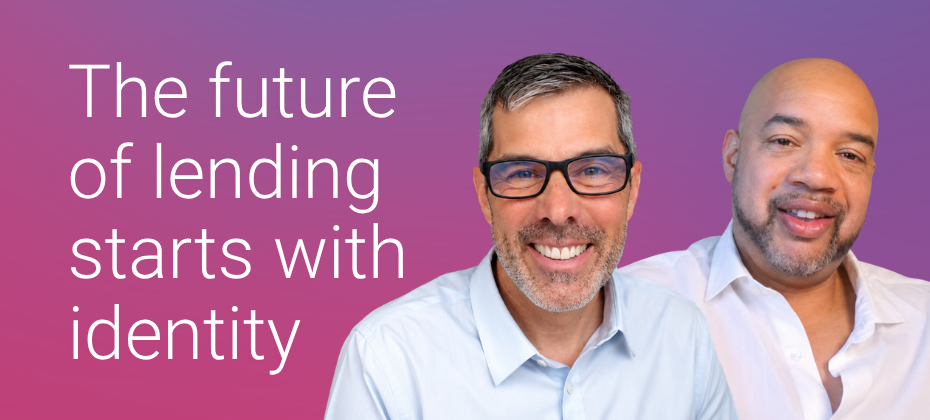
Ask the Expert: The Future of Lending Starts With Identity With Shawn Rife and Brian Cardona

Identity intelligence and alternative data can help lenders validate consumers and support more informed decisions across the customer lifecycle.

September 16, 2026 by Julie Lee
Financial Institutions Are Rethinking Customer Acqusition

Customer acquisition strategies are constantly evolving toward more precise targeting. From a marketing lens, you can track every step, optimize communication channels and still miss the person most likely to convert. Attribution can tell us which channels work and automation can make marketing spend more efficient. But both assume we know who is actually on the other end. Financial institutions are learning that finding audiences and targeting them is no longer the biggest challenge. As acquisition optimization marketing becomes more sophisticated, teams can measure and act on more signals than before. What they can't always know is whether the person on the receiving end is real. Customer acquisition has evolved into an identity problem. The challenge is not that every questionable signal represents malicious activity. It's that acquisition systems must make increasingly intelligent decisions with an imperfect understanding of who they're actually engaging. When identities are fragmented, duplicated, temporary or synthetic, optimization becomes a question of trust as much as targeting. When your signals don't reliably identify customers The customer journey often includes searching, filling out a form, creating an account, requesting a quote and subscribing. All of these signals work well when identity is relatively stable.  However, financial institutions are finding that these signals are becoming less reliable. A single person can operate across multiple personas, devices, browsers, aliases, accounts and intermediaries while several apparent “people” may actually represent one underlying actor. Financial instituions are finding: Fragmented customer signals Difficulty distinguishing an old account from a new one Different digital pathways associated with the same individual Signals that are generated by automation Real customers getting flagged because signals are too thin to evaluate confidently Legacy signals continue to be challenged Marketing has historically treated intent as a valuable signal because intent was relatively difficult to produce. A search required human intent. A form required someone to fill it out. An inquiry implied a meaningful amount of human effort. Financial institutions are already combating AI-enabled fraud, and now marketing teams are starting to face it on a massive scale. AI can mimic human behavior by researching products, comparing prices, filling out forms, creating accounts and signing up for services. A valid email address is no longer enough. Marketers need to know: How long has it existed? How recently has it been active? Does its activity appear consistent or suddenly anomalous? Has it gone dormant and returned? Is it associated with patterns that suggest stability or unusual behavior? How to build on your strongest signal Email remains one of the most persistent identifiers in digital commerce, following people across devices, platforms, transactions, subscriptions, accounts and years of activity. For over two decades, this has shaped how AtData thinks about identity. Now, as part of Experian, it’s shaping how an entire platform and team approach identity. A marketer doesn’t need every prospect to have existed online for twenty years. But understanding whether a newly acquired prospect has meaningful identity context can dramatically improve the quality of the decision being made around it. Better identity intelligence can help organizations reduce unnecessary friction by improving their ability to recognize legitimate customers. With a strong identity foundation, marketing teams can better address: Which audiences are more likely to convert? Which leads are high quality? Which channels are driving incremental growth? What do the best prospects look like? The value isn't simply having an email address. It's understanding the history and behavioral context associated with it. That context can provide a stronger digital identity signal, helping marketers understand how long they have been active, whether its behavior is consistent with that of a real person and whether current activity aligns with past patterns. It continues to be one of the most persistent identifiers in digital commerce. An infrastructure built for what's coming The acquisition of AtData by Experian reflects a fundamental shift in how identity infrastructure needs to work. Experian's scale and decisioning capabilities, combined with AtData's real-time email intelligence, create a strong platform. Read more about the why behind the acquisition and see how email works as an identity anchor for fraud prevention. Contact us to learn about our customer acquisition solutions

September 15, 2026 by Zohreen Ismail
As Electric Vehicle Adoption Eases, Dealers Can Find New Opportunities To Reach Consumers

After years of rapid growth, new electric vehicle (EV) registrations have moderated, and the EV market has entered a new chapter. But slower growth shouldn’t be mistaken for disappearing demand, with data suggesting the reality is much more nuanced. According to Experian Automotive’s Automotive Consumer Trends Report: Q2 2026, battery EVs accounted for 8.21% of new retail registrations in the last 12 months, down from 9.23% a year earlier. However, consumers aren’t simply walking away from electrification. In fact, more than one million new EVs were registered during the past 12 months and the used EV market recorded more than 540,000 registrations over the same period. The opportunity may be less about waiting for the EV market to grow and more about understanding where EV demand is present, who is driving them, and how to reach those consumers more effectively. Who is likely to purchase an EV and what vehicle types are they interested in? Understanding who’s in the market for an EV can allow dealers to position themselves around consumers’ needs as they choose a vehicle that fits their everyday lifestyle. In the second quarter of 2026, Millennials and Gen X accounted for 67.83% of new EV registrations, nearly 10 percentage points above their combined share of all new, retail registrations. Millennials were also the largest generational audience across both new and used EV market share, coming in at 35.76% and 38.42%, respectively. It’s important to consider that the EV shopper isn’t necessarily looking for an unfamiliar or new type of vehicle. In many cases, they’re seemingly looking for an electric version of the practical vehicle they already know. For instance, SUVs accounted for 77.47% of new EV registrations in Q2 2026, which was similar to SUVs’ 63.49% share of all new retail registrations. For these shoppers, creating messaging around value, practicality, and available choices may resonate differently than premium technology messaging aimed at some new-EV prospects. The more precisely dealers can identify those audiences, the less they need to depend on broad EV market momentum to generate demand. To learn more about EV insights, view the full Automotive Consumer Trends Report: Q2 2026 presentation.

September 15, 2026 by Kirsten Von Busch

Subscribe to our Newsletter

Enter your name and email for the latest updates.

This site is protected by reCAPTCHA and the Google Privacy Policy and Terms of Service apply.

Subscribe to our Newsletter

Don't miss out on the latest industry trends and insights!
Subscribe