
Income Verification: Providing Seamless Experiences

by Theresa Nguyen 2 min read January 30, 2024

This article was updated on January 30, 2024.

Income verification is a critical step in determining a consumer’s ability to pay. The challenge is verifying income in a way that’s seamless for both lenders and consumers. While many businesses have already implemented automated solutions to streamline operations, some are still relying on manual processes built on older technology.

Let’s take a closer look at the drawbacks of traditional verification processes and how Experian can help businesses deliver frictionless verification experiences.

The drawbacks of traditional income verification

Employment and income verification provides lenders with greater visibility into consumers’ financial stability. But it often results in high-touch, high-friction experiences when done manually. This can be frustrating for both lenders and potential borrowers:

  • For lenders: Manual verification processes are extremely tedious and time-consuming for lenders as it requires physically collecting and reviewing documents. Additionally, without reliable income data, it can be difficult for lenders to accurately determine a consumer’s ability to pay, leading to higher origination risk.
  • For borrowers: Today’s consumers have grown accustomed to digital experiences that are fast, simple, and convenient. A verification process that is slow and manual may cause consumers to drop off altogether.

How can this process be optimized?

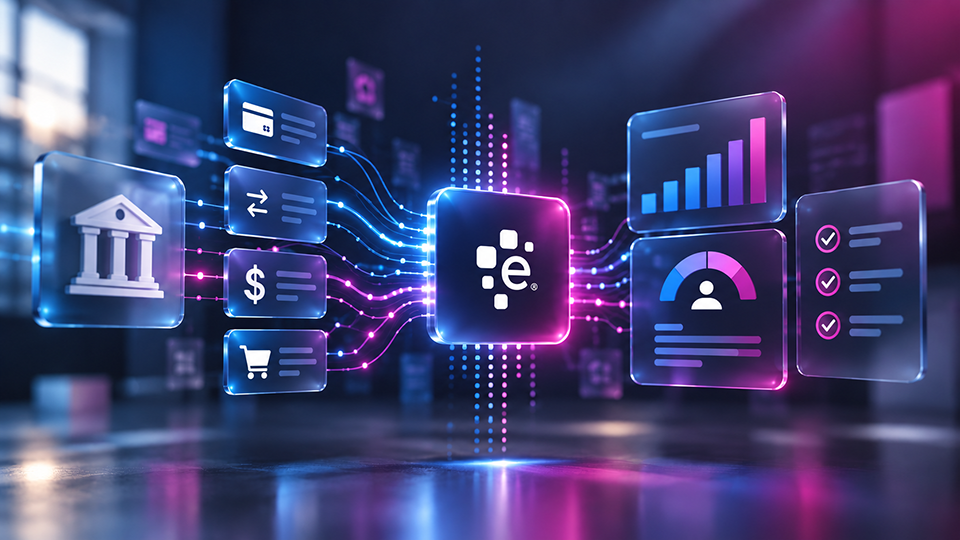
To accelerate the verification process and gain a more complete view of consumers’ financial stability, lenders must look to automated solutions. With automated income verification, lenders obtain timely income reports to accurately verify consumers’ income in minutes rather than days or weeks. Not only does this allow lenders to approve more applicants quickly, but it also enables them to devote more time and resources toward improving their strategies and enhancing the customer experience.

The right verification solution can also capture a wider variety of income scenarios. With the click of a button, consumers can give lenders permission to access their financial accounts, including checking, savings, 401k, and brokerage accounts. This creates a frictionless verification experience for consumers as their income information is quickly extracted and reviewed. Retrieving data directly from financial accounts also provides lenders with a fuller financial picture of consumers, including those with thin or no credit files. This helps increase the chances of approval for underserved communities and allows lenders to expand their customer base without taking on additional risk.1

Learn more

1 Experian Income Verification Product Sheet (2017).

Related Posts

The American Fintech Council on Responsible Innovation

Ian P. Moloney of the American Fintech Council discusses responsible fintech innovation and Experian’s role in expanding credit access.

Published: July 8, 2026 by Scarlet.Nickel@experian.com
Electric Vehicle Registrations Are Growing Beyond Traditional Locations

For years, most electric vehicle (EV) adoption has been concentrated in California, New York, and other traditional early-adopter markets. And while those markets still lead the nation in total registrations, as of last year, some of the fastest-growing EV markets are in regions that haven’t played a significant role in the past. According to Experian Automotive’s 2025 EV Year in Review Report, EV adoptions seem to be entering a new phase that is spreading well beyond coastal strongholds. In fact, the top designated market areas (DMAs) that saw the fastest year-over-year growth for new retail individual EV registrations in the last five years were Detroit, MI (34.5%), Naples, FL (32.6%), Atlanta, GA (20.6%), Buffalo, NY (18.7%), and Charlotte, NC (17.3%). However, despite the growing demand in these market areas over the last few years, Los Angeles, CA still holds a strong lead in new retail individual EV registrations, with over 164,000 new adopters in 2025. Rounding out the top five were San Francisco, CA (85,000+), New York, NY (78,000+), Miami, FL (45,000+), and Seattle, WA (35,000+). EV adoption expanding well beyond the early-adopter markets could be a result of charging infrastructure growth, vehicle availability improvement, and consumer interest reaching new levels across the country. What does this mean for dealers? The extension of EV adoption into emerging markets signals that these vehicles are becoming a mainstream consideration for more consumers. As dealers look for ways to grow their presence in this segment, adopting marketing strategies, service operations, and inventory planning will be beneficial to meet changing buyer expectations and capitalize on the growing demand. The biggest takeaway isn’t necessarily which markets are selling the most EVs, it’s seemingly where adoption is gaining momentum. As new regions start to embrace these vehicles, it’ll be important to monitor the next phase of growth and where future opportunities may emerge. To learn more about EV insights, visit Experian Automotive’s EV Resource Center.

Published: July 7, 2026 by Kirsten Von Busch
PREMIER Bankcard Expands Financial Access

Learn how PREMIER Bankcard and Experian are helping expand financial access through data, technology and personalized decisioning.

Published: July 6, 2026 by Scarlet.Nickel@experian.com
