Recently, a number of media articles have discussed the task facing financial institutions today – find opportunities growth in a challenging and flat economy. The majority of perspectives discuss the fact that lenders will soon have no choice but to look to the ‘fringe’, by lowering score cut-offs, adjusting acquisition strategies and introducing greater risk into their portfolios in order to grow. Risk and marketing departments are sure to be creating and analyzing credit risk models and assessing credit risk in new, untapped markets in order to achieve these objectives. While it may appear to be oversimplifying the task, many lenders have the opportunity to grow simply by understanding more about two groups of consumers that are already sitting in their offices (or application queues) today: applicants who are approved, but book elsewhere, and applicants that are declined. There are a number of analytic techniques that can be utilized to understand these populations further. Lenders can study the characteristics of other loans originated by these lost consumers, and can also perform analyses of how these consumers performed after booking competitive offers. By understanding the credit characteristics and account delinquency trends of its current applicants, lenders can uncover a wealth of information and insight about the growth opportunities sitting right before them.
Finding growth in your current applicants
Related Posts

AI, digital doppelgängers and growing consumer skepticism could reshape the data breach landscape in 2027. Here’s what to prepare for.

Explore the Fintech Identity and Fraud Report for insights on AI-driven fraud threats, identity protection and the evolving fraud landscape.
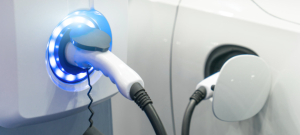
Take a look around at any road, parking lot, or highway, and you’ll see just how diverse today’s vehicle landscape has become. Within that evolving mix, electric vehicles (EVs) have seen years of rapid growth, and while the market is seemingly entering a new phase, interest remains. So, with several vehicles and fuel types to choose from, what keeps drivers coming back to electrified vehicles? Experian Automotive’s Automotive Market Trends Report: Q2 2026 found that among EV owners who returned to the market in the last 12 months, majority (72.2%) replaced their EV with another EV, while 18.5% switched to a gasoline vehicle. Hybrid buyers also showed considerable loyalty to electrification, with 55.7% of gas-hybrid owners staying with the same fuel type when replacing their vehicle, and 32.7% swapping for a gasoline vehicle. Consumers are seemingly remaining loyal to EVs and hybrids because they are attracted to the benefits that fit their everyday lifestyle, such as lower fuel or charging costs amid the elevated gas prices. For some, it could also be tied to convenience, as drivers who have found a reliable charging routine or appreciate the efficiency of a hybrid may have little reason to switch back to a traditional gasoline vehicle. Generations are taking different paths to electrification Generational differences also influence hybrid and EV loyalty, with younger consumers generally showing greater openness to alternative fuel types. While older generations tend to have greater familiarity with traditional gasoline vehicles, hybrid and EV adoption is increasing across all age groups as these options become more accessible and mainstream. Millennials, in particular, showed the strongest inclination toward electrified vehicles. Through Q2 2026, they accounted for the highest EV share at 8.2%, compared with Gen X at 5.5%, Gen Z (4.7%), and Baby Boomers (4.7%). The difference becomes even more pronounced when hybrids are in the mix, as 23.1% of Millennial registrations were gas-electric hybrids or plug-in hybrids, versus 16.7% for Gen X, 16.8% for Gen Z, and 18.0% for Baby Boomers. For automotive professionals, these differences make understanding who is driving what, and what they may choose next, increasingly important. The future of the automotive market may be less about consumers choosing one vehicle type over the other and more about understanding the distinct patterns and preferences of each generation. As the market continues to evolve, those insights can help automotive professionals better meet consumers where they are. To learn more about vehicle market trends, view the full Automotive Market Trends Report: Q2 2026 presentation on demand.