All posts by Guest Contributor
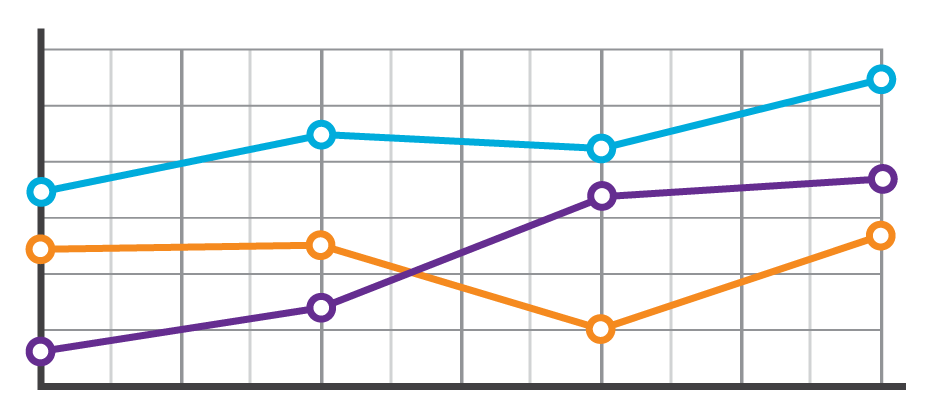
Shifts in consumer payment behaviors are not always reflected in a credit score, so can trended data be the answer to providing a lender with insights on when to make line adjustments and prospect?

Data is the cornerstone of retail success today. Your organization can start depending on your data & gain actionable insights w/these data management tips:

It should come as no surprise that reaching consumers on past-due accounts by traditional dialing methods is increasingly ineffective. The new alternative, of course, is to leverage digital channels to reach and collect on debts. The Past: Dialing for dollars. Let’s take a walk down memory lane, shall we? The collection approach used for many years was to initially send the consumer a collection letter recapping the obligation and requesting payment, usually when an account was 30 days late. If the consumer failed to respond, a series of dialing attempts were then made, trying to reach the consumer and resolve the debt. Unfortunately, this approach has become less effective through the years due to several reasons: The use of traditional landlines continues to drop as consumers shift to cell and Voice Over Internet Protocol (VOIP) services. The cost of reaching consumers by cell is more costly since predictive dialers can’t be used without prior consent, and the obtaining and maintaining consent presents its own set of tricky challenges. Consumers simply aren’t answering their phones. If they think a bill collector is calling, they don’t pick up. It’s that simple. In fact, here is a breakdown by age group that Gallup published in 2015, highlighting the weakness of traditional phone-dialing. The Present: Hello payment portal. With the ability to get the consumer on the phone to negotiate a payment on the wane, the logical next step is to go digital and use the Internet or text messaging to reach the consumer. With 71 percent of consumers now using smartphones and virtually everyone having an Internet connection, this can be a cost-effective approach. Some companies have already implemented an electronic payment portal whereby a consumer can make a payment using his or her PC or smartphone. Usually this is prompted by a collection letter, or if permitted by consumer consent, a text message to their smartphone. The Future: Virtual negotiation. But what if the consumer wants to negotiate different terms or payment plans? What if they want to try and settle for less than the full amount? In the past – and for most companies operating today – this translates into a series of emails or letters being exchanged, or the consumer must actually speak to a debt collector on the phone. And let’s be honest, the consumer generally does not want to speak to a collector on the phone. Fortunately, there is a new technology involving a virtual negotiator approach coming into the market now. It works like this: The credit grantor or agency contacts the consumer by letter, email, or text reminding them of their debt and offering them a link to visit a website to negotiate their debt without a human being involved. The consumer logs onto the site, negotiates with the site and hopefully comes to terms with what is an acceptable payment plan and amount. In advance, the site would have been fed the terms by which the virtual negotiator would have been allowed to use. Finally, the consumer provides his payment information, receives back a recap of what he has agreed to and the process is complete. This is the future of collections, especially when you consider the younger generations rarely wanting to talk on the phone. They want to handle the majority of their matters digitally, on their own terms and at their own preferred times. The collections process can obviously be uncomfortable, but the thought is the virtual negotiator approach will make it less burdensome and more consumer-friendly. Learn more about virtual negotiation.

With the recent switch to EMV and more than 4.2 billion records exposed by data breaches last year, attackers are migrating to the CNP channel.
Policymakers in Washington continue to grapple with how to spur responsible innovation and how fintech fits into the existing regulatory paradigm.

Average amount financed for a new vehicle in Q4 2016 was $30,261 — up $710 from Q4 2015 and the highest amount on record

Check out these four trends that speak to how Americans are doing when it comes to money management and overall financial literacy.

Understanding how a consumer uses credit or pays back debt over several months (trended data) can help you derive valuable insights on consumers

Newest technology doesn’t mean best when it comes to stopping fraud

Florida, Delaware, Oregon and New York were the riskiest states for e-commerce fraud

Latest results from Experian's Market Trends report shows that 17.3 million new vehicles have been added to the U.S. Market of light-duty vehicles on the road.

Adoption of EMV has pressured attackers to migrate fraud to the CNP channel. This is a major driver to the increase in e-commerce fraud attacks.

Experian recently acquired a minority stake in Finicity, a leading financial data aggregator enabling innovation in the FinTech industry through its modern RESTful API and Finicity Aggregation Platform. Steve Smith—chairman, CEO and co-founder of Finicity—has a passion and experience in developing innovative and disruptive technology, products and services that leads to efficiency for markets and, ultimately, improvements for consumers. Here he shares his thoughts about disruptive technology in the lending space and its benefits to lenders and consumers. Q: Finicity has said its objective is to take a loan application approval from weeks to minutes using its technology. That sounds pretty great, but how is that possible? How does this play out behind the scenes? A: Well, we’re living in a world where we, as consumers, expect very user-friendly experiences and we expect things to happen at digital speeds. The loan process is no exception. To deliver the experience consumers are expecting requires us to leverage the technology trends of digitization, mobility and big data. Finicity plays a foundational role by leveraging thousands of digital connections across financial institutions to aggregate consumer-permissioned account data. Once we have this data, we’re able to deliver real-time insights into an individual's financial health. This financial health assessment includes income and assets, two critical components to the loan approval process. All that’s required is the borrower to permission use of the data. Once that’s done, we’re able to gather all appropriate data across multiple accounts, rapidly analyze it and send a verification report to the lender. No papers. No multiple requests. No questions on the validity of the data. All done in minutes, not weeks. Q: This is very disruptive technology. What are the benefits for lenders? Consumers? A: Well, as we discussed, one of the major benefits is the speed to a loan. Furthermore, this reduces cost for the lender by maximizing loan officer’s time, while also freeing up loan capital as they can move through loans more quickly with a higher quality assessment. Another benefit for lenders is reduced fraud. Our information on income and assets is coming from real-time bank validated information. This eliminates the possibility of altered data. For consumers, it’s a dramatically simplified process. No need to chase down multiple documents. There are virtually no second requests for information, which we often see in the process. And they’re always in control of their information. All in all, it’s a dramatically better experience for both the lender and the borrower. Q: What sets this solution apart from others in the market? A: A few things set Finicity apart in delivering the quality of insights required. First, we are an industry leader in the number of financial institutions we connect with, ensuring broader access for more customers. Second, 95 percent of our integrations provide access to formatted data, something that’s critical to credit decisioning solutions. In these cases, we’re not screen scraping. This enhances our ability to collect bank validated transactions; we provide the financial institution transaction ID. This provides assurance of data quality. Finally, is our ability to categorize and analyze the transactions. This allows us to identify income streams and assets. Through this process, we’re also able to flag unusual transactions, like large deposits, that may skew actual assets. Q: The future of financial technology is still evolving. What lies ahead? A: We’re very excited about the future of financial technology and the impact that aggregation will have. Whether it’s financial management, digital payments or credit decisioning, real-time data will improve the experiences and the outcomes. As we’re talking about lending, this is one of the spaces that could see significant disruption. Our ability to generate a richer view of an individual’s or organization’s financial health will more accurately determine their ability to repay a loan. This will be a great benefit for those that have thin file or no credit history. We see a world where suitability for a loan will be driven by their actual financial life independent of their use of credit. One of the largest markets in the US is millennials. However, for consumers under 30, two-thirds have subprime or non-prime credit scores and one-third of millennials don't have any credit history. This is just one group underserved because legacy models don’t leverage the full extent of data available. Q: Is there anything else you can tell us about Finicity and its role changing customer experiences across financial service? A: For us, it all comes down to one thing: enabling individuals and organizations to have the information and insights they need to make smarter financial decisions. The data is there. We’re helping to unlock the potential of that data by working with innovative partners like Experian. To learn more about Experian and Finicity's account aggregation solutions, visit www.experian.com/finicity

Legitimate address discrepancies are common, which surprises most. And handling every discrepancy as high risk is expensive & inhibits customer service

Identifying an address as incorrect seems simple. But in reality, address mismatches between an application & credit bureau data aren’t uncommon. Here's how