Electric Vehicle Financing Grew Significantly in Q4 2021

by Melinda Zabritski 2 min read March 31, 2022

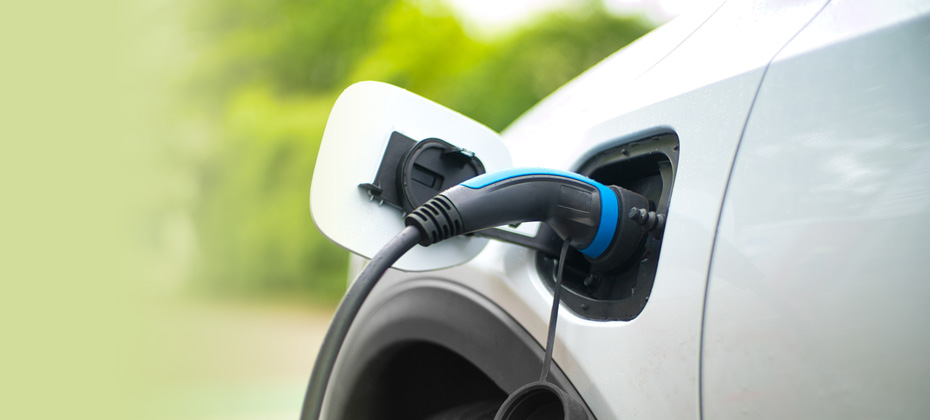
Electric vehicle charging

Over the past few years, there has been significant momentum in the alternative fuel vehicle market as the speed of new model introductions has raced forward. And now, with more options available and improved infrastructure driving popularity, we’re seeing more consumers finance alternative fuel vehicles than previous years.

The State of the Automotive Finance Market: Q4 2021 report broke down alternative fuel financing trends—specifically how electric vehicle (EV) financing doubled year-over-year. Here are some of the trends we found.

EV vehicle popularity is increasing

While multiple alternative fuel vehicle segments made up 15.91% of new vehicle financing this quarter, an increase from 11.8% in Q4 2020, EV financing has grown significantly compared to half a decade ago. In Q4 2021, EVs made up 4.56% of new vehicle financing, doubling from 2.25% in Q4 2020 and a substantial jump from five years ago at 0.57% in Q4 2016.

As EVs continue to become more popular, looking at what models people finance will help lenders and dealers understand consumer preferences and make more informed decisions. In Q4 2021, three Tesla models made up the majority of the top financed EVs: the Tesla Model 3 took the lead at 36.62%, followed by the Tesla Model Y at 34.18% and the Tesla Model S at 5.3%. Rounding out the top five were the Ford Mustang Mach-E (6.02%) and the Volkswagen ID.4 (3.4%).

The remarkable growth in EV financing demonstrates how influential this fuel type is becoming in the automotive industry.

Average monthly payments for top EV models

Consumer predilections clearly show they would rather purchase a new EV than lease it, with 72.3% of new EV financing being loans and the remaining 27.7% being leases in Q4 2021.

In the past, we have seen some EVs typically have higher monthly payments than other alternative fuel vehicles, but there were many budget-friendly options for EV models this quarter. For example, the average monthly loan payment for a Nissan LEAF was $515 while its average monthly lease payment was $307 in Q4 2021. Similarly, the average monthly loan payment for a Hyundai Ioniq came in at $520 and its average monthly lease payment was $219 this quarter.

It is notable that the overall average monthly loan payment for an EV was $774, while the average monthly lease payment was $688 in Q4 2021.

With many more alternative fuel vehicle models on the horizon, this market will only continue to grow. Understanding the current state of alternative vehicle financing provides industry players additional context to this growing vehicle segment. Staying close to the data enables lenders and dealers make informed decisions in the quarters to come.

To learn more about EV financing and other automotive finance trends, watch the entire State of the Automotive Finance Market: Q4 2021 webinar.


Related Posts

Electric Vehicle Registrations Are Growing Beyond Traditional Locations

For years, most electric vehicle (EV) adoption has been concentrated in California, New York, and other traditional early-adopter markets. And while those markets still lead the nation in total registrations, as of last year, some of the fastest-growing EV markets are in regions that haven’t played a significant role in the past. According to Experian Automotive’s 2025 EV Year in Review Report, EV adoptions seem to be entering a new phase that is spreading well beyond coastal strongholds. In fact, the top designated market areas (DMAs) that saw the fastest year-over-year growth for new retail individual EV registrations in the last five years were Detroit, MI (34.5%), Naples, FL (32.6%), Atlanta, GA (20.6%), Buffalo, NY (18.7%), and Charlotte, NC (17.3%). However, despite the growing demand in these market areas over the last few years, Los Angeles, CA still holds a strong lead in new retail individual EV registrations, with over 164,000 new adopters in 2025. Rounding out the top five were San Francisco, CA (85,000+), New York, NY (78,000+), Miami, FL (45,000+), and Seattle, WA (35,000+). EV adoption expanding well beyond the early-adopter markets could be a result of charging infrastructure growth, vehicle availability improvement, and consumer interest reaching new levels across the country. What does this mean for dealers? The extension of EV adoption into emerging markets signals that these vehicles are becoming a mainstream consideration for more consumers. As dealers look for ways to grow their presence in this segment, adopting marketing strategies, service operations, and inventory planning will be beneficial to meet changing buyer expectations and capitalize on the growing demand. The biggest takeaway isn’t necessarily which markets are selling the most EVs, it’s seemingly where adoption is gaining momentum. As new regions start to embrace these vehicles, it’ll be important to monitor the next phase of growth and where future opportunities may emerge. To learn more about EV insights, visit Experian Automotive’s EV Resource Center.

Published: July 7, 2026 by Kirsten Von Busch
PREMIER Bankcard Expands Financial Access

Learn how PREMIER Bankcard and Experian are helping expand financial access through data, technology and personalized decisioning.

Published: July 6, 2026 by Scarlet.Nickel@experian.com
Simplifying Verification: Inside Experian Verify Hub with Sophia Cheung 

Explore how Experian Verify Hub is simplifying income and employment verification as Sophia Cheung shares insights on reducing complexity, improving data access, and helping organizations make faster, more confident decisions.

Published: July 3, 2026 by Ted Wentzel

Subscribe to our Auto blog

Enter your name and email for the latest updates.

This site is protected by reCAPTCHA and the Google Privacy Policy and Terms of Service apply.