
The auto industry is blessed with an abundance of data – market research, demand estimates, demographic trends, registration history, not to mention your dealership’s own sales and inventory data. Dealers are often visual people – who love beautiful cars more than boring spreadsheets. The more visual you can make your data, the easier it will be to make decisions based on what it’s telling you. Here are the five steps to being a data-driven dealer.
 1. Where am I selling the most cars?
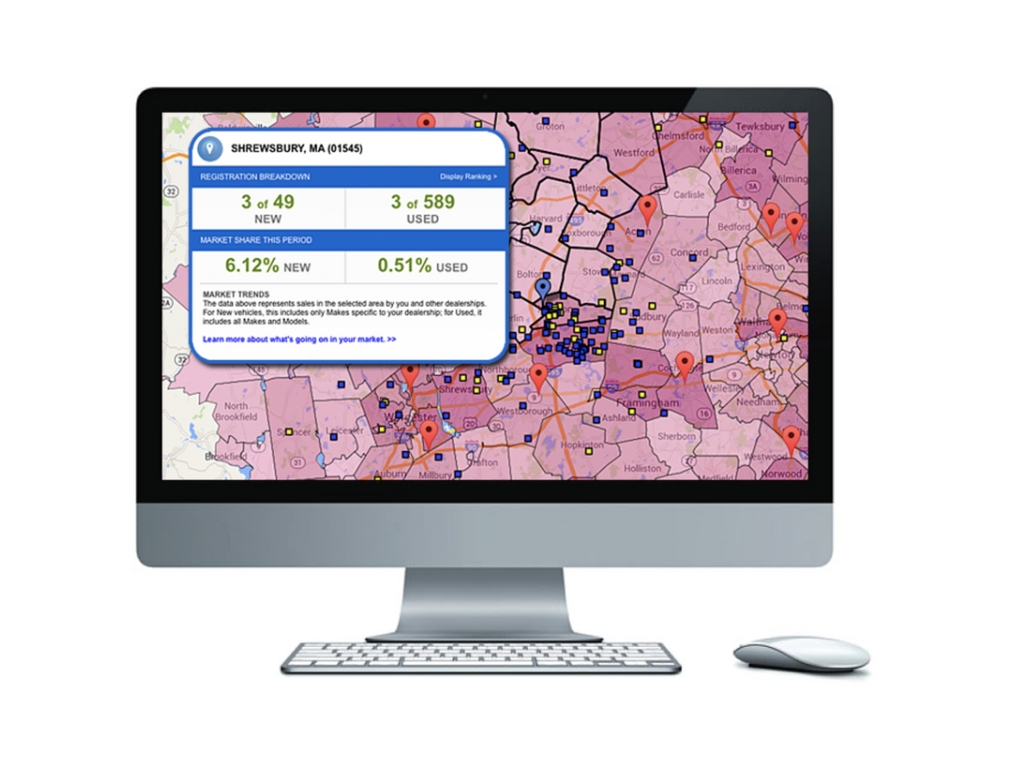
You probably have a good instinct about where the “hot spots” are around your dealership. But there’s a reason many dealers often display a map somewhere in the dealership, with pushpins representing recent new and used sales. It’s a tried-and-true technique because there’s no substitute for a visual representation of data, especially to get a good sense of where you’re currently successful.
More importantly, it will also help you answer a critical question – where should I be selling the most cars? By layering your web stats, such as Google Analytics, on top of your sales data, you can start to see whether your PPC spend is resulting in sales.
Then layer on registration data to understand whether you’re maximizing opportunity in your own backyard. You might already be selling a lot of cars into a town, but looking at your on-brand market share will help you determine if you’ve fully penetrated the area. Looking at overall market activity, not just your own data, is required to understand where you fit into the bigger picture and decide upon your best sales strategy.
 2. Where should we be conquesting?
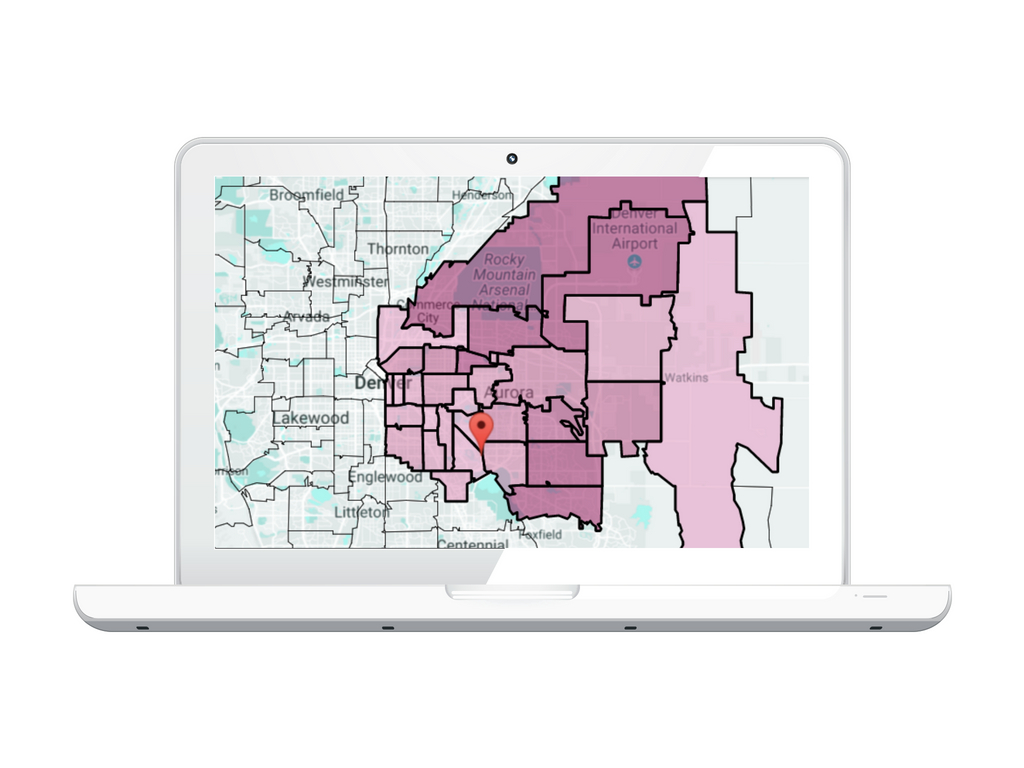
Once you’ve confirmed that you’re (hopefully) dominating in your town and those directly adjacent to you, it’s time to turn your eye to how to take on competitive dealerships farther afield. Again, data can help you determine next steps and target your budget appropriately.
Every dealership approaches and defines “conquesting” a little differently, but there are two common techniques that can be made much easier using recent registration statistics.
First, look for ZIP Codes outside of your immediate PMA that are selling a high number of on-brand vehicles. These are your competitors’ happiest hunting grounds; focus on enticing shoppers in those areas to drive a little further to take advantage of special pricing or promotions, rather than attacking blindly in a 20-mile radius.
 3. What is my best performing campaign now?
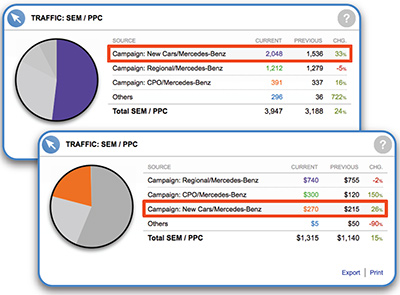
No matter what your position is at the dealership, you need to know what’s working best at any given moment. The GM needs to be able to make on-the-fly budgeting decisions, while the e-commerce Director wants to know which campaigns are working and what to do more of. But too often, the only objective measures we’re regularly provided are traffic stats. Traffic is important, of course, but we’d suggest there are three factors dealers should evaluate for every campaign.
A campaign may be driving lots of shoppers to your site, but if they’re immediately leaving the site, they aren’t worth much for you. A high bounce rate is your first sign that something is amiss since shoppers aren’t finding what they were looking for on your site.
A second-level analysis involves looking at what other pages visitors looked at after hitting the campaign landing page. For an offer focused on a specific vehicle, visitors should be moving on to look at inventory on VDP pages. Free oil change promotion? Visitors should be spending time on the service portion of your site. Work with your agency or internal e-commerce team to determine what content, language and images are the most effective at engaging potential buyers to take the desired action.
Speaking of action, conversion rate is your single best measure of whether a campaign is performing to expectations. Just make sure you’re measuring actions that matter: Form submissions, email leads, mobile clicks to call, and visits to hours and directions pages all indicate various levels of positive customer interest in beginning a dialogue.
4. How do I determine whether my traditional advertising spend is producing results?
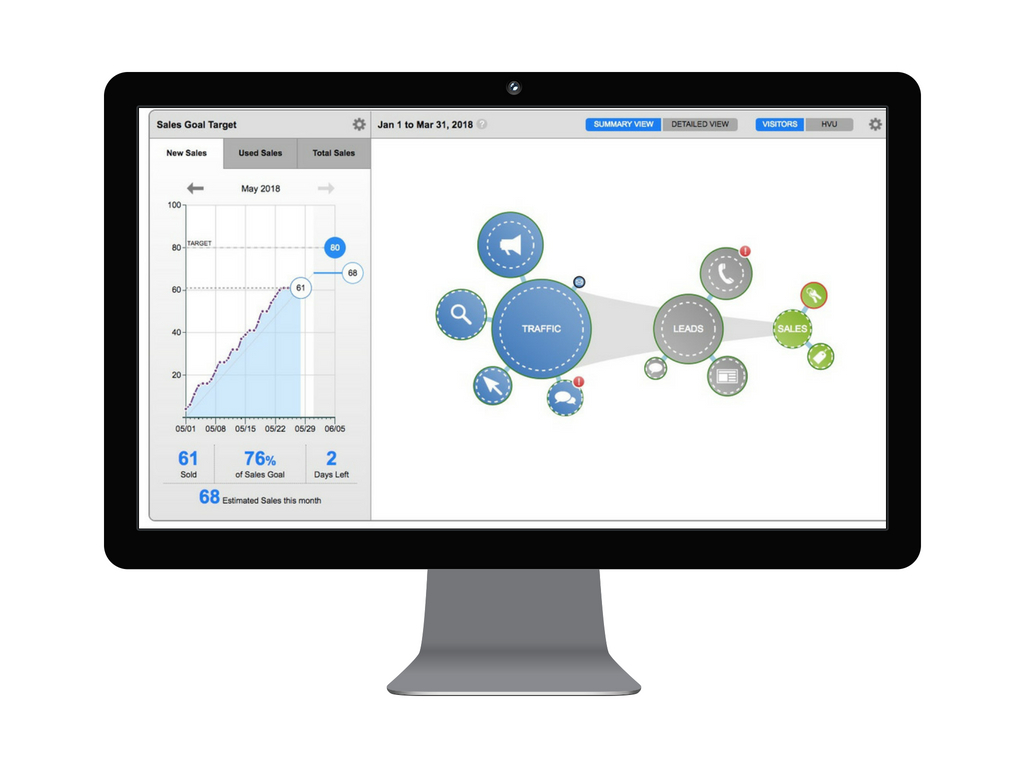
Measuring dealer marketing ROI can be challenging, especially for traditional advertising. History tells us that radio, TV, newspaper, and outdoor are successful in driving demand, but quantifying that effect can be an elusive goal.
But there are methods that will get you closer to determine the effect of your traditional efforts on sales. By tagging the start dates of all your marketing activities and mapping them on a trendline of your traffic for your URLs, leads such as phone calls, chat, and coupon codes for your service department as well as sales, you’ll get a good sense about whether your offline campaigns are generating online interest.
 5. Who is my ideal customer?
Once you understand which models are likely to move next month, your next question should be: “Who am I selling to?” You probably have a good sense of your typical customer profile for many models (there’s a good chance you’re showing minivans and SUVs to young families, for example). But do you know where those customers live? And how to best talk to them?
There is an incredible amount of data available on consumers, from credit history to buying behavior to lifestyle preferences. So how do you make use of this rich consumer data? At a basic level, Experian data can tell you a lot about the residents of each ZIP Code surrounding your dealership – from average age, income, and number of children, all the way to the most prevalent Mosaic® profiles in each town. In a previous article, we talk about locating your ideal customer using Mosaic profiles. You might have a high number of “American Royalty” in one area, or an abundance of “Sports Utility Families” just a couple of towns over.
This information can tell you not only where you might want to market particular models, but what medium and messaging will resonate best in each area. While only 15 miles apart, the Boston suburbs of Sudbury and Norwood are home to very different types of BMW buyers, suggesting vastly different marketing campaigns to best appeal to each.
Data is a necessary tool for understanding your ideal customer, improving your marketing results, and selling more vehicles. These five steps to becoming a data-driven dealer address all your requirements to enrich your marketing and conquest more successfully.